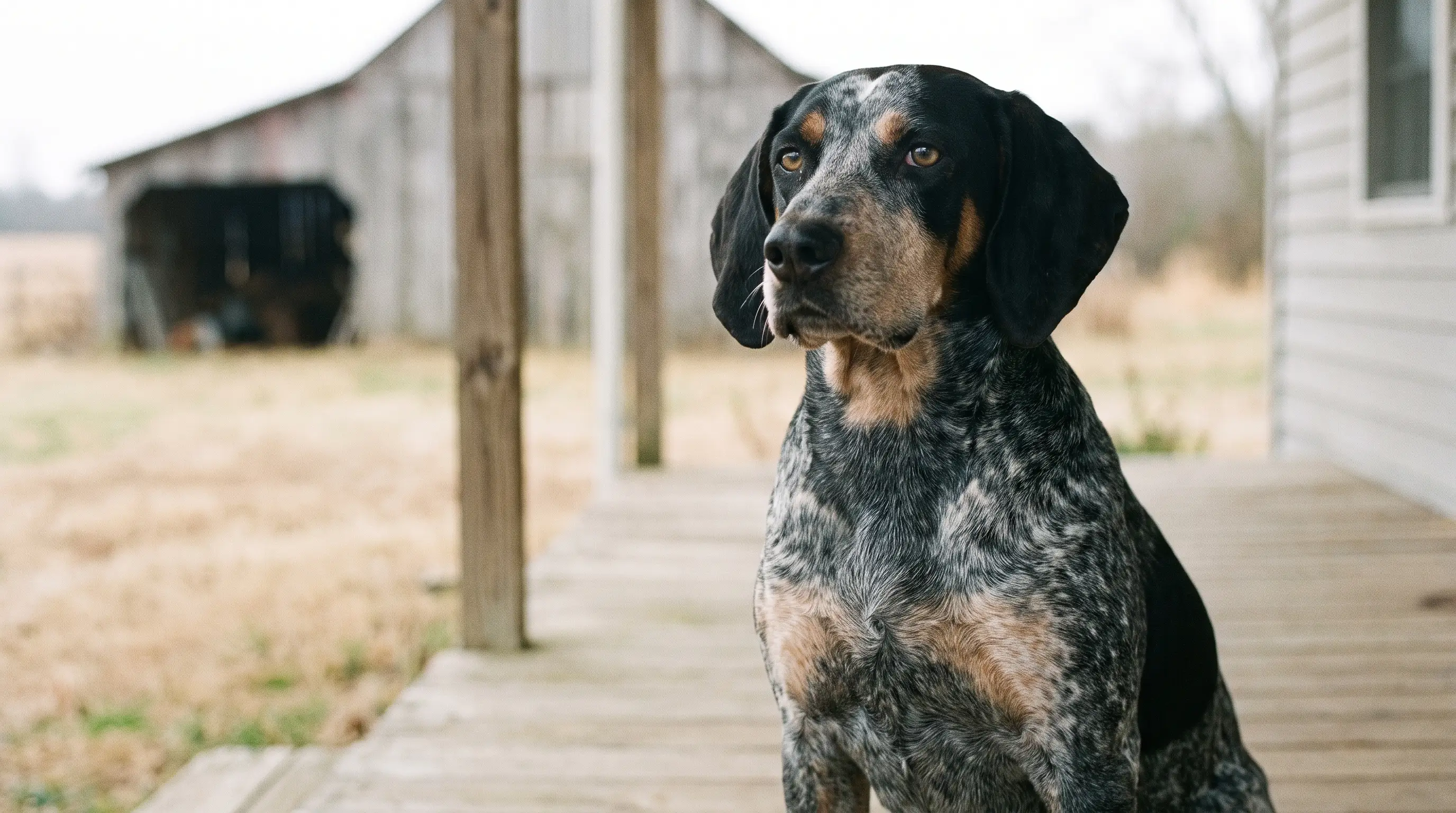
Bluetick Coonhound
A midnight-speckled songster — French hound blood gone gloriously Southern.
Vital stats
| Size | Medium-large · 53–69 cm |
| Weight | 20–36 kg |
| Life expectancy | 11–12 years |
| Energy | High — 60–90 min/day |
| Shedding | Light to moderate |
| Coat | Short, glossy coat · blue-ticked with black and tan |
| Group | Hound · AKC |
Breed traits
Friendliness
Care
Mind
Temperament
Descended from French Grand Bleu de Gascogne hounds crossed with American foxhounds, the Bluetick is a cold-nosed specialist — able to untangle old, faint trails other dogs walk past — and it pursues them with cheerful, bawling obsession. At home it's affectionate, a touch dramatic, and devoted to its people once the day's sniffing is done.
Habits & quirks
The bawl
A drawn-out, musical howl bred to carry across miles of bottomland — practised freely at home.
Cold-trailing
It happily works scents hours or days old that other dogs never notice.
Tree focus
Squirrels and cats up trees will be pointed out, loudly, until further notice.
Houndy theatrics
Baths, nail trims and closed doors are all met with operatic commentary.
Care
| Exercise | 60–90 minutes of hard exercise daily — trailing games, hikes and long lines beat pavement laps. |
| Containment | A tall, secure fence is essential; an interesting scent outranks every command ever taught. |
| Training | Patient, food-driven and consistent — this hound cooperates with people it likes but never blindly obeys. |
| Ears | Drop ears need a weekly check and clean, especially after wet or brushy outings. |
Common questions
Are Bluetick Coonhounds good pets?
Yes, for active homes — they're affectionate, sociable and gentle with children. City flats and noise-sensitive neighbours are a poor match for the voice.
Why do Bluetick Coonhounds howl so much?
They were bred to report progress to hunters across miles of dark woodland, and the instinct runs deep. Exercise and company reduce it; nothing eliminates it.
Are Blueticks easy to train?
They're intelligent but independent, bred to work far ahead of their handler. Reward-based training and realistic expectations about recall get the best results.