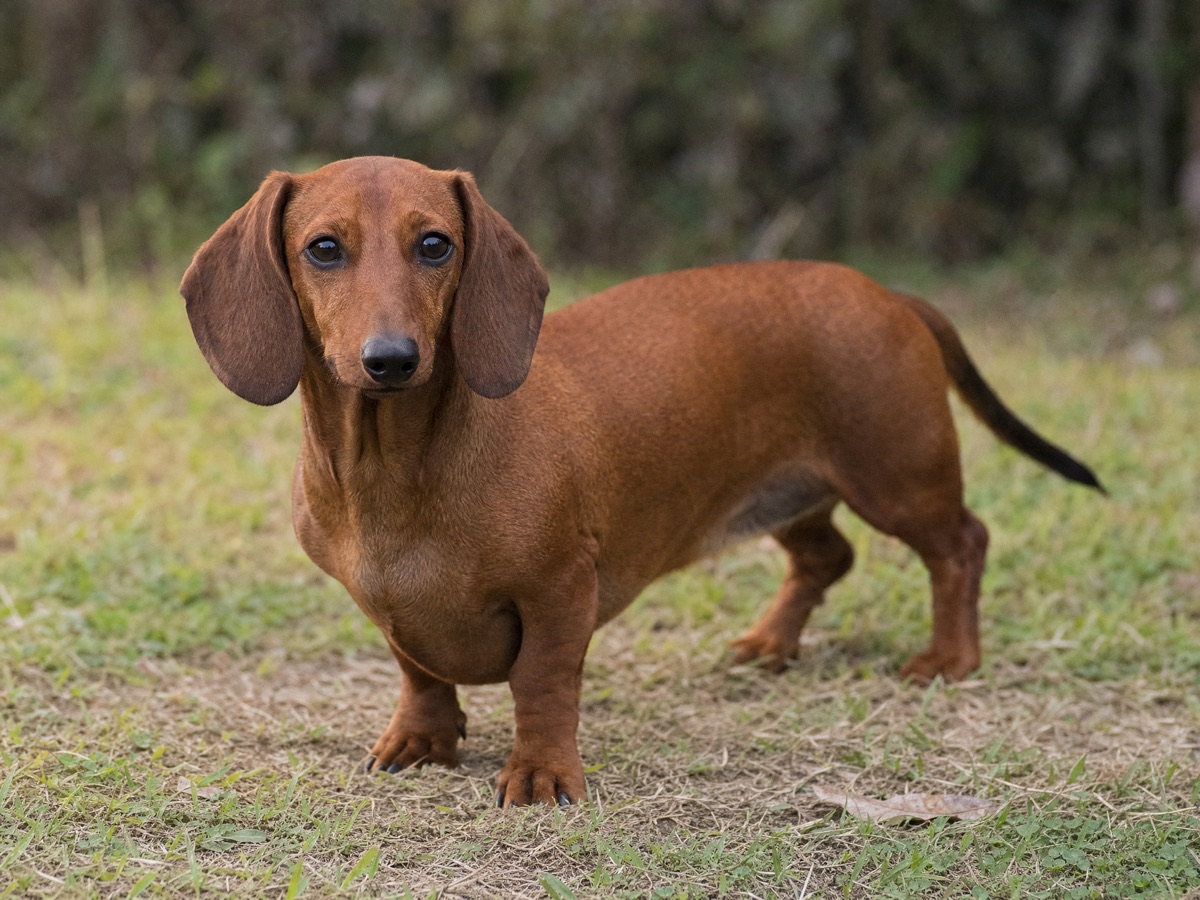
Dachshund
Long dog, huge attitude — bred to go to ground after badgers.
Vital stats
| Size | Small · 20–23 cm (standard) |
| Weight | 7–14 kg (standard) |
| Life expectancy | 12–16 years |
| Energy | Moderate — 45–60 min/day |
| Shedding | Low–moderate |
| Coat | Smooth, long or wire · many colours |
| Group | Hound · FCI №148 / AKC |
Breed traits
Friendliness
Care
Mind
Temperament
Engineered to follow a badger into its sett and argue with it underground, the Dachshund carries the courage of a far larger dog and the independence of a freelancer. At home that wiring means bold opinions, enthusiastic digging, a watchdog's bark, and a warm, comic loyalty to its chosen people.
Habits & quirks
Burrower-in-chief
Bred for tunnels, so your duvet is now a sett.
Big-dog bark
A hunter's voice built to carry from underground — the postman will assume a Rottweiler.
Excavation projects
Flowerbeds are practice setts; provide a digging pit or lose the garden.
The standoff
Orders are treated as suggestions — ask nicely and make it worth their while.
Care
| Back care | IVDD is the breed's big risk — ramps instead of stairs, no leaping off sofas, support the spine when lifting. |
| Feeding | Extra weight loads that long back; keep a visible waist at all costs. |
| Exercise | Two or three brisk, sniffy walks a day keep body and busy mind right. |
| Training | Bred to decide alone underground, so recall takes patience — be more interesting than the scent. |
Common questions
Are Dachshunds good with children?
With respectful older kids, yes; supervise with toddlers, as rough handling risks their fragile long back and they won't tolerate it.
Do Dachshunds have back problems?
The breed is prone to disc disease (IVDD). Limit jumping and stairs, use ramps, keep them lean, and support the whole body when lifting.
Why do Dachshunds bark so much?
They were bred to bark underground so hunters could locate them — the loud voice is a feature, not a fault. Training and enrichment lower the volume; nothing will mute it.