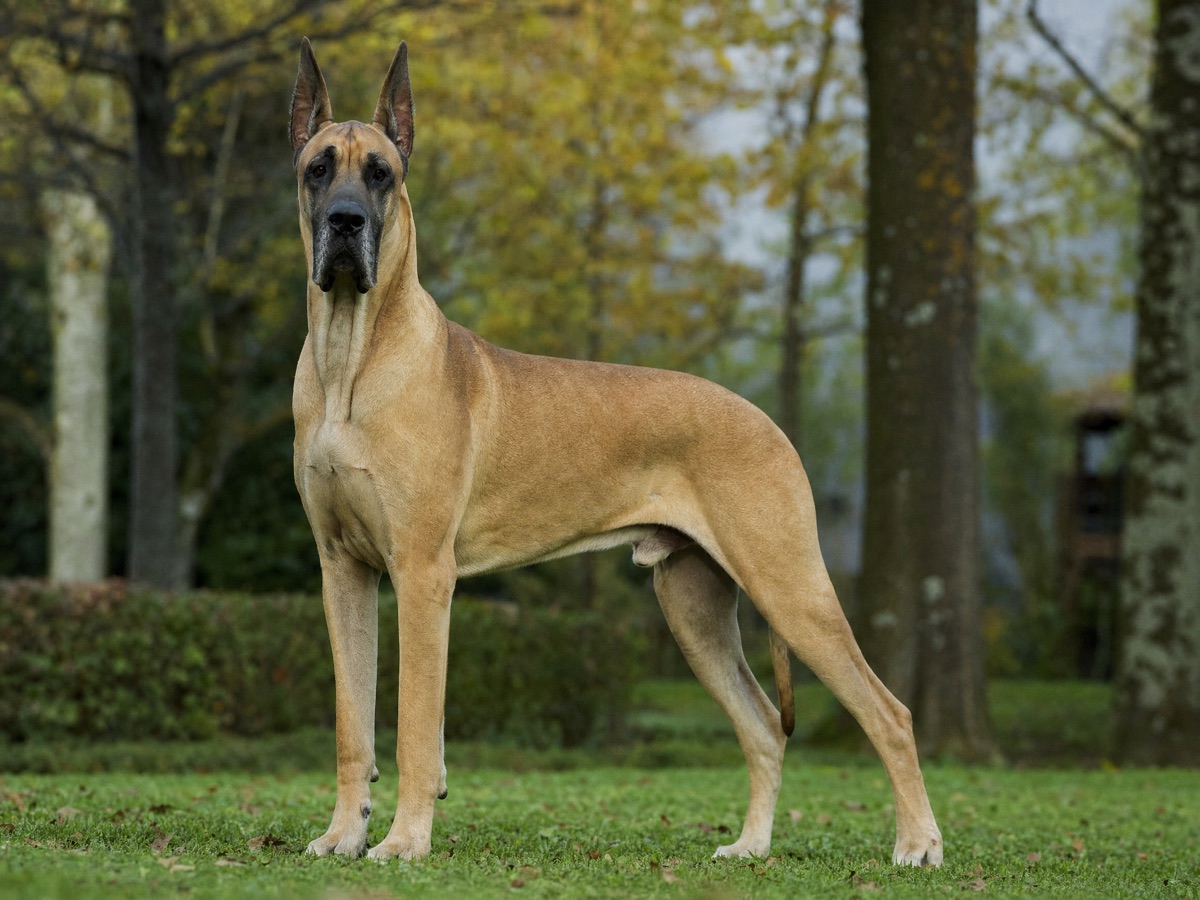
Great Dane
The gentle giant — a horse-sized lapdog with a calm, sweet soul.
Vital stats
| Size | Giant · 71–86 cm |
| Weight | 50–80 kg |
| Life expectancy | 7–10 years |
| Energy | Moderate — 45–60 min/day |
| Shedding | Moderate |
| Coat | Short, sleek · fawn, brindle, blue, black, harlequin |
| Group | Working · FCI №235 / AKC |
Breed traits
Friendliness
Care
Mind
Temperament
Bred by German nobility to catch wild boar and grace castle halls, the Dane long ago traded ferocity for serenity. What remains is a courteous, people-adoring giant: patient with children, welcoming to guests, and convinced that sofas and laps were engineered with it in mind. It wants very little from life beyond proximity to its family — and adequate furniture.
Habits & quirks
The lean of love
Fifty-plus kilograms of affection, deposited gently against your legs until you stagger.
Lap optimist
The whole dog will not fit on your knees; the Dane will keep trying anyway.
Counter surfing, effortless
No jumping required — the kitchen worktop is simply at chin height.
The dramatic flop
A Dane doesn't lie down so much as collapse, with a sigh audible from the next room.
Care
| Exercise | Moderate daily walks suit adults, but strictly limit running and stairs during the long, fragile growth phase. |
| Health | Bloat is the breed's biggest killer — feed several smaller meals, keep mealtimes calm, and learn the emergency signs cold. |
| Feeding | Giant-breed puppies need controlled growth on an appropriate large-breed diet, never maximum-speed bulking. |
| Training | Teach manners early: a bouncing puppy is charming at 15 kg and a hazard at 70. Danes are soft-natured and respond best to gentle consistency. |
Common questions
Are Great Danes good apartment dogs?
Surprisingly yes for calm households — they're low-energy indoors, but their sheer size needs room to move and sturdy space.
What health issues do Great Danes have?
Bloat (gastric torsion) is the big risk — feed smaller meals and avoid exercise right after eating. Heart and joint issues and a short 7–10 year lifespan are also common.
How much does it cost to keep a Great Dane?
More than most breeds: giant-dog quantities of food, larger medication doses, bigger everything from beds to boarding. Budget generously for insurance too — giant-breed health care is priced to match the dog.