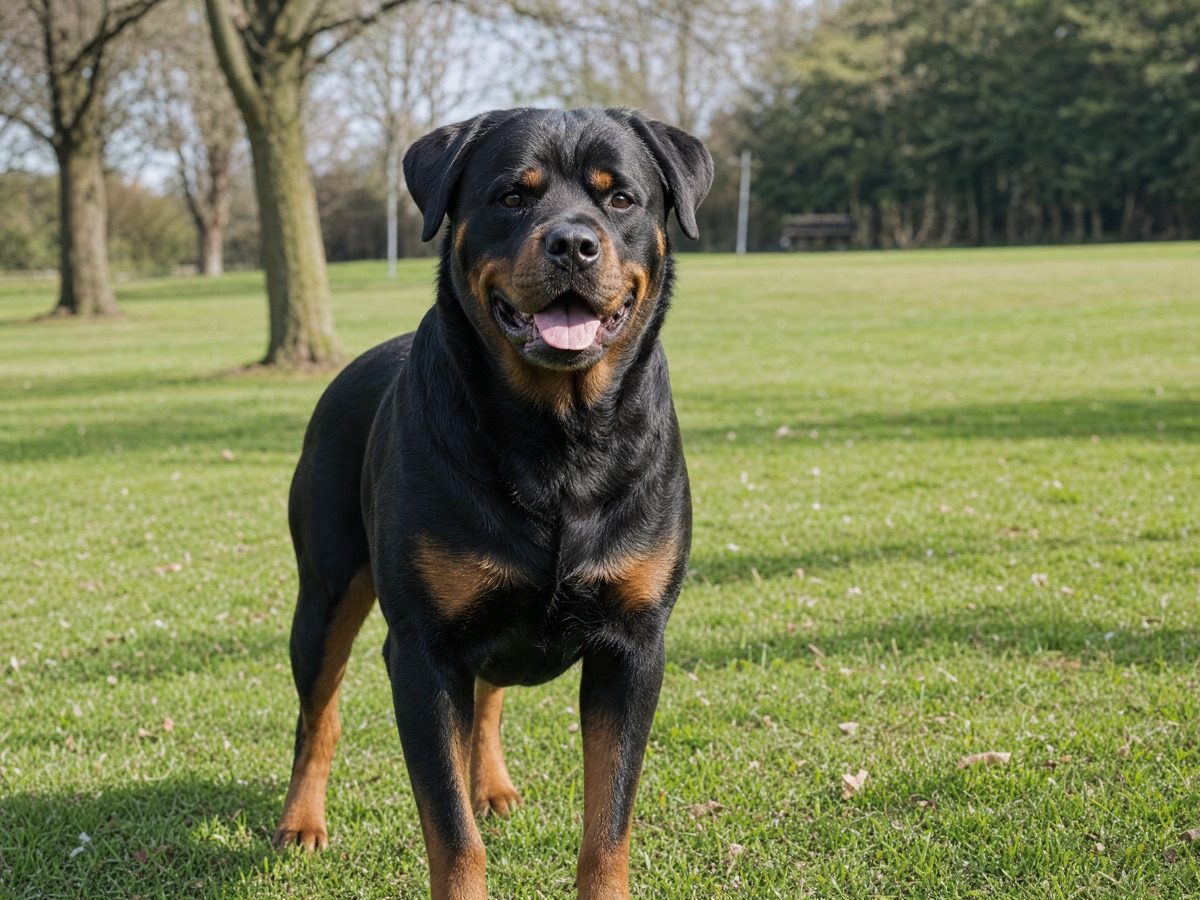
Rottweiler
A calm, confident guardian — steady of nerve, devoted to its family.
Vital stats
| Size | Large · 56–69 cm |
| Weight | 35–60 kg |
| Life expectancy | 9–10 years |
| Energy | Moderate-high — 60+ min/day |
| Shedding | Moderate, year-round |
| Coat | Short double coat · black with tan markings |
| Group | Working · FCI №147 / AKC |
Breed traits
Friendliness
Care
Mind
Temperament
Bred to drive cattle to market and guard the proceeds home, the Rottweiler carries centuries of working judgement: watchful, self-assured and slow to startle. With its family it is affectionate to the point of clinginess; with strangers it observes first and decides later. Give it structure, work and leadership, and its steadiness is remarkable.
Habits & quirks
The Rottie lean
Fifty kilos of guardian pressed warmly against your legs — an ancient droving habit turned love language.
The doorway audit
It settles where it can see every entrance; nothing crosses the threshold unlogged.
The rumbling purr
Contented Rottweilers produce a low grumble easily mistaken for growling — it's the breed's happy noise.
Velcro shadowing
Guardian breeds guard best at close range; expect an escort between rooms.
Care
| Training | Begin socialisation and obedience in puppyhood and never stop — a Rottweiler's power demands lifelong good manners. |
| Exercise | An hour or more daily, plus a job: carting, obedience, tracking or nosework keep mind and muscle honest. |
| Health | Screen for hip and elbow dysplasia and heart conditions; keep it lean to spare the joints. |
| Feeding | Measure meals and grow puppies slowly — rapid weight gain stresses a heavy-boned frame. |
Common questions
Are Rottweilers dangerous?
Not by nature — they're calm and steady when well bred and socialised. Like any powerful breed, temperament comes down to breeding, training and responsible ownership.
Are Rottweilers good with children?
Yes with their own family, when raised together — they're affectionate and protective. Supervise around small children given the size and strength.
How much exercise does a Rottweiler need?
At least an hour a day of walks and purposeful activity, plus mental work. A bored, under-exercised Rottweiler is a large problem in the making.