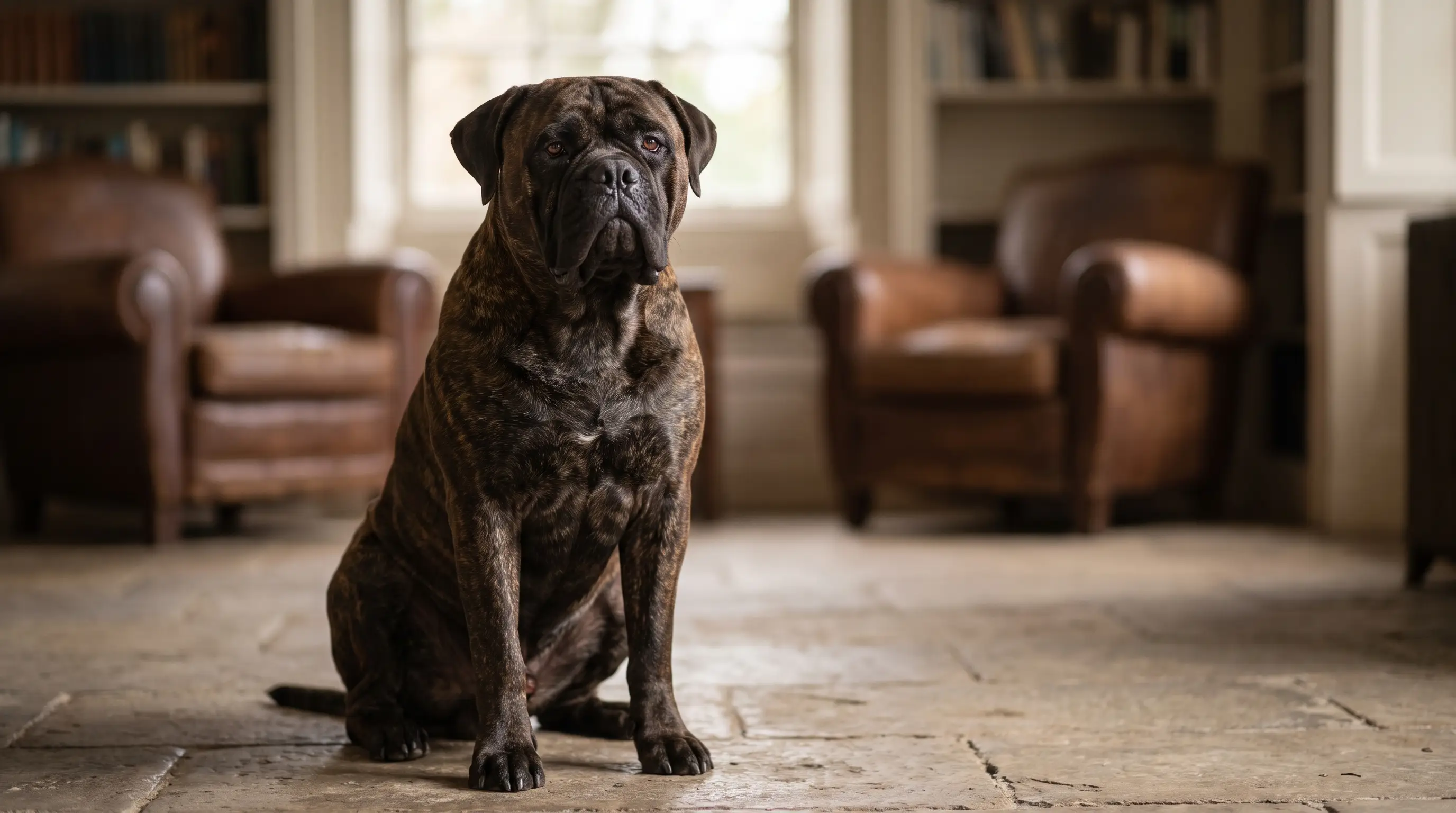
Bullmastiff
The gamekeeper's night dog — silent, immense, and gentle with everyone on the guest list.
Vital stats
| Size | Giant · 61–69 cm |
| Weight | 41–59 kg |
| Life expectancy | 7–9 years |
| Energy | Moderate — 40–60 min/day |
| Shedding | Low–moderate, year-round |
| Coat | Short, dense · fawn, red, brindle |
| Group | Working · FCI №157 / AKC |
Breed traits
Friendliness
Care
Mind
Temperament
Gamekeepers crossed Mastiff with Bulldog in the 1860s to create a dog that could track a poacher in darkness, knock him flat and hold him — silently, without biting. That job description survives as watchful stillness: a Bullmastiff is placid and affectionate at home, makes its own judgements about strangers, and rarely wastes a bark.
Habits & quirks
The doorway audit
Every visitor is quietly assessed before being approved for entry.
Leaning in
Fifty kilos of affection, applied directly and steadily to your legs.
Economy of motion
It moves when there's a reason; supervising from the rug counts as work.
The silent follow
You'll turn around and find it has drifted, noiselessly, to wherever you are.
Care
| Training | Teach manners before the puppy outweighs you — calm, consistent leadership from day one, with broad early socialisation. |
| Exercise | Two moderate walks a day; avoid hard running and stairs while the joints are still growing. |
| Feeding | Grow puppies slowly on measured meals, and split adult food into two servings to reduce bloat risk. |
| Health | Ask breeders for hip, elbow and heart screening, and know the signs of bloat — at this size, minutes matter. |
Common questions
Are Bullmastiffs good family dogs?
With their own family, devoted and remarkably gentle — they're calm housemates and natural protectors. They need early socialisation and an owner who can handle real strength.
Do Bullmastiffs bark a lot?
Very little — they were bred to work in silence. A Bullmastiff that does bark is usually telling you something worth checking.
How much exercise does a Bullmastiff need?
Less than the size suggests: a couple of steady daily walks and some play. Protect growing joints in the first two years and avoid exertion in heat.