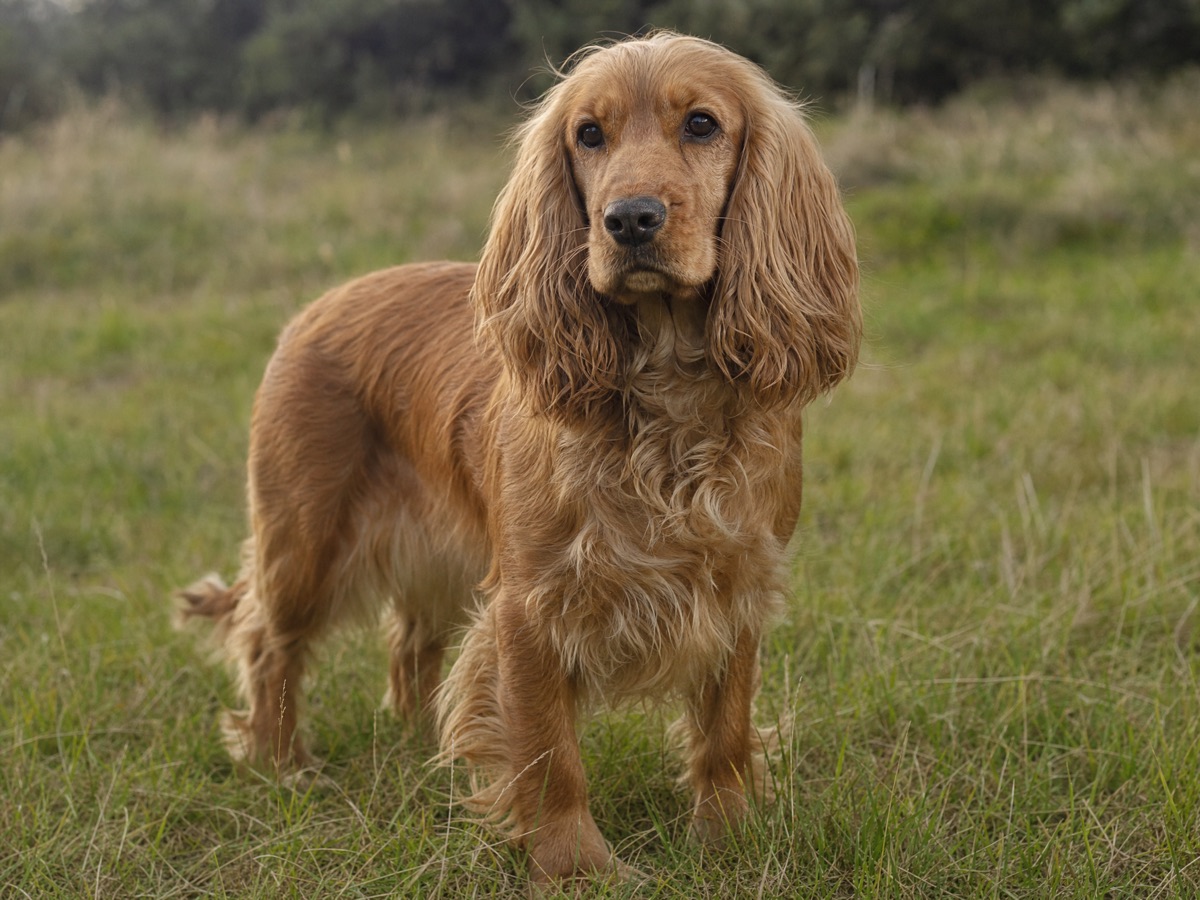
Cocker Spaniel
A merry, feather-eared gundog that never stopped wagging.
Vital stats
| Size | Small-medium · 34–39 cm |
| Weight | 7–14 kg |
| Life expectancy | 10–14 years |
| Energy | High — 60 min/day |
| Shedding | Moderate |
| Coat | Silky, feathered coat · black, buff, parti and more |
| Group | Sporting · FCI №167 / AKC |
Breed traits
Friendliness
Care
Mind
Temperament
The smallest of the sporting breeds carries a full-size gundog heart: bred to quarter the field for woodcock, it channels that eagerness into games, walks and simply being adored. Expect a soft-natured, tail-driven optimist that trains beautifully with kind hands — Cockers are sensitive souls, and harsh corrections bruise more than they teach.
Habits & quirks
The full-body wag
Happiness starts at the stubby tail and takes over the whole dog — 'merry' is in the breed standard for a reason.
Soup ears
Those long, low-set ears trail into food and water bowls; snoods at dinner are not vanity.
Nose-first walks
A birdy nose means every hedge is a headline — build in sniffing time or walk forever.
The velcro nap
Wherever you settle, a Cocker materialises against your leg within the minute.
Care
| Grooming | Brush the feathered coat several times a week and book a trim every four to six weeks — mats form fast behind ears and legs. |
| Ears | Check and dry the ear canals weekly; those beautiful drop ears trap moisture and infections. |
| Exercise | A brisk hour daily plus fetch and scent games keeps the gundog brain content. |
| Health | Choose breeders who screen eyes, hips and hearts; keep weight down — begging is a Cocker art form. |
Common questions
Are Cocker Spaniels good family dogs?
Yes — gentle, affectionate and playful. Supervise with very young children, as an excited Cocker can be bouncy.
Do Cocker Spaniels need a lot of grooming?
Yes — brush the feathered coat several times a week, trim every few weeks, and keep the long ears clean and dry to avoid infections.
What's the difference between an American and an English Cocker Spaniel?
They split from shared English stock in the twentieth century and have been separate breeds since the 1940s. The American is smaller with a rounder head, shorter muzzle and more profuse coat; the English is taller, plainer-coated and closer to its working roots.