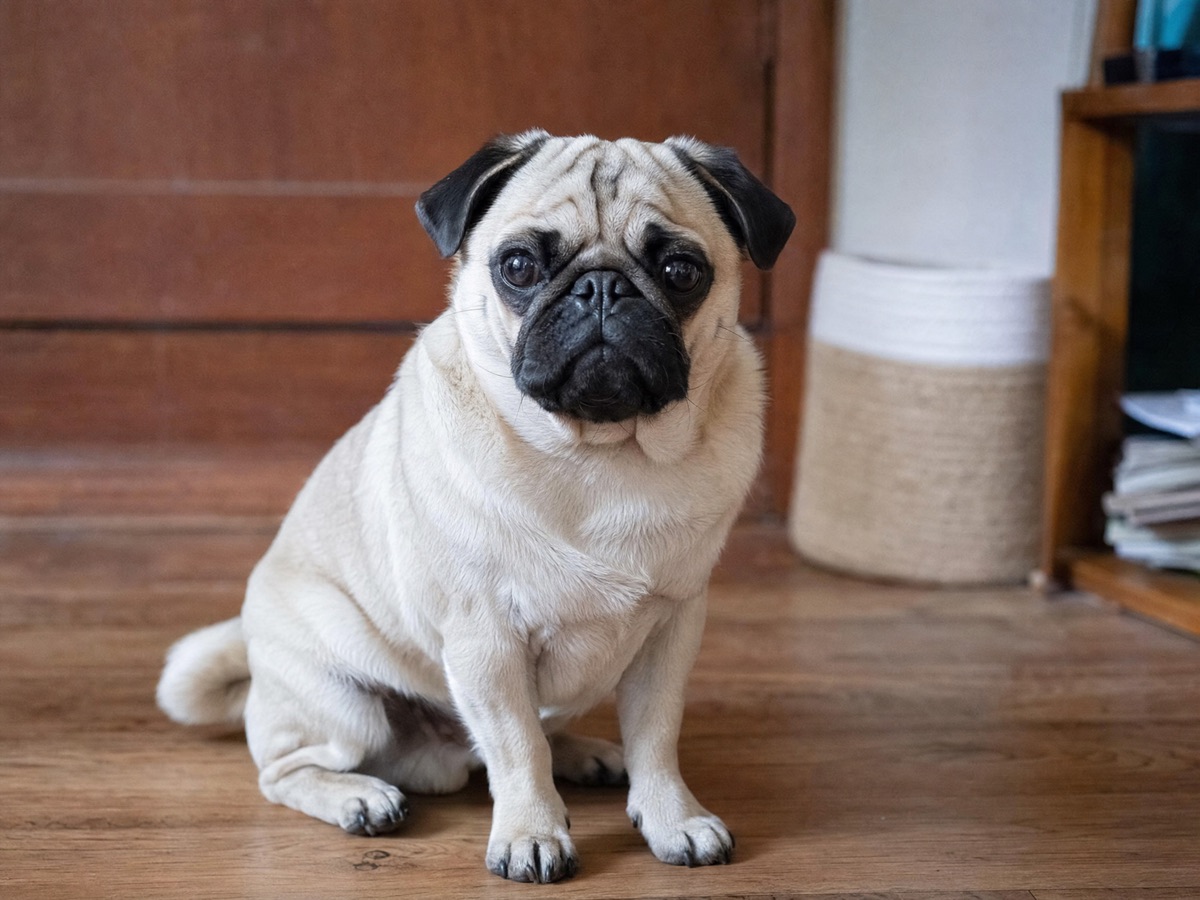
Pug
Multum in parvo — 'a lot of dog in a small space', wrinkles and all.
Vital stats
| Size | Small · 25–33 cm |
| Weight | 6–8 kg |
| Life expectancy | 13–15 years |
| Energy | Low–moderate — 20–40 min/day |
| Shedding | High, year-round |
| Coat | Short double coat · fawn, black |
| Group | Toy · FCI №253 / AKC |
Breed traits
Friendliness
Care
Mind
Temperament
Bred for two thousand years to do exactly one job — delight its people — the Pug is affectionate, even-tempered and reliably funny, a born clown with a dignified streak. Expect a shadow at your heel, a warm weight in your lap, and a personality far larger than the dog it comes in.
Habits & quirks
The head tilt
Ask a Pug anything and the whole face tips sideways in earnest consideration.
Snoring in surround sound
The flat face comes with a soundtrack — naps are rarely silent.
The Pug run
Sudden ecstatic laps of the living room, tail unfurling at top speed.
Professional supervisor
Whatever you're doing — cooking, typing, bathing — a Pug will be watching from close range.
Care
| Health | Avoid heat and over-exertion — brachycephalic airways make Pugs prone to overheating; keep a close eye on eyes too. |
| Feeding | Portion strictly. Pugs gain weight easily, and extra kilos make breathing markedly worse. |
| Grooming | Clean facial folds regularly to prevent infection, and expect surprising amounts of shed hair. |
| Exercise | Two or three short, gentle walks daily in cool hours — never in midday heat. |
Common questions
Are Pugs good apartment dogs?
Yes — small, affectionate and low-energy, they suit flats well. Keep them cool and lean, and never over-exert them in heat.
Do Pugs have breathing problems?
Many do — the flat face causes brachycephalic airway issues. Choose breeders selecting for open nostrils and longer muzzles, and avoid heat and obesity.
Can Pugs be left alone?
For short periods, yes, but they're companion dogs to the core and dislike solitude. Long, regular absences tend to produce an unhappy, vocal Pug.