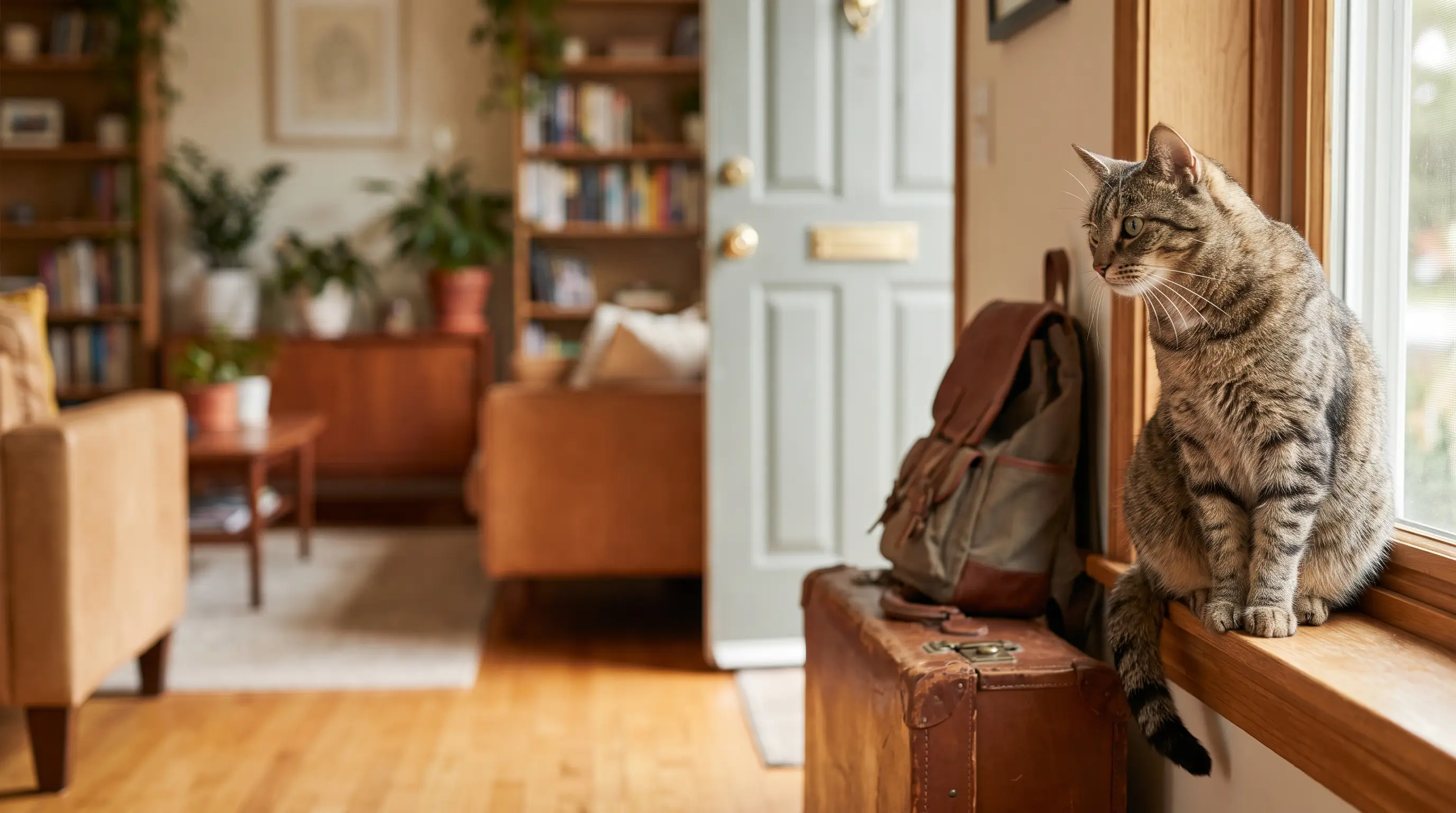
Cat on holiday or leave it home? An honest guide
For most cats, the honest answer is to leave them at home. Cats bond to their territory far more strongly than dogs bond to people, so a familiar house with someone dropping in usually beats hauling them somewhere new. Taking your cat along or booking a cattery are real options too, but each one asks more of the cat than owners tend to admit. Here is how to weigh them without pretending your cat wants the trip as much as you do.
Leave your cat home or take it along
Leave your cat home for most holidays, because a cat's sense of security is tied to place, not to whichever room you happen to be in. Dogs treat you as the centre of their world and travel reasonably well as long as you are there. Cats read safety off the smells, sightlines, and hiding spots of a space they already control, and a strange house strips all of that away at once. Vets and behaviourists say the same thing in plainer words: most cats find being removed from home and moved somewhere unfamiliar distressing, and the first days anywhere new go to nervous adjustment rather than any kind of relaxation.
That does not mean you leave the door unlocked and drive off. It means the goal shifts from "where do I put the cat" to "how do I keep the cat in its own space with the gaps covered." For a short trip that can be as simple as a neighbour with a key. For a longer one it takes a plan. The three real options below are a daily sitter, a boarding cattery, and bringing the cat with you, roughly in order of how well they suit an average cat.
A pet sitter or trusted neighbour
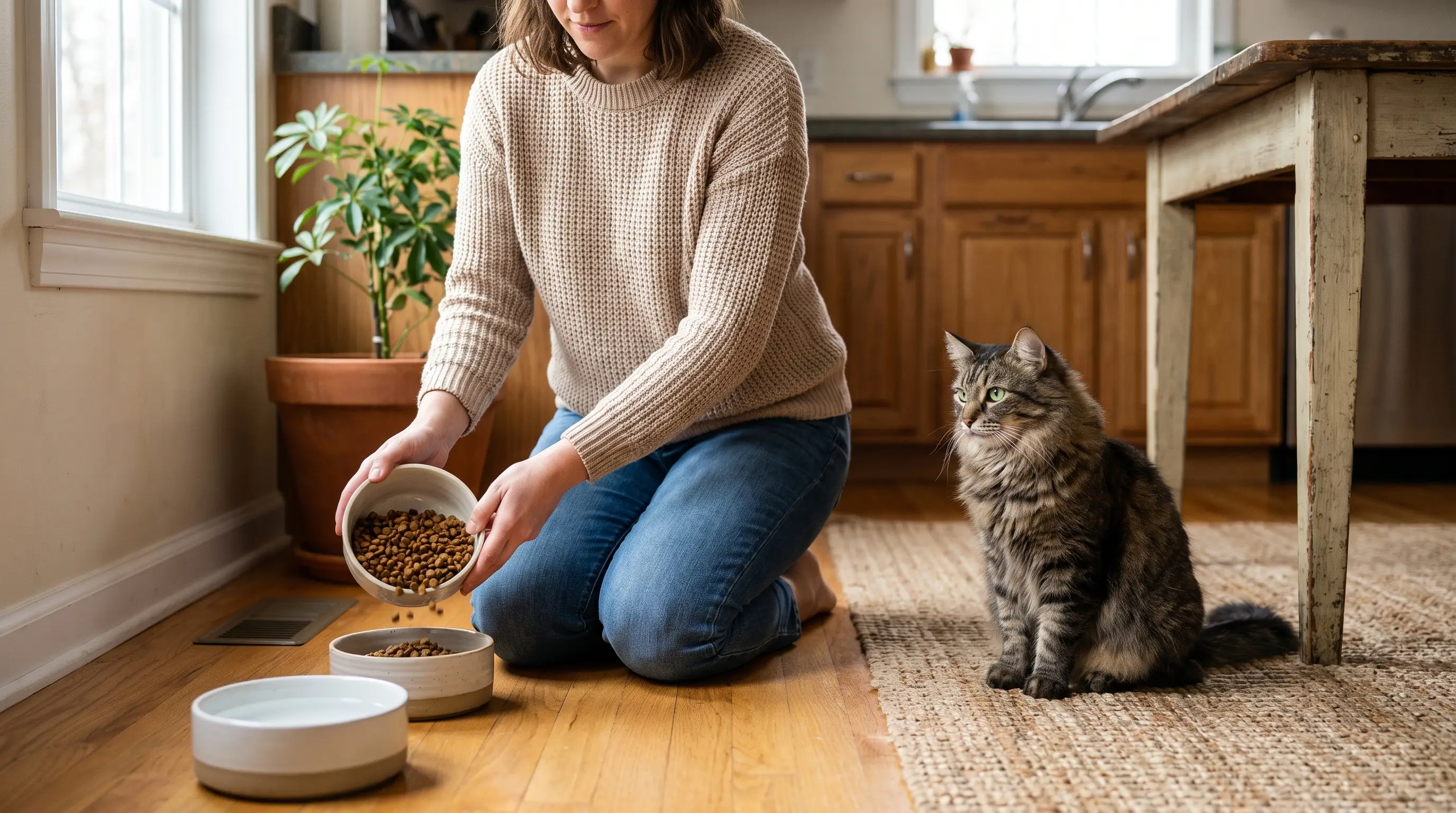
A daily visit from a sitter or a neighbour your cat already knows is the best option for most cats, because it keeps the animal in its own territory while covering food, water, and the litter box. An in-home carer means your cat never has to cope with a strange building, other cats' scent, or a car ride on top of your absence. Ask the person to come at least once a day, and to actually spend a few minutes with the cat rather than just topping up bowls and leaving.
Choose someone the cat has met, and leave clear notes: how much food, where the litter is, any medication, your vet's number, and what a normal day looks like so a visitor can spot when it isn't. This route also handles the things owners forget, like a knocked-over water bowl or a litter tray a fussy cat has decided to boycott. For cats with kidney disease, diabetes, or a thyroid condition, a competent in-home sitter is usually the safer choice, since the stress of boarding can push those conditions the wrong way.
A boarding cattery
A good cattery keeps your cat supervised and safe, but many cats find the experience stressful, so treat it as a solid fallback rather than a default. Catteries are full of the sound and smell of unfamiliar cats and people, and that alone is a lot for a territorial animal. One study of boarding cats found that roughly two thirds settled reasonably over a two-week stay, while the remaining third stayed stressed the whole time, so it genuinely depends on the individual cat.
If you go this way, book well ahead, especially over summer and school holidays when good catteries fill up. Expect to show proof of vaccination: most require an up-to-date FVRCP (feline distemper) and rabies course, with paperwork from your vet, not a verbal assurance. Many won't take a cat until at least a few days to a week after a fresh shot, so sort vaccinations early. Visit the place first if you can, look at how the pens are separated and cleaned, and be honest with yourself about whether your particular cat is the social kind or the hide-under-the-bed kind.
Bringing your cat with you
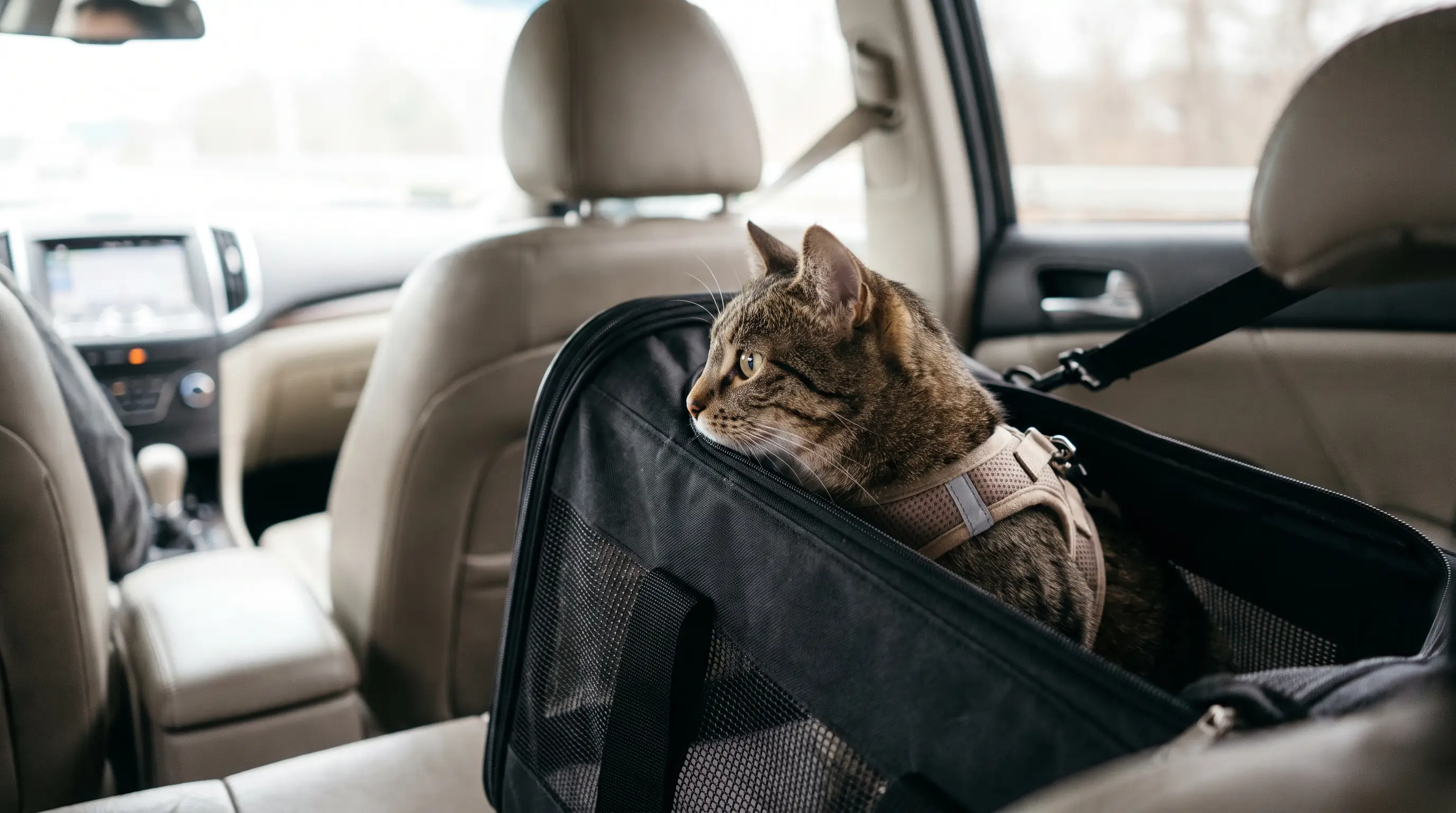
Bring your cat along only for long stays or if it genuinely tolerates travel, because for a one-week trip most cats gain nothing and lose their sense of safety. A few cats, some Bengals and other confident individuals among them, take to it, but they are the exception. If you do travel with a cat you need a secure carrier, a harness and lead for any time outside it, and a microchip plus an ID tag in case it bolts somewhere it doesn't know. Acclimate the cat to the car in short trips before the real one, so the carrier and engine noise aren't a first-time shock on departure day.
The one rule with no exceptions: never leave a cat alone in a parked car. On a warm day the inside of a car can climb from the high 20s Celsius to lethal temperatures within minutes, and cracking a window barely slows it. Heatstroke damages the kidneys, liver, and brain and can kill quickly. Pack familiar things too, the bed, a blanket, favourite toys, and give the cat a cool, quiet spot at the destination. If the trip is a beach one, read our cat at the beach guide before you go.
How long you can leave a cat alone
Even with plenty of food and water out, you should not leave a cat unattended beyond about 24 hours. A healthy adult cat can handle a single day and night on its own, but the limit is not really about food. It is about the litter box getting foul after a day or two, water bowls that get knocked over or run low, and the plain fact that no one is there if the cat gets sick, shut in a room, or injured. Kittens, seniors, and cats on medication need checking much more often than that.
So the practical rule is simple: for anything longer than a day, arrange at least one visit a day from a person, whether that is a sitter, a friend, or a neighbour. The old idea of a giant food pile and a weekend away is how avoidable emergencies happen. Automatic feeders and pet fountains help with the routine, but they don't replace a set of human eyes on the cat once a day.
Signs your cat isn't coping
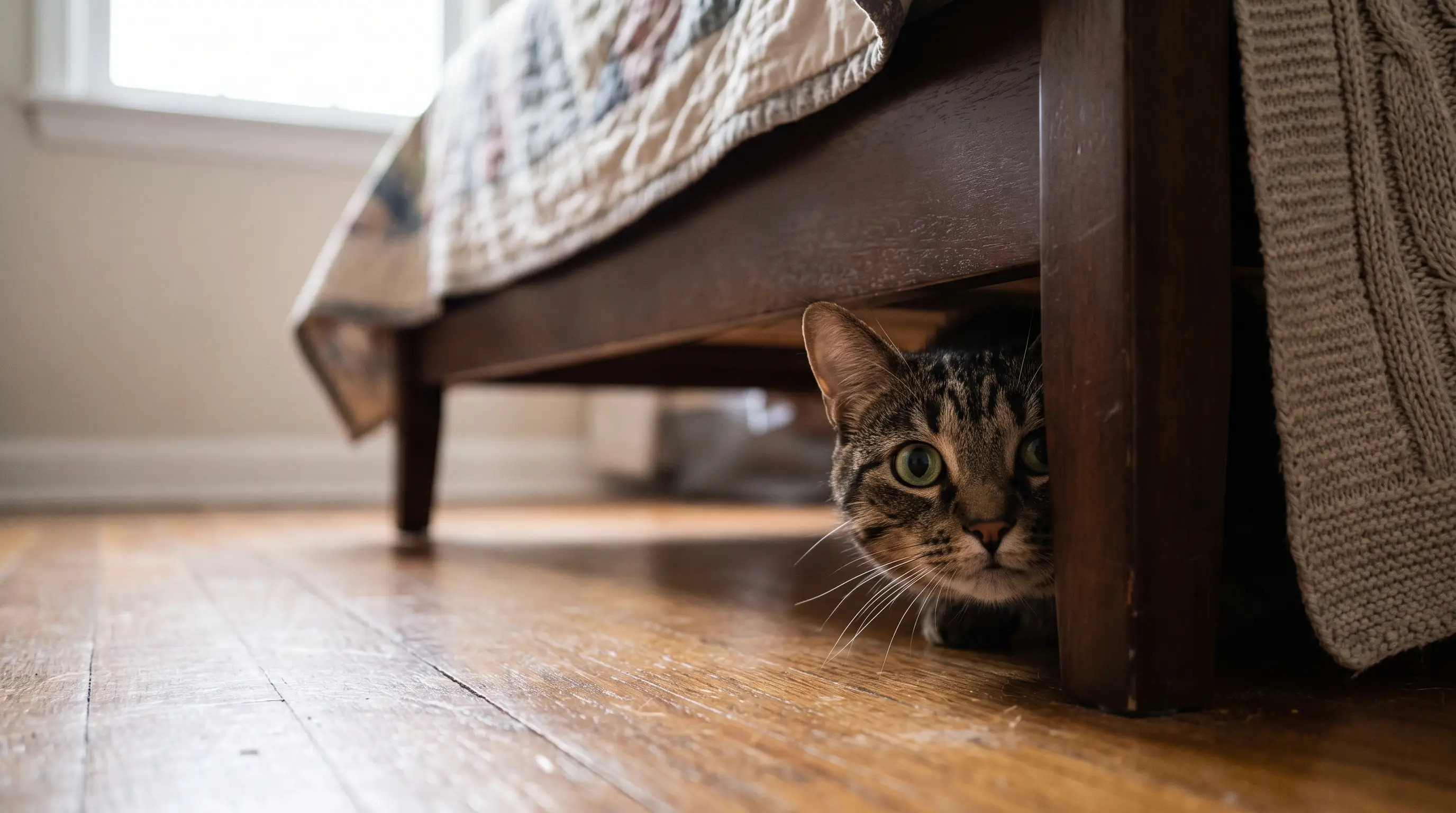
Watch for hiding, refusing food, and litter box changes, because those are the earliest signs a cat is not handling your absence or a new place. A cat that vanishes under the bed and stays there, stops eating for more than a day, or starts weeing and pooing outside the tray is telling you it feels unsafe. Over-grooming to the point of bald patches, constant hiding, and sudden aggression or clinginess are all on the same list.
Loss of appetite is the one to act on fastest. A cat that won't eat for more than about 24 hours can develop a serious liver problem called hepatic lipidosis, which is why "he's just sulking, he'll eat eventually" is a risky bet. Whoever is checking on your cat should know these signs and have your vet's number, so a bad reaction gets caught early instead of on the day you get home.
Common questions
Where do I leave my cat when I go on holiday?
The best place for most cats is their own home, with a sitter or trusted neighbour visiting at least once a day for food, water, and the litter box. A boarding cattery is a safe fallback if no one can drop in, though many cats find it stressful and it needs booking ahead plus proof of vaccination.
How does my cat feel when I go on holiday?
Cats notice the absence and often react by hiding, eating less, sleeping more, or calling out, especially in the first days. Keeping them in their own home with a familiar routine and a daily visitor softens this far more than moving them somewhere new, because their security is tied to their territory.
How long can you leave a cat alone?
A healthy adult cat can be left alone for up to about 24 hours, but no longer without someone checking in. Beyond a day the litter box gets foul, water can run out or spill, and there is no one to help if the cat gets sick or shut in, so arrange at least one daily visit.
How long can a cat go without seeing its owner?
A cat can go days or weeks without seeing its specific owner as long as someone is meeting its needs and it stays in familiar surroundings. What matters more than your face is a clean litter box, fresh food and water, and a safe territory, so a good sitter keeps a cat content while you are away for a longer trip.
How do I take my cat on holiday with me?
Use a secure carrier, a harness and lead for outside the carrier, and make sure the cat is microchipped with an ID tag before you go. Acclimate it to the car with short trips first, pack familiar bedding and toys, never leave it alone in a parked car, and only travel with a cat for long stays or if it genuinely tolerates the journey.
How do I travel with a cat in the car?
Secure the cat in a solid carrier belted into the back seat, never loose in the car, and keep the cabin cool and well ventilated. Build up to the trip with short practice drives, skip food right before leaving to reduce nausea, and stop to offer water on long journeys, but never leave the cat in the parked car even for a minute.
More in Cats
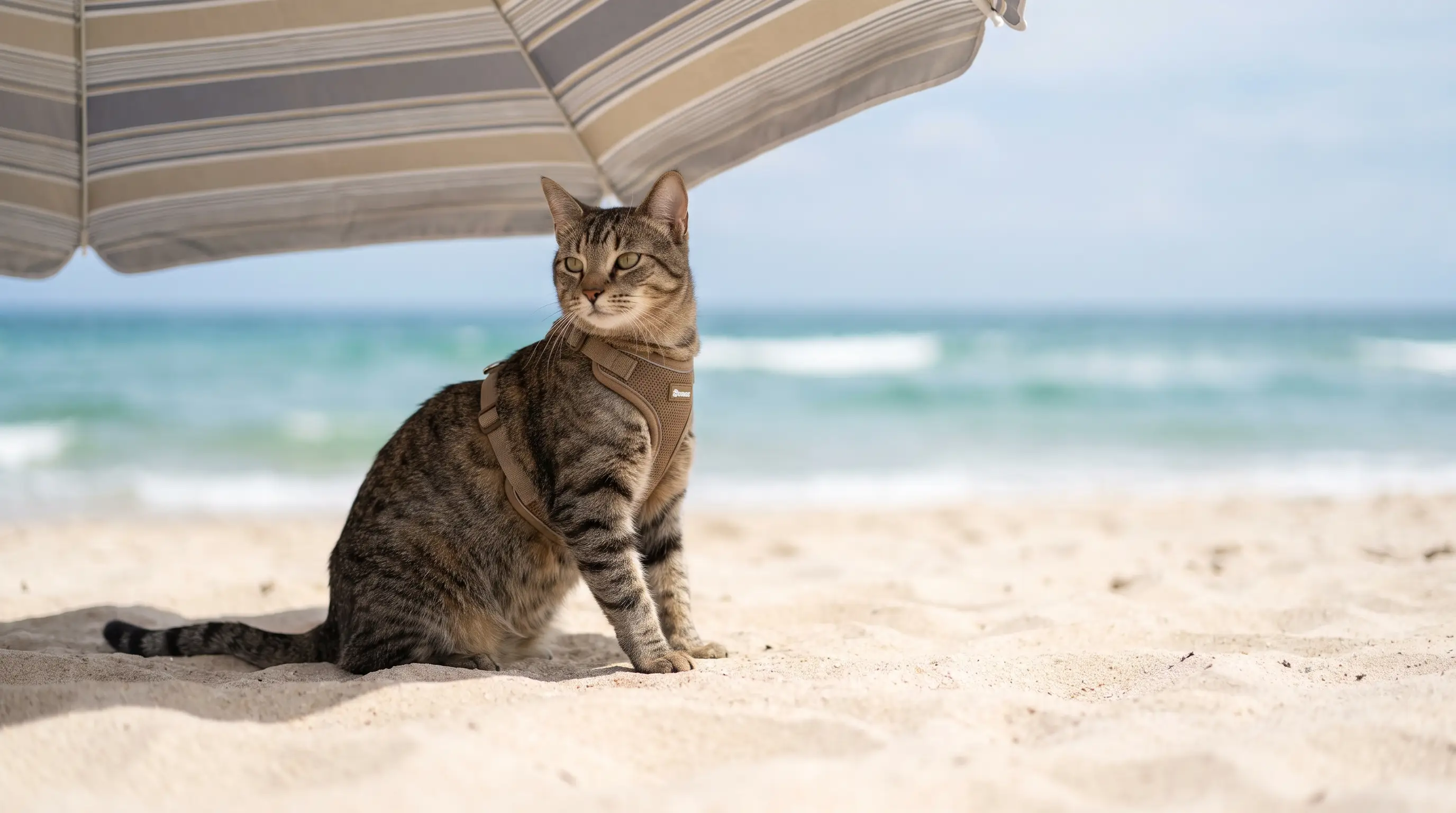
Can you take your cat to the beach? An honest guide
Most cats should skip the beach, and a few can go safely. The honest, vet-checkable guide to heat, sun, saltwater, harnesses and who stays home.

What Catnip Really Does to a Cat
The honest, myth-busting guide to catnip: what nepetalactone does, why 1 in 3 cats ignore it, and what to try instead.
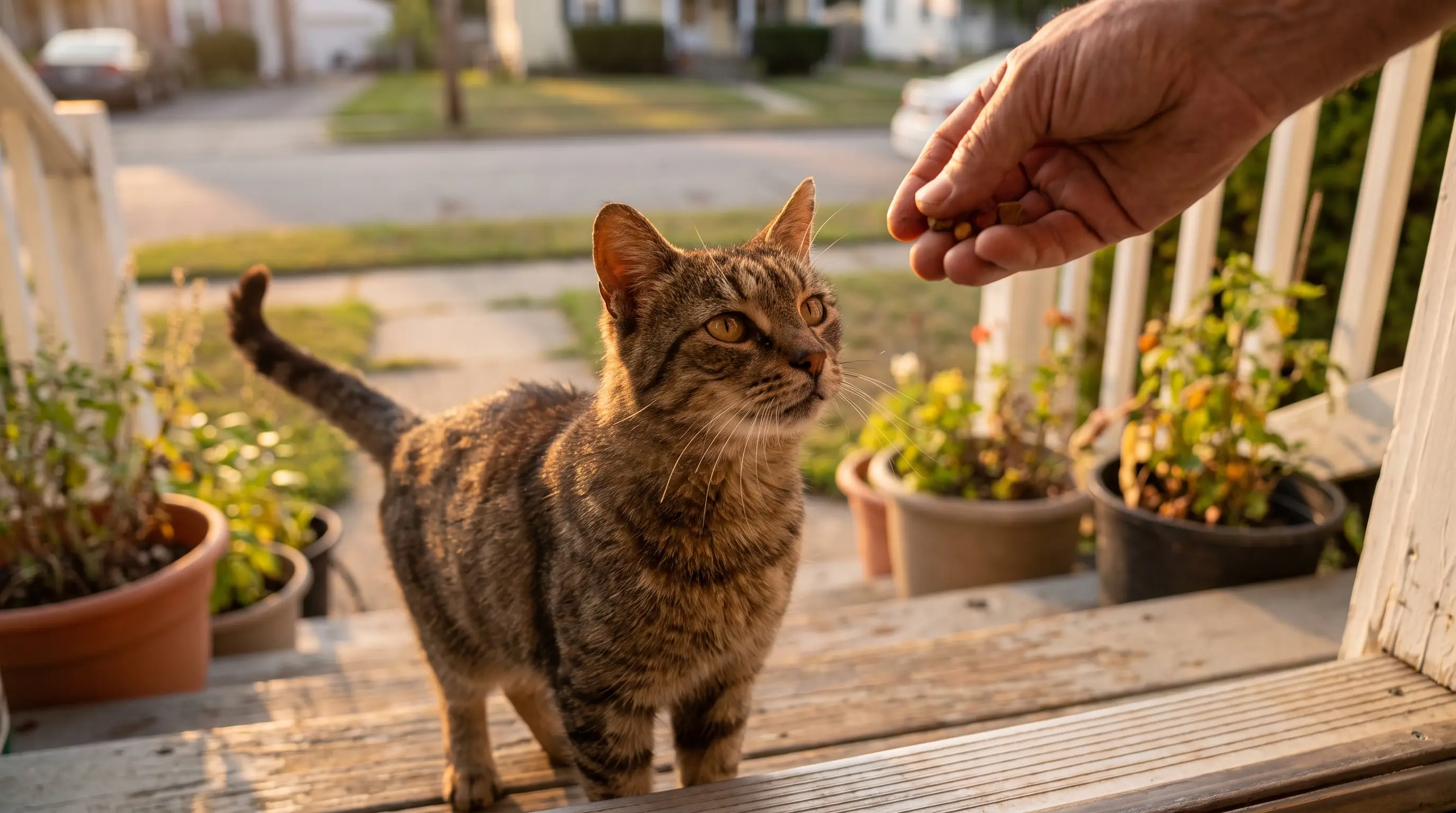
You Found a Stray Cat: What to Actually Do
A friendly cat on your doorstep may already have a home. Here is the honest, welfare-first order of steps before you take it in.