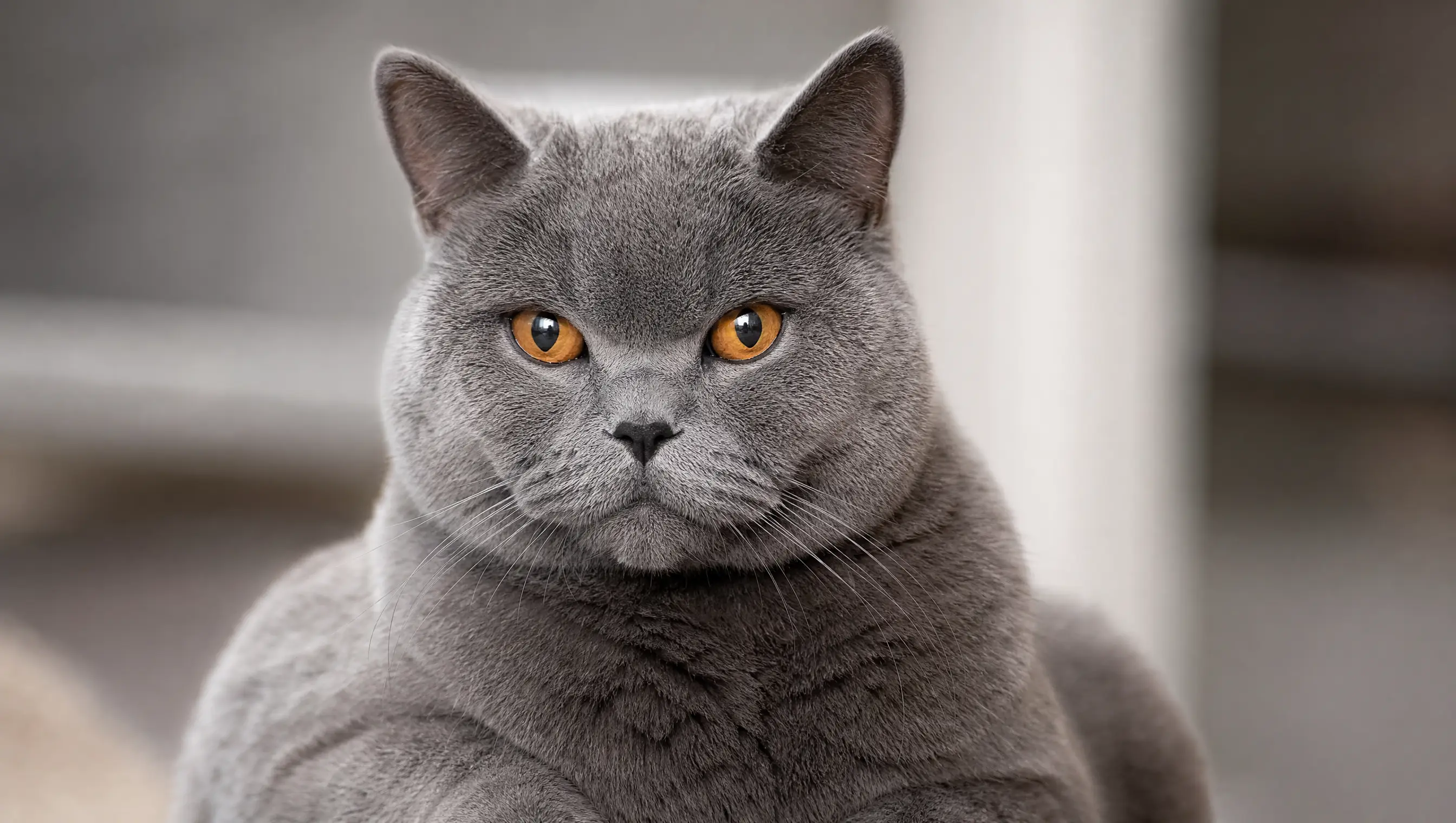
British Shorthair
Round eyes, round cheeks, and a firm four-on-the-floor policy about being picked up.
Vital stats
| Size | Medium to large · stocky, cobby build |
| Weight | 4–8 kg · toms often heavier |
| Life expectancy | 12–17 years |
| Energy | Low — placid and unhurried |
| Shedding | Moderate, heavier in spring and autumn |
| Coat | Short, dense, plush, no undercoat mat |
| Group | Shorthair |
Breed traits
Friendliness
Care
Mind
Temperament
British Shorthairs are easygoing to the point of unflappable — undemanding, quiet, and slow to fluster. They tend to bond closely with the household but show it at a slight distance: near you rather than on you, and many actively dislike being scooped up or carried. Kittens play plenty, but adults settle into a dignified, low-key adulthood and are content to be left alone during the day, which makes them a reasonable fit for working owners. They're patient with sensible children and other pets, and they rarely make much noise. Just know that 'calm and food-motivated' slides easily into overweight if you free-feed.
Habits & quirks
Four on the floor
Most would rather sit beside you than be held; pick one up and you'll often get a polite wriggle to get down.
The teddy-bear coat
The dense, no-undercoat coat stands away from the body and feels like plush — but it packs a heavier seasonal shed than the short length suggests.
Quiet company
They talk little and keep to themselves for hours, then reappear to supervise dinner from a respectful distance.
Food radar
Genuinely food-driven and not very active — the pairing that makes this one of the easier breeds to accidentally overfeed.
Care
| Grooming | A weekly comb is enough most of the year; step it up during the spring and autumn moults, when the thick coat drops in earnest. |
| Health screening | Ask a breeder for HCM (heart) screening and, given the Persian ancestry, a negative PKD1 DNA test for polycystic kidney disease in the parents. |
| Weight | Their placid nature plus a big appetite makes obesity the number-one everyday risk; measure meals, skip the free-feeding, and keep them moving with daily play. |
| Blood type | British Shorthairs have an unusually high rate of blood type B, which matters for breeding queens and any transfusion — worth typing before either. |
Common questions
Are British Shorthairs lap cats?
Usually not. They're affectionate but independent, and many prefer sitting next to you to being held. If you want a cat that curls up on you for hours, this isn't the most reliable pick.
Do they shed a lot for a shorthair?
More than the short coat implies. It's dense and plush, and it blows heavily twice a year in spring and autumn — a weekly comb, and more during those moults, keeps the loose hair down.
Why do British Shorthairs get overweight so easily?
They're calm, sedentary and strongly food-motivated all at once. Portion the food instead of leaving a bowl out, and build in daily play so a naturally lazy cat still gets some exercise.