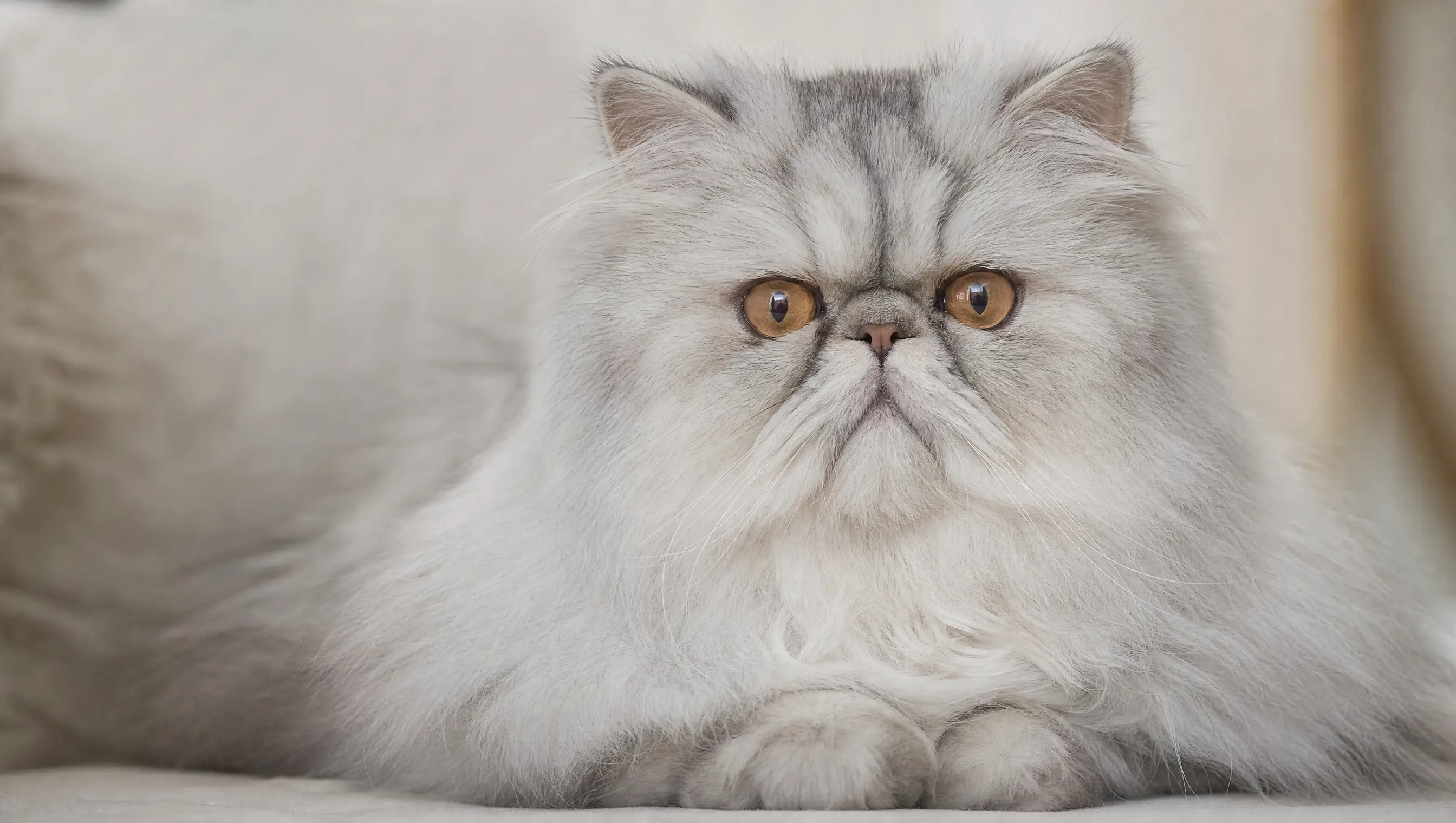
Persian
A furry cushion with opinions — placid, plush, and happiest ruling the sofa.
Vital stats
| Size | Medium · cobby, low-slung build |
| Weight | 3–6 kg |
| Life expectancy | 12–16 years |
| Energy | Low — placid and undemanding |
| Shedding | Heavy, year-round |
| Coat | Long, dense double coat |
| Group | Longhair |
Breed traits
Friendliness
Care
Mind
Temperament
Persians are quiet, gentle homebodies. They'd rather drape themselves on a cushion than climb the curtains, and they greet the day with a soft chirp instead of the demanding yowl of an Oriental breed. They bond closely but calmly — affectionate on their own terms, happy to sit near you for hours without needing to be the centre of a game. Strangers and chaos put them off; a loud, busy household with young children full of surprises is not their scene. Give them routine, gentle handling and a settled home, and you get one of the most restful cats there is. Just know the placid nature is genuine — this is not a cat that will entertain itself with acrobatics.
Habits & quirks
The daily comb
That double coat mats fast — a missed few days can turn into pelts that have to be shaved out under sedation.
Weepy eyes
The flat face crowds the tear ducts, so most Persians need their eyes and face folds wiped clean daily to prevent staining and sores.
Floor cat
Short legs and a heavy coat mean they favour ground level and low perches over high leaps and shelves.
Quiet company
They shadow you softly rather than loudly — content to be in the same room, not underfoot demanding attention.
Care
| Grooming | Non-negotiable daily combing right down to the skin, plus regular baths to keep the coat and the greasy chin clean. Many owners keep a pet in a shorter 'lion clip' to make it manageable. |
| Breathing & heat | The flat (brachycephalic) face can mean narrowed nostrils, noisy breathing and poor heat tolerance. Keep them cool in summer, and choose a breeder favouring a more open muzzle and open nostrils. |
| Kidneys | Polycystic kidney disease (PKD) has been common in the breed. Buy from a breeder who DNA-tests their cats as PKD-negative, and ask to see the results. |
| Eyes & teeth | Excess tearing, entropion and a crowded, misaligned jaw are all linked to the shortened face. Clean the eyes daily and keep up with dental checks. |
Common questions
How much grooming does a Persian really need?
Daily. The coat is a dense double coat that mats within days if you skip it, and neglected mats often end in a vet shave-down. Budget ten to fifteen minutes a day, plus periodic baths.
Are Persians unhealthy because of the flat face?
The very flat 'show' faces can struggle with breathing, tear drainage and heat. It's not universal — 'doll-face' or more traditional Persians with an open muzzle tend to breathe more easily. Also insist on PKD DNA-testing, whichever type you choose.
Are Persians good with children and other pets?
With calm, gentle ones, yes — they're placid and tolerant. But they dislike rough handling and noise, so a household of loud toddlers isn't ideal. They generally coexist peacefully with other quiet cats and easygoing dogs.