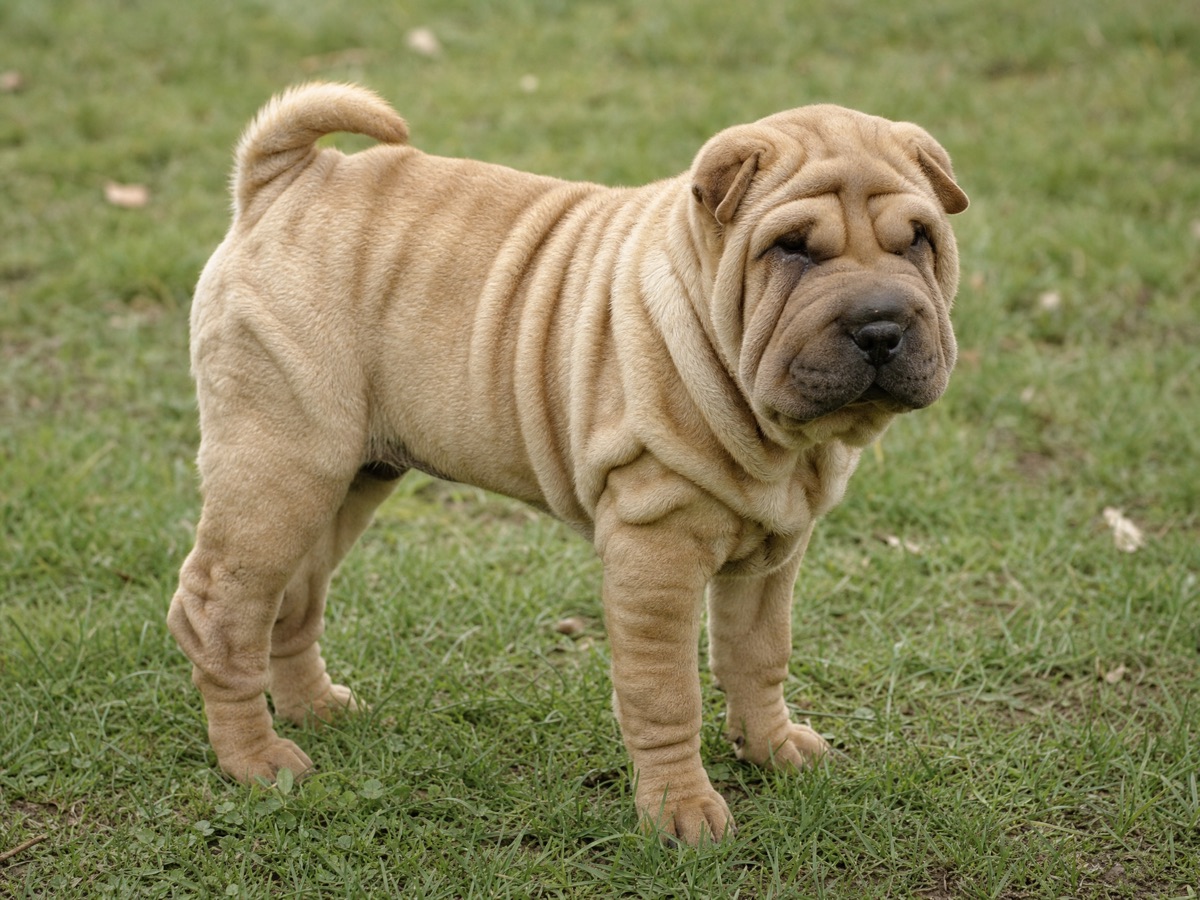
Chinese Shar-Pei
The wrinkled sentinel — loyal, aloof and unmistakably one of a kind.
Vital stats
| Size | Medium · 44–51 cm |
| Weight | 18–29 kg |
| Life expectancy | 8–12 years |
| Energy | Moderate — 30–60 min/day |
| Shedding | Low-moderate |
| Coat | Harsh bristly 'sand-skin' coat · fawn, cream, red, black |
| Group | Non-sporting · FCI №309 / AKC |
Breed traits
Friendliness
Care
Mind
Temperament
Bred as an all-purpose farm dog in southern China — guarding, hunting, minding stock — the Shar-Pei kept a guardian's mind: composed, territorial and deeply loyal to its own. The loose skin and bristly coat once made it hard for opponents to grip; today they wrap a dignified, self-possessed dog that neither needs nor seeks universal approval.
Habits & quirks
Frowning, not sad
The permanent worried expression is upholstery, not mood.
Quiet watch
Rarely barks without a reason — which makes the rare bark worth hearing.
Personal space
Greets guests with a polite inspection, then returns to its post.
Shadow of one
Chooses its person and keeps them within line of sight, unobtrusively.
Care
| Skin | Keep the folds clean and dry to prevent infection, and learn what healthy skin looks like. |
| Health | Ask breeders about Shar-Pei fever and entropion; both are well known in the breed and manageable when caught early. |
| Socialisation | Early, broad, positive exposure is essential to soften the natural wariness of strangers and dogs. |
| Exercise | Moderate daily walks suit it; avoid heat, which the short muzzle handles poorly. |
Common questions
Are Shar-Peis good family dogs?
With their own family, yes — loyal and calm — but they're aloof and protective with strangers and other dogs, so need early socialisation and experienced handling.
Do Shar-Peis need special skin care?
Yes — the deep folds must be kept clean and dry to prevent infections, and the breed is prone to a hereditary fever and eye problems. Regular vet checks help.
What is Shar-Pei fever?
A hereditary inflammatory condition causing recurring episodes of fever and swollen hocks, linked to the same genetics as the wrinkling. It needs veterinary management, so ask any breeder openly about it.