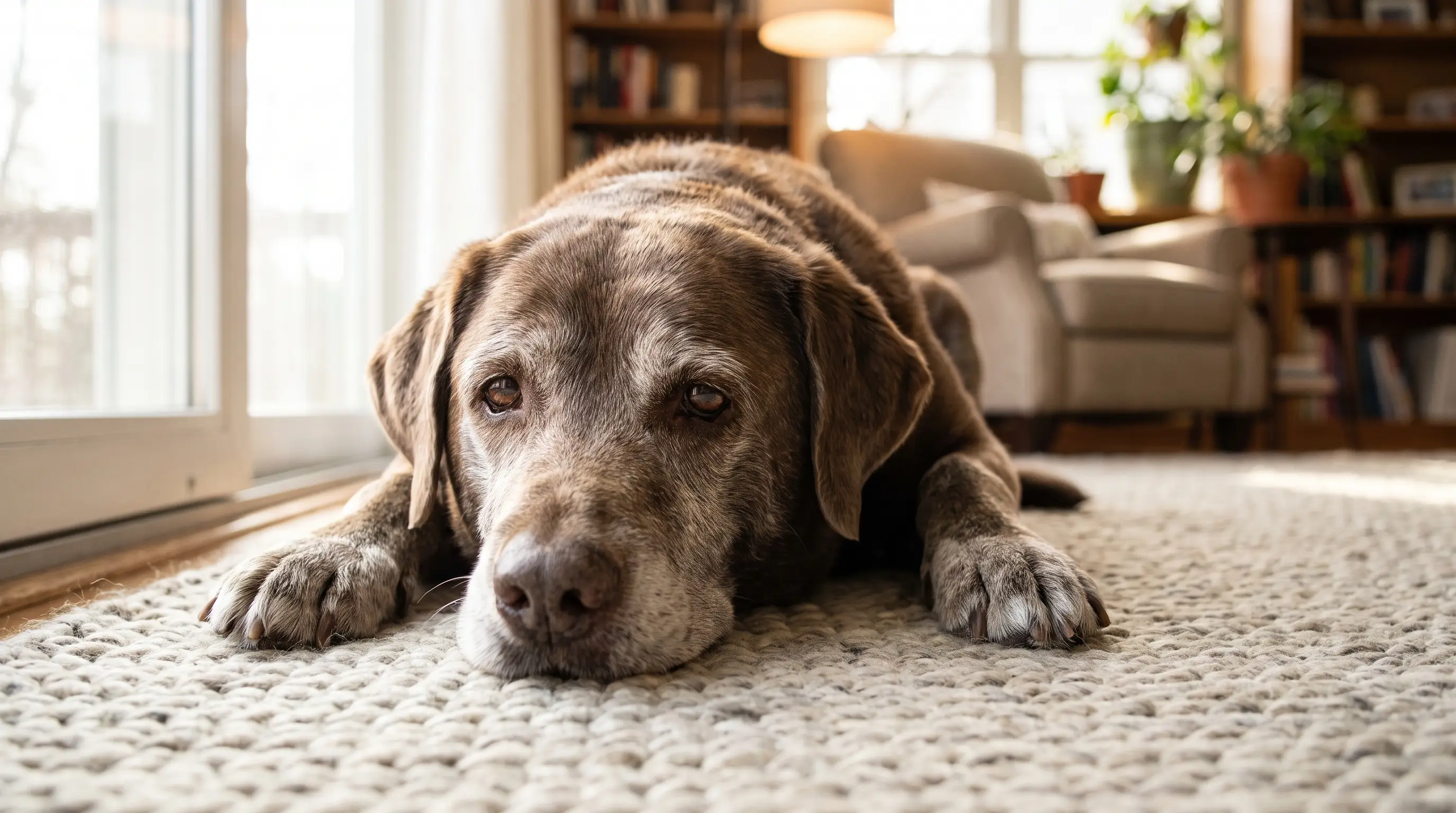
Is my old dog in pain? The signs they hide
If your old dog has slowed down, hesitates at the stairs, or takes a moment to get up in the morning, they may well be in pain. Dogs hide discomfort by instinct, so arthritis and age-related aches rarely announce themselves with a yelp. The signs are quiet and easy to write off as "just getting old" — and that is the mistake, because arthritis is common in senior dogs and very treatable.
Why dogs hide pain
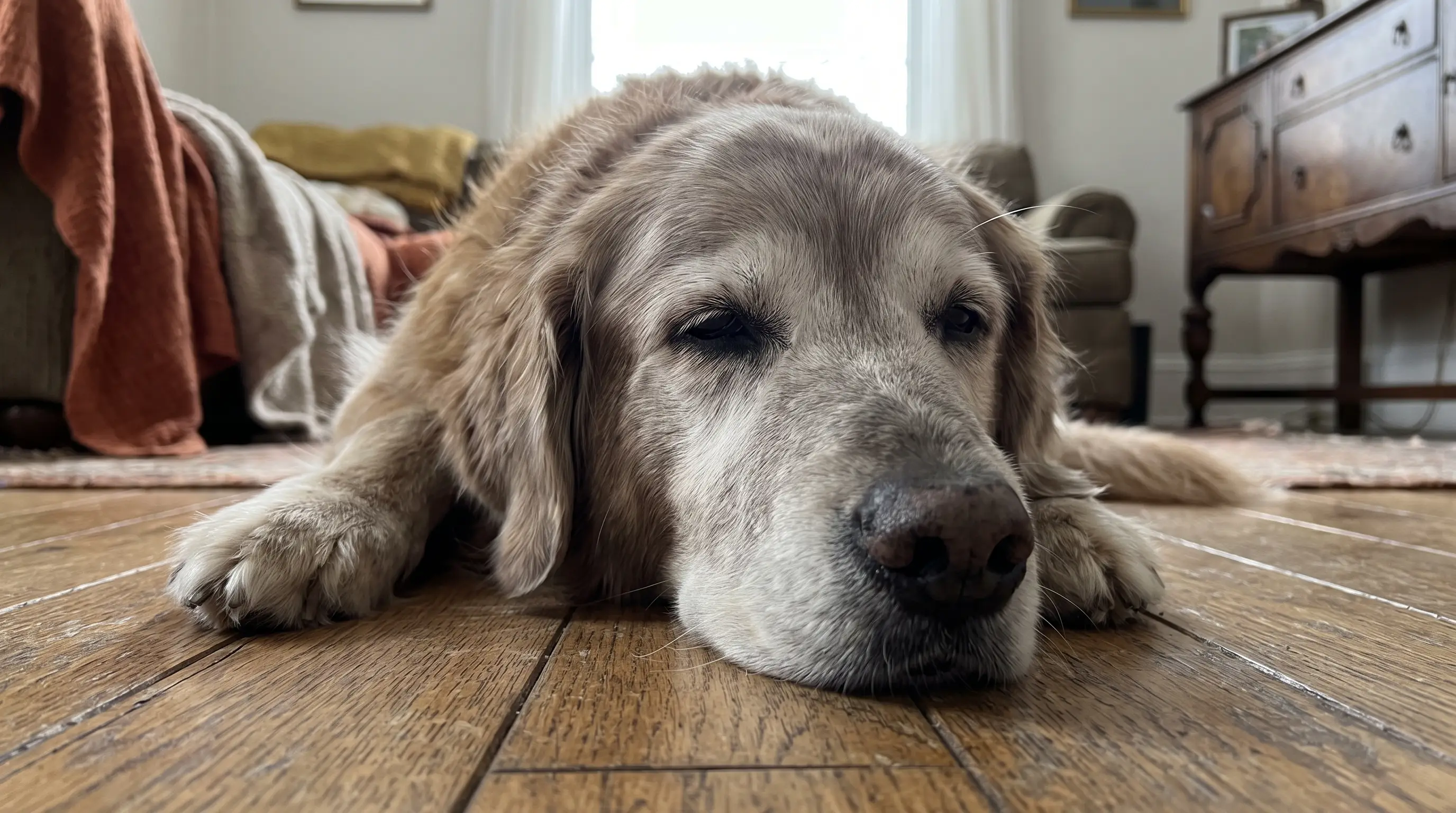
Dogs hide pain because showing weakness once made an animal a target, and that instinct still runs in the grey-muzzled dog on your sofa. A sore dog will still wag, still eat, and still meet you at the door — right up until the pain is severe. By the time a dog limps openly, joint disease is usually well advanced, so the loudest signs are the last to arrive. This is why vets read small shifts in movement and mood far more than they wait for whimpering. It also explains the trap owners fall into: the early signs get filed under normal ageing, and the dog is left to cope. Both parts of that are wrong. Arthritis is not just old age catching up, and it is one of the most treatable problems a senior dog faces. If you want the wider picture on caring for an ageing dog, our senior dog care guide covers the rest.
The quiet signs of pain in an old dog
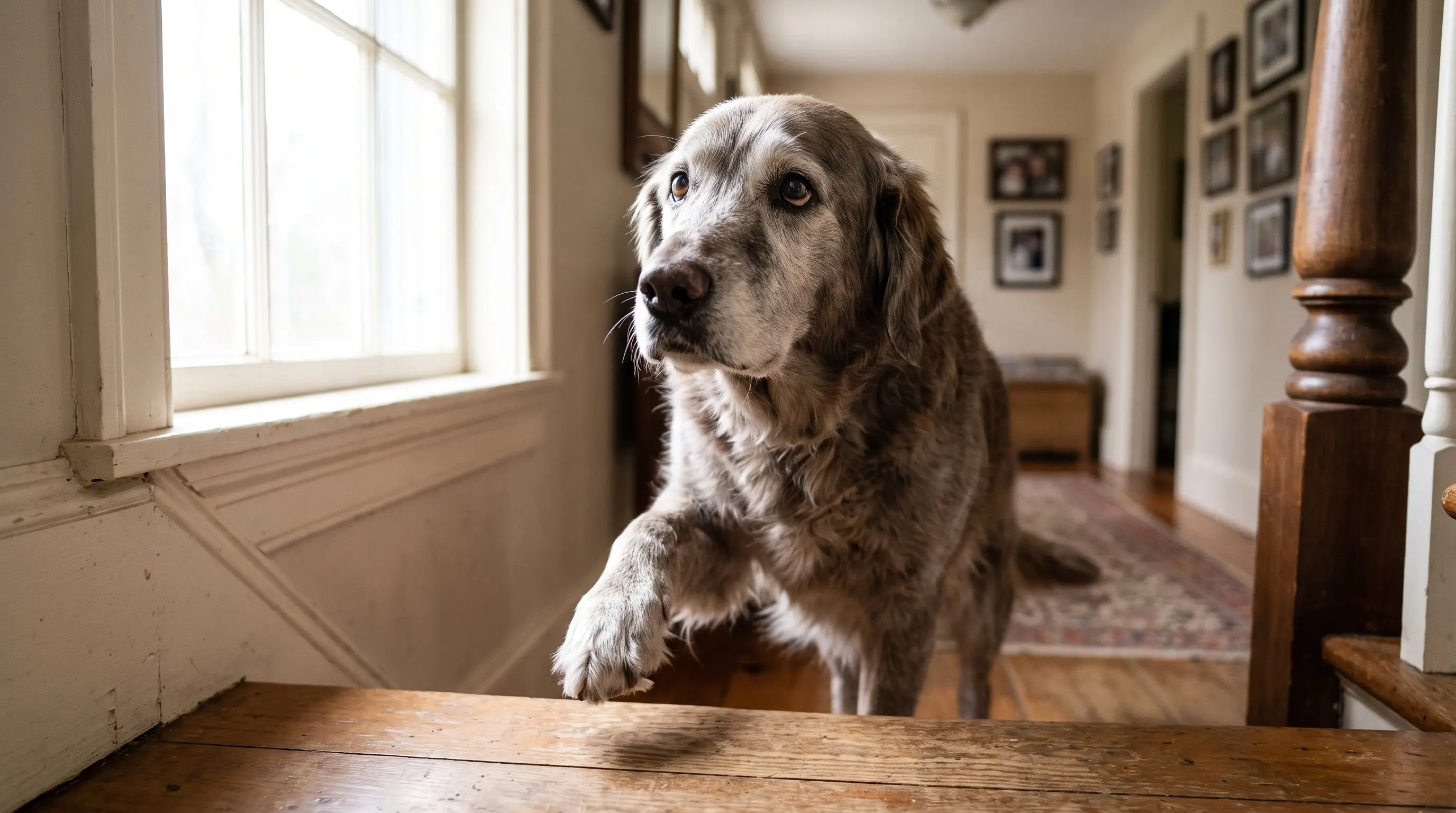
The clearest signs of pain in an old dog are changes in how they move, not cries of distress. Watch for a dog that lags behind on walks or wants to turn back early, and one that hesitates before stairs, before jumping onto the sofa, or into the car. Stiffness that is worse after rest and in cold weather, then eases once they warm up, points strongly at arthritis. So does a slow, effortful struggle to get up from lying down.
Look at posture and body too. A hunched or changed stance, muscle wasting over the hips and back legs, or persistent licking and chewing at one joint are all quiet flags. Behaviour shifts count as much as movement: panting or restlessness while resting, new irritability when touched or handled, withdrawal from play and greetings, and even accidents in the house because it hurts to get into position. Any one of these on its own is easy to dismiss. Two or three together are worth a vet visit.
Never give a dog human painkillers
Never give your dog human painkillers — ibuprofen, aspirin, naproxen and paracetamol (acetaminophen) are toxic to dogs and can kill. Ibuprofen and naproxen damage the kidneys and cause bleeding stomach ulcers, and even a single tablet can seriously harm a large dog. Aspirin causes the same gut damage and, in overdose, salicylate poisoning. Paracetamol destroys liver cells and damages the red blood cells that carry oxygen, and many human formulations also contain xylitol, itself deadly to dogs. There is a veterinary form of paracetamol, but it is prescribed and dosed by a vet — the human product is not a safe substitute. The takeaway is simple: reach for the phone, not the medicine cabinet. Vets have anti-inflammatories and pain relief made specifically for dogs that are far safer and actually work.
How arthritis in older dogs is actually treated
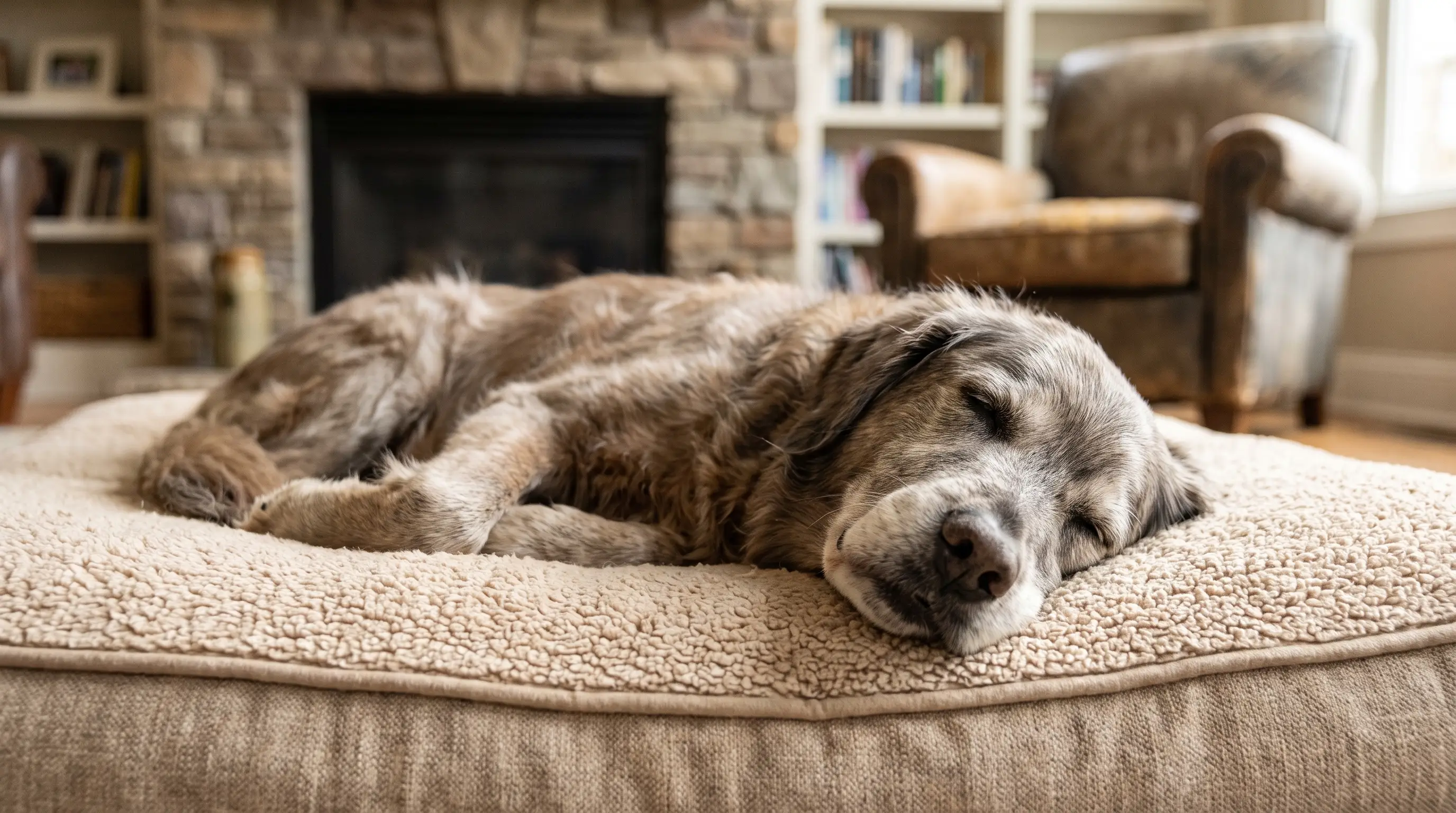
Arthritis in older dogs is treated, not just accepted, and most dogs get meaningfully better. A vet will confirm the diagnosis and can prescribe dog-specific anti-inflammatories or, increasingly, a monthly anti-pain injection developed for canine osteoarthritis. Medication works best alongside a few practical changes. Weight matters most of all: a lean dog carries less load through sore joints and hurts less, so getting portions right is real pain relief — our guide on how much to feed a dog is a good place to start.
Beyond weight, joint supplements such as omega-3 fish oil and glucosamine can help, as can gentle, regular exercise — little and often beats one long weekend hike. Physiotherapy and hydrotherapy rebuild the muscle that supports the joints. At home, an orthopedic bed takes pressure off the hips, ramps spare the jump into the car or onto the sofa, and rugs or runners give traction on slippery floors, where a slipping older dog both hurts and frightens itself.
When to see the vet now
Some signs mean you skip the wait-and-see and go to the vet the same day. Sudden severe pain, a limb that is being dragged or cannot bear weight, or a dog that suddenly stops eating all need urgent attention, because they can point to something beyond arthritis — a spinal problem, an injury, or another illness. Everyday stiffness can be booked as a normal appointment, but a sharp change from your dog's baseline should not wait. When you go, bring a phone video of the movement that worries you; dogs often hide their symptoms in the clinic and show them freely at home. Age is not a diagnosis, and a comfortable old dog can have very good years left — some reach remarkable ages, as our piece on the oldest dog ever recorded shows.
Common questions
How do I know if my old dog is in pain?
Watch for changes in movement and mood rather than crying: trouble getting up, stiffness after rest, lagging on walks, reluctance to use stairs or jump, licking a joint, panting at rest, and new irritability or withdrawal. Dogs hide pain by instinct, so these quiet signs matter more than obvious limping. If you see a few together, book a vet check.
What can I give my old dog for pain?
Only medication prescribed by your vet, such as dog-specific anti-inflammatories or a canine arthritis injection. Never give human painkillers like ibuprofen, aspirin, naproxen or paracetamol, which are toxic to dogs and can be fatal. Weight control, joint supplements and an orthopedic bed also reduce day-to-day pain.
Can I give my dog human painkillers?
No. Ibuprofen, aspirin, naproxen and paracetamol (acetaminophen) are all toxic to dogs and can cause kidney failure, stomach ulcers, liver damage or death, sometimes from a single tablet. Always call your vet, who can prescribe pain relief made specifically and safely for dogs.
Do dogs hide their pain?
Yes, dogs hide pain by instinct because in the wild showing weakness made an animal a target. This is why a sore dog often keeps eating, wagging and greeting you until the pain is advanced, and why owners miss early arthritis. Small changes in how a dog moves and behaves are the most reliable early clues.
What are the signs of arthritis in older dogs?
Common signs include stiffness that is worse after rest and in cold weather, difficulty rising, slowing down on walks, reluctance to climb stairs or jump, a hunched posture, muscle loss over the hips, and licking at a joint. Arthritis is very common in senior dogs and, importantly, treatable rather than something to just accept.
How can I ease my senior dog's arthritis pain?
Start with a vet, who can prescribe safe canine pain relief, then keep your dog lean, since a lighter dog puts less strain on sore joints. Gentle regular exercise, joint supplements, hydrotherapy or physiotherapy, an orthopedic bed, ramps and non-slip rugs all help. Avoid all human painkillers.
More in Dogs

8 rare dog breeds most people never meet
Eight of the world's rarest dog breeds — where they come from, what makes them unusual, and why you almost never see one.

Foxtails: The Summer Grass Seed That Burrows Into Pets
Foxtail grass seeds catch in fur and travel one way—inward. Here's how to spot them on a cat or dog, and stop them.
The oldest dog ever and how long dogs really live
Bluey reached 29 years. Bobi's 31-year claim fell apart. Here's the real math on dog lifespan, and how to buy your dog more time.