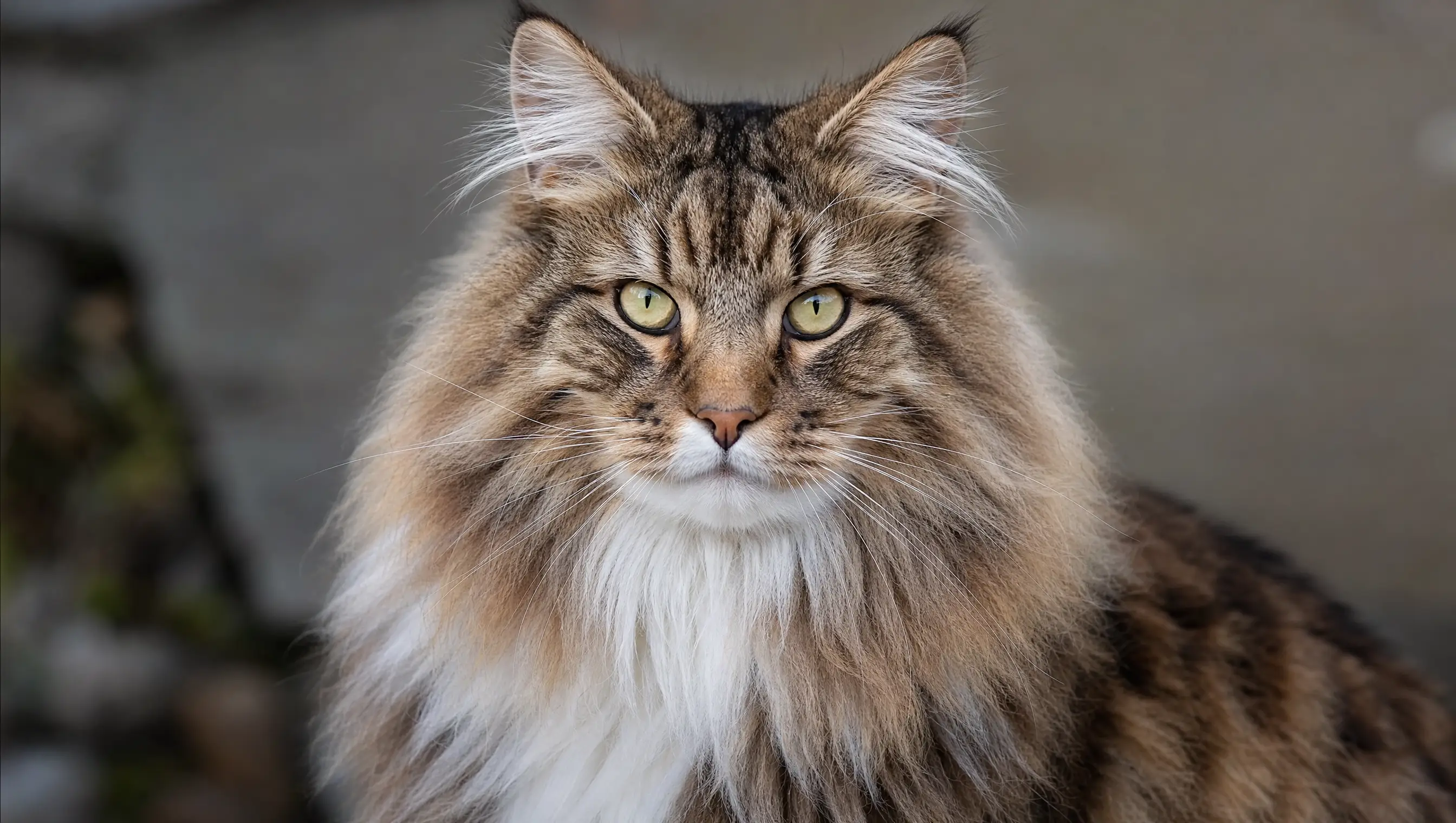
Norwegian Forest Cat
Norway's forest cat — a climber built for snow, calm in the house and happiest up high.
Vital stats
| Size | Large · long-bodied, muscular build |
| Weight | 4–9 kg · toms markedly heavier |
| Life expectancy | 14–16 years |
| Energy | Moderate — active climber, settles indoors |
| Shedding | Heavy, strongly seasonal |
| Coat | Long double coat, water-resistant |
| Group | Longhair |
Breed traits
Friendliness
Care
Mind
Temperament
The Norwegian Forest Cat is friendly on its own terms. It bonds hard with its household and likes company, but it won't drape itself over strangers or demand attention every waking minute — count on it choosing the top of the bookcase over your lap more often than not. Quiet, too: a soft chirp or trill rather than a running commentary. It stays playful and physically busy well into adulthood, and those long hind legs make it a serious climber that treats tall furniture as a starting point. Slow to mature, taking up to five years to fill out, and slow to fluster once it does. Patient with children and other pets when introduced properly, it makes a steady, low-drama housemate that keeps a bit of its wildcat self-possession.
Habits & quirks
Climber, not a lap cat
Long back legs make it a natural climber that heads for the highest shelf; it can descend a tree head-first, which most cats can't.
Two-part shed
The coat blows out heavily in spring as the woolly undercoat drops, then thickens again for winter — grooming load swings with the seasons.
Quietly affectionate
It follows you between rooms and wants to be near, but stays independent and rarely vocal about it — a soft trill is usually all you'll get.
Slow to grow up
Won't reach full size and coat until four or five, so expect a long, leggy adolescent stage before it fills out.
Care
| Grooming | Comb once or twice a week most of the year, then daily during the spring moult when the undercoat sheds; focus on the ruff, armpits and britches where mats form. |
| Health | The breed carries risk of HCM (a heart condition) and hip dysplasia; it also has a specific inherited disorder, glycogen storage disease type IV (GSD IV), for which a reliable DNA test exists — buy only from a breeder who screens the parents. |
| Space to climb | This is a cat that needs vertical room. A tall, sturdy tree or well-placed shelves keep it exercised and content; without height it gets bored and heavy. |
| Feeding | A big, slow-maturing frame does best on steady measured meals; once it stops growing, watch portions, because the heavy coat can hide weight gain until it's a problem. |
Common questions
What's the difference between a Norwegian Forest Cat and a Maine Coon?
They look similar but aren't related. The Wegie has a triangular head with a straight profile and long, level back legs built for climbing; the Maine Coon has a squarer muzzle, tends to be even larger, and is generally more openly attention-seeking. The Norwegian is a touch more reserved with strangers.
Are Norwegian Forest Cats high-maintenance to groom?
Less than the coat suggests for most of the year — the outer coat resists tangling, so a weekly comb usually does it. The exception is the spring shed, when the undercoat comes out in earnest and you'll want to groom daily for a few weeks.
Do they make good indoor pets?
Yes, provided you give them height. They're calm and quiet enough for a flat, but they're strong climbers by nature, so a tall cat tree or shelving matters more than floor space. Bored and grounded, they put on weight.