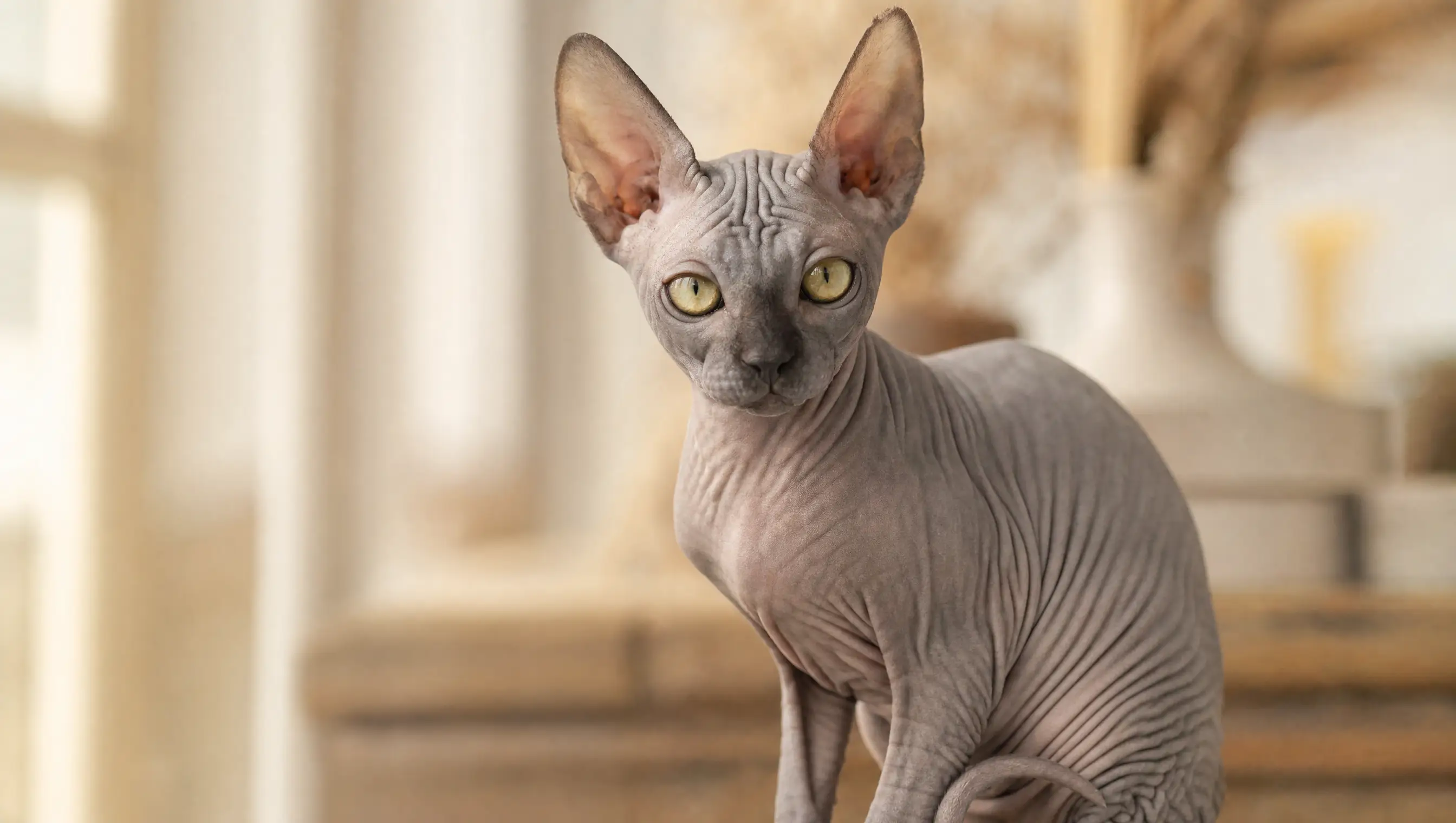
Sphynx
A hot-water bottle with a personality — hairless, needy, and always in your business.
Vital stats
| Size | Small to medium · lean, barrel-chested |
| Weight | 3–5 kg · males heavier |
| Life expectancy | 8–14 years |
| Energy | High — busy, acrobatic, attention-seeking |
| Shedding | Effectively none — but not hypoallergenic |
| Coat | Hairless; fine peach-fuzz, warm bare skin |
| Group | Hairless |
Breed traits
Friendliness
Care
Mind
Temperament
Sphynx are relentlessly social and physical about it — they climb you, sleep under the covers, and greet strangers at the door instead of hiding. Clever, mischievous and food-motivated, they get into cupboards, counters and trouble when bored, so they do far better with company, a second pet or a busy household than left alone all day. Expect a cat that wants to be touching you most of the time and will complain if it can't. The upside is a genuinely doglike bond; the downside is a cat that does not do 'independent'. They stay kitten-like and playful well into adulthood.
Habits & quirks
Heat-seeking
With no coat they lose warmth fast, so they burrow under blankets, pile onto radiators and drape over you like a living compress.
Counter surfer
Curious, dexterous and always hungry — they open drawers, raid food and reach places a normal cat wouldn't bother with.
Greeter, not hider
Where most cats vanish when the doorbell rings, a Sphynx trots over to inspect the guest.
The grubby feel
Skin oils build up without a coat to wick them away, leaving a faint waxy film — hence the regular baths.
Care
| Skin & bathing | Bathe roughly weekly with a gentle cat shampoo and wipe the wrinkles, nail beds and ear canals, which collect a reddish-brown waxy grime. Overdo it and you strip the skin; skip it and it gets sticky. |
| Warmth & sun | No coat means they chill easily and sunburn on bare skin — keep the house warm, offer sweaters or heated beds in winter, and keep them out of strong direct sun and outdoors entirely. |
| Heart screening | Hypertrophic cardiomyopathy (HCM) is common in the breed; buy from a breeder who does annual cardiac ultrasound on their cats, and have yours checked. HCM affects many Sphynx lines. |
| Diet & warmth budget | A fast metabolism and heat loss mean they eat more than their size suggests and can be prone to digestion issues — feed good-quality food on a routine and don't let the belly fool you into overfeeding. |
Common questions
Are Sphynx cats hypoallergenic?
No. Cat allergies are usually to the Fel d 1 protein in saliva and skin oils, not the hair itself — and Sphynx still produce it. Some allergy sufferers do better with one, but there's no guarantee; spend time with an adult before committing.
Do Sphynx cats really need baths?
Yes, most do — usually about weekly. Without a coat to absorb them, skin oils build into a waxy film on the skin and inside the wrinkles, ears and nail folds, so a wipe-down or bath is part of routine care rather than optional.
What health problems are Sphynx prone to?
The big one is HCM, an inherited heart-muscle disease, so cardiac screening matters. They're also prone to skin conditions, ear-wax buildup, and being sensitive to cold. Expect a bit more vet attention than an average moggy.