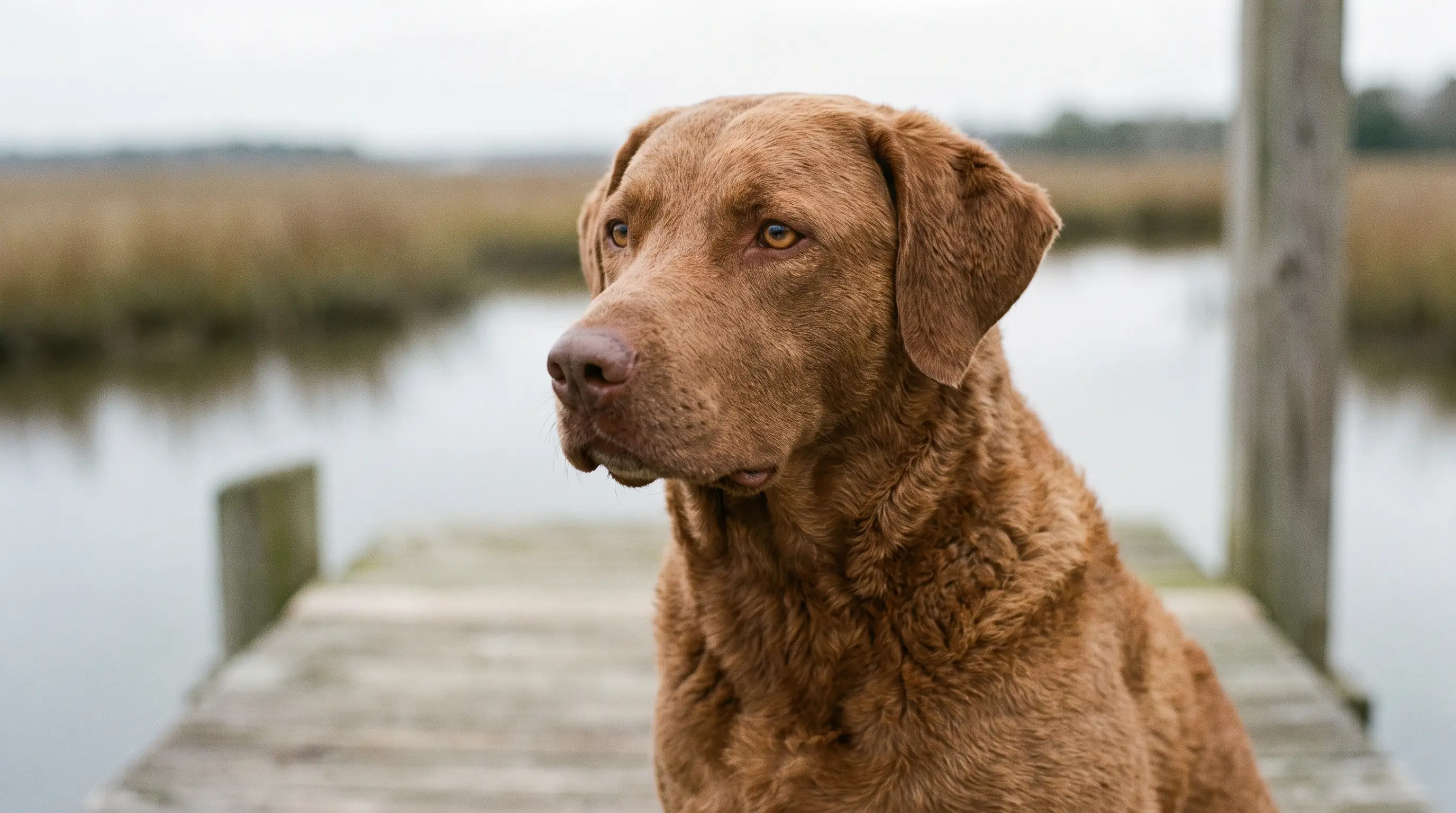
Chesapeake Bay Retriever
The duck dog that breaks ice for a living.
Vital stats
| Size | Large · 53–66 cm |
| Weight | 25–36 kg |
| Life expectancy | 10–13 years |
| Energy | High — 60–90 min/day |
| Shedding | Moderate, seasonal |
| Coat | Wavy, oily double coat · brown, sedge, deadgrass |
| Group | Sporting · FCI №263 / AKC |
Breed traits
Friendliness
Care
Mind
Temperament
Bred by market hunters to retrieve hundreds of ducks a day from near-freezing water, the Chessie is tireless, tough-minded and more independent than its Labrador cousins. At home that reads as calm devotion to its family, polite reserve with everyone else, and a working brain that respects fair, consistent leadership.
Habits & quirks
Ice-breaker
Cold water that sends other dogs to the fireside is exactly where a Chessie wants to be.
One-family heart
Warm and silly with its own people, politely unimpressed by everyone else.
The Chessie smile
Many bare their front teeth in a toothy grin when happy — it looks alarming and means the opposite.
Self-appointed watchman
It keeps quiet tabs on the garden, the boat and the children without being asked.
Care
| Exercise | An hour or more daily, with swimming whenever possible — a bored Chessie invents projects you won't like. |
| Grooming | Weekly brushing only; never over-bathe, or you strip the protective oils that make the coat waterproof. |
| Training | Firm, fair and early — this breed tests soft handlers and remembers unfairness. |
| Health | Watch hips and elbows; keep it lean, as heavy retrievers pay for extra kilos in joint wear. |
Common questions
Are Chesapeake Bay Retrievers good family dogs?
Yes, for active families — they're devoted and patient with their own children. They are more protective and aloof with strangers than Labs or Goldens, so socialisation matters.
Why does my Chessie's coat feel oily?
That oil is the point — it sheds icy water and insulates the skin. Bathe rarely and brush weekly; a slightly musky smell is normal for the breed.
Is a Chesapeake harder to train than a Labrador?
Generally yes — it's just as clever but less eager to please, with an independent streak. Consistent, reward-based training from puppyhood works; nagging and harshness backfire.