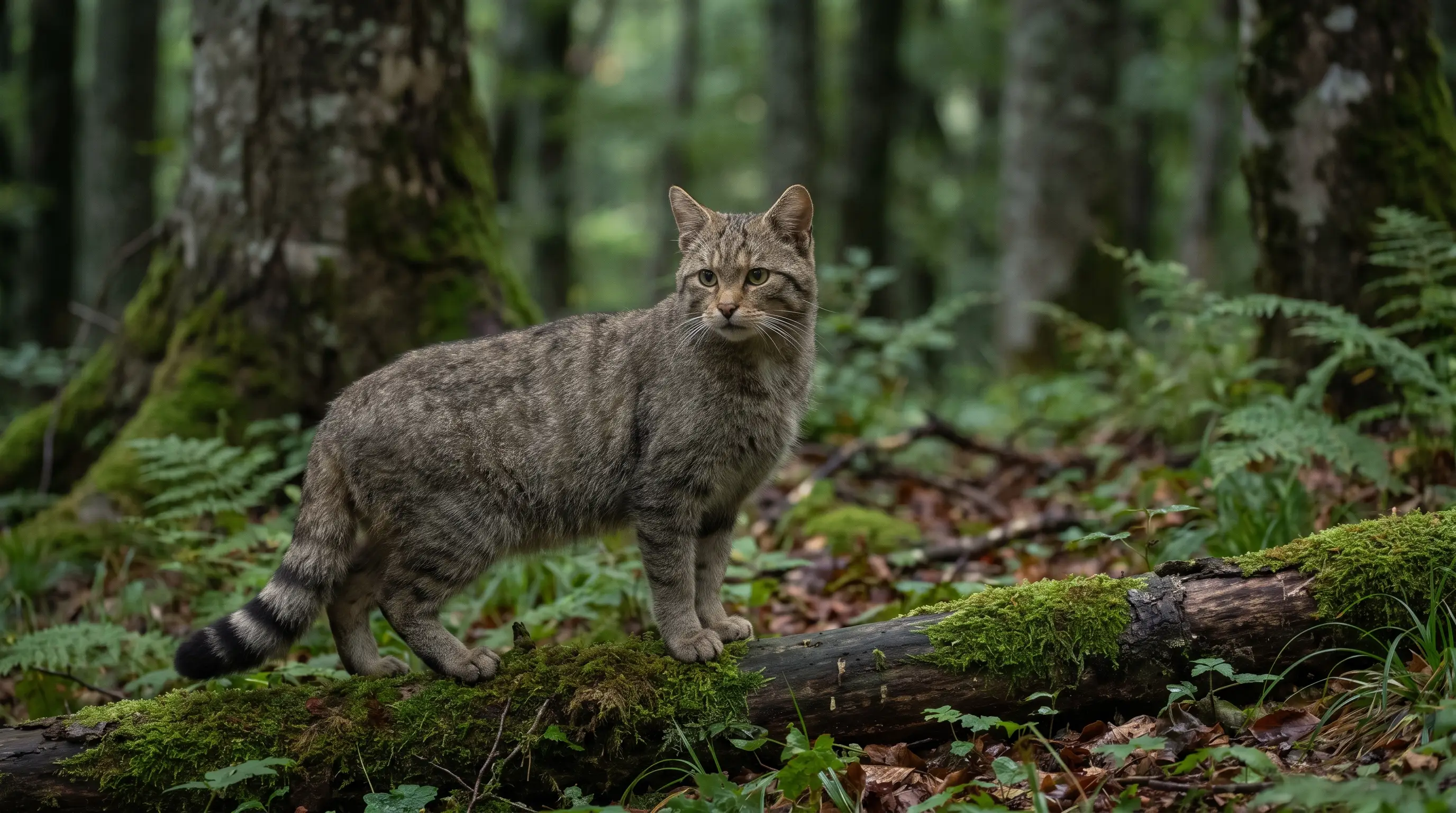
Italian wildcat: spotting a true Felis silvestris
Italy still has a real wild cat living in its woods, and it is not a stray that went feral. The European wildcat, Felis silvestris silvestris, is a native species that has hunted the Apennine forests for far longer than anyone has kept a cat indoors. It is elusive, nocturnal and solitary, and it is protected by law. Most people who think they have seen one have actually seen a large tabby.
The European wildcat
The European wildcat is a genuine native species of Italy, not a house cat that took to the woods. Felis silvestris silvestris has lived in the peninsula since long before domestic cats arrived, and most of the Italian population sits along the central and southern Apennines, through Abruzzo, Molise, Campania, Basilicata and Calabria, with scattered records in the northeast. It keeps to mixed woodland, riverside forest and Mediterranean scrub, and steers clear of high mountains, farmland and towns.
It is a small predator by our standards but a solid one: body length 55 to 75 cm, tail another 25 to 40 cm, weight 2 to 7 kg, with males heavier than females. It hunts mostly at night, lives alone, and hears or smells people long before they see it, which is why photographs almost always come from camera traps rather than hikers.
Wildcat or a big feral tabby
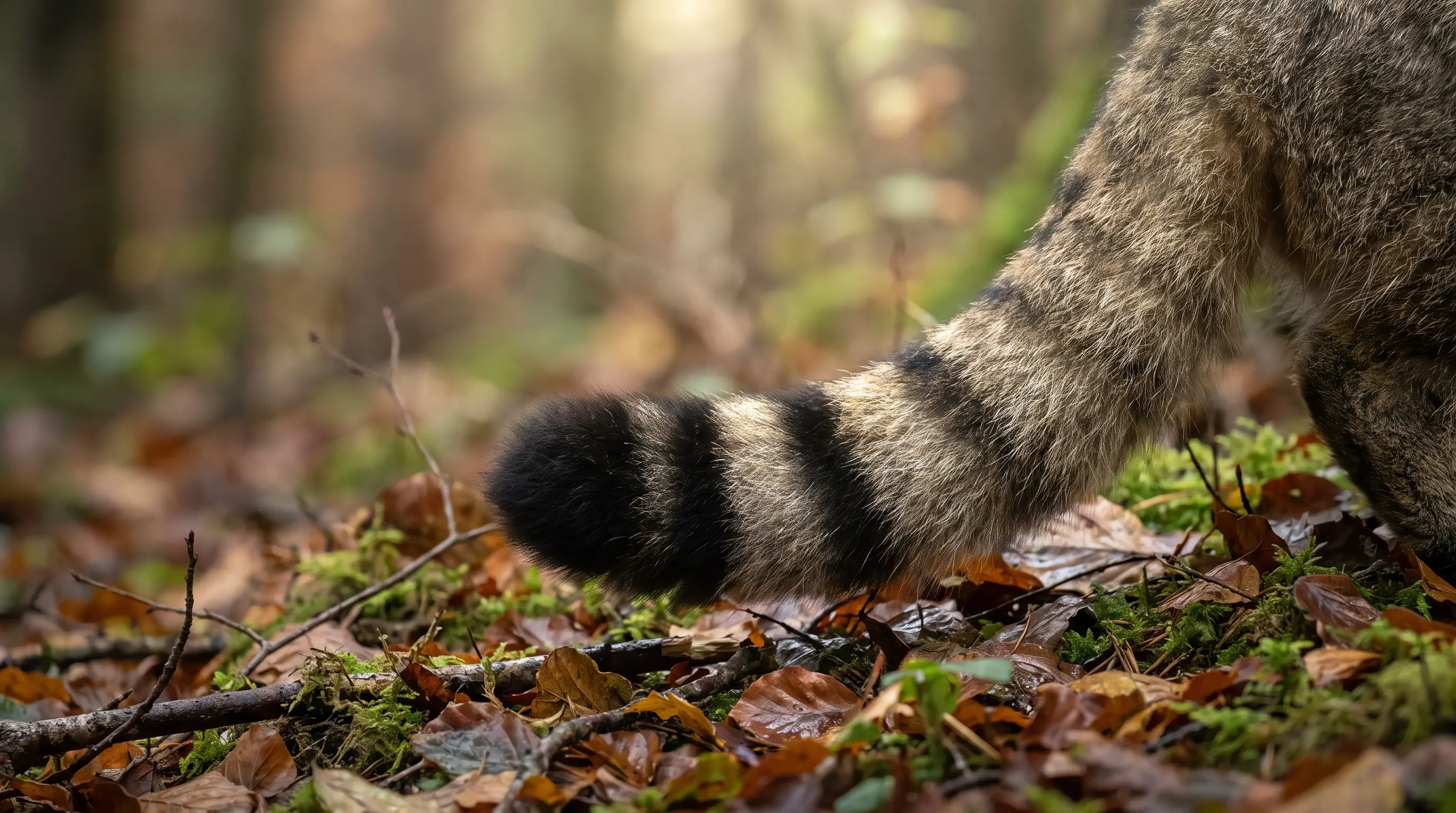
Check the tail before anything else. A true wildcat carries a thick, blunt, bushy tail ringed with two or three clean black bands and ending in a rounded black tip, while a domestic tabby's tail tapers to a point. Then look along the spine: the wildcat has a single dark dorsal stripe that stops cleanly at the base of the tail instead of continuing down it.
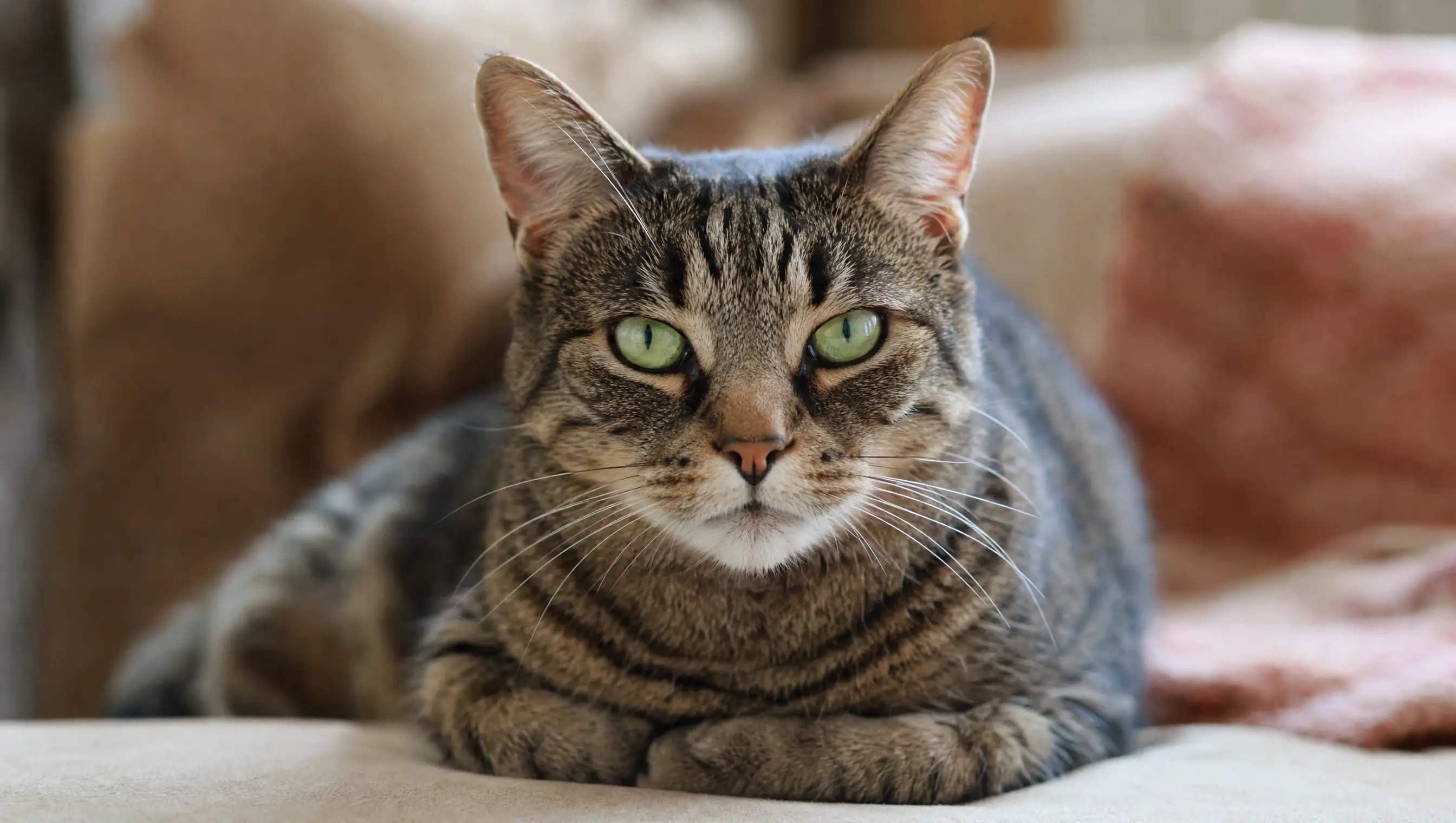
The rest of the picture is muted. The coat is grey-brown with soft, broken tabby markings, the build is sturdy, the head broad, and there are no white patches anywhere. A white bib, white toes, bold sharp stripes or a slim tapering tail all point to domestic blood. A large farmyard domestic shorthair can look convincing in a blurry photo, which is exactly why researchers rely on skull measurements and DNA rather than a glance to confirm a wildcat.
The Sardinian wildcat
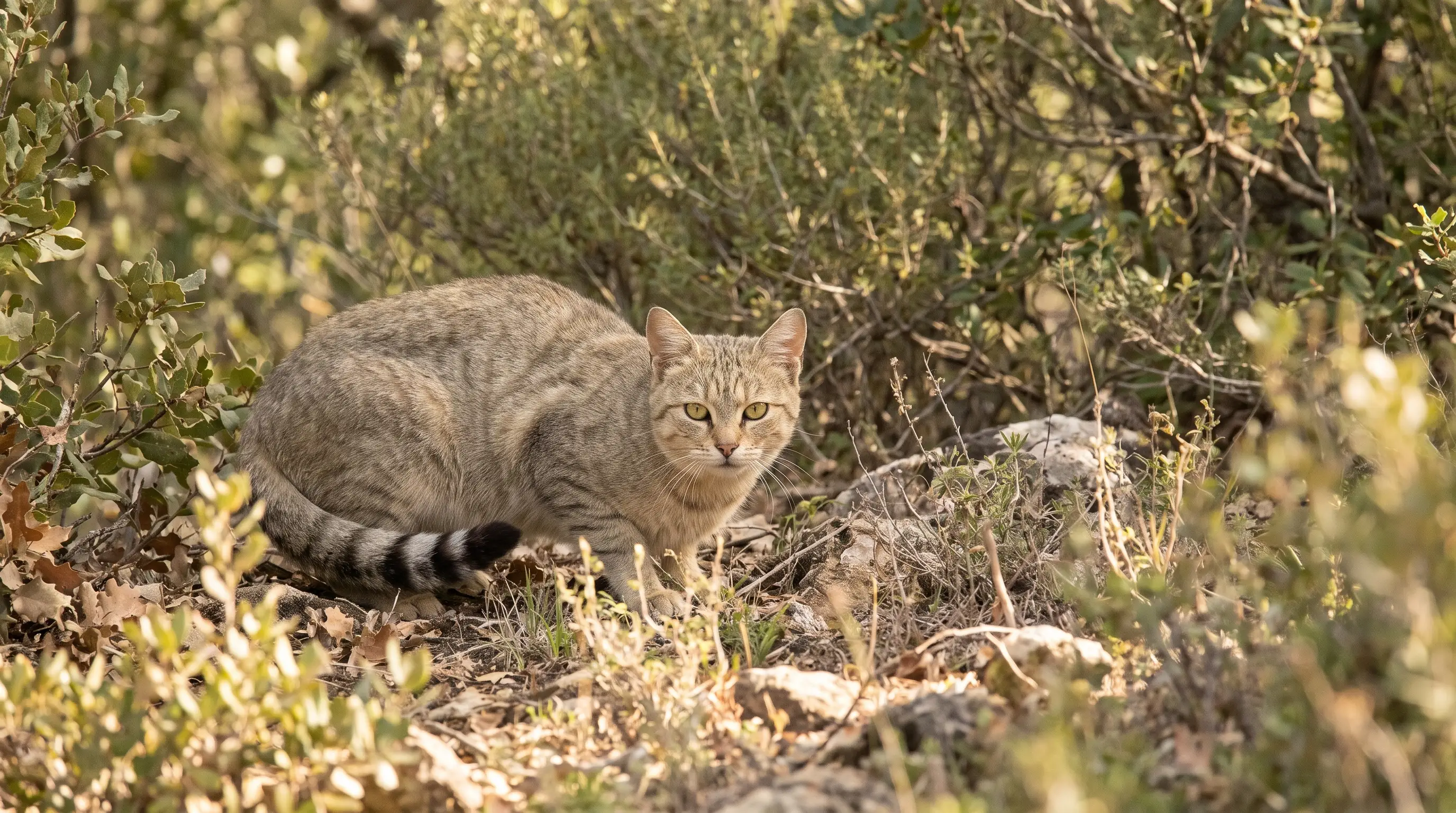
Sardinia has its own wild cat, and it comes from a different family line. The island's animals are usually classed as Felis lybica sarda, descended from the African wildcat rather than the European one, most likely a population carried to Sardinia and Corsica in antiquity that then went wild and stayed. Taxonomists still argue over the exact name, but the genetics place it with the North African group, not with the mainland Apennine cats.
At a distance it looks much the same, ringed tail and muted coat, and it fills the same role as a small nocturnal hunter of rodents, birds and reptiles. The Mediterranean island populations, in Sardinia, Corsica and Crete, are among the most threatened wildcat stocks anywhere in Europe.
Not the ancestor of your house cat
Your cat is not descended from the European wildcat. The domestic cat, Felis catus, traces back to the African wildcat, Felis lybica, tamed in the Near East roughly 10,000 years ago around early grain stores that drew mice. Felis silvestris is a cousin of that lineage, sharing a distant ancestor but never itself domesticated.
The distinction matters because the two are close enough to interbreed and produce fertile kittens, unlike more distant members of the wider small-cat family. That single fact is where the wildcat's biggest problem begins.
Hybridization, the real threat
The main danger to the Italian wildcat today is hybridization with domestic and feral cats, not hunting or traps. When a wildcat breeds with a free-roaming domestic cat the kittens are fertile, and over generations the wild genome gets diluted until pure wildcats become hard to find. Scotland shows where this ends: its wildcat population collapsed into a so-called hybrid swarm, was classed as critically endangered in 2022, and is now regarded as functionally extinct in the wild as a pure animal.
Italy's wildcat is in better condition, helped by large forested areas with few people, and it is protected under the Bern Convention, the EU Habitats Directive (Annex IV) and CITES. The most useful thing an ordinary cat owner near wildcat country can do is neuter their animals and keep them from roaming free through the forest at night.
Common questions
How can you tell if a cat is a wildcat?
Check the tail and the coat. A true European wildcat has a thick, blunt, bushy tail with two or three clean black rings and a rounded black tip, a single dark stripe along the back that stops at the tail base, a muted grey-brown broken tabby pattern, and no white patches. Sharp stripes, white toes or a tapering tail mean it is a domestic or hybrid cat, and only DNA or skull measurements confirm a pure wildcat.
How big is a European wildcat?
A European wildcat is bigger and more solidly built than a house cat, but not dramatically so. Body length runs from about 55 to 75 cm with a tail of 25 to 40 cm, and weight sits between 2 and 7 kg, with males heavier than females.
What does a wildcat eat?
The wildcat lives mainly on small rodents such as voles and mice. Depending on where it lives it also takes birds, hares, insects and reptiles, hunting alone and mostly at night.
Where do wildcats live in Italy?
In Italy the European wildcat lives mainly along the central and southern Apennines, through regions such as Abruzzo, Molise, Campania, Basilicata and Calabria, with scattered records in the northeast. It favours mixed woodland, riverside forest and Mediterranean scrub and avoids high mountains, farmland and towns. Sardinia has a separate population, Felis lybica sarda, of African-wildcat descent.
What is the difference between a wildcat and a domestic cat?
The European wildcat is a native wild species that has never been domesticated, while the domestic cat descends from the African wildcat and lives alongside humans. The wildcat is sturdier, keeps to forest, hunts at night and cannot be tamed, and it is a protected animal, whereas a stray or feral cat is simply a domestic cat living outdoors.
Are wildcats dangerous to humans?
No, the European wildcat is not a danger to people. It is shy and elusive, senses humans early and slips away, so encounters on foot are very rare; it will defend itself fiercely if cornered but never seeks out contact with people.
More in Wild
8 small wild cats you've never heard of
Eight small wild cats — from the deadliest hunter on Earth to the ancestor of your housecat — and where each one still lives.

The Alpha Wolf Myth: How a Pack Really Works
The alpha wolf was invented in a captive enclosure. In the wild a pack is a family led by parents, and your dog isn't fighting you for rank.

How the wolf became the dog
The tamest wolves fed themselves at our campfires and bred a new animal into existence. The full, honestly bounded story.