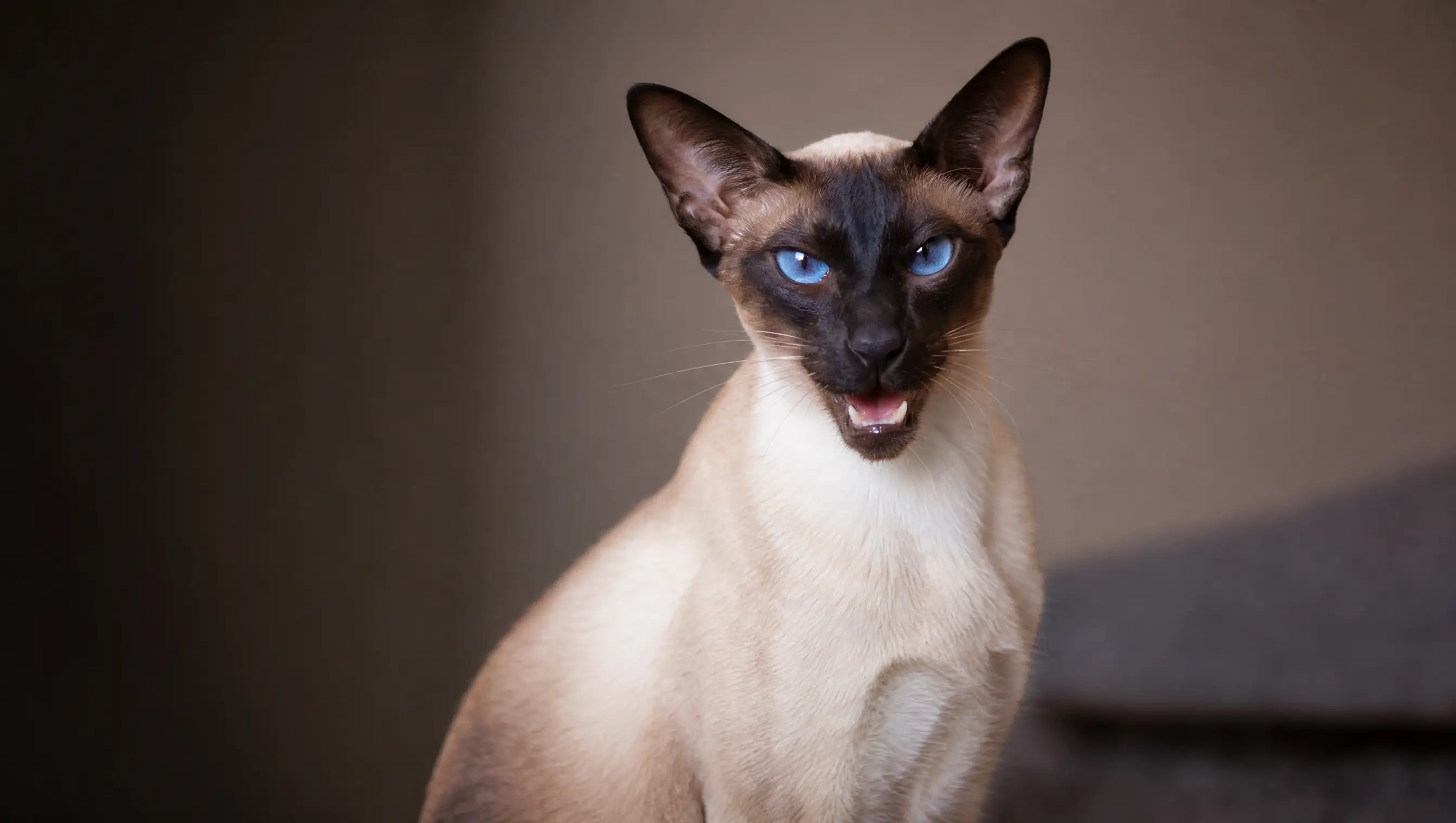
Siamese
The cat that has an opinion about everything and will tell you all of it, loudly.
Vital stats
| Size | Small to medium · long and lean |
| Weight | 3–5 kg · males at the top end |
| Life expectancy | 12–20 years |
| Energy | High — busy and demanding |
| Shedding | Low · short single coat |
| Coat | Short, fine, colour-pointed |
| Group | Shorthair |
Breed traits
Friendliness
Care
Mind
Temperament
Siamese are the extroverts of the cat world: attached to their people, always underfoot, and never quiet about it. The voice is the thing everyone warns you about — a loud, rasping, almost human call they use to comment on meals, closed doors, and your decision to leave the room. They're clever and quick, learn tricks and fetch readily, and get into trouble when bored, so they need company and something to do. They bond hard, often to one person, and take separation badly; many do better with a second cat than left alone all day. If you want a self-sufficient cat that keeps to itself, this is the wrong breed.
Habits & quirks
The voice
That famous loud, gravelly yowl is a two-way conversation — they talk at you constantly and expect an answer.
Heat-painted points
The dark points come from a temperature-sensitive pigment gene: cooler ears, face, paws and tail darken, while the warm body stays pale, and kittens are born white.
Velcro cat
Expect a shadow on your lap, in your bed and under the covers — they seek out warmth and contact and don't do 'aloof'.
Busy hands
Sharp and mischievous: they open cupboards, fish toys out of drawers and invent games, so give them puzzles or they'll make their own.
Care
| Grooming | The short single coat is easy — a weekly once-over or a rubber brush is plenty, and they shed far less than most cats. |
| Health | A well-documented breed with real genetic risks: progressive retinal atrophy (leading to blindness), systemic amyloidosis affecting the liver, dental disease, and a tendency toward asthma and respiratory issues. Buy from a breeder who screens and ask about lines. |
| Company | The one non-negotiable: they hate being alone. If you're out all day, plan on a second cat, enrichment, and real interaction when you're home. |
| Play & mind | High energy and a fast brain mean they need daily play, climbing space and puzzle feeders — a bored Siamese turns destructive and even louder. |
Common questions
Are Siamese cats really that loud?
Yes — it's the defining trait, not a myth. They're among the most vocal breeds, with a distinctive rasping yowl they use often and insistently. If noise bothers you or your neighbours, this isn't the cat for you.
Can a Siamese be left alone while I'm at work?
Not happily. They bond intensely and get stressed, loud and destructive when isolated. A long workday is manageable only with a companion animal and plenty of attention at both ends of the day.
Why do Siamese have dark faces, ears and paws?
It's temperature-sensitive albinism: the pigment enzyme only works in cooler parts of the body, so the extremities darken while the warm core stays cream. It's also why they're born white and why older cats often darken overall.