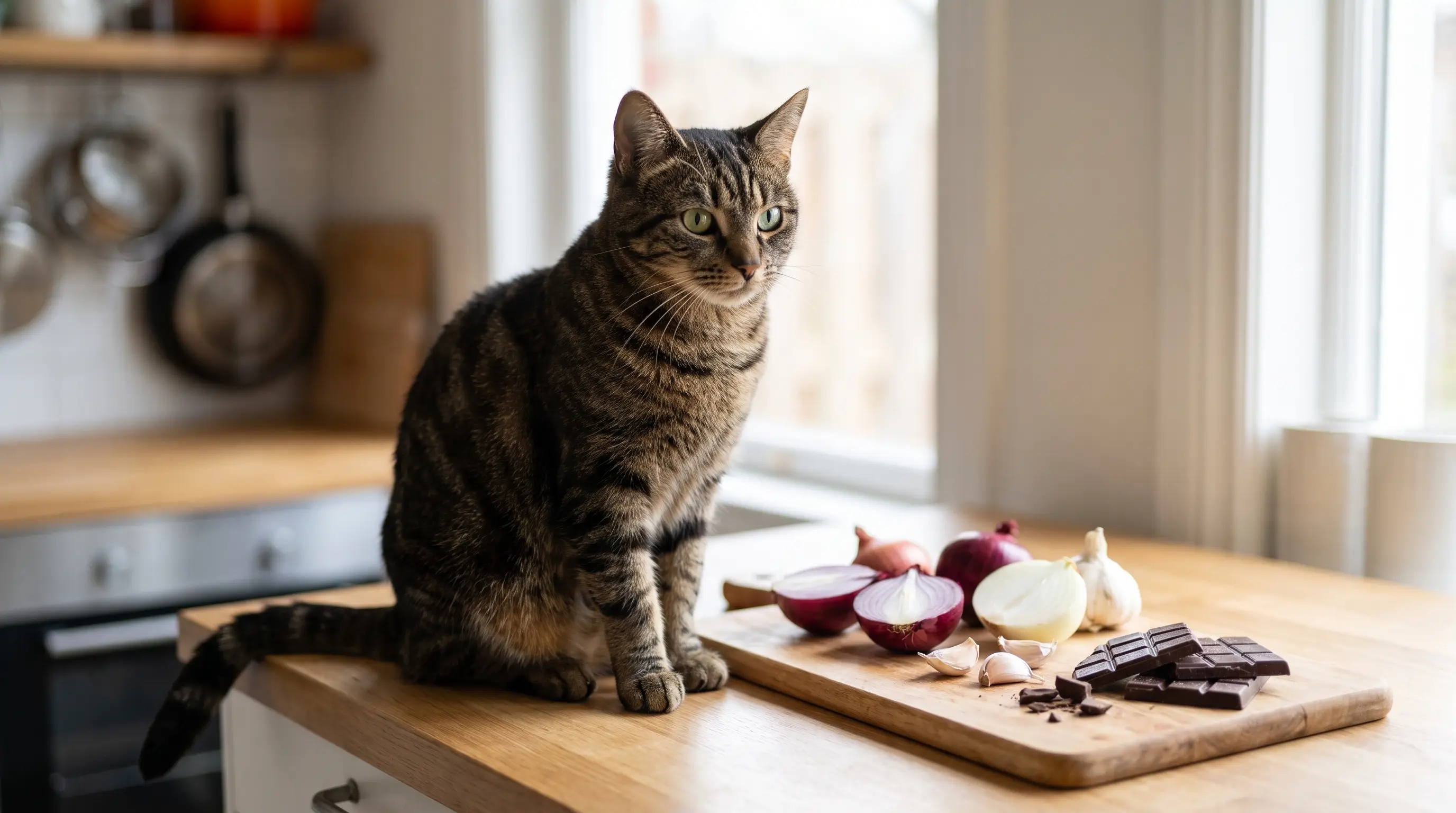
Foods that are toxic to cats: the honest list
The genuinely dangerous foods for cats are a short, specific list: onions and garlic, chocolate and caffeine, grapes and raisins, alcohol and raw dough, and probably xylitol. A few household staples aren't poison but are wrong for cats in ways worth understanding, and one common flower is deadlier than anything in your fridge. Here is the honest version, sorted by how much you should actually worry.
Onion, garlic, and the allium family
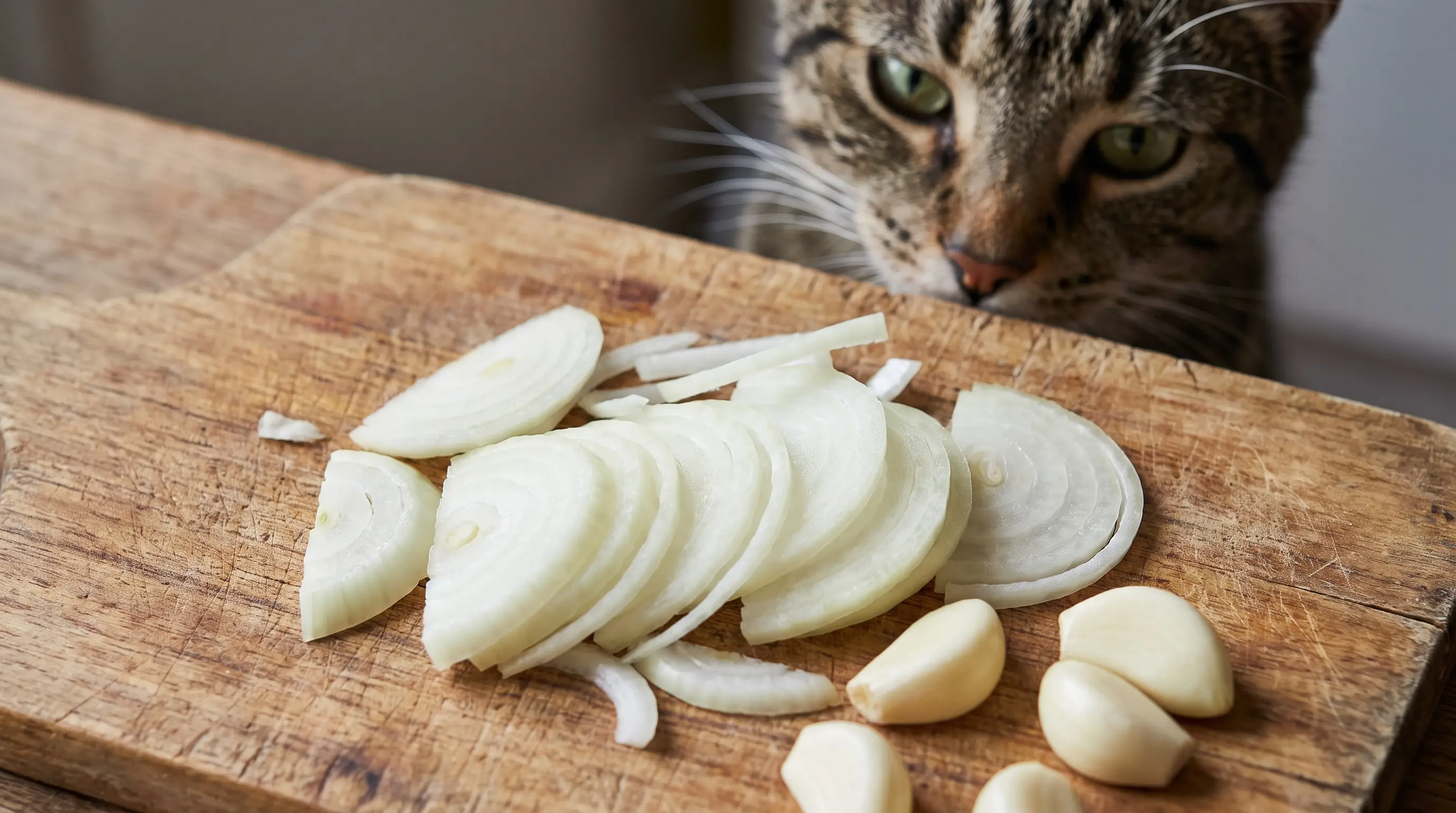
The allium family — onions, garlic, chives, leeks, shallots — is toxic to cats because the sulphur compounds in it damage red blood cells and cause anaemia. Cats are the most sensitive species to this, more so than dogs, and the effect is cumulative, so small repeated exposures add up rather than passing harmlessly. Cooking, drying or powdering doesn't help. The concentrated forms are actually the bigger threat: garlic is roughly three to five times as potent as onion by weight, and dehydrated flakes, onion powder, garlic powder and dried soup mixes pack a lot of toxin into a small amount.
This is why the usual culprit isn't a cat stealing a raw onion. It's the hidden onion powder in baby food, gravy, pasta sauce, stock cubes and takeaway leftovers licked off a plate. Gut upset tends to show up 6 to 24 hours later, but the signs of anaemia — pale gums, lethargy, fast breathing — can take one to five days to appear, so a cat can seem fine the evening it ate something and be unwell days on. If you know your cat got into an allium, call your vet rather than waiting to see what happens.
Chocolate, caffeine, grapes, and alcohol
Chocolate and caffeine are toxic to cats through the same stimulants that make them a problem for dogs — theobromine and caffeine, which hit the heart and nervous system. Cats can't taste sweetness and rarely go looking for chocolate, so poisonings are less common than in dogs, but dark and baking chocolate carry the most theobromine and a determined cat can still get into trouble. The same caution covers coffee, tea, energy drinks and cocoa powder.
Grapes and raisins are best treated as off-limits. In dogs they can cause sudden kidney failure, sometimes from a surprisingly small amount, and while the picture in cats is less documented, the mechanism isn't understood well enough to call any dose safe. Alcohol is dangerous in small quantities because cats are small, and raw bread dough is a sneaky one — the yeast keeps fermenting in the warm stomach, producing alcohol and expanding painfully. Xylitol, the sweetener in sugar-free gum, sweets and some peanut butters, is a proven danger in dogs; the research in cats is thinner, but there's no reason to test it, so keep it away.
Fish, milk, and dog food: the myths worth correcting
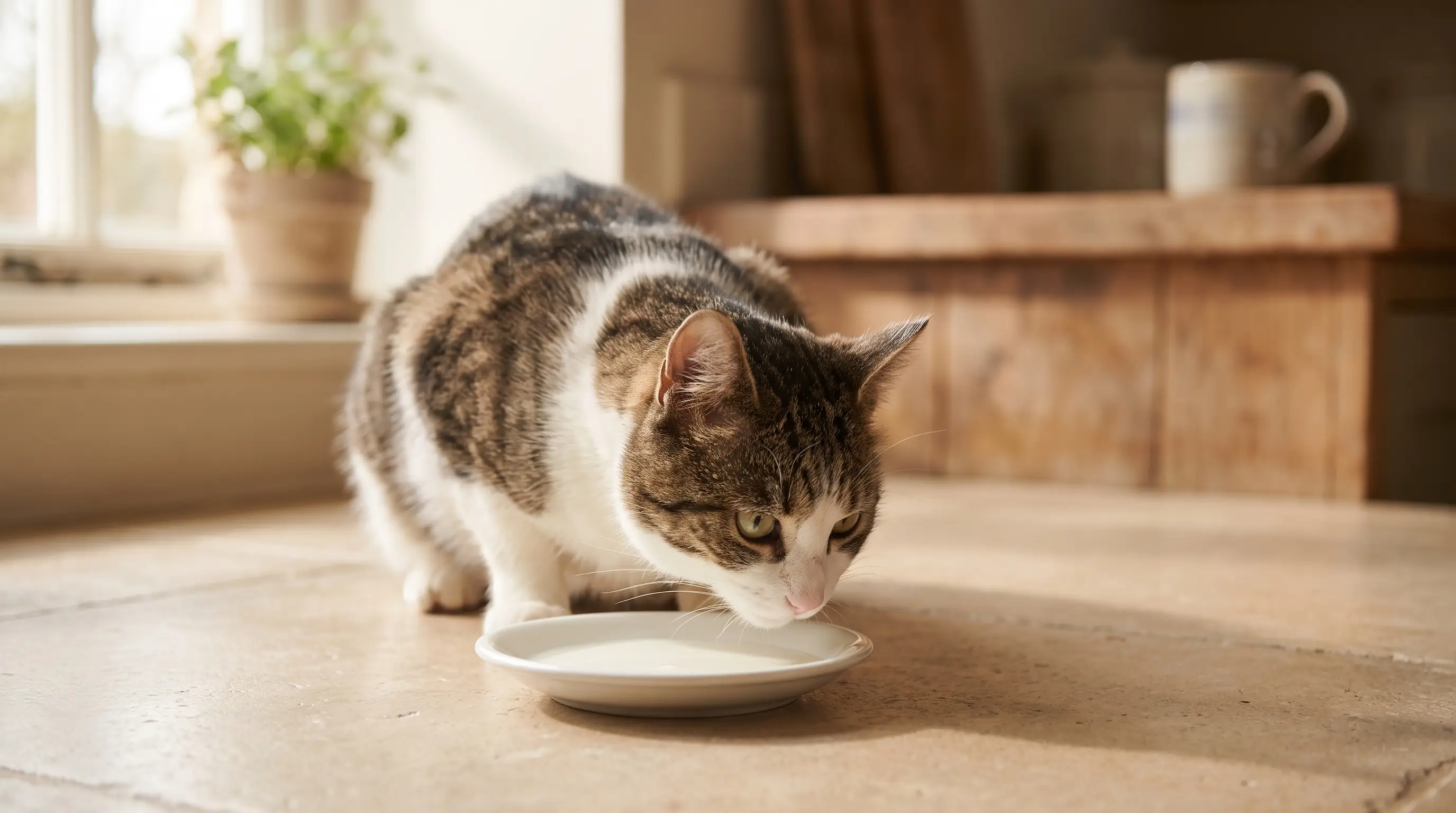
These three aren't poisons, but each is wrong for cats in a way that gets misunderstood. Cow's milk isn't toxic — the problem is that most adult cats are lactose intolerant, having lost the enzyme to digest milk sugar after kittenhood, so the classic saucer of milk usually buys you diarrhoea and a queasy cat. Skip it; water is what they need, and if you want a treat there are safer options like a little plain cooked meat or a sprinkle of catnip.
Raw fish in quantity causes its own problem: it contains thiaminase, an enzyme that destroys vitamin B1, and a diet heavy in raw fish can trigger a thiamine deficiency that shows up as wobbliness, weakness and seizures. Cooking destroys the enzyme, which is why canned tuna doesn't carry the same risk. But an all-tuna diet fails for different reasons — tuna sits high in the food chain and accumulates mercury, and it simply isn't nutritionally complete, so it should be an occasional topping, not a meal. Dog food follows the same logic: it isn't poison, but cats are obligate carnivores who need far more protein and their own dietary taurine, which dog food isn't built to supply. A stolen mouthful is nothing; a long-term diet of it causes real deficiencies. Whether you share your sofa with a Siamese or a rescue moggy, the rule is the same.
Lilies: not a food, but the deadliest thing in the house
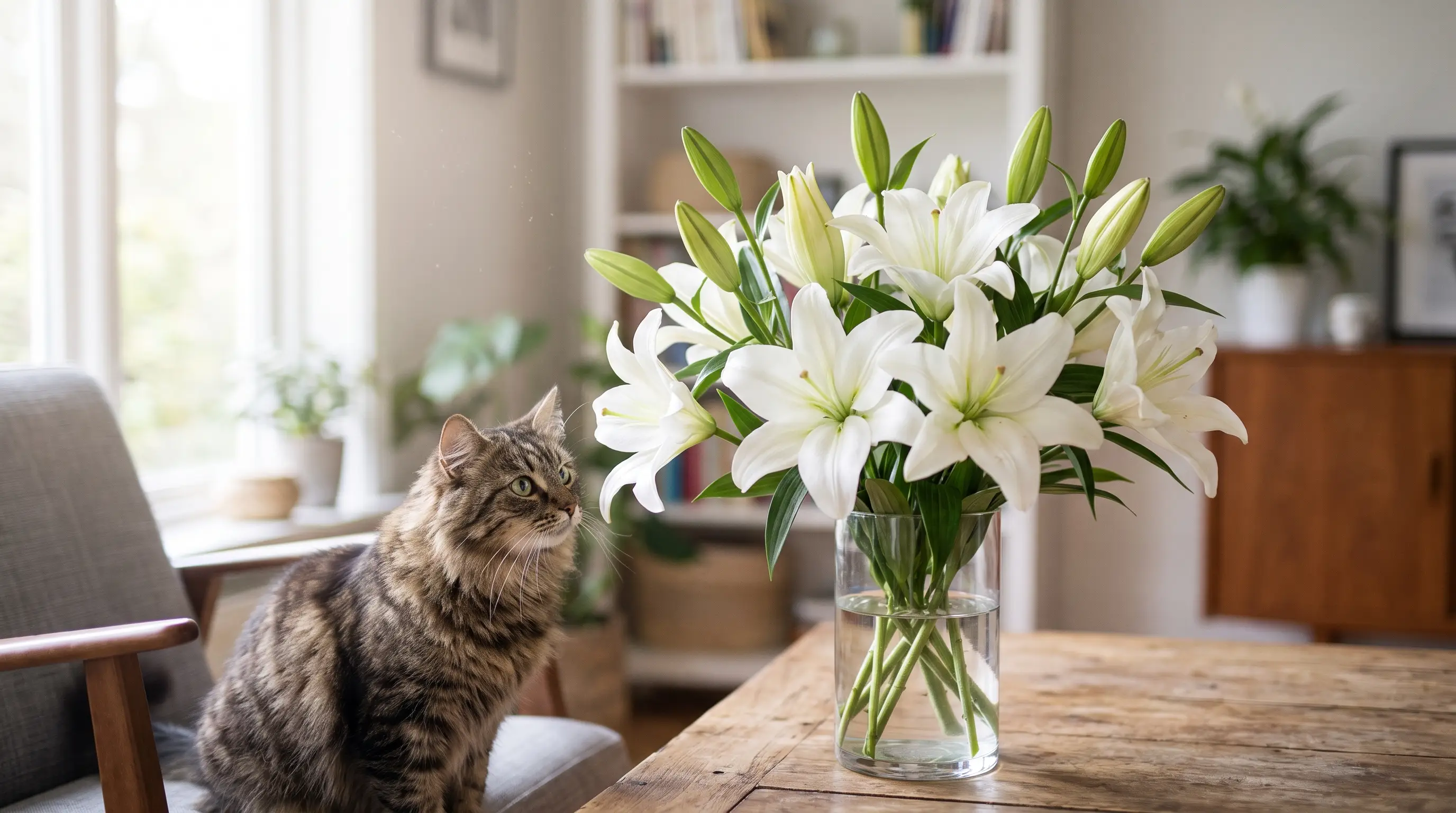
Lilies deserve a place on any cat-safety list even though they're a plant, not a food, because they are among the deadliest things a cat can encounter. With true lilies — the Lilium and Hemerocallis (daylily) types often found in bouquets — a tiny exposure is enough: a nibbled petal or leaf, a few grains of pollen licked off the fur during grooming, or a sip of the vase water can cause fatal kidney failure. The entire plant is toxic, pollen and water included.
The timeline is fast and unforgiving. Early signs like drooling, vomiting and going off food appear within hours, kidney damage sets in around 12 to 24 hours, and without treatment kidney failure can follow within one to three days. This is a genuine emergency where speed changes the outcome, so a cat known to have contacted a lily should see a vet immediately, not in the morning. The safest move is not to bring true lilies into a home with cats at all.
What to do if your cat eats something toxic
Call your vet or a pet poison line straight away, and have the substance and the rough amount ready to tell them. Speed matters more than certainty — you don't need to wait for symptoms, and with things like lilies and alliums, waiting is exactly what makes them dangerous. Keep the packaging, the plant, or a photo so someone can identify what your cat got into and how much.
Don't try to make your cat vomit at home unless a vet has told you to; the wrong approach can do more harm than the food. If it's out of hours, ring the emergency line anyway — most poisoning cases do far better when they're seen early, before the toxin has done its work. A quick phone call costs nothing and often settles whether you're dealing with a nuisance or a real emergency.
Common questions
What foods are poisonous to cats?
The main ones are onions and garlic (and the rest of the allium family), chocolate and caffeine, grapes and raisins, alcohol and raw yeast dough, and likely xylitol. Onion and garlic are the most common household poisonings because they hide in sauces, gravy and baby food.
What is the most toxic food for cats?
Among everyday foods, onions and garlic are the most dangerous because cats are especially sensitive to them and the damage to red blood cells builds up over repeated exposures. Beyond food, lilies are the deadliest common household item for cats, causing kidney failure from tiny amounts.
Can cats eat cheese and milk?
Milk and cheese aren't toxic, but most adult cats are lactose intolerant, so dairy tends to cause stomach upset and diarrhoea. There's no nutritional reason to give it, so it's best skipped in favour of water.
Is tuna bad for cats?
Tuna in small amounts as an occasional treat is fine, but an all-tuna diet is a problem: tuna accumulates mercury and isn't nutritionally complete, and raw fish contains an enzyme that destroys vitamin B1. Keep it to an occasional topping rather than a regular meal.
What should I do if my cat eats something toxic?
Call your vet or a pet poison control line immediately and tell them what your cat ate and roughly how much. Don't wait for symptoms and don't try to make your cat vomit unless a vet instructs you to.
Can cats eat dog food?
A stolen mouthful of dog food won't poison a cat, but it's the wrong diet long-term. Cats are obligate carnivores that need more protein and their own source of taurine, which dog food isn't formulated to provide.
More in Cats
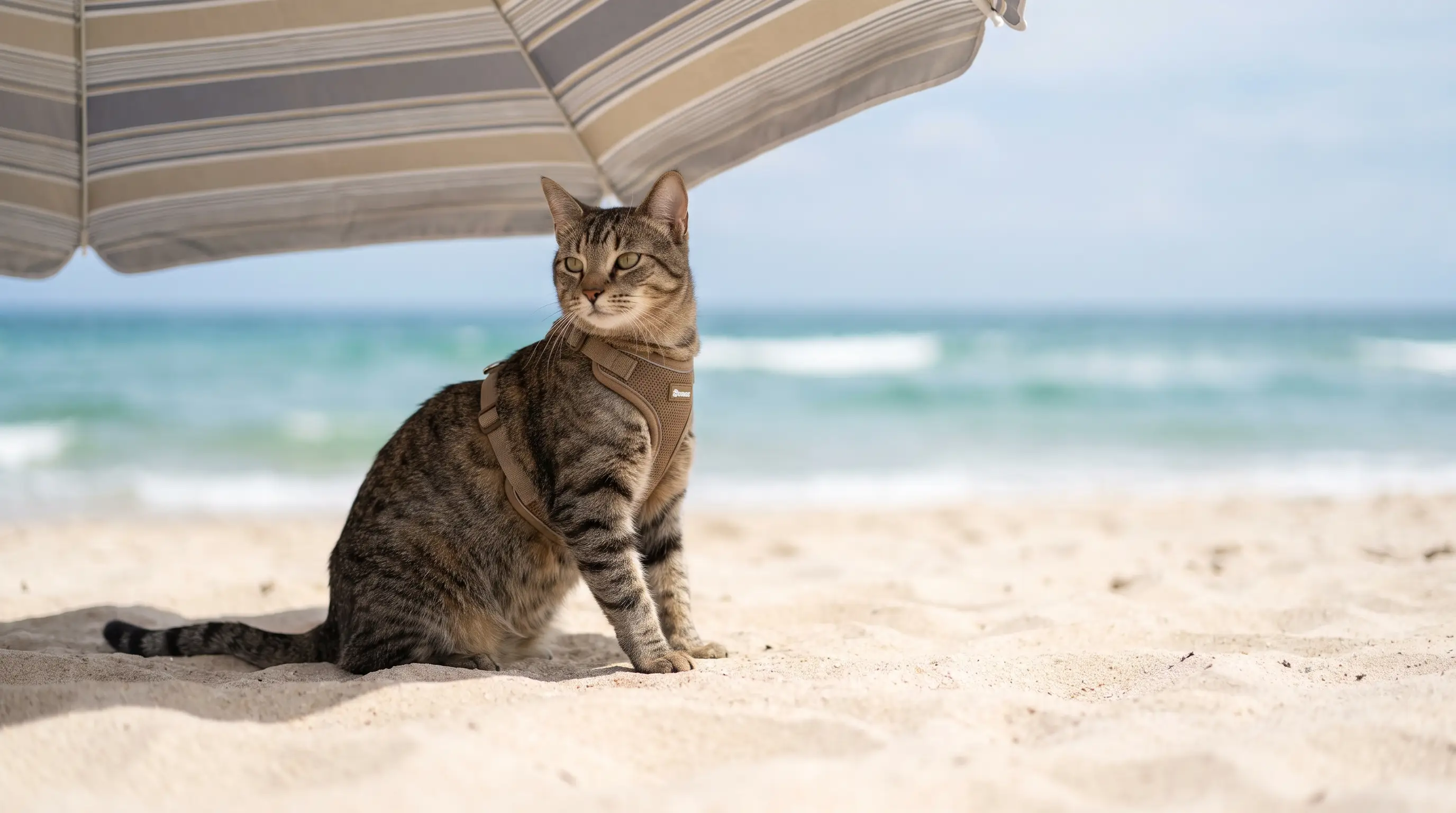
Can you take your cat to the beach? An honest guide
Most cats should skip the beach, and a few can go safely. The honest, vet-checkable guide to heat, sun, saltwater, harnesses and who stays home.
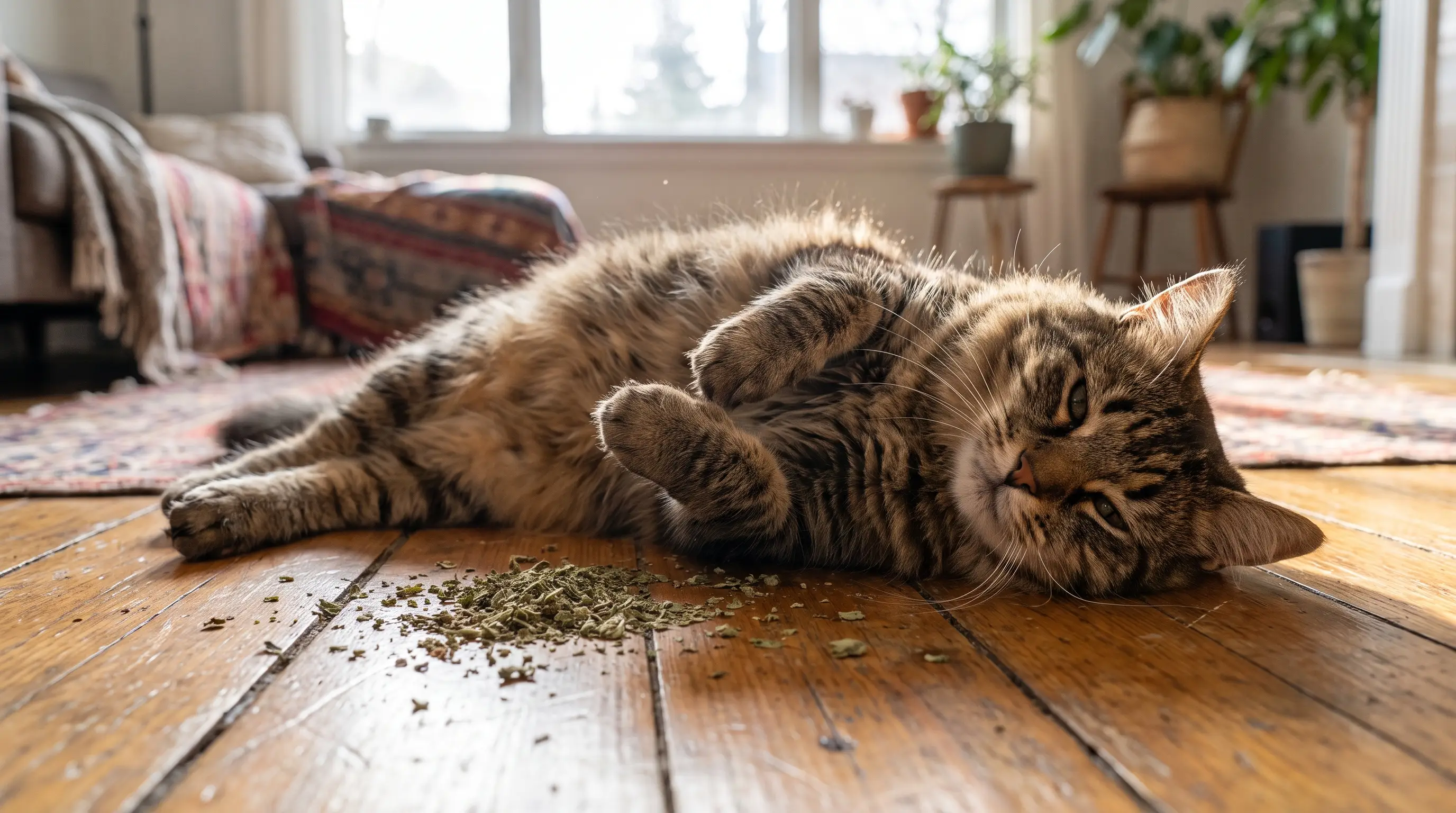
What Catnip Really Does to a Cat
The honest, myth-busting guide to catnip: what nepetalactone does, why 1 in 3 cats ignore it, and what to try instead.
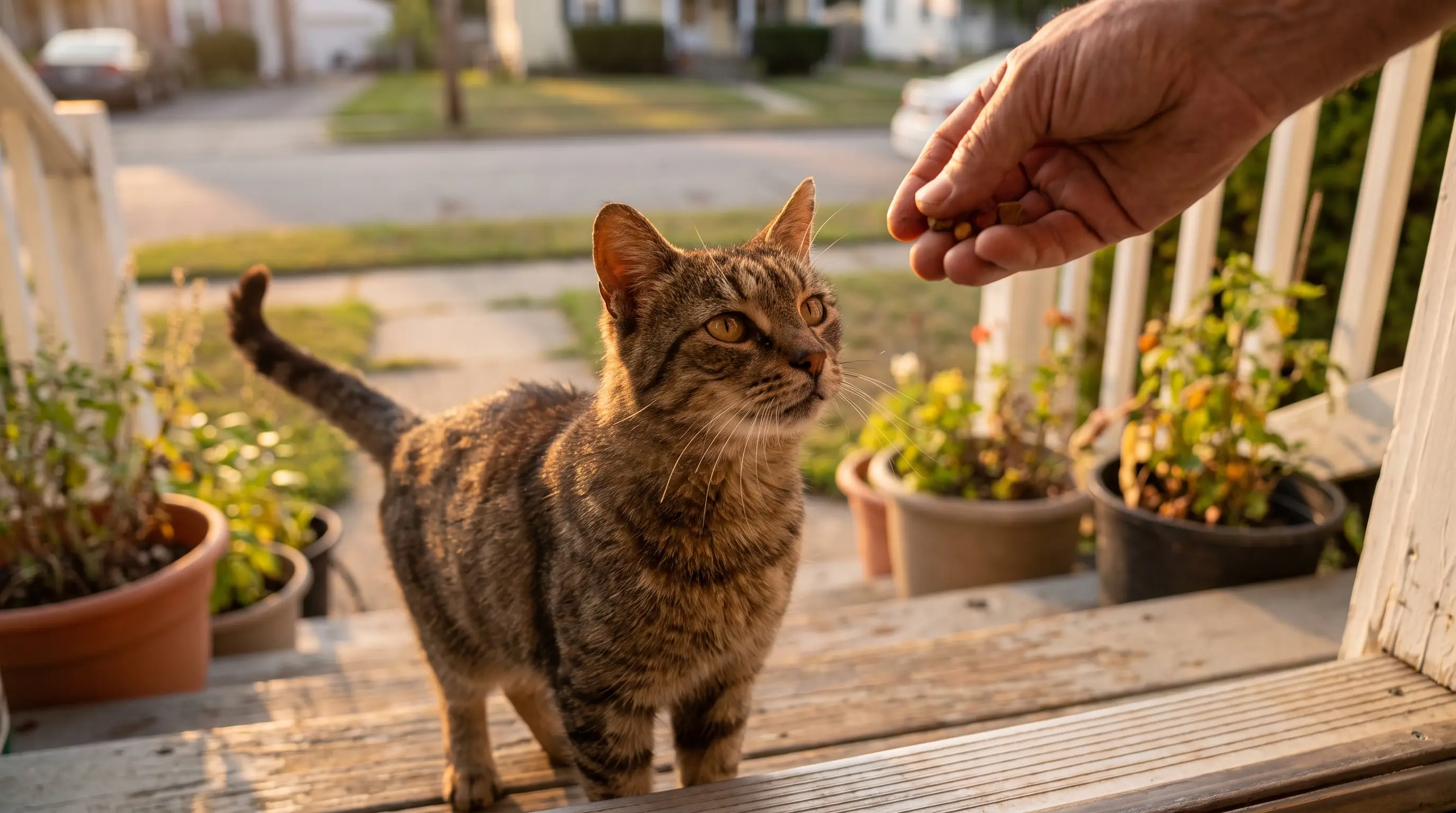
You Found a Stray Cat: What to Actually Do
A friendly cat on your doorstep may already have a home. Here is the honest, welfare-first order of steps before you take it in.