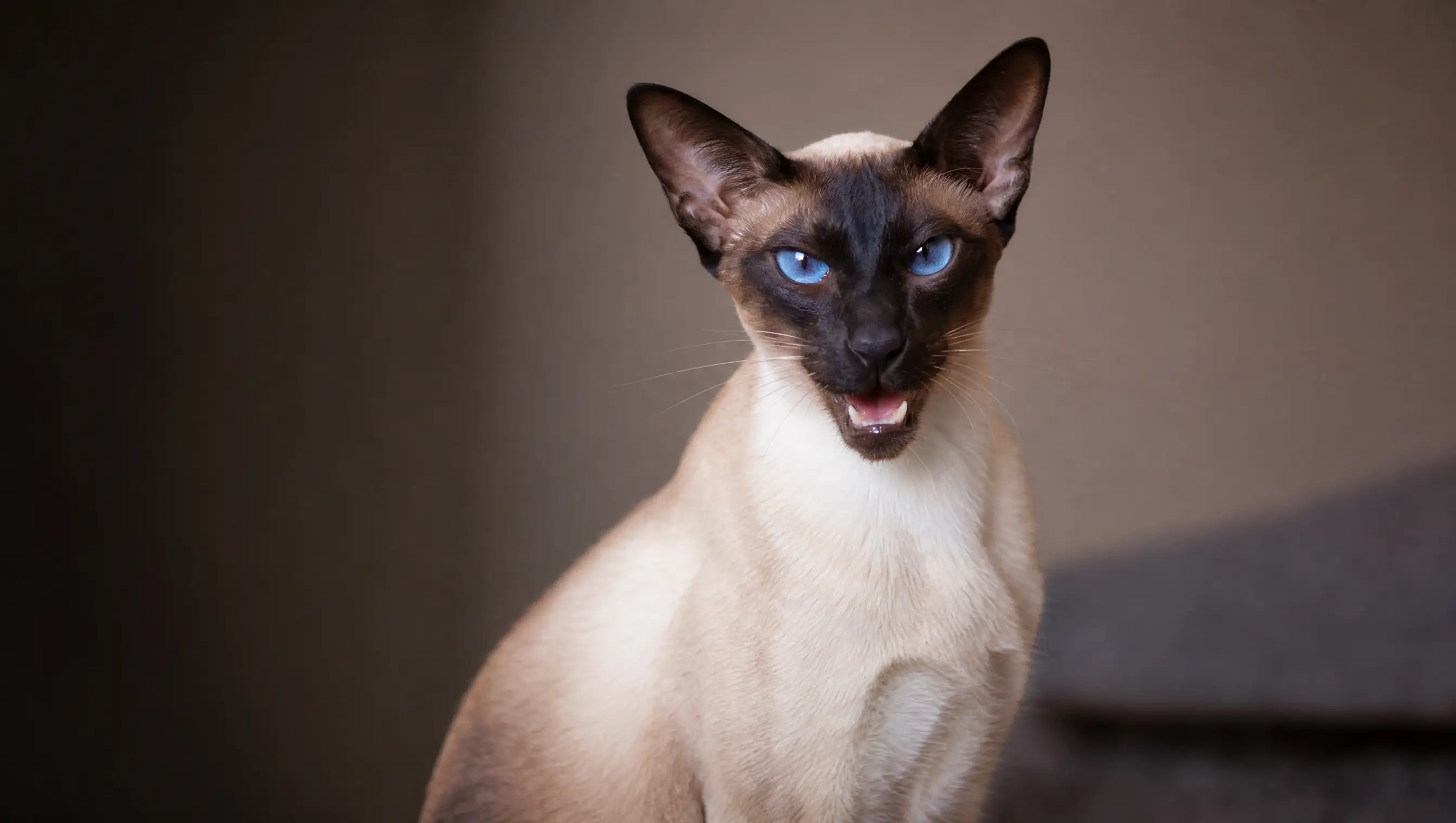
Siamese
The cat that has an opinion about everything and will tell you all of it, loudly.
Vital stats
| Size | Small to medium · long and lean |
| Weight | 3–5 kg · males at the top end |
| Life expectancy | 12–20 years |
| Energy | High — busy and demanding |
| Shedding | Low · short single coat |
| Coat | Short, fine, colour-pointed |
| Group | Shorthair |
| Origin | Thailand |
Breed traits
Friendliness
Care
Mind
The Siamese by the numbers
The Siamese facts owners search for most — price, lifespan, weight, shedding and colours, in one place.
Widely bred, so you can usually find a litter from a registered breeder without a long wait. Ongoing costs stay modest — it eats little and routine vet care sits at the lower end.
We don't quote a single figure: the real price swings with breeder, region, bloodline and health testing — and a rescue costs a fraction of a breeder's litter. Adopting is almost always the cheapest route.
Temperament
Siamese are the extroverts of the cat world: attached to their people, always underfoot, and never quiet about it. The voice is the thing everyone warns you about — a loud, rasping, almost human call they use to comment on meals, closed doors, and your decision to leave the room. They're clever and quick, learn tricks and fetch readily, and get into trouble when bored, so they need company and something to do. They bond hard, often to one person, and take separation badly; many do better with a second cat than left alone all day. If you want a self-sufficient cat that keeps to itself, this is the wrong breed.
Habits & quirks
The voice
That famous loud, gravelly yowl is a two-way conversation — they talk at you constantly and expect an answer.
Heat-painted points
The dark points come from a temperature-sensitive pigment gene: cooler ears, face, paws and tail darken, while the warm body stays pale, and kittens are born white.
Velcro cat
Expect a shadow on your lap, in your bed and under the covers — they seek out warmth and contact and don't do 'aloof'.
Busy hands
Sharp and mischievous: they open cupboards, fish toys out of drawers and invent games, so give them puzzles or they'll make their own.
Health
Siamese are often very long-lived, but the breed carries some well-documented genetic risks worth knowing about. Progressive retinal atrophy can lead to blindness, and systemic amyloidosis — abnormal protein deposits, often in the liver — turns up in some lines, so buy from a breeder who screens and can talk you through their cats' ancestry. Dental disease is common enough to make regular tooth care and vet checks worthwhile, and the breed has a known tendency toward asthma and other respiratory trouble, so mention any persistent coughing or wheezing to your vet early. A well-chosen kitten from a careful breeder tips the odds firmly in your favour.
Nutrition
| Grooming | The short single coat is easy — a weekly once-over or a rubber brush is plenty, and they shed far less than most cats. |
| Health | A well-documented breed with real genetic risks: progressive retinal atrophy (leading to blindness), systemic amyloidosis affecting the liver, dental disease, and a tendency toward asthma and respiratory issues. Buy from a breeder who screens and ask about lines. |
| Company | The one non-negotiable: they hate being alone. If you're out all day, plan on a second cat, enrichment, and real interaction when you're home. |
| Play & mind | High energy and a fast brain mean they need daily play, climbing space and puzzle feeders — a bored Siamese turns destructive and even louder. |
Cats are obligate carnivores, so a meat-based diet with real protein suits a Siamese far better than a filler-heavy one. This is a lean, busy, athletic cat that burns what it eats, but that's no reason to leave an open bowl down — measure meals and count treats so an indoor Siamese doesn't quietly gain weight in its calmer years. Wet food, or wet mixed with dry, helps keep water going in, which is good practice for any cat. Given the breed's tendency to dental trouble, ask your vet whether a dental diet or regular tooth-brushing makes sense for yours.
Kitten guide
A Siamese kitten is social, clever and loud from the start, and how you set up those first weeks shapes the adult cat. Handle it constantly, introduce it to visitors, other pets and everyday noise, and you get the confident, people-loving cat the breed is famous for. Because Siamese hate being alone, think hard before bringing one home to an empty house all day — many do best adopted in pairs, so the kitten grows up with a companion. Kitten-proof the space, give it height to climb and puzzles to solve, and expect a busy explorer that opens drawers and investigates everything. Book an early vet visit for vaccinations, a microchip and a neutering plan.
Training
Siamese are one of the easier cats to train and one of the most likely to get into trouble if you don't — a fast brain with nothing to do turns destructive. Litter training is usually quick; keep the tray clean and in a settled spot and most Siamese need little more. Give them a real outlet for that intelligence: puzzle feeders, a tall scratching post and climbing tower, rotated toys, and clicker tricks, fetch or harness walks, all of which they take to readily. The one thing enrichment can't replace is company — plan for real interaction at both ends of the day, and a second cat if the house is empty. Get the kitten used to the carrier early, since a vocal Siamese makes its feelings about a surprise trip very clear.
Life expectancy
Siamese cats live 12–20 years. That upper figure is one of the longest of any cat, and plenty of Siamese reach it. Buying from a breeder who screens for the breed's inherited problems, keeping the cat lean, and staying on top of dental and respiratory health are what move a cat toward the top of the range. Regular vet checks matter more as they age, when catching a problem early makes the most difference.
Similar breeds
Breeds with a similar build and background — worth a look if this one isn't quite the fit.
Compare this breed
Common questions
Are Siamese cats really that loud?
Yes — it's the defining trait, not a myth. They're among the most vocal breeds, with a distinctive rasping yowl they use often and insistently. If noise bothers you or your neighbours, this isn't the cat for you.
Can a Siamese be left alone while I'm at work?
Not happily. They bond intensely and get stressed, loud and destructive when isolated. A long workday is manageable only with a companion animal and plenty of attention at both ends of the day.
Why do Siamese have dark faces, ears and paws?
It's temperature-sensitive albinism: the pigment enzyme only works in cooler parts of the body, so the extremities darken while the warm core stays cream. It's also why they're born white and why older cats often darken overall.
Does the Siamese shed a lot?
Not much. The Siamese is a low-shedding breed, so loose hair around the home stays minimal. It still needs regular grooming, but you won't be fighting drifts of fur.
Are Siamese cats hypoallergenic?
No cat breed is truly hypoallergenic. The trigger is Fel d 1, a protein in a cat's saliva and skin that transfers to the coat during grooming and then travels on loose hair and dander — so a cat that sheds less, like the Siamese, spreads less of it around the house, but still produces it. If someone at home reacts to cats, spend real time with this breed before deciding, and no breeder should promise you an allergy-free cat.
Are Siamese cats good with children?
Usually yes. The Siamese is a sociable cat that tends to tolerate the noise and handling of family life better than most, which is why it comes up so often for homes with kids. It still needs somewhere high and quiet to retreat to, and children need teaching that a cat walking away is allowed to.
How much grooming does a Siamese need?
Very little. The Siamese handles its own coat and a comb once a week or so is plenty — mostly to catch loose hair before the cat swallows it. Claws, teeth and ears still want the usual checks, which is the part people skip on an easy-coated cat.
Stories featuring this breed
All stories →
Why does my cat follow me everywhere, even the bathroom?
The supposedly aloof animal trailing you from room to room is behaving exactly as the attachment science predicts. Why cats shadow their person, the bathroom mystery, and the one change that needs a vet.
The longest-lived cat breeds, and what actually adds years
Siamese and Russian Blues regularly see their late teens; some cats double a dog's run. The breeds with the long odds — and the honest truth that how a cat lives beats what it was born as.
Do cats love their owners? The kidnap experiment says yes
Science ran the same attachment test on cats that it runs on human infants, and 64% passed. What the secure-base test found, why one earlier study disagreed, and how a cat actually says it.