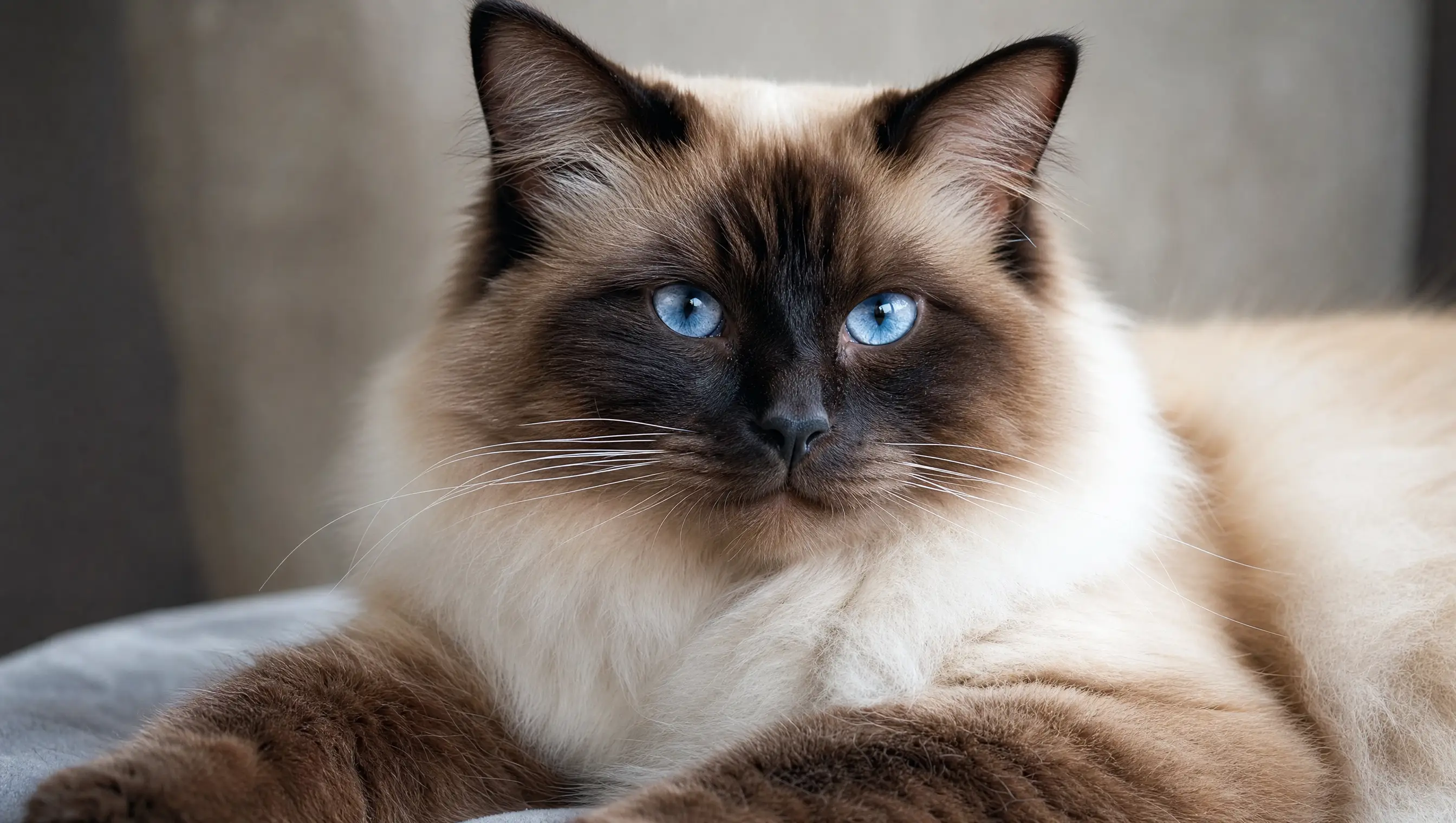
Ragdoll
The cat that goes limp in your arms and would rather be underfoot than up high.
Vital stats
| Size | Large · long, broad-chested build |
| Weight | 4–9 kg · toms often 6–9 kg |
| Life expectancy | 12–17 years |
| Energy | Low to moderate — placid, not busy |
| Shedding | Moderate, seasonal |
| Coat | Semi-long, silky, little undercoat |
| Group | Longhair |
Breed traits
Friendliness
Care
Mind
Temperament
Ragdolls are bred for one thing above all: an easy, unbothered temperament, and it shows. They greet you at the door, trail you from room to room, and flop down wherever you land — often going boneless in your arms. Most are quiet, with a soft voice they use sparingly, and they lean gentle rather than playful, though a feather wand still gets a rise out of them. They tend to stay low, preferring laps and sofas to the top of the bookshelf. The flip side of all that trust is a cat with little street sense: docile, slow to defend itself, and genuinely unhappy left alone for long stretches. This is an indoor companion that wants company, not an independent mouser.
Habits & quirks
Going limp
Pick one up and it often relaxes completely and hangs like its namesake — not universal, but common enough to define the breed.
Ground floor
Unlike most cats they rarely climb high; expect them at your feet, on the sofa, and in the bed rather than on top of the cupboards.
Door greeter
Many wait by the door and follow you around dog-style, wanting to be in the same room whatever you're doing.
Born white
Kittens arrive pure white and take up to two years to darken into their full seal, blue, chocolate or lilac points.
Care
| Grooming | The low-undercoat coat mats less than a Persian's but still needs a comb two or three times a week, more during the seasonal shed, with attention to the ruff and britches. |
| Health | HCM (a heart-muscle disease) runs in the breed and there's a specific Ragdoll MYBPC3 gene test — ask a breeder for the DNA result plus a normal heart scan on the parents. PKD and bladder stones are also worth asking about. |
| Keep them in | Trusting, slow to run from trouble and often unregistered street-smart, Ragdolls do best as indoor cats or with a secure garden or catio. |
| Company | They hate being alone for long — if the house is empty all day, a second cat or a predictable routine helps more than extra toys. |
Common questions
Do all Ragdolls actually go limp when you hold them?
Not every single one, but a large share do relax and flop when picked up — it's a temperament trait the breed was selected for, not a trained trick. If yours doesn't, it's still normal.
Are Ragdolls good with children and other pets?
Yes — they're big, tolerant and slow to swat, which suits gentle kids and calm dogs. Because they won't defend themselves well, teach children to handle them kindly and supervise rough play.
How much grooming does a Ragdoll need?
Less than the coat length suggests. With little undercoat it mats far less than a Persian, so a thorough comb a couple of times a week, stepping up during spring shed, keeps it in good order.