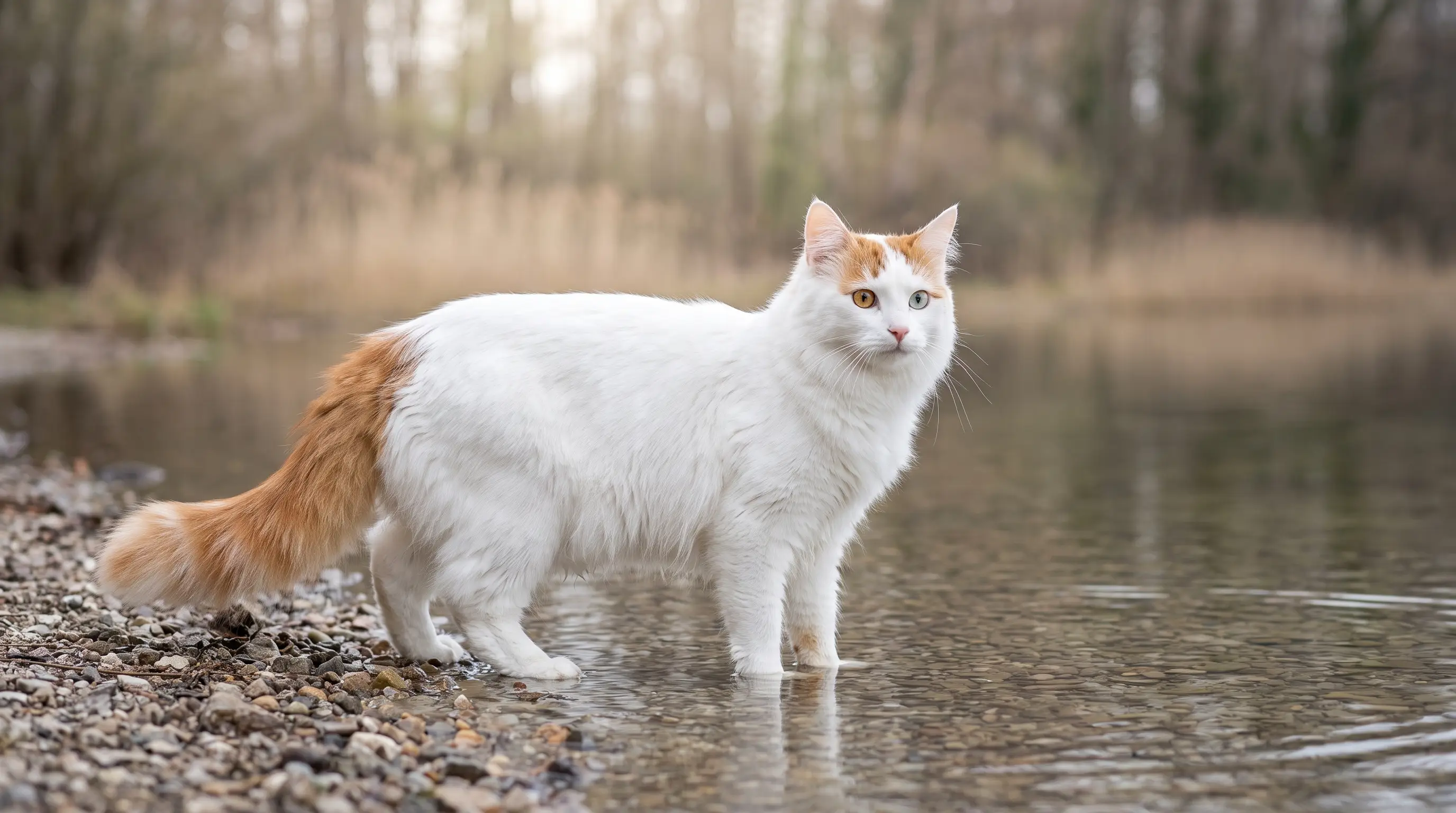
Turkish Van
The swimming cat — a big, athletic white cat from Lake Van that heads for water instead of away from it.
Vital stats
| Size | Large · long, muscular body |
| Weight | 4–9 kg · males heavier |
| Life expectancy | 12–17 years |
| Energy | High — athletic and playful |
| Shedding | Low to moderate, seasonal |
| Coat | Semi-long, single, water-resistant |
| Group | Longhair |
Breed traits
Friendliness
Care
Mind
Temperament
The Turkish Van is a big, high-energy cat that acts less like a cushion ornament and more like a four-legged athlete. It bonds hard to its people and wants to be where you are, but on its own terms — most Vans dislike being picked up and held, preferring to sit beside you than on you. Expect a strong jumper and climber that finds the highest shelf in the room, keeps its kitten energy for years, and needs real play and space to stay out of trouble. Smart and food-motivated, they take well to clicker tricks, fetch and even harness walks.
Habits & quirks
Water play
Many will paw at running taps, join you at the sink, or wade into shallow water — a rare trait the breed is known for.
The Van pattern
Classically chalk-white with color restricted to the head and tail, most often auburn; the body stays white.
Odd eyes
Eyes may be amber, blue, or one of each — a striking odd-eyed pair is common in the breed.
Big jumper
An athletic climber that heads for the top of the bookcase; give it height or it will find its own.
Care
| Grooming | The single coat has no undercoat, so it rarely mats — a weekly brush, more during the seasonal shed, keeps it in good order. |
| Health | Generally a hardy, long-lived breed; buy from a breeder who screens their breeding cats and can show you health records. |
| Play & space | High energy and a love of heights: tall cat trees, sturdy shelves and daily active play keep the mischief and the weight down. |
| Water safety | The water habit is charming but supervise around full baths, ponds and pools — liking water is not the same as being safe in it. |
Common questions
Do Turkish Vans really like water?
Many do — the breed is nicknamed 'the swimming cat' and a lot of Vans will paw at taps, play in a sink or wade into shallow water. It is not universal, though; some individuals ignore water entirely, so treat it as a fun quirk rather than a guarantee.
Are the Turkish Van and Turkish Angora the same breed?
No. They are two distinct Turkish breeds. The Turkish Van is a larger, sturdier cat with the auburn head-and-tail 'Van' pattern, while the Turkish Angora is a finer-boned cat that is most often pure white. They are often confused but bred and judged separately.
Is a Turkish Van a good pet?
For an active household, yes — they are affectionate, playful and clever. But they are demanding, athletic and not a quiet lap cat, so they suit people who want an involved, energetic companion with room to climb, not a calm cat that naps all day.