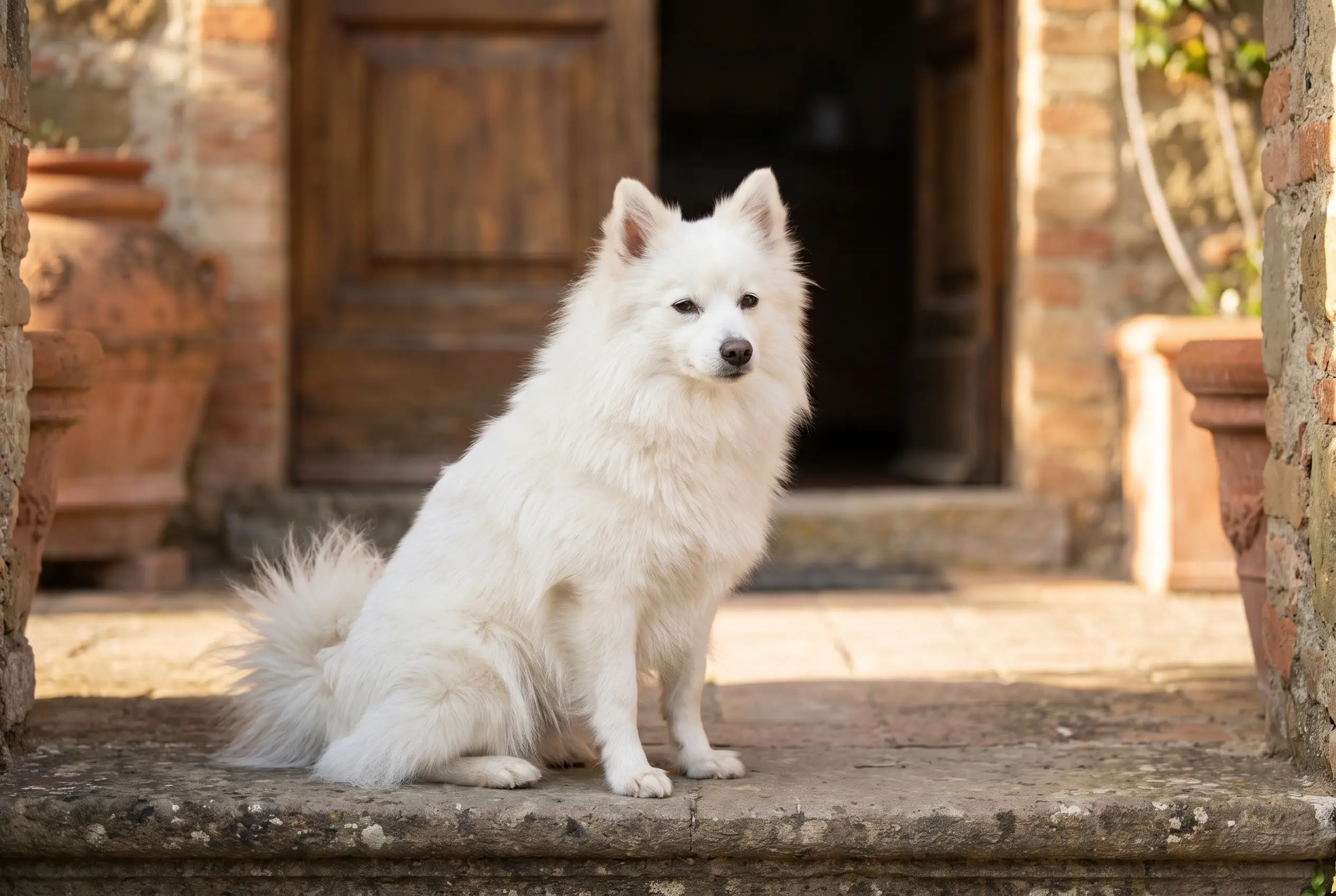
Volpino Italiano
A four-kilo Italian spitz with a big white ruff and the bark of a proper watchdog.
Vital stats
| Size | Small · 25–30 cm |
| Weight | 4–5 kg |
| Life expectancy | 14–16 years |
| Energy | High for its size — 30–45 min/day plus play |
| Shedding | Moderate — sheds the undercoat seasonally |
| Coat | Long, harsh and stand-off with a thick ruff · almost always solid white |
| Group | Toy · Spitz (FCI №195) |
Breed traits
Friendliness
Care
Mind
Temperament
One of Italy's oldest spitz breeds, the Volpino kept two very different kinds of company: it sat in the laps of Italian nobility and it rode with carters, guarding the wagon and warning the big mastiffs of anything amiss. By the 1960s it had almost died out, and today's dogs come from a small group of survivors. The character is unchanged — lively, sharp and bold, devoted to its people and quick to sound off at strangers. It learns well but keeps an independent streak, so training works best kept short and rewarding.
Habits & quirks
The doorbell
Every visitor, delivery and passing dog gets announced, loudly and without delay.
One-family dog
It picks its household and follows them from room to room, close as a shadow.
Ruff and plume
The stand-off coat stacks into a thick collar around the neck and a tail curled up over the back.
Fox face
Small triangular ears held upright and a pointed muzzle — the name comes from volpe, Italian for fox.
Care
| Coat | Brush the harsh stand-off coat once a week; it sheds the soft undercoat heavily a couple of times a year. It doesn't need clipping. |
| Barking | The watchdog voice is loud and easily triggered. Teach a 'quiet' cue early, or the alarm runs all day. |
| Exercise | Small but genuinely energetic: a couple of walks and some play keep it level. It loves games and tricks. |
| Company | Deeply attached and not keen on long stretches alone. It does best with people around for much of the day. |
Common questions
Do Volpino Italianos bark a lot?
Yes — alertness and voice are part of the breed, bred in from its days guarding carts. Early training keeps it manageable, but a silent Volpino isn't a realistic goal.
Are Volpino Italianos good apartment dogs?
They're small and adaptable enough for a flat, but the barking needs managing for the neighbours' sake. Give it company, walks and something to do and it settles well indoors.
Are Volpino Italianos rare?
Very. The breed nearly vanished in the mid-20th century and was revived from a few survivors; numbers are still low, especially outside Italy.