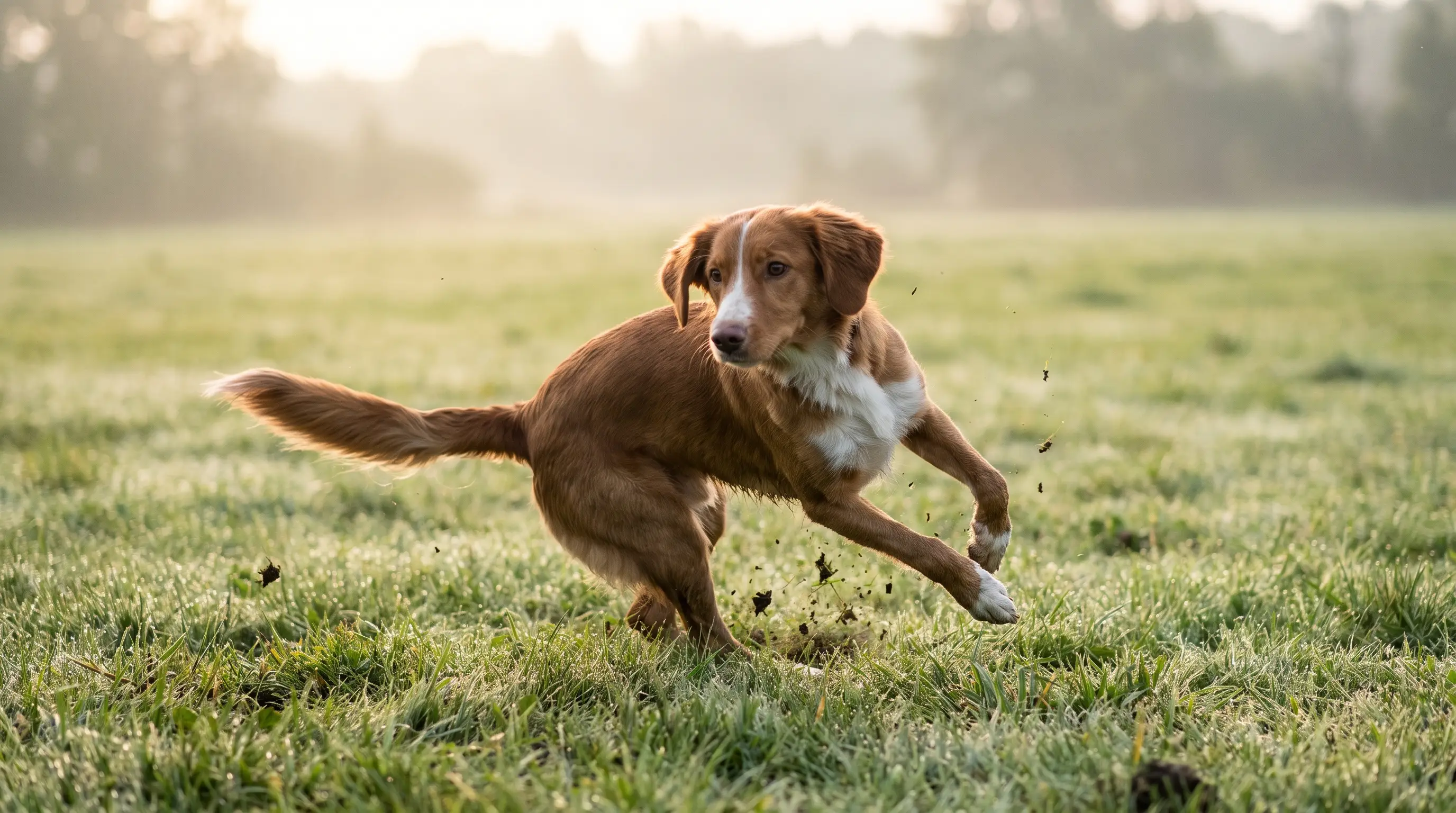
What a dog's tail is actually for
A dog's tail does three real jobs: it keeps the body balanced, it broadcasts mood to other dogs, and it controls how much of the dog's own scent goes into the air. None of those jobs is decoration, and none of them makes "wagging" a reliable sign of a happy dog. Read on for what each function does and how to read the whole animal instead of just the back end.
Balance: the tail as a counterweight and rudder
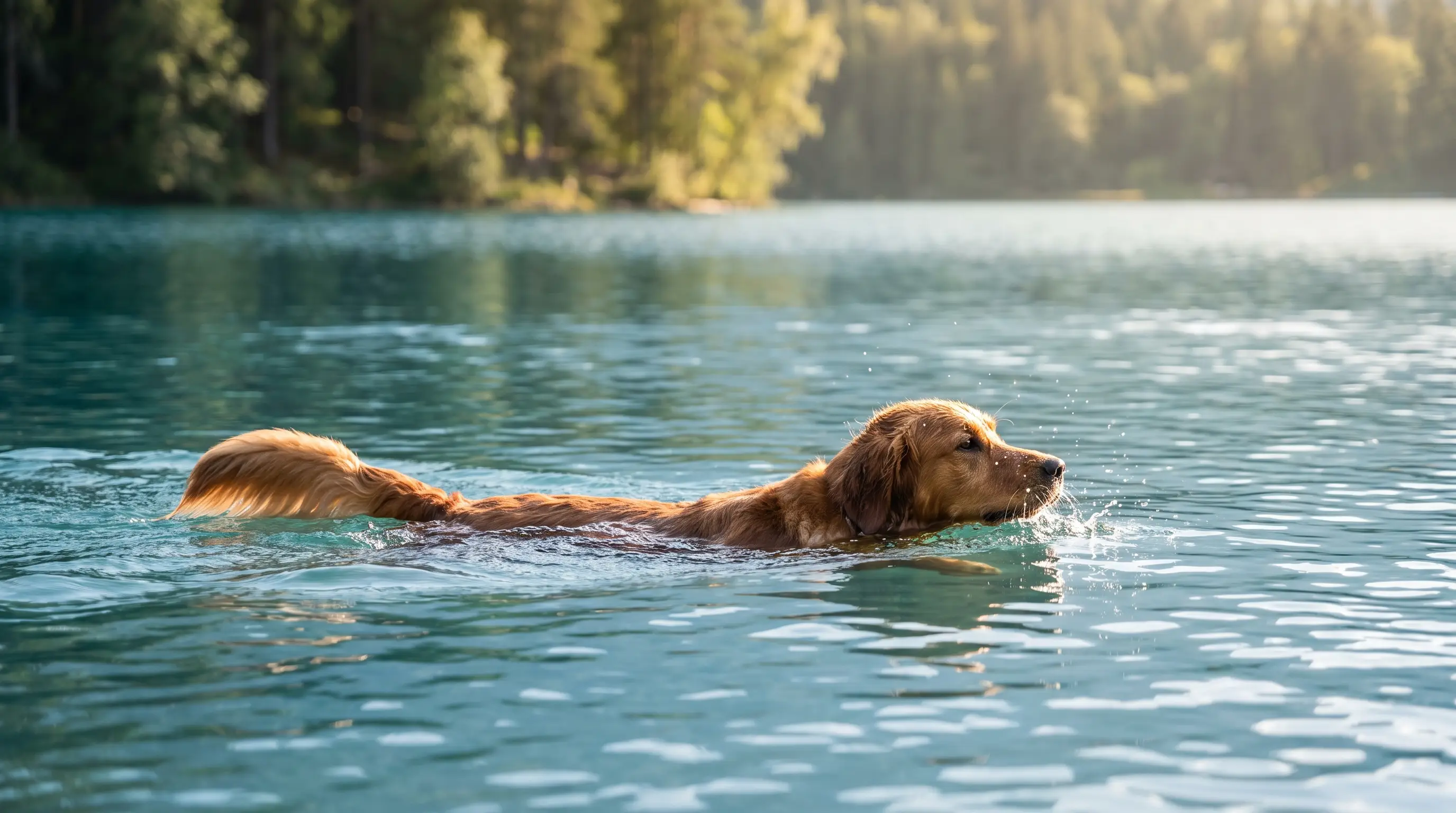
The tail's oldest job is physical: it acts as a counterweight that keeps a dog upright through fast, sharp movement. When a dog corners at speed, it flicks the tail toward the direction of the turn, and that shift in mass stops the body spinning off line, the same principle a tightrope walker uses with a balance pole. The effect is most obvious in the sighthounds bred for speed - a whippet uses its long whip tail to counterbalance the hairpin turns it makes chasing a lure. The tail helps on narrow ground too, giving a dog something to swing against while it picks along a ledge, a fallen log or a steep climb. In water it becomes a rudder: thick-tailed water dogs like retrievers hold the tail out straight while swimming and swing it to the side to steer each turn.
This is why a tail injury or a stiff, painful tail can quietly change how a dog moves before anyone spots a limp.
Communication: what tail position, speed and breadth mean
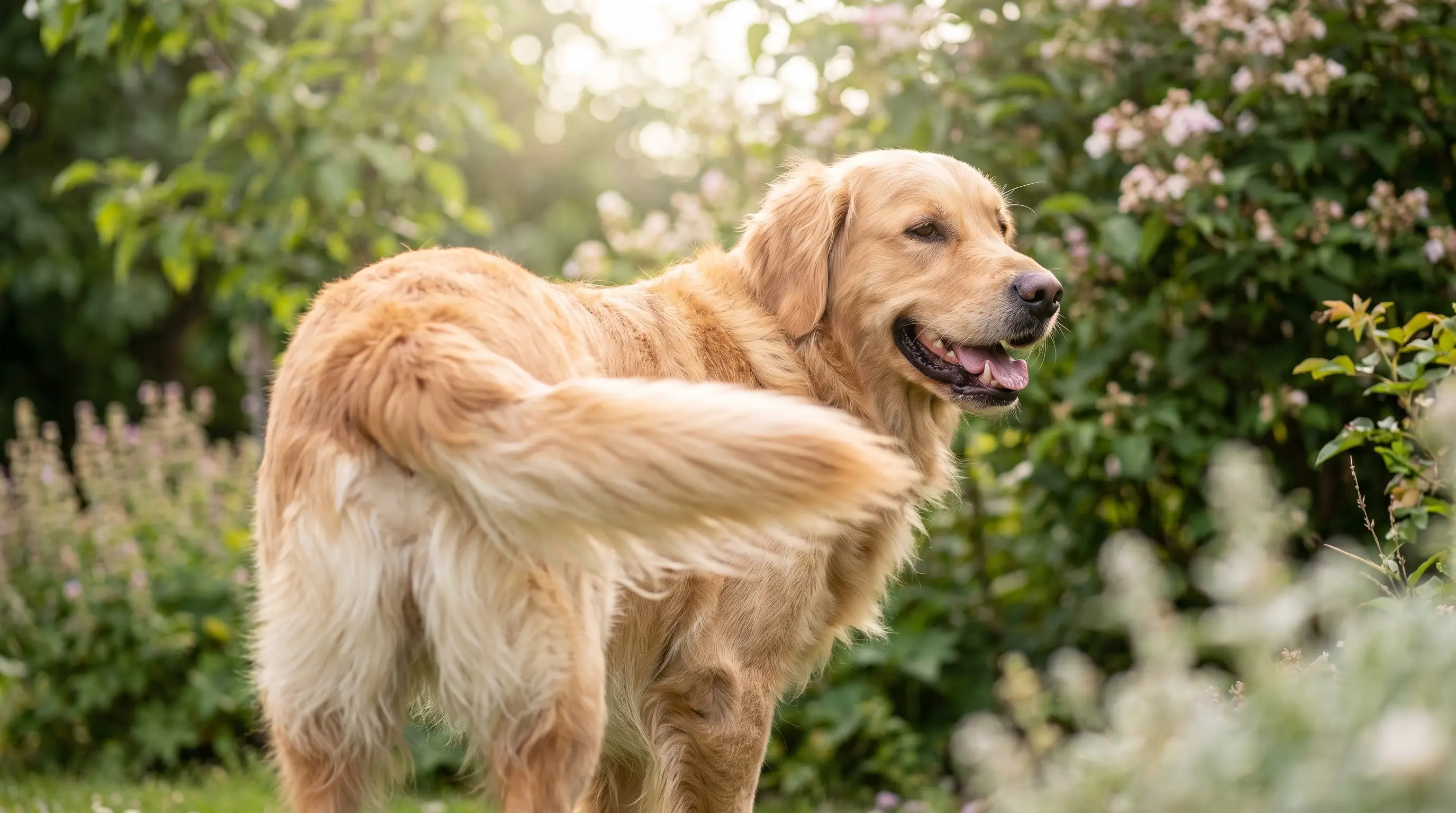
Tail height tells you the dog's state before the wag tells you anything. A high, stiff tail means the dog is alert or aroused, which is not the same as friendly - an aroused dog can tip into a bite. A low tail or one clamped between the legs signals fear or submission. A tail carried in a neutral position, roughly level with the spine, reads as calm. The wag itself carries a second layer of meaning through its speed and breadth. Fast, tight, high wags go with tension and arousal. The wag people should actually relax about is the loose, sweeping, full-body "helicopter" wag that swings the whole rear end - that one reliably means genuine happiness. Breed shape muddies the reading: a curled-tail Akita and a low-slung Greyhound start from different baselines, so you calibrate to the individual dog's neutral, not to a chart.
The left-right wag asymmetry
Dogs wag more to their right when they feel positive and more to their left when they feel negative - and it holds up in the lab. In a 2007 study in Current Biology, Quaranta and colleagues filmed dogs reacting to different sights and found a right-side bias when the dog saw something it wanted to approach, such as its owner, and a left-side bias toward things it wanted to withdraw from, such as an unfamiliar dominant dog. The bias comes from the brain: the two hemispheres split approach and withdrawal, and each drives the opposite side of the body. A 2013 follow-up from the same group showed the signal is actually used - dogs watching video of another dog with a left-biased wag showed raised heart rate and more anxious behaviour, while a right-biased wag left them calm. So the direction of the wag is a message dogs send and other dogs read, even if we can rarely catch it by eye.
Scent: how the tail broadcasts the anal glands
A dog's tail position controls how much scent from its anal glands reaches the air, which turns the tail into a chemical volume knob. The anal glands sit either side of the anus and carry a scent unique to each dog. When a confident dog holds its tail high, it lifts and exposes those glands and spreads more of that signature into the environment - the physical swagger and the chemical announcement travel together. A frightened dog clamping its tail down does the reverse, sealing the glands and keeping its scent to itself so it can stay unnoticed. This is part of why tail height and social confidence track so closely: the posture you can see and the scent you cannot are driven by the same muscles at the same moment.
Tail docking and the lost signal
Docking a puppy's tail removes one of these communication channels for life. A 2018 reassessment in the journal Animals concluded that the tail is embedded enough in canine signalling that shortening it can blur how clearly a dog is read by others. A field experiment made the point with a life-sized robot dog: when it had a long tail, real dogs approached a wagging version happily and gave a still, upright tail a wide berth, but when the tail was swapped for a docked stub, dogs approached cautiously either way, unable to tell the moods apart. A dog that can't state its intentions with its tail may fall back on growling or snapping to make itself understood. Breeds still commonly docked, like the boxer, carry this cost whether or not their owners intended it.
How to read the whole dog, not just the tail
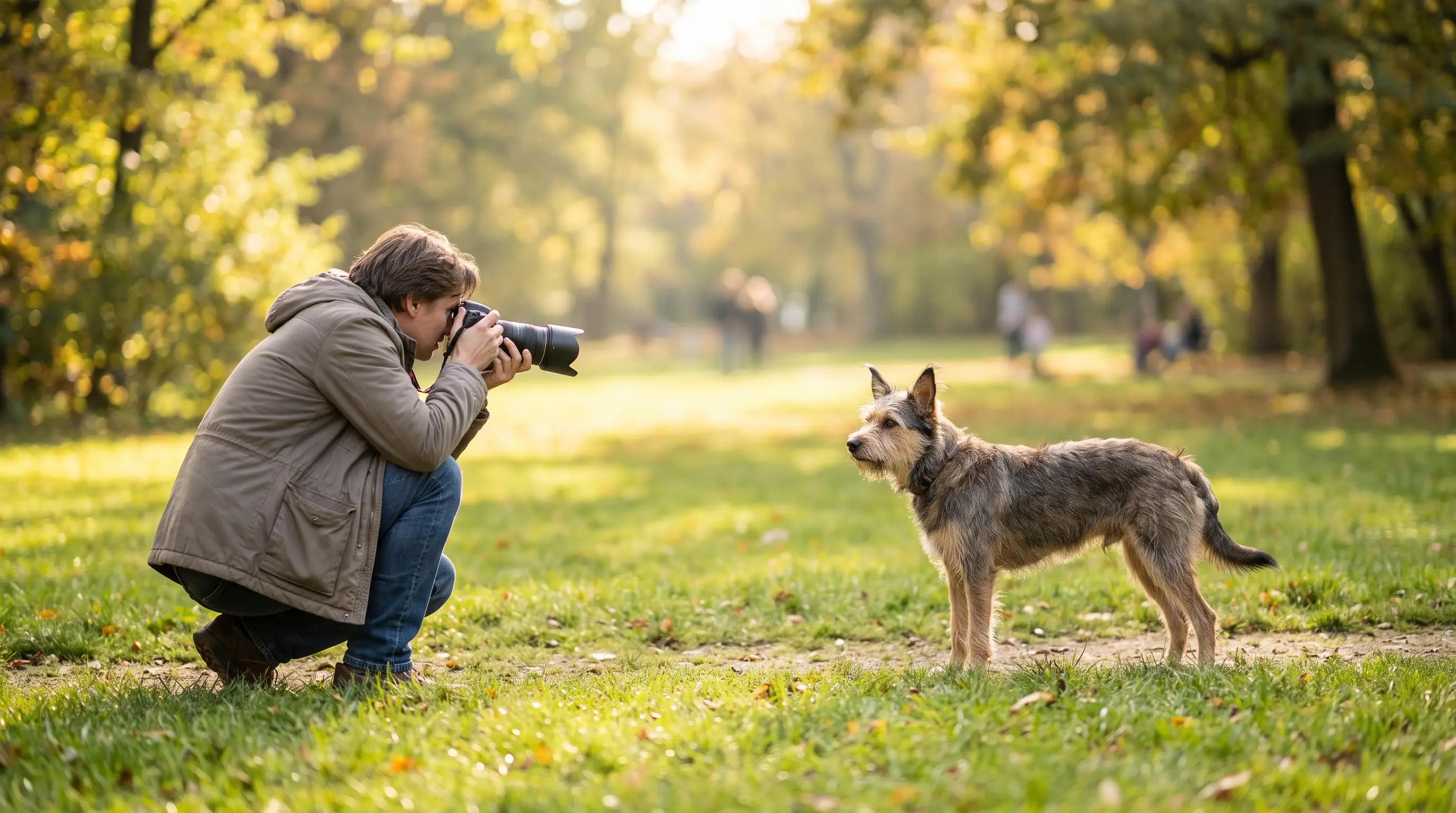
Read the tail alongside the ears, eyes, mouth and where the dog is putting its weight, because the tail on its own will fool you. The single most common mistake is treating any wag as a green light - a stiff, fast, high wag over a tense, forward-leaning body is a warning, not an invitation. Pair the tail with the rest: a soft face, loose shoulders and a low sweeping wag is an approachable dog; hard eyes, a closed mouth, a still or high-flagging tail and weight shifted forward is a dog telling you to back off. Watch the base of the tail rather than the tip, since that is where the muscle tension shows first. When the signals disagree - a wagging tail on a frozen, staring dog - trust the tension, not the wag.
Common questions
Why do dogs wag their tails?
Dogs wag their tails to communicate their emotional state, mostly to other dogs but also to people. A wag means the dog is responding to something and signalling how it feels about it, which can be happiness, arousal, tension or uncertainty depending on the tail's height, speed and direction.
Does a wagging tail mean a dog is happy?
No, not on its own. A loose, sweeping, full-body wag usually does signal happiness, but a fast, stiff, high wag often means arousal or agitation and can precede a bite. Read the wag together with the dog's ears, eyes and body posture before assuming it is friendly.
What does it mean when a dog wags its tail to the right?
A right-biased wag is linked to positive feelings and a wish to approach, such as seeing its owner. Research by Quaranta and colleagues found dogs wag more to their right in positive situations and more to their left when they want to withdraw, and other dogs actually pick up on the difference.
Why do dogs tuck their tails between their legs?
A tucked tail signals fear, anxiety or submission. Lowering the tail also seals off the anal glands and reduces the scent the dog gives off, which helps a nervous dog stay unnoticed and appear smaller and less threatening.
Do dogs need their tails for balance?
Yes. The tail works as a counterweight that keeps a dog stable during fast turns, climbing and walking narrow surfaces, and as a rudder for steering while swimming. A dog can adapt without one, but the tail makes agile, high-speed movement easier.
Can a dog live a normal life without a tail?
Yes, dogs born without tails or with docked tails live normally, but they lose a communication channel. Studies show other dogs read a short or docked tail less clearly, which can lead to more cautious or tense encounters.
More in Dogs
8 rare dog breeds most people never meet
Eight of the world's rarest dog breeds — where they come from, what makes them unusual, and why you almost never see one.

Foxtails: The Summer Grass Seed That Burrows Into Pets
Foxtail grass seeds catch in fur and travel one way—inward. Here's how to spot them on a cat or dog, and stop them.
The oldest dog ever and how long dogs really live
Bluey reached 29 years. Bobi's 31-year claim fell apart. Here's the real math on dog lifespan, and how to buy your dog more time.