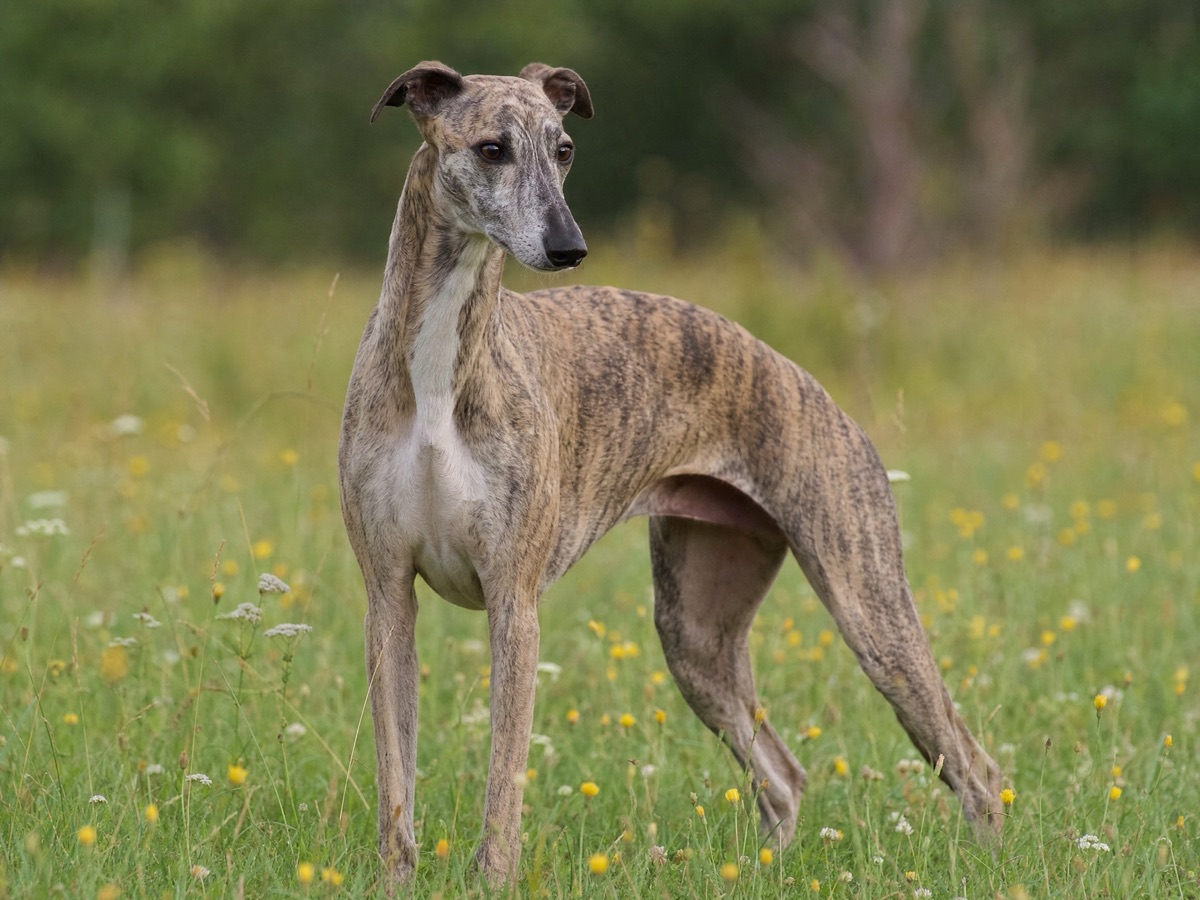
Whippet
A pocket Greyhound — sweet, quiet, and astonishingly fast.
On these lists: Dogs for apartments · Dogs for hot weather
Vital stats
| Size | Medium · 44–51 cm |
| Weight | 9–14 kg |
| Life expectancy | 12–15 years |
| Energy | Moderate — daily sprint bursts |
| Shedding | Low, year-round |
| Coat | Fine short coat · any colour |
| Group | Hound · FCI №162 / AKC |
| Origin | Northern England |
| FCI group | 10 — Sighthounds · FCI 162 |
Breed traits
Friendliness
Care
Mind
The Whippet by the numbers
The Whippet facts owners search for most — price, lifespan, weight, shedding and colours, in one place.
Widely bred, so you can usually find a litter from a registered breeder without a long wait. Ongoing costs stay modest — it eats little and routine vet care sits at the lower end.
We don't quote a single figure: the real price swings with breeder, region, bloodline and health testing — and a rescue costs a fraction of a breeder's litter. Adopting is almost always the cheapest route.
Temperament
Bred by Northern English miners for rabbit coursing and rag racing, the Whippet is two dogs in one: a serene, gentle companion indoors and a heat-seeking missile the moment something runs. It's sensitive, quiet and touch-loving — train with softness, and never trust it off-lead near roads.
Habits & quirks
The croissant
Sleeps curled in an impossibly tight ring, ideally under your blanket, ideally touching you.
Zoomies, then nothing
Thirty seconds of full-throttle laps, followed by four hours of ornamental stillness.
The sighthound stare
Locks onto distant movement before you've even seen it.
Radiator seeking
Thin coat, low body fat — it will find the warmest cushion in the house.
Health
The Whippet is one of the soundest, healthiest breeds you'll meet — lean, athletic and typically trouble-free. What it isn't is weatherproof or thick-skinned. With almost no body fat and a fine coat, a Whippet genuinely feels the cold and needs a warm coat in winter and a soft, padded bed rather than a thin mat. The thin skin also tears more easily than most dogs' on wire, brambles and rough ground, so check your Whippet over after a hard run. Mind those two things, and you have a remarkably healthy companion.
Nutrition
| Exercise | One or two safe, enclosed sprint sessions daily beat long slow marches. |
| Warmth | A proper winter coat isn't a fashion choice — Whippets genuinely feel the cold. |
| Skin | Thin skin tears easily on wire and brambles; check it over after off-lead runs. |
| Lead safety | Near roads, always leashed — no recall outruns a sighthound mid-chase. |
A Whippet is meant to look lean: a little of the ribs and hip bones showing over that racy frame is right, not a sign to feed more. Feed good, measured meals to hold lean muscle, keep any treats inside the daily total, and resist the urge to round off those elegant lines. If you're not sure what a healthy Whippet weight looks like, your vet will set you straight — on this breed, the number worth getting right is a lean one.
Puppy guide
A Whippet puppy is gentle, sensitive and quick to bond, so socialize it softly and never with force. Get it used to a warm coat and a padded bed from the start, teach recall early while accepting the prey drive will always be there, and keep exercise easy and low-impact while the long limbs are still growing. Near roads, on the lead — with a sighthound, that lesson can't start too early.
Training
Whippets are sensitive, gentle dogs that fall apart under a raised voice, so train with softness and rewards — shout and you get a worried dog that shuts down, not a keener one. They learn willingly, but recall is the honest limit: a sighthound locked onto something running has stopped hearing you, and no training fully overrides that. Save the free galloping for safely enclosed ground and keep the lead on near roads.
Life expectancy
Whippets live 12–15 years. Whippets are a naturally long-lived, sound breed, and keeping one at the top of that range is mostly comfort and common sense: a lean racing weight, a warm coat in winter, a soft bed for that bony frame, and a safe place to sprint. Look after the thin skin, keep the teeth and vaccinations in order, and a Whippet spends most of a long life doing what it loves best — one glorious sprint, then hours of ornamental sleep.
Popular Whippet mixes
Whippoodle
A wispy, low-shedding sighthound cross. Gentle and quiet at home like a Whippet, with the Poodle's curls and quick mind. Still needs a daily sprint.
Bedlington Whippet
A classic working lurcher, fast and light with a bit more terrier grit than a pure Whippet. Loyal and calm indoors, but built to chase.
Whippet Collie
Whippet speed with Border Collie focus, a favourite lurcher for people who want a dog that runs and thinks. Needs real exercise and a job.
Similar breeds
Breeds with a similar build and background — worth a look if this one isn't quite the fit.
Compare this breed
Breeds that look like this
Common questions
Are Whippets good apartment dogs?
Yes — they're quiet, clean and calm indoors, provided they get one or two good daily sprints or runs to burn energy.
Are Whippets fragile?
Lean and thin-skinned rather than fragile — they feel the cold and need a coat in winter, and their skin cuts easily on rough terrain.
Can Whippets live with cats?
Often, if raised together indoors — but the chase instinct is hard-wired outdoors. A strange cat that runs will be chased.
Does the Whippet shed a lot?
Not much. The Whippet is a low-shedding breed, so loose hair around the home stays minimal. It still needs regular grooming, but you won't be fighting drifts of fur.
Is the Whippet hypoallergenic?
No dog is truly hypoallergenic, but the Whippet comes closer than most: its low-shedding coat releases less of the dander that triggers allergies. Many allergy sufferers manage well with this breed, but spend time around one before committing.
Is the Whippet good with children?
Generally yes. The Whippet is a friendly, people-loving breed that usually does well with children when raised and socialised well. As with any dog, teach children to be gentle and supervise around toddlers.
Is the Whippet easy to train?
Reasonably. The Whippet is trainable with consistency and rewards, though it isn't the quickest study. Keep sessions short and positive, and be patient with the basics like recall.
Stories featuring this breed
All stories →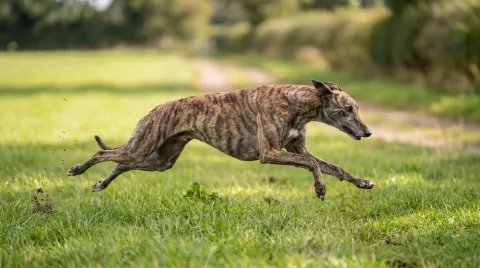
The fastest dog breeds, and how fast they really go
The Greyhound hits about 72 km/h — second only to the cheetah, and the winner over any real distance. Honest top speeds for the sighthounds and the surprises, plus how fast a Dobermann actually is.
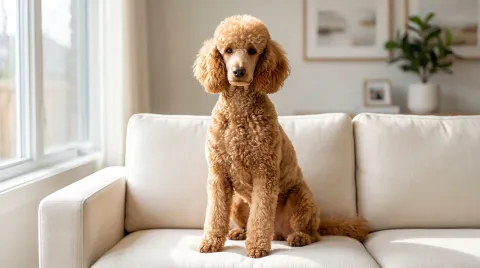
Low-shedding dog breeds, ranked from our own data
We scored every breed for shedding, 1 to 5. Here are the ones that scored lowest — the curly coats worth the grooming bill, the genuinely low-maintenance short-hairs, and why none of them are hypoallergenic.
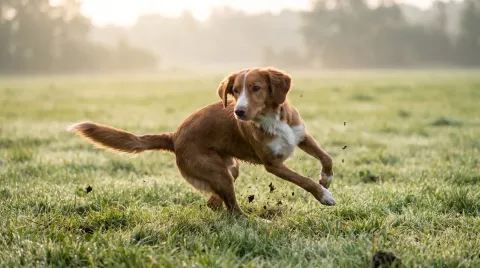
What a dog's tail is actually for
Balance, communication and scent - the three real jobs a dog's tail does, and why a wag on its own never means a happy dog.