
Treats without the weight gain: the 10% rule
Treats and everything else your pet eats outside its regular food should add up to no more than about 10% of its daily calories, and you take those calories out of the meal bowl instead of piling them on top. That one habit is the difference between a treat that costs nothing and one that quietly turns into a spare tyre. It works the same for cats and dogs, and it takes about a minute to set up.
The 10% rule
Treats and extras should make up no more than roughly 10% of your pet's daily calories, with the other 90% coming from a complete, balanced food. This is the figure most veterinary nutritionists and the World Small Animal Veterinary Association point people to, and the reasoning is plain. A complete food carries the protein, fats, vitamins and minerals a cat or dog needs in the right ratios. Most treats do not, so once they climb past a tenth of the day they start crowding out real nutrition as well as adding weight.
The part people miss is that this is a calorie limit, not a headcount. Ten percent is not "two biscuits" or "three treats" — it depends entirely on how calorie-dense the treat is and how big the animal is. The second half of the rule matters just as much: you subtract treat calories from the day's meals rather than adding them. Give the treats, then serve a slightly smaller dinner. Skip that step and even a perfect 10% turns into 110% of what your pet should eat.
Hidden calories
Most treat-driven weight gain is invisible because it arrives in small pieces spread across the day. Two dental chews, a few training treats, a corner of toast at breakfast, a dollop of the kids' leftovers, a lick of yoghurt — none of it feels like a meal, and together it can be one. A 5kg dog needs only around 200 calories a day, which means its entire treat budget is about 20. A single medium dental chew runs 50 to 100 calories, so one chew has already blown the whole day before a proper meal is in sight.
Small pets are hit hardest because their whole daily allowance is tiny, and long-backed breeds like the dachshund pay for extra weight in joint and spine trouble. The fix is not willpower, it is bookkeeping: decide that dental sticks, chews, table scraps and training rewards all count, and the hidden calories stop being hidden.
How to count treat calories
Start with a rough figure for how many calories your pet needs, then read the calories printed on the treat packet and keep the daily treat total under a tenth of that number. Most markets require pet-food and treat labels to carry an energy figure, usually as kcal per treat or per 100g, so the information you need is already in your hand. If you do not know your pet's daily need, ask your vet or use a veterinary calorie calculator such as the one from the Pet Nutrition Alliance; as a rough anchor, many indoor cats sit near 200 calories a day and a small dog not far above that.
Then do the honest accounting. Count dental sticks and chews as treats, because that is what they are to the waistline even if the packet calls them dental care. Add up a normal day — chews, training bits, scraps — and if the total sits above 10%, trim the biggest offender first. Usually it is the chew.
Low-calorie treat swaps

The easiest way to stay under budget is to swap calorie-dense biscuits for something that is mostly water and fibre. A piece of raw carrot, a plain green bean, or a few pieces of your pet's own kibble counted out of the meal all work, and dogs generally take to them happily. For dogs, plain air-popped popcorn is a genuinely low-calorie option — no butter, no salt, no oil, and no unpopped kernels, all of which turn a harmless snack into a problem.
Two cautions. Carrots are low in calories but relatively high in sugar, so leave them out for a diabetic pet. And cats are obligate carnivores who rarely see the point of a vegetable; for them, a few bits of their own kibble held back from a meal, or a flake of plain cooked chicken, lands far better than a carrot ever will.
Training treats

For training, break treats into tiny pieces or use the day's own kibble so a full session does not overfeed. A reward only has to taste like something — the dog does not count the calories, so a treat snapped into four or five pea-sized bits rewards four or five times for the price of one. A busy working breed like the border collie can run through dozens of rewards in a single session, which is exactly the scenario the 10% rule is built to catch.
The cleanest trick is to measure out the day's kibble in the morning and train from that same bowl. Every reward then comes straight out of the meal allowance, so a long session cannot push the day over budget — it just means a lighter dinner.
Pet obesity
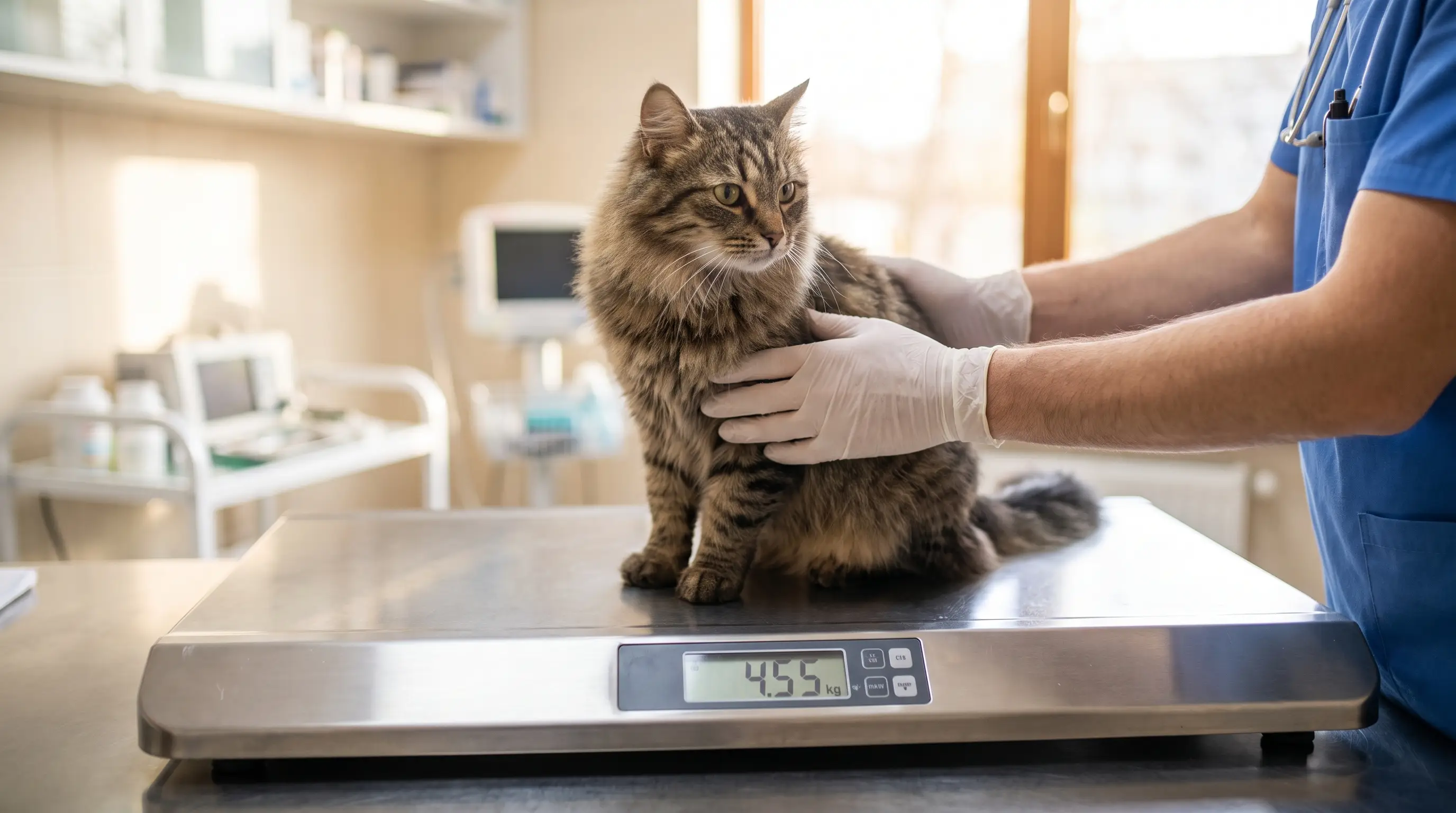
This matters because treats are where obesity usually creeps in, and obesity is common. The Association for Pet Obesity Prevention's 2022 US survey classified roughly 59% of dogs and 61% of cats as overweight or obese, while fewer than half of owners thought their own pet had a weight problem — the gap between the scale and the story is most of the problem. Extra weight drives arthritis and joint pain, raises the risk of diabetes (especially in cats, through insulin resistance), and adds strain to the heart.
It also shortens the years you get. Purina's fourteen-year lifespan study of Labradors found that dogs kept lean lived a median of about two years longer than their overfed littermates. Very few daily habits move that number, and the treat jar is one of the few you fully control.
Common questions
How many treats should I give my dog a day?
Only as many as keep treats under about 10% of your dog's daily calories, which for a small dog is often just one or two small treats and for a large dog a few more. It depends on the treat's calories, not a fixed number, and everything counts — chews, training bits and table scraps included.
What is the 10% rule for dog treats?
Treats and extras should make up no more than 10% of your dog's daily calories, with the remaining 90% coming from complete, balanced food. It is a calorie limit rather than a count, and the treat calories are meant to come out of meals, not be added on top.
Can too many treats make a dog fat?
Yes, treats are the most common hidden source of extra calories and a frequent cause of weight gain. Small pieces spread across the day add up fast, and a single dental chew can use most of a small dog's entire treat budget on its own.
Do dental chews count as treats?
Yes. A medium dental chew is typically 50 to 100 calories, so it counts fully toward the 10% treat allowance even though the packet is sold as dental care. If your pet needs to lose weight, factor the chew in or ask your vet before using them daily.
How many treats can a cat have a day?
The same 10% rule applies, and since many indoor cats need only around 200 calories a day, that leaves roughly 20 calories for treats — usually just a few small ones. Count anything given by hand, and trim the meal to match.
What can I give my dog instead of treats?
Low-calorie options include a piece of raw carrot, plain green beans, plain air-popped popcorn with no butter or salt, or a few pieces of your dog's own kibble counted out of the meal. Skip carrots for diabetic dogs, since they are relatively high in sugar.
More in Dogs

8 rare dog breeds most people never meet
Eight of the world's rarest dog breeds — where they come from, what makes them unusual, and why you almost never see one.

Foxtails: The Summer Grass Seed That Burrows Into Pets
Foxtail grass seeds catch in fur and travel one way—inward. Here's how to spot them on a cat or dog, and stop them.

The oldest dog ever and how long dogs really live
Bluey reached 29 years. Bobi's 31-year claim fell apart. Here's the real math on dog lifespan, and how to buy your dog more time.