Bringing a kitten home: your first-week plan
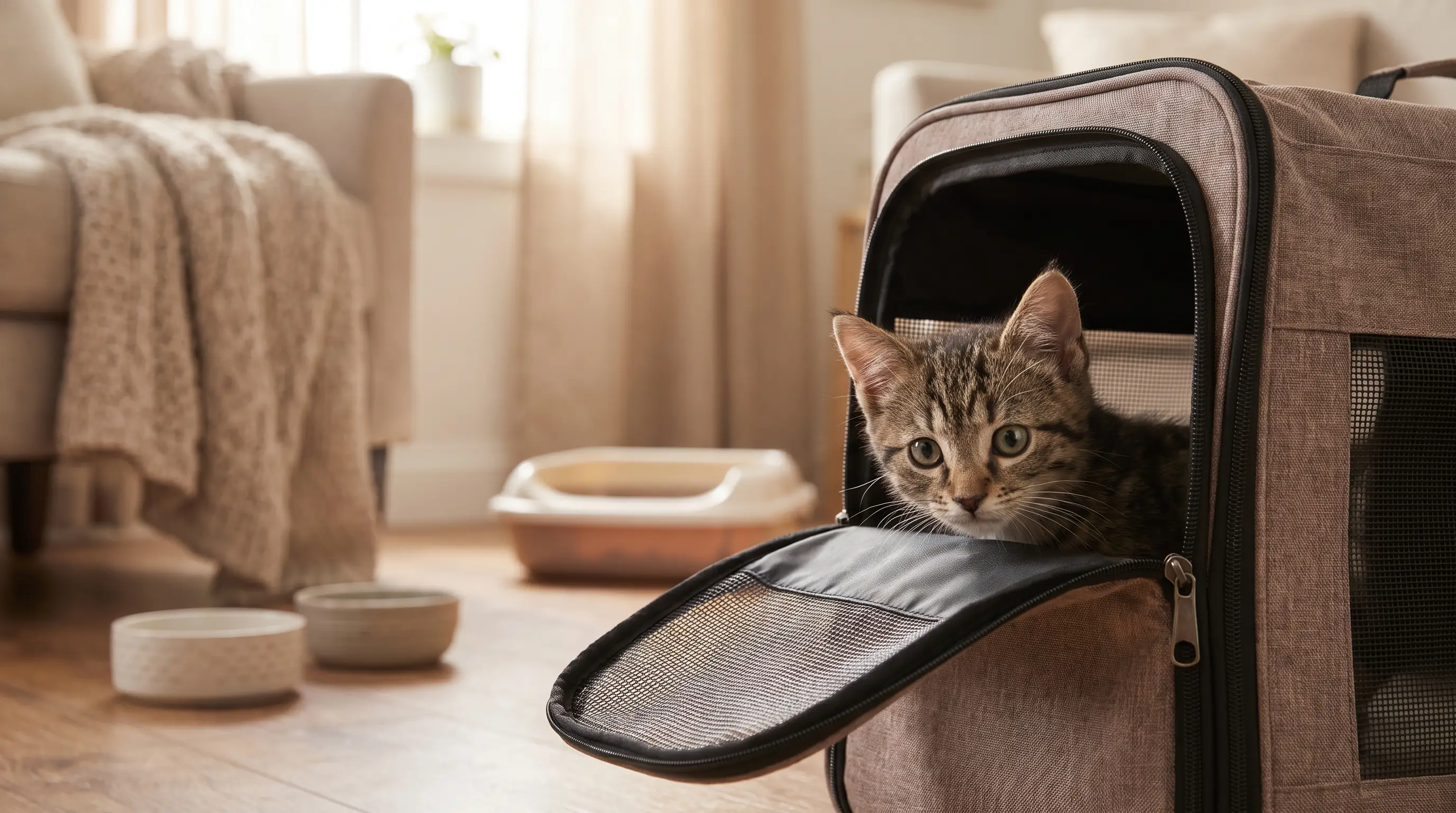
The single best thing you can do for a new kitten is give it one room, not a whole house. Set up a quiet spare room or bathroom with a litter tray, food and water, a bed and a hiding spot, and let the kitten decompress there for the first few days before it explores the rest of the home. Kittens sleep 16 to 20 hours a day and read a big new space as threat, not treat. Slow down, let the kitten come to you, and book the vet.
The safe room
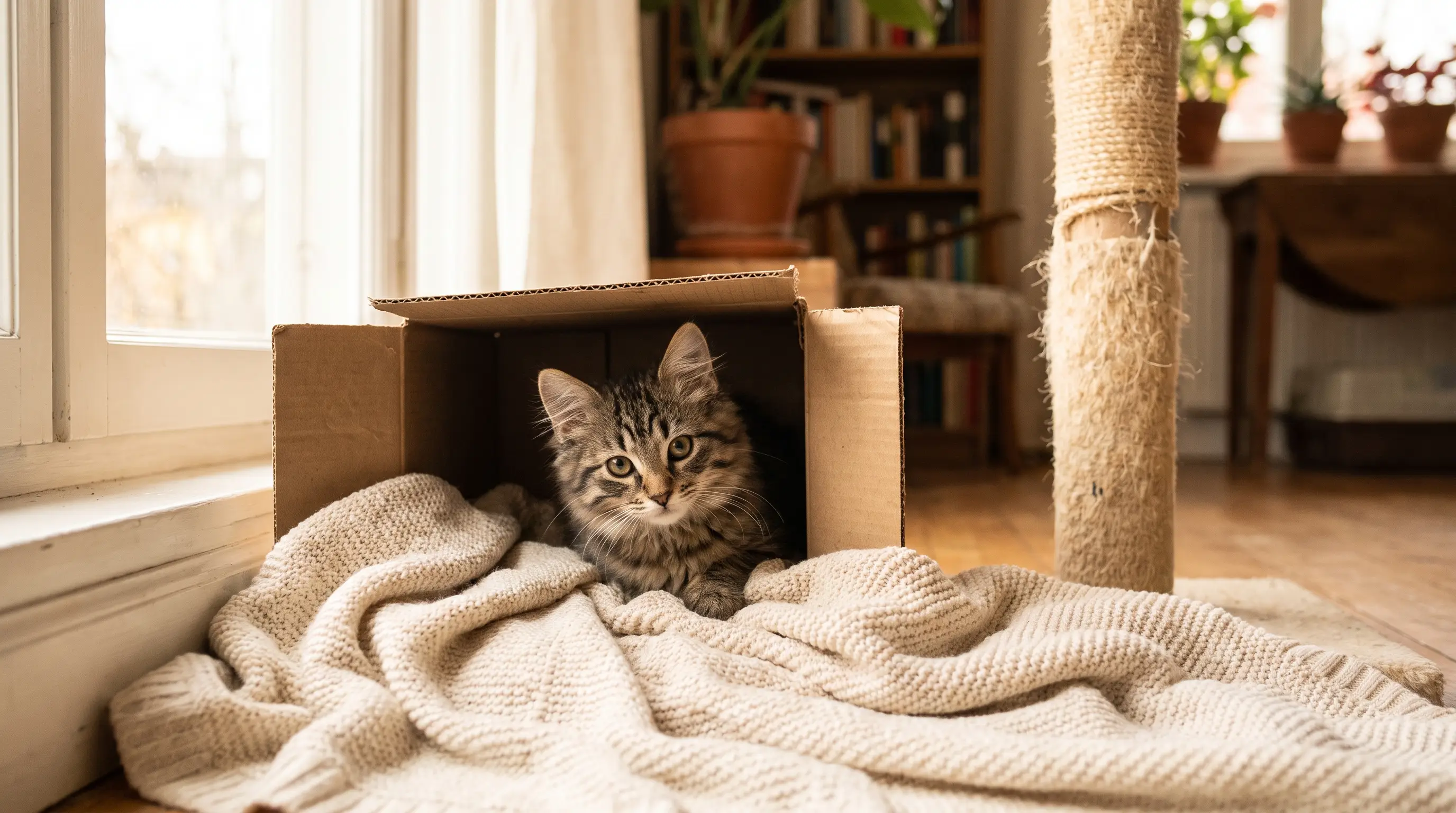
Start with one room and turn it into the kitten's base camp before the carrier comes through the door. Pick the quietest space you have — a spare bedroom, a home office, even a bathroom — and set it up so everything the kitten needs is within a few steps. A litter tray goes in one corner, food and water bowls in another well away from the litter, a soft bed, a hiding spot like a cardboard box on its side, a scratching post and a couple of small toys.
Then leave the kitten to settle. Most need one or two days in the safe room; a shy one might want a week. A kitten that has decided one room is safe will later explore the house calmly, while a kitten turned loose in the whole place at once often bolts under the nearest sofa and stays there. Open the rest of the home gradually, one room at a time over the first days, and let the kitten set the pace rather than carrying it around to show it the sights.
Kitten-proofing and toxic plants
Get down to kitten height and clear the room of anything a curious mouth can reach. Tuck away and tape down electrical and blind cords, and pick up hair ties, rubber bands, string, thread and anything small enough to swallow — swallowed elastic and thread are a common cause of emergency surgery in young cats. Then check your plants. Lilies are the one to know about: every part of a true lily (genus Lilium) and daylily (Hemerocallis) is deadly to cats, and it takes almost nothing. A nibbled petal, a few pollen grains licked off the fur, or even a drink of the vase water can cause fatal kidney failure within a few days. There is no safe dose, so the only sound advice is to keep lilies out of a house with cats. Onion, garlic, chocolate, grapes and raisins are toxic too — the kitchen hides more hazards than most people expect.
The litter tray

Most kittens use a litter tray on instinct, so your job is mainly to make it easy to get right. Choose a tray with low sides the kitten can climb into without a struggle, because a tiny kitten cannot scale a high-walled box, and fill it with a fine, unscented litter. Strong scents and hard pellets that feel odd underfoot put some kittens off, and a kitten that gives up on the tray will pick a soft rug instead. Keep the tray well away from the food and water, scoop it every day, and resist moving it around while the kitten is still learning where it lives — the litter you pick matters more than the fancy box. If a kitten that was using the tray suddenly stops, treat it as a possible health sign rather than naughtiness and mention it to your vet.
Food, play and letting the kitten approach
Feed a complete kitten food, little and often. Kittens have small stomachs and high energy needs, so under six months they usually eat three or four small meals a day rather than one or two large ones — follow the amounts on the pack and keep to whatever weaning food the breeder or shelter used, at least at first, to avoid an upset stomach. Skip cow's milk; it gives most kittens diarrhoea.
Then let the kitten come to you instead of the other way round. Sit on the floor at its level, stay still, and let curiosity do the work — dragging a wand toy along the ground invites play without a hand looming overhead. Don't chase the kitten, corner it, or pass it around visitors on the first day. Gentle, unforced handling in these early weeks is the single biggest thing you can do for a friendly adult cat, whether you end up with a quiet tabby or a talkative Siamese.
Introductions to resident cats and dogs
Never introduce a new kitten to a resident cat or dog face to face on day one. The safe room does double duty here: it keeps the newcomer separate while the animals get used to each other's smell through the door. Start with scent-swapping — rub a cloth over one animal and leave it near the other, and feed them on opposite sides of a closed door so each links the other's scent with something good. After a few calm days, move to short, supervised meetings through a barrier like a baby gate or a cracked door, and build up over days to weeks. Some hissing and swatting early on is normal; a real fight is not, so end a meeting before it escalates and try again later. Keep dogs on a lead for the first few introductions and let the kitten retreat whenever it wants. Rushing this is the main reason cats never accept each other, so give it more time than feels necessary.
The first vet visit
Book the first vet visit within the first week, and sooner if the kitten isn't eating, drinking or using the tray by the second day. The vet runs a full health check, starts or continues the vaccination course — kittens usually get their first vaccines around eight or nine weeks with a booster three to four weeks later, up to about sixteen weeks — and sorts out deworming and flea treatment. Ask about a microchip, which is permanent ID and now a legal requirement for cats in some countries, and about neutering: many vets recommend it from around four months rather than waiting until six. Bring any records from the breeder or shelter and a short list of questions on diet, worming and behaviour. This first appointment is also where you set up the kitten's ongoing plan, so it's worth booking before problems appear rather than after.
Common questions
What is the 3-3-3 rule for kittens?
The 3-3-3 rule is a rough guide to settling: about 3 days to decompress in a safe space, 3 weeks to learn the household routine, and 3 months to feel fully at home. It's a popular rule of thumb rather than a strict scientific timeline, and shy or very young kittens can take longer at every stage.
How long should you keep a kitten in one room?
Most kittens do well in one safe room for the first one to two days, though a nervous kitten may want a week or more. Let the kitten's confidence, not the calendar, decide: once it's eating, using the litter tray and coming out to play, you can start opening the rest of the house one room at a time.
Should I ignore my kitten the first day?
Don't smother it, but you don't have to ignore it either. Sit quietly in the room and let the kitten approach you rather than picking it up or chasing it, so it learns you're safe on its own terms. Talk gently and offer a toy, but skip visitors and handling until it has settled in.
Where should a kitten sleep on the first night?
In its safe room, with a warm bed and a hiding spot like a covered box so it feels secure. A kitten may cry the first night or two from missing its littermates, which is normal; a soft blanket, a warm covered spot and a quiet room usually help more than moving it into your bed straight away.
How long does it take for a kitten to settle into a new home?
Most kittens start acting like themselves within a week or two, and feel fully at home by around three months. Age and personality matter a lot — a confident kitten may settle in days, while a timid or under-socialised one takes longer — so patience and a steady routine do more than pushing for quick progress.
Should you leave a new kitten alone at night?
Yes, a kitten can be left alone overnight in its safe room from the first night, with water, a litter tray, a warm bed and no hazards it could chew or swallow. Keeping it in one secured room is safer than free run of the house, and it also protects your resident pets while everyone gets used to each other.
More in Cats

Can you take your cat to the beach? An honest guide
Most cats should skip the beach, and a few can go safely. The honest, vet-checkable guide to heat, sun, saltwater, harnesses and who stays home.

What Catnip Really Does to a Cat
The honest, myth-busting guide to catnip: what nepetalactone does, why 1 in 3 cats ignore it, and what to try instead.

You Found a Stray Cat: What to Actually Do
A friendly cat on your doorstep may already have a home. Here is the honest, welfare-first order of steps before you take it in.