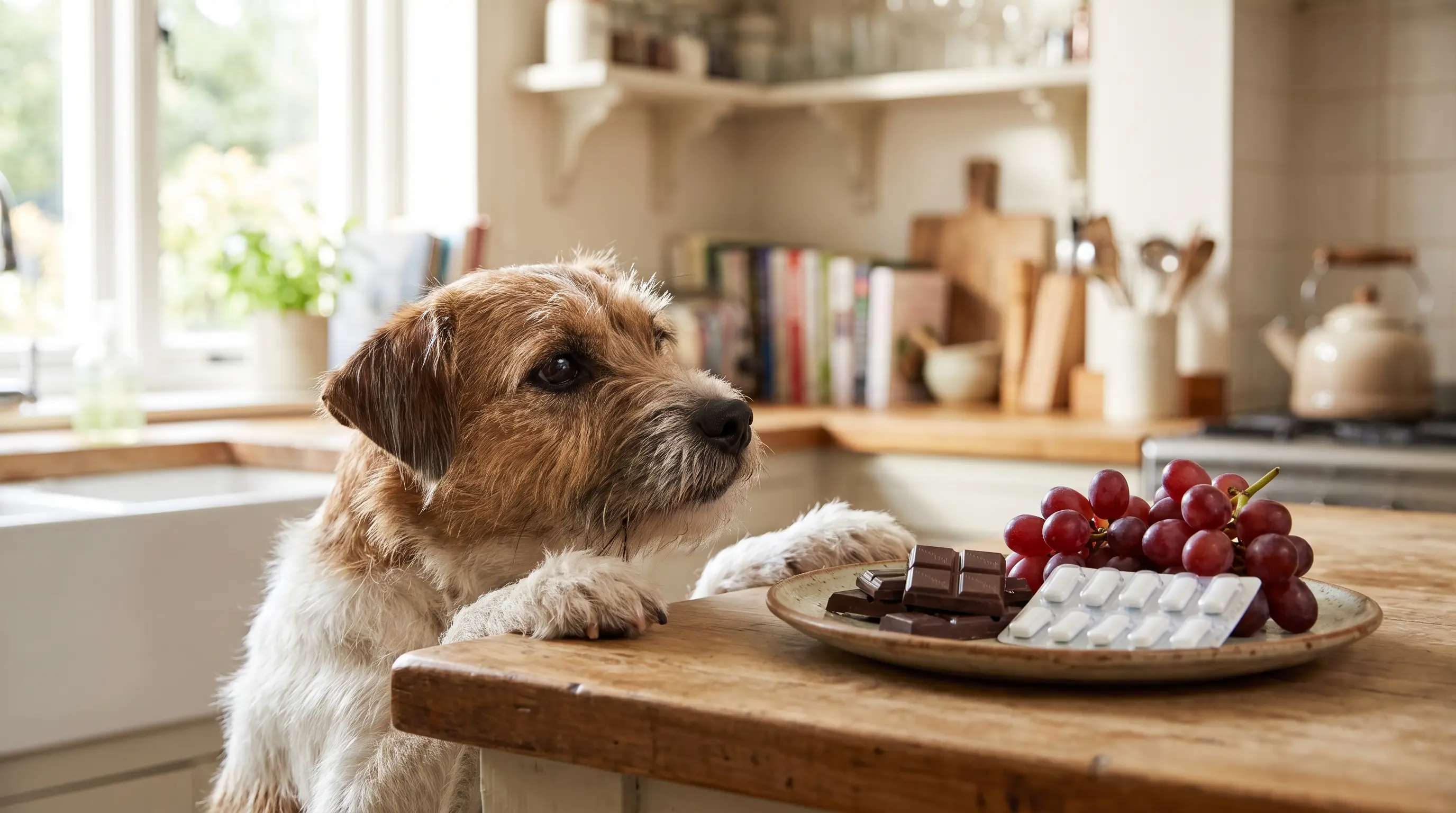
Foods dogs must never eat: the toxic list
Three foods do most of the real damage to dogs: chocolate, grapes and raisins, and xylitol. The rest of the toxic list matters too, but if you remember only a handful of things, remember those three and remember that the right move is always to call your vet before symptoms start, not after. Here is the honest version, ranked by how much danger each food actually carries.
Chocolate
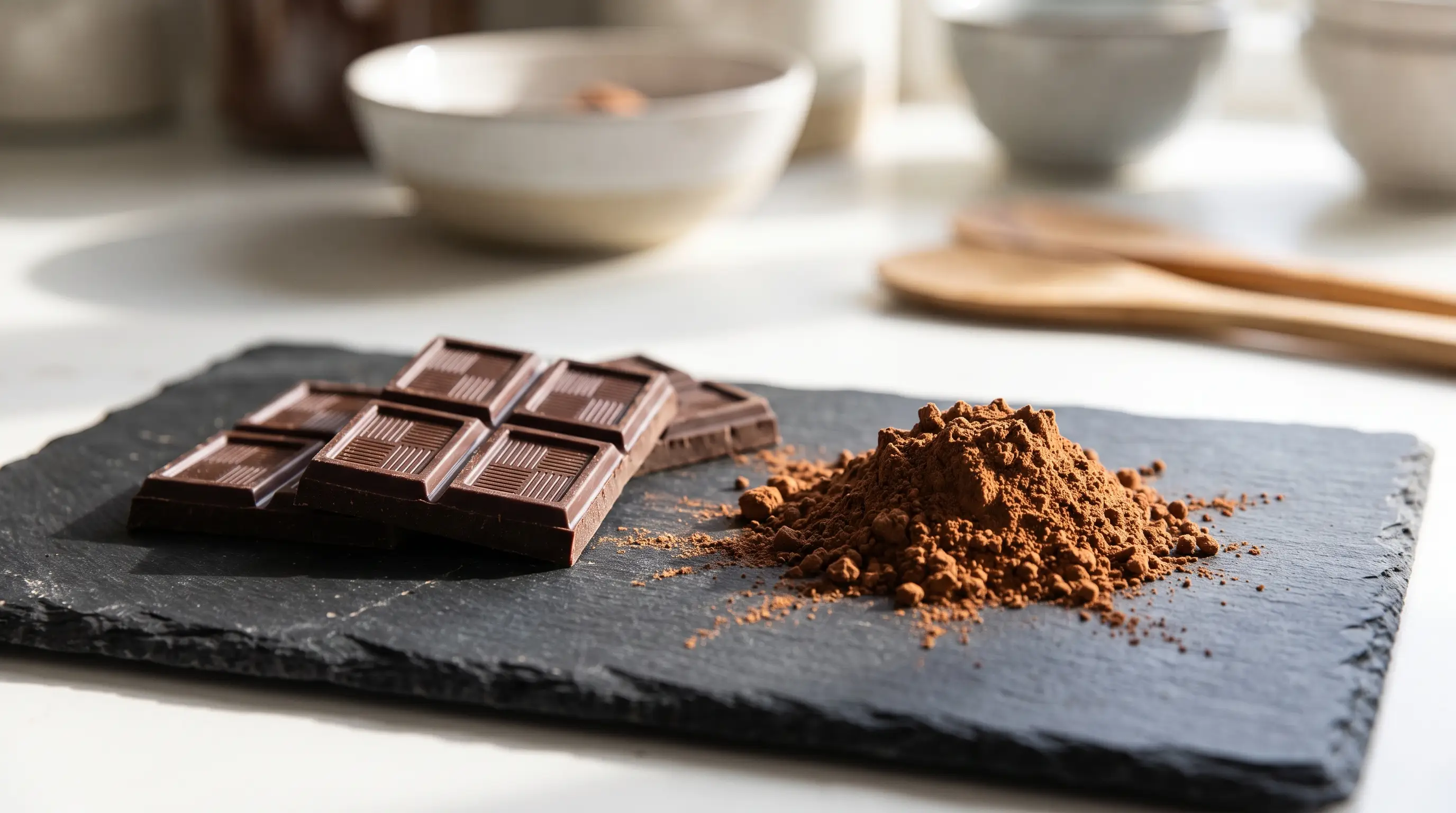
Chocolate is dangerous because it contains theobromine and caffeine, two stimulants dogs break down far more slowly than people do, so the compounds build up and hit the heart and nervous system. The darker the chocolate, the worse it is. Baking chocolate and cocoa powder carry the most theobromine per gram, dark chocolate is next, milk chocolate is milder, and white chocolate has almost none. Because the danger depends on both the type and your dog's weight, the same chocolate bar that a Great Dane could shrug off can seriously poison a Chihuahua. Signs include vomiting, restlessness, a racing heart, tremors and, in bad cases, seizures. Don't try to judge the dose yourself. A quick call with the type of chocolate, the amount, and your dog's weight lets a vet or poison line tell you in minutes whether it is a wait-and-watch or an emergency.
Xylitol and birch sugar
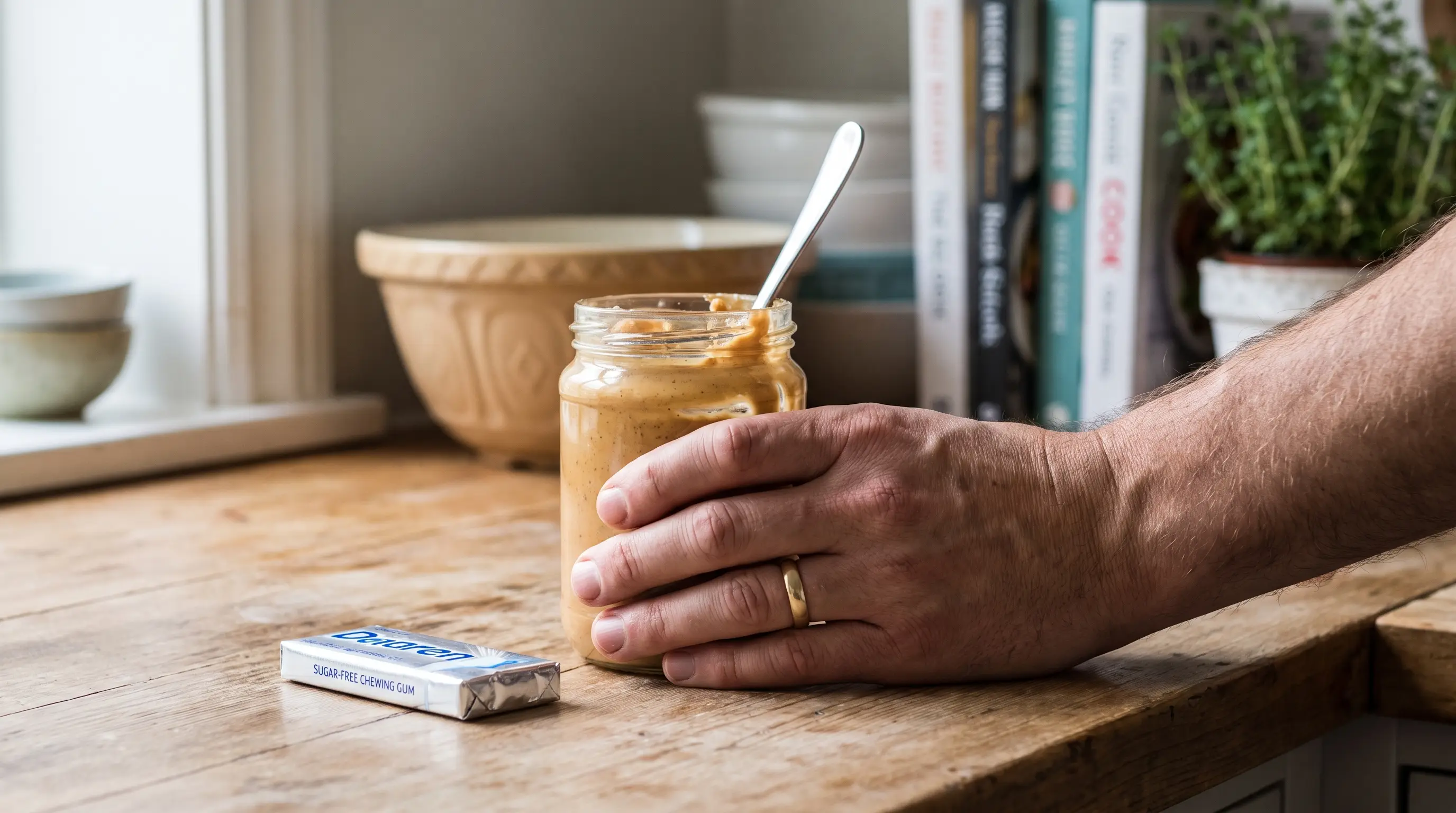
Xylitol is the most under-known killer on this list, and a tiny amount can be life-threatening. It is a sugar substitute that hides in sugar-free gum, some peanut butters, baked goods, mints, and toothpaste, and on labels it sometimes appears as birch sugar. When a dog swallows it, the pancreas mistakes it for real sugar and dumps insulin, which crashes blood sugar within minutes and can cause staggering, weakness and seizures. Larger doses can trigger liver failure a day or two later. The FDA has warned owners about it directly, and the peanut-butter risk is the trap that catches careful people, since many use it to hide pills. Read the label on anything sweet before you share it, and if your dog gets into gum or sugar-free food, treat it as an emergency even if only a piece or two is gone.
The gap between a safe amount and a dangerous one is small, which is why this one deserves more fear than it usually gets.
Grapes and raisins
Grapes and raisins can cause sudden kidney failure, and because the toxic dose is unpredictable, you should treat any amount as dangerous. It doesn't matter whether they are seeded or seedless, red or green, organic or not; raisins are simply grapes with the water removed, so they pack the toxin more tightly. In 2021 researchers linked the poisoning to tartaric acid, which explains why the risk had been so hard to pin down, since the tartaric acid content of grapes swings widely from one bunch to the next. Dogs don't clear it well, and it damages the kidneys directly. Early signs are vomiting and lethargy within hours. There is no safe serving, so grapes and raisins never belong in trail mix, baked goods, or a bowl left within reach.
Onion, garlic, leeks and chives
The allium family, which includes onion, garlic, leeks, shallots and chives, damages a dog's red blood cells and can cause anemia. What makes it sneaky is that the effect is cumulative and the form doesn't spare you: cooked, dried, and powdered all count, so onion or garlic powder in leftovers, gravy, baby food or table scraps adds up over time. Garlic is more concentrated than onion by weight, so it takes less of it. Signs can be delayed by several days and include weakness, pale gums and dark urine. This is the one where the danger comes less from a single dramatic incident and more from a habit of sharing seasoned human food. A curious food-thief like a Beagle can rack up small doses from the kitchen bin without anyone noticing until the symptoms show.
The rest of the list
Beyond the big offenders, a handful of foods round out the real danger list. Macadamia nuts can cause weakness, tremors and a rise in body temperature, often within twelve hours. Alcohol and raw yeast bread dough are a double threat, because the dough keeps rising and fermenting in the warm stomach, producing gas that bloats the gut and alcohol that gets absorbed. Caffeine, in coffee grounds, tea bags or energy drinks, works like chocolate but stronger. Cooked bones are risky in a different way, since they splinter and can tear or block the gut. Large amounts of salt, from dough ornaments or over-salted food, can cause dangerous sodium levels. Some foods are milder than their reputation: avocado contains persin, which mostly upsets a dog's stomach, and the bigger hazards there are the fatty flesh and the choke-sized pit. Milder does not mean free rein, but it does mean not every scare is an emergency.
What to do if your dog eats something toxic
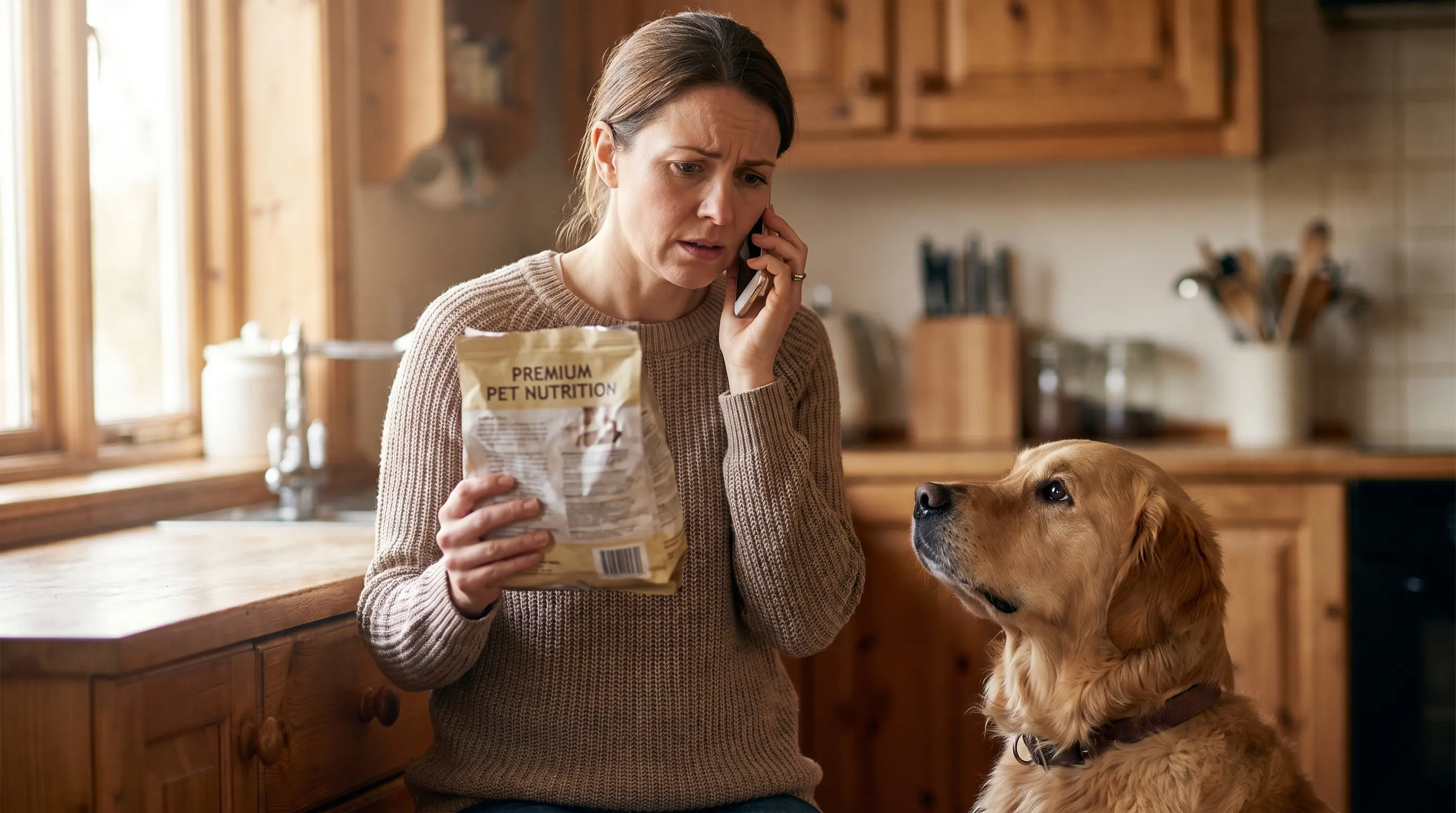
Don't wait for symptoms. The single most useful thing you can do is call your vet, an emergency clinic, or an animal poison line straight away, because the best window to act is often before a dog looks sick at all. In the US the Pet Poison Helpline is 855-764-7661 and the ASPCA Animal Poison Control Center is 888-426-4435; both run around the clock and both charge a consultation fee that is worth it. Before you call, have three things ready: the product or its packaging, an estimate of how much your dog ate, and your dog's weight, since every dose calculation depends on it. Don't make your dog vomit unless a professional tells you to, because with some substances that does more harm than good. Save the label or a photo of the ingredients, and if you're near the container, bring it with you to the clinic. Fast, boring, well-informed action beats panic every time.
Common questions
What foods are poisonous to dogs?
The most dangerous are chocolate, grapes and raisins, and xylitol (a sweetener also labeled birch sugar). Onions, garlic, leeks and chives, macadamia nuts, alcohol, raw yeast dough, caffeine, cooked bones and large amounts of salt are also toxic. Chocolate, grapes and xylitol do the most real harm.
How much chocolate is toxic to a dog?
It depends on the type of chocolate and your dog's weight, so there is no single safe number. Baking chocolate and cocoa powder are the most dangerous per gram, dark chocolate next, milk chocolate milder, and white chocolate has almost none. A small dose of dark chocolate can poison a small dog, so call a vet with the type, amount and weight rather than guessing.
Can one grape kill a dog?
It can, because the toxic dose of grapes is unpredictable and even a small amount has caused kidney failure in some dogs. There is no serving considered safe, and raisins are more concentrated than fresh grapes. If your dog eats any grapes or raisins, call your vet or a poison line right away.
Is peanut butter safe for dogs?
Plain peanut butter is usually fine, but some brands contain xylitol, which is life-threatening to dogs in tiny amounts. Always read the ingredient label and avoid anything listing xylitol or birch sugar, especially the sugar-free products people use to hide pills.
What should I do if my dog eats something poisonous?
Don't wait for symptoms; call your vet, an emergency clinic, or an animal poison line immediately. Have the product packaging, the amount eaten, and your dog's weight ready, and don't induce vomiting unless a professional tells you to. In the US the Pet Poison Helpline is 855-764-7661 and the ASPCA is 888-426-4435.
What are the symptoms of poisoning in dogs?
Common early signs include vomiting, diarrhea, lethargy, drooling, tremors, weakness and a racing heart, though they vary by the food and can be delayed. Xylitol can cause a sudden crash within minutes, while onion or garlic damage may not show for days. Don't wait for symptoms to appear before calling for advice.
More in Dogs

8 rare dog breeds most people never meet
Eight of the world's rarest dog breeds — where they come from, what makes them unusual, and why you almost never see one.
Foxtails: The Summer Grass Seed That Burrows Into Pets
Foxtail grass seeds catch in fur and travel one way—inward. Here's how to spot them on a cat or dog, and stop them.
The oldest dog ever and how long dogs really live
Bluey reached 29 years. Bobi's 31-year claim fell apart. Here's the real math on dog lifespan, and how to buy your dog more time.