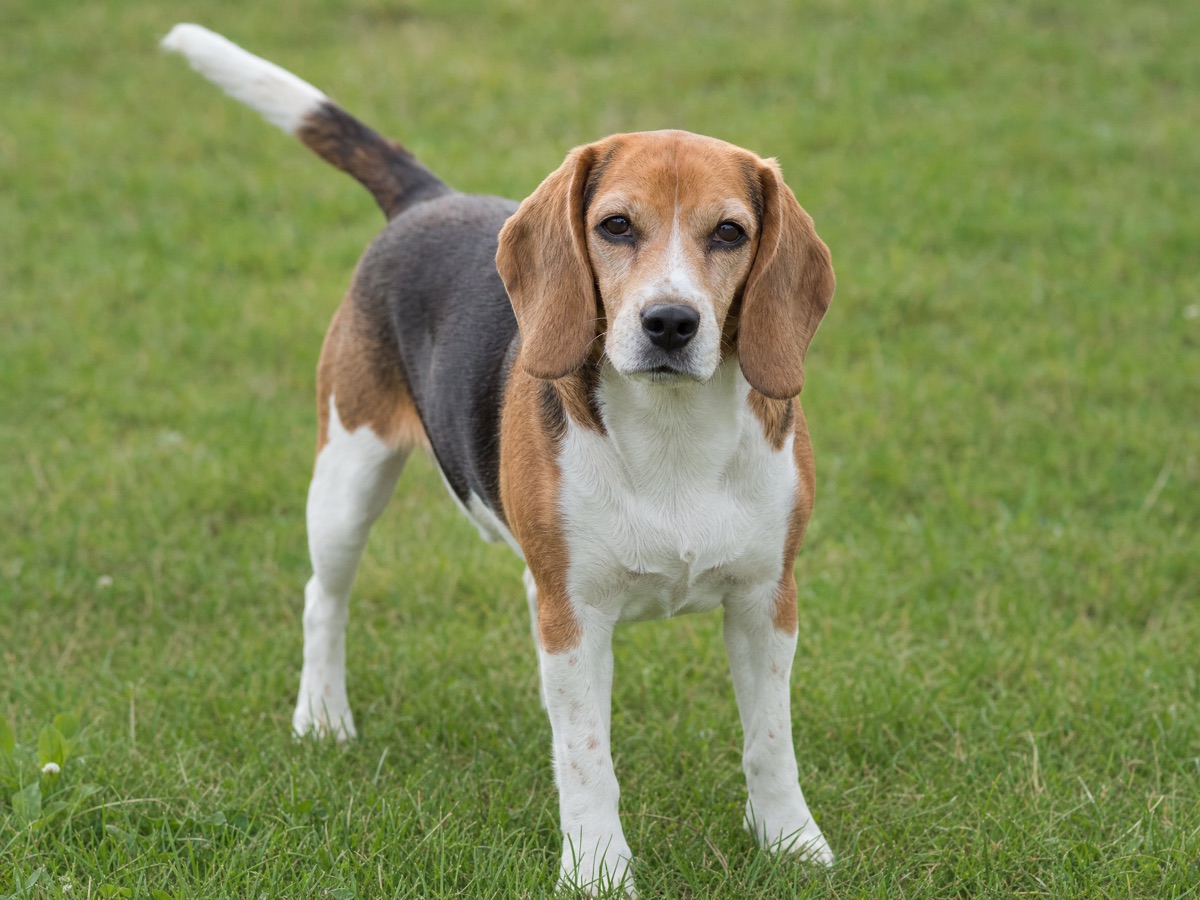
Beagle
A nose with a dog attached — merry, musical and mischievous.
On these lists: Family dogs · Dogs for hunting
Vital stats
| Size | Small · 33–41 cm |
| Weight | 9–11 kg |
| Life expectancy | 12–15 years |
| Energy | High — 60+ min/day |
| Shedding | Moderate, year-round |
| Coat | Short, dense · tricolour, lemon & white |
| Group | Hound · FCI №161 / AKC |
| Origin | England |
| FCI group | 6 — Scent hounds and related breeds · FCI 161 |
Breed traits
Friendliness
Care
Mind
The Beagle by the numbers
The Beagle facts owners search for most — price, lifespan, weight, shedding and colours, in one place.
Widely bred, so you can usually find a litter from a registered breeder without a long wait. Ongoing costs stay modest — it eats little and routine vet care sits at the lower end.
We don't quote a single figure: the real price swings with breeder, region, bloodline and health testing — and a rescue costs a fraction of a breeder's litter. Adopting is almost always the cheapest route.
Temperament
Centuries of hunting hare in packs built a hound that is cheerful, tireless and constitutionally incapable of ignoring a scent. At home the Beagle is sunny, sturdy and sociable — happiest with company, dreadful in solitude, and permanently convinced that whatever you're eating was meant for it.
Habits & quirks
The nose takes over
Mid-walk, mid-game, mid-anything — a good scent switches the Beagle to autopilot.
Counter surveillance
No unattended sandwich is safe; Beagles plan food heists with genuine talent.
The full chorus
Excitement, loneliness or a passing fox all get the same answer: a rich, carrying bay.
Pack sleeping
Bred to pile up with packmates, most Beagles treat your lap or duvet as home base.
Health
Beagles are hardy, but two things need watching: weight and ears. The breed loves food and gains easily, and obesity drives most of its other problems. Long ears trap moisture and can get infected, so check and dry them. Beagles are also prone to eye conditions (PRA) and back trouble (IVDD). Keep it lean and check the ears weekly.
Nutrition
| Containment | A secure, dig-checked fence is non-negotiable — a trail on the breeze beats any recall. |
| Feeding | Measure meals and lock the bin; Beagles gain weight quickly and beg like professionals. |
| Exercise | An hour or more daily, plus scent games — a tired nose makes a quiet house. |
| Company | This is a pack animal; long, lonely days produce howling and demolition. |
A Beagle will eat anything, endlessly, and steal what it can reach — so measure every meal, count treats, and lock the bin. Extra weight is the breed's biggest health risk, so keep ribs easy to feel. Use food for training, but take those calories out of the day's meals.
Puppy guide
A Beagle puppy is a nose on legs — curious, food-driven and quick to wander off a scent. Start recall early and never fully trust it off-lead; the nose wins. Socialise well, get it used to being alone in small doses to head off separation habits, and set the food rules from day one.
Training
Beagles are bright but independent — bred to follow a scent for miles without checking in, so 'come' competes with every smell. Train with food, keep sessions short and fun, and make yourself more interesting than the ground. A secure garden and a long line save a lot of grief. Watch the counter-surfing.
Known health issues
No breed is problem-free. These are the conditions most worth knowing about for this breed — with what a good breeder screens for and what an owner watches. General guidance, not a substitute for your vet.
Tends to gain weight
A hearty appetite and easy weight gain that quietly shortens life and worsens joints if unchecked. Good breeders screen: Not a genetic test — a management point to plan for. Watch for: Keep ribs easy to feel; measure meals and go easy on treats.
Inherited eye disease
Progressive retinal atrophy and cataracts run in several breeds and can dim or take sight over time. Good breeders screen: Eye-tested parents and, where available, a DNA test for PRA. Watch for: Night-time bumping, cloudy eyes, or hesitation in dim light.
Back trouble (IVDD)
Slipped or ruptured spinal discs, a real risk in long-backed breeds like the Dachshund and Corgi. Good breeders screen: Choose lines without early disc disease; keep pups lean. Watch for: Sudden pain, a hunched back, wobbling or dragging hind legs — see a vet fast.
Worried about a symptom right now? Processionary caterpillars: an emergency for dogs · Fleas, ticks and worms: the parasite basics
Life expectancy
Beagles live 12–15 years. A Beagle kept lean and well-exercised is a long-lived, healthy dog. Weight is the single biggest lever — the food-obsessed Beagle that's allowed to get heavy pays for it in joints, back and general health.
Popular Beagle mixes
Puggle
A popular small cross — playful and affectionate, usually with a longer muzzle than a Pug, which helps the breathing. Can inherit the Beagle's stubborn streak and nose.
Beaglier
A gentle, sociable little cross that's often calmer than a pure Beagle. Sweet-natured and family-friendly; watch for the Cavalier's heart issues.
Bocker
An energetic, affectionate cross with a good nose and a soft, feathered coat. Friendly and playful; needs regular grooming and exercise.
Beagador
A friendly, food-loving family cross with plenty of energy. Trainable but easily distracted by scents, and very prone to weight gain — keep it lean.
Jackabee
A small, high-energy, clever cross with a strong prey drive. Fun and lively, but needs real exercise and firm, patient training.
Similar breeds
Breeds with a similar build and background — worth a look if this one isn't quite the fit.
Breeds that look like this
Common questions
Are Beagles good family dogs?
Yes — sturdy, cheerful and patient with children. They're pack dogs, so they hate being left alone for long.
Do Beagles bark a lot?
They bay and howl more than they bark — a loud, carrying hound voice. Training and enrichment help, but silence isn't their nature.
Are Beagles easy to train?
Mixed. Their bottomless food motivation makes basics quick, but the nose always competes for attention — keep sessions short and never trust recall off-lead in open country.
Does the Beagle shed a lot?
Moderately. The Beagle sheds a fair amount, steadily through the year with heavier seasonal patches. A weekly brush keeps most of the loose hair off your floors and clothes.
Is the Beagle hypoallergenic?
Not really. No dog is truly hypoallergenic, and the Beagle's shedding coat releases plenty of the dander that sets off allergies. If someone at home is allergic, this isn't the easiest breed to live with — spend time around one first.
Stories featuring this breed
All stories →
Why do dogs howl? Sirens, solitude and the wolf inside
The howl is long-distance radio inherited from wolves — and no, the siren isn't hurting your dog's ears. What each howl broadcasts, and the one kind that's a message for you.

How to stop a dog barking too much
Barking is communication, not defiance, and the fix depends entirely on which of four reasons is driving it. The reward-based method for each, and why shouting or a bark collar usually makes it worse.

Leash training a puppy, from first steps to real walks
A puppy's first collar and lead should feel like nothing at all. The gentle, reward-based route from wearing the gear indoors to a calm walk outside, and what to do differently for a natural puller.