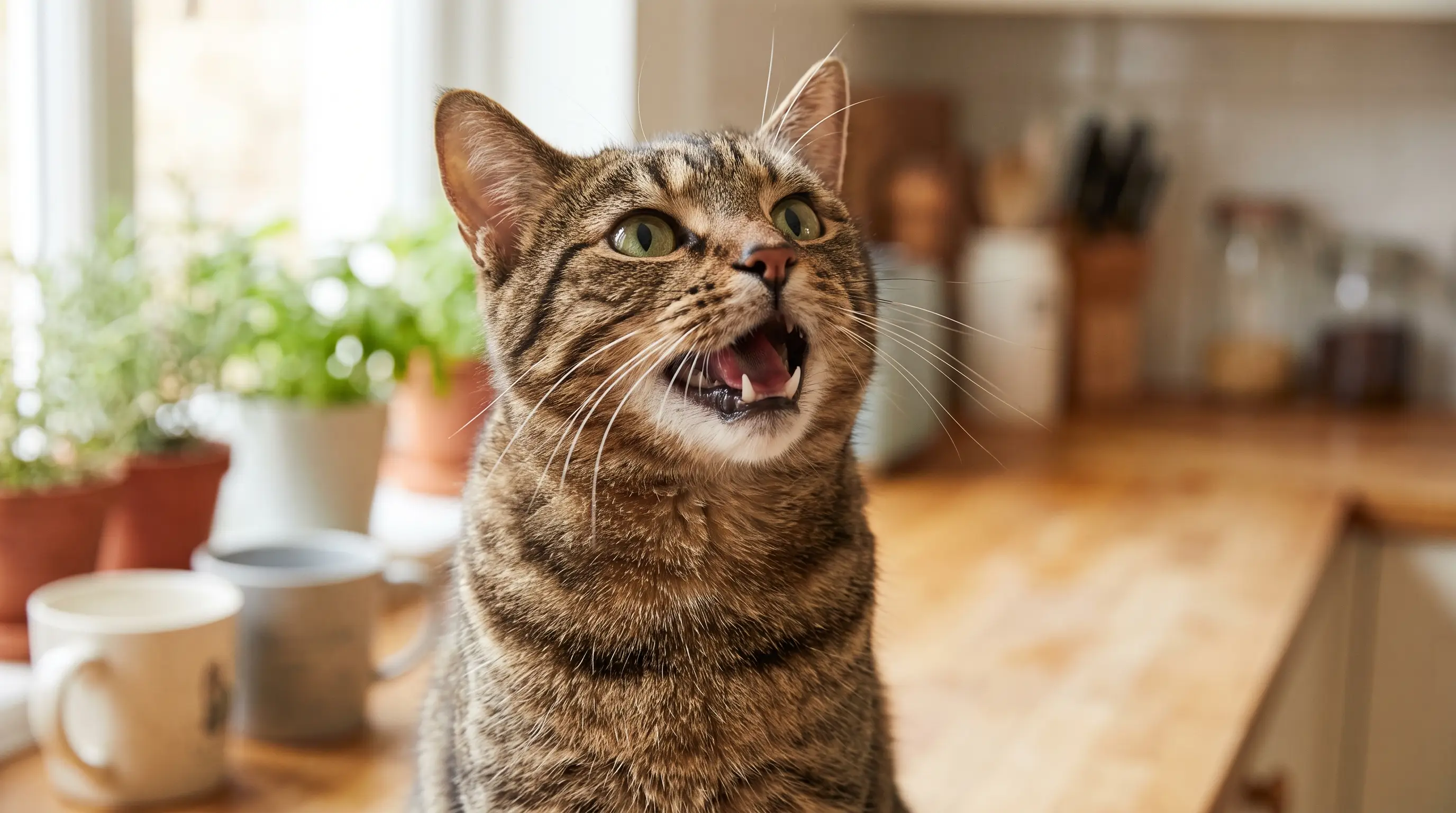
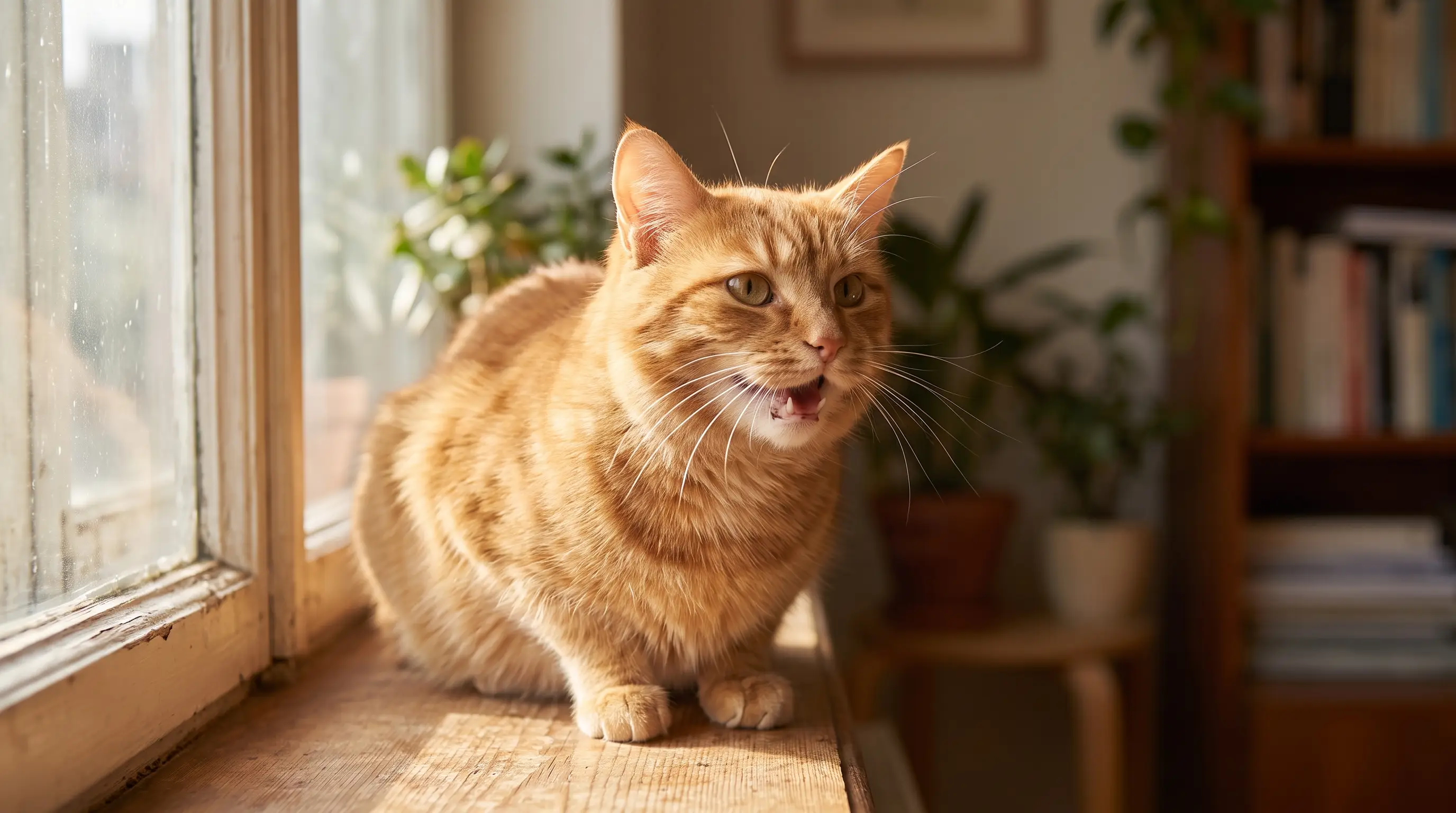
Your cat almost never meows at other cats. Meowing is a language cats developed for one audience specifically: humans. Feral and free-living adult cats talk to each other mostly through scent, posture, and facial signals, and they save the vocal begging for kittenhood. The cat on your kitchen floor kept meowing into adulthood for one reason: with us, it works.
Why cats meow at humans, not each other
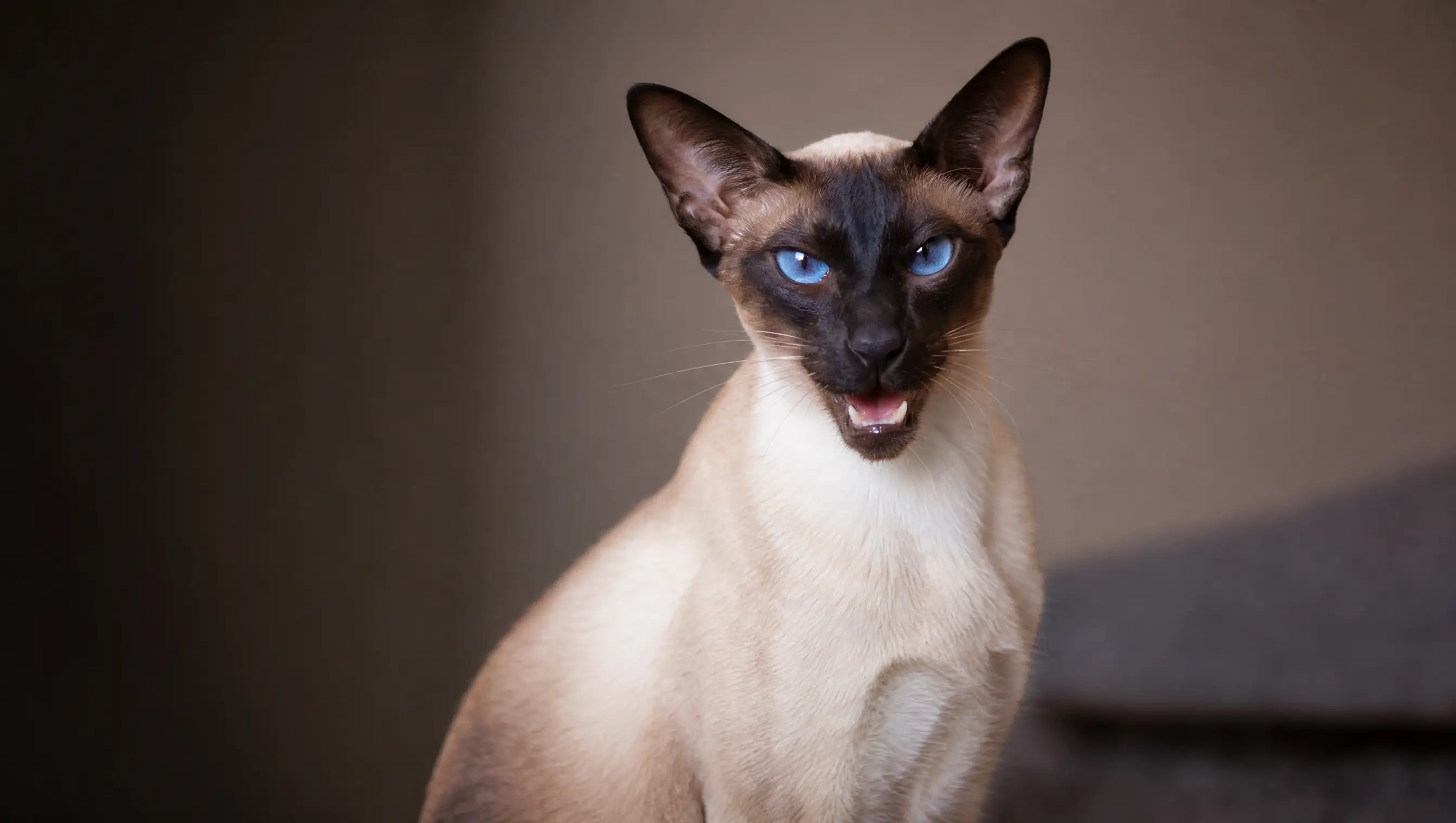
Adult cats rarely meow at one another because they don't need to. Their wild relatives communicate through scent marking, body language, and facial expression, and kittens meow only at their mothers to beg for food or warmth. Domestic cats never fully drop that kitten behavior. They learned that we are poor at reading scent and subtle body signals, so they aim the one signal we do respond to straight at us. Research by John Bradshaw and others found that house cats meow far more than their wildcat ancestors, and that the meow itself has shifted over domestication into a sound humans find harder to ignore. Cats even tailor their calls to the individual person, developing a private vocabulary each owner learns to read but a stranger often can't. Some breeds are simply louder about it, and the Siamese is famous for holding a running commentary all day. If you want to hear what feline communication sounds like without a human in the picture, our piece on wild cats shows how much of it happens in silence.
What each meow means
The pitch, length, and number of meows carry the message, and once you tune in the pattern is fairly consistent. A short, high-pitched meow is a plain hello, the greeting you get when you walk in the door. Several meows strung together mean your cat is excited or genuinely pleased to see you. A drawn-out "mrrrow" is a demand, usually for food, a door to open, or your attention right now. A low-pitched, moaning meow is a complaint or a grumble, the feline equivalent of a sigh. And a very high-pitched or sudden loud meow signals something urgent: pain, fear, or anger. None of these are exact across every cat, but the direction holds. Rising pitch and volume mean rising stakes, and a call that sounds different from your cat's usual repertoire is the one to pay attention to.
Purring
Purring usually means a content, relaxed cat, but not always. Cats also purr to soothe themselves when they are sick, injured, frightened, or even close to death, which is why a purr on the vet's table is not proof that everything is fine. There is also a specific manipulation at work at feeding time. A 2009 study by Karen McComb at the University of Sussex identified a "solicitation purr" that hides a high-frequency cry, acoustically similar to a human baby's, embedded inside the normal low rumble. People consistently rated that purr as more urgent and harder to ignore, which is roughly the point. If your cat purrs hardest right before breakfast, you are hearing it work.
Chirps, trills, and chattering at birds
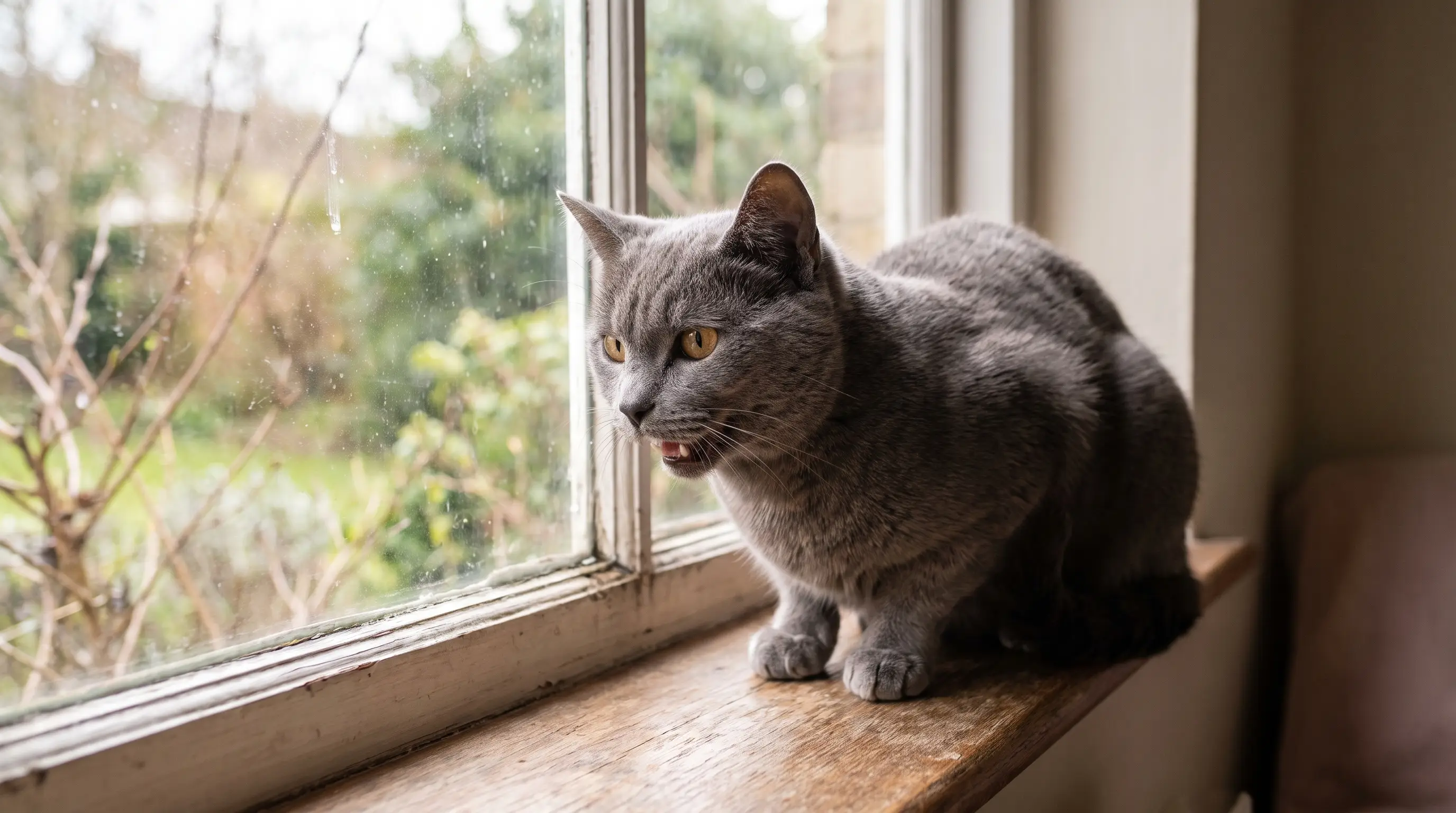
Chirps and trills are friendly sounds, the opposite end of the register from a yowl. A trill, that rolled "brrp" with a rising note, is a greeting or an invitation to follow, borrowed straight from the call mother cats use to steer their kittens. When your cat trills and walks toward the food bowl or the bedroom, it is asking you to come along. Chattering is different and stranger: the rapid teeth-clacking, jaw-quivering sound a cat makes at birds or squirrels through a closed window. The leading explanations are excitement and frustration from a hunting drive with nowhere to go, and possibly a form of prey mimicry. The behavior is normal, but if a cat suddenly chatters far more than usual, a vet check rules out a physical cause.
Yowling and caterwauling
A yowl is a long, loud, drawn-out cry, and it almost always signals something serious. In cats that aren't spayed or neutered, caterwauling is the sound of mating season: a female in heat calling for mates, or a male answering. It also comes out during territorial standoffs, or when a cat is distressed, trapped, or in pain. In older cats, persistent night yowling is often feline cognitive dysfunction, the cat version of dementia. The ASPCA reports that more than 55 percent of cats aged 11 to 15, and around 80 percent of cats aged 16 to 20, show some sign of cognitive decline, and disorientation at night is a classic symptom. Territorial yowling between neighborhood cats traces straight back to the behavior of their wild ancestors.
When meowing suddenly changes
A sudden change in how much your cat meows is the single clearest reason to book a vet visit. Everyday causes are ordinary enough: hunger, boredom, a request for attention, or a cat in heat. But a real jump in vocalizing, especially in an older cat, can point to a medical problem. Hyperthyroidism is one of the most common, and it often shows up as a hungry, restless, night-yowling senior. Deafness makes cats meow loudly because they can no longer hear their own volume, cognitive decline drives disoriented crying, and pain or high blood pressure can do the same. The rule is simple: if your normally quiet cat gets loud, or your chatterbox suddenly goes silent, that change is the message. A cat that has just moved in and won't stop calling is usually asking for reassurance rather than a diagnosis, something we cover in found a stray cat, but a change in an established cat's baseline earns a checkup.
Common questions
What does it mean when a cat meows?
A meow is a cat asking you for something, because cats reserve meowing almost entirely for humans rather than other cats. The specific meaning depends on pitch and length: a short high meow is a greeting, a drawn-out one is a demand for food or attention, and a low moan is a complaint.
Why does my cat keep meowing?
Continuous meowing usually means an unmet need such as hunger, boredom, or a request for attention, and cats quickly learn that persistence gets results. If the constant meowing is new or paired with restlessness or weight loss, it can signal a medical issue like hyperthyroidism and warrants a vet visit.
Why does my cat meow at night?
Night meowing often comes from a cat's natural crepuscular energy, hunger, or a bid for company after sleeping all day. In senior cats, persistent night yowling is frequently a sign of cognitive decline, high blood pressure, or hyperthyroidism, so a sudden onset should be checked by a vet.
Why does my cat meow when he sees me?
Meowing the moment it sees you is a greeting and a bid for connection, a ritual many cats save specifically for the people they trust. It often doubles as a request, for food, for petting, or simply to be noticed and acknowledged.
How do I get my cat to stop meowing?
The most reliable way is to meet the genuine need behind the meow, feeding on a predictable schedule and offering play and attention before it starts, while not rewarding demand meowing the instant it happens. First rule out medical causes with a vet, since you cannot train away meowing driven by pain, hyperthyroidism, or deafness.
Why does my cat meow so much?
Some cats are naturally talkative, especially breeds like the Siamese, and healthy cats meow more when hungry, bored, or seeking attention. A noticeable increase from your cat's normal baseline, particularly in an older cat, is worth a vet check to rule out thyroid disease, hearing loss, or cognitive decline.