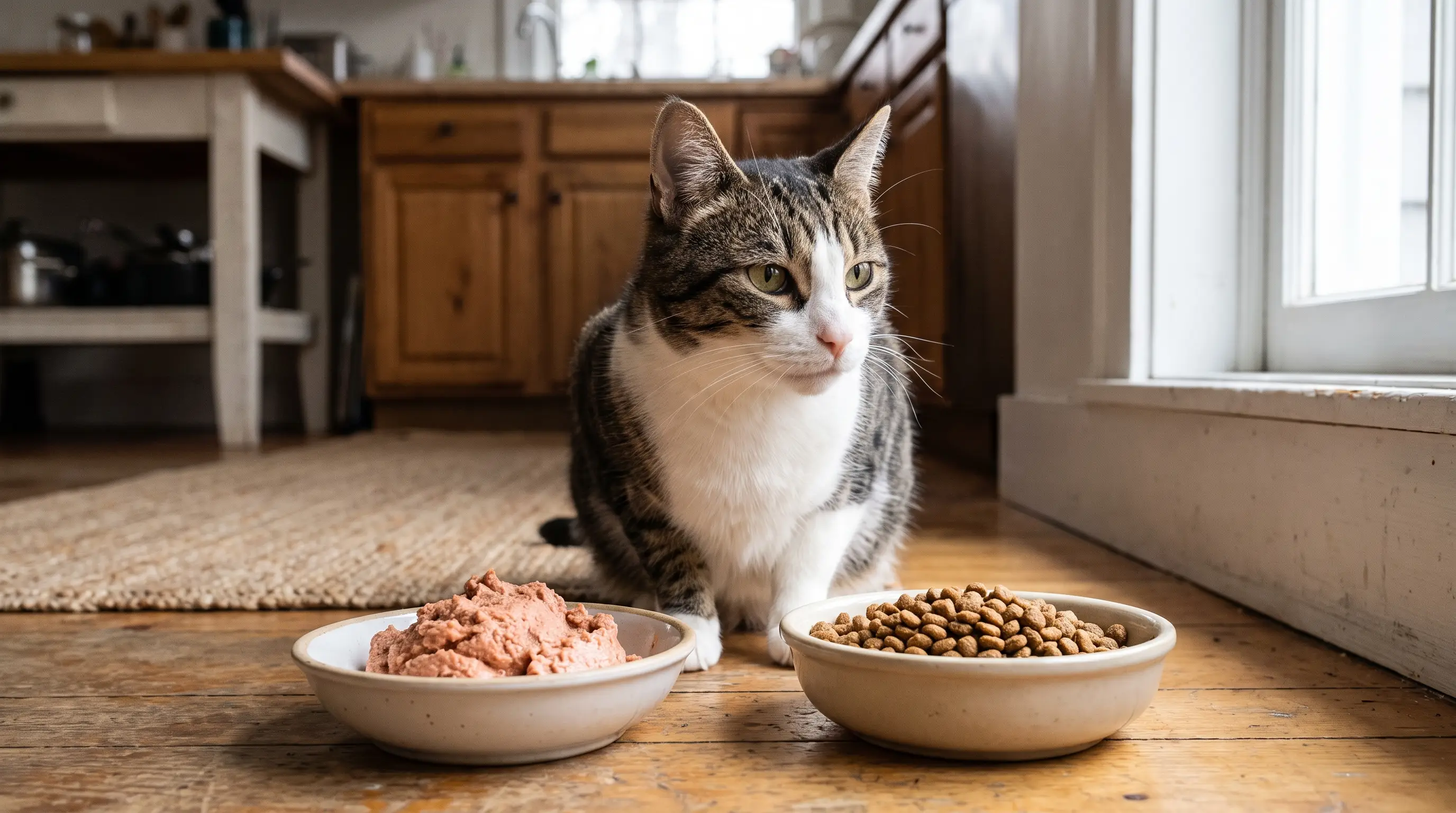
Wet vs dry cat food: what actually matters
The format of your cat's food matters far less than one thing on the label: whether it's complete and balanced for your cat's life stage. Get that right and both wet and dry can keep a cat healthy. From there the honest differences are moisture, price, and convenience, plus two myths that refuse to die. Here's what actually changes your cat's health, without the brand spin.
Wet vs dry cat food
Start with the label, not the format. Any food carrying an AAFCO (in the US) or FEDIAF (in Europe) statement that it's complete and balanced for your cat's life stage will supply every nutrient your cat needs, whether it's a can of pâté or a bag of kibble. That single line settles most of the argument. A cheap wet food that's complete beats a fancy dry food that isn't, and the reverse is equally true.
Once you've cleared that bar, the real choice comes down to three practical trade-offs: how much water the food carries, what it costs, and how it fits your day. Wet food wins on moisture and tends to be lower in carbohydrate and more filling per calorie. Dry food wins on price and convenience. Neither is a health failure on its own, which is why the pointless part of the debate is treating one as good and the other as bad.
Moisture and the desert cat
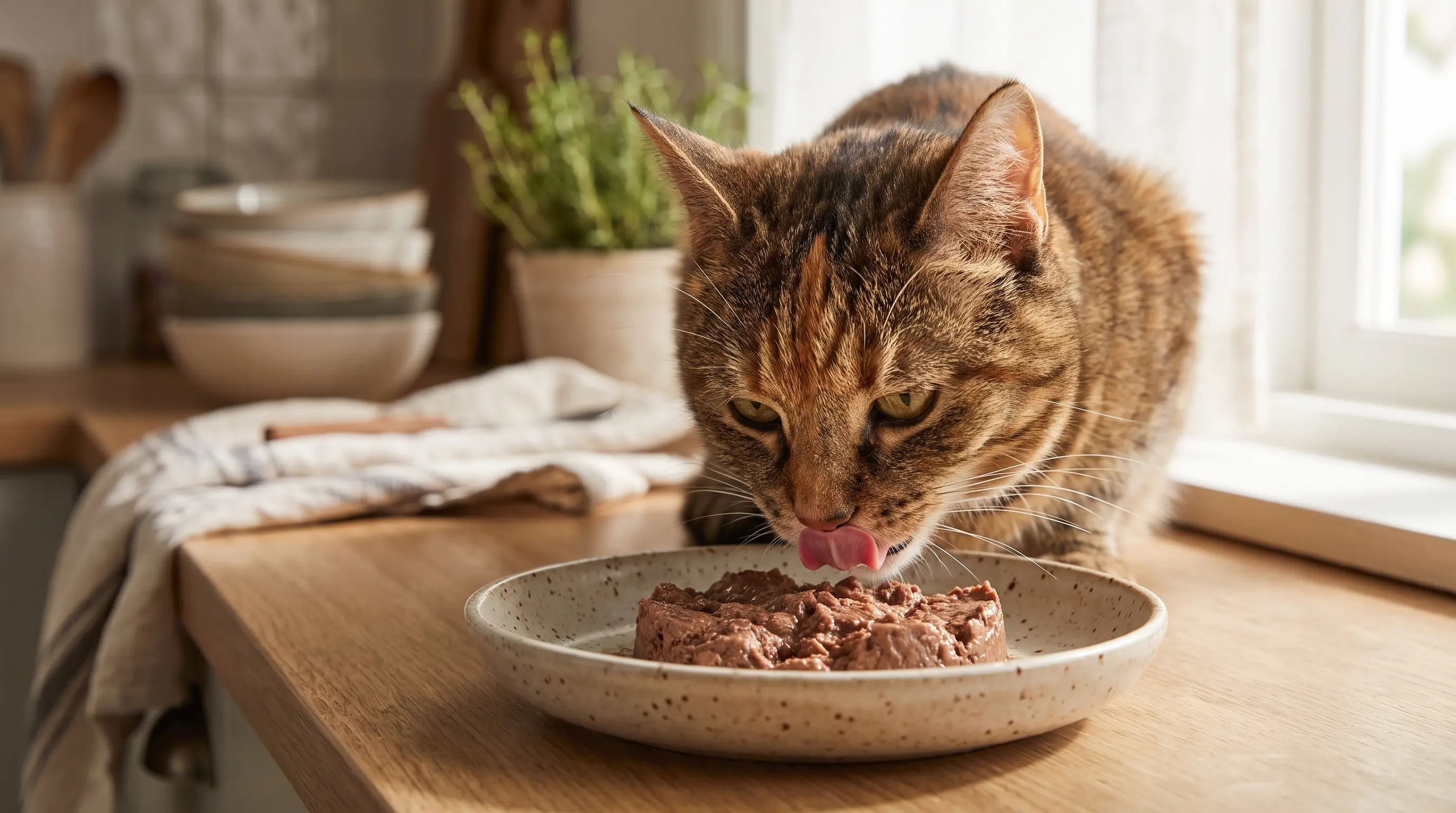
This is where wet food earns its price. Cats descend from desert-dwelling ancestors that got most of their water from prey, and they kept the low thirst drive that went with it. In the wild a cat's food is roughly 70-75% water, so it rarely needed to seek out a puddle. Modern cats carry that same weak thirst response, which means many chronically under-drink when fed dry food that's only about 10% moisture.
Wet food is around 70-80% water, so it puts fluid into the cat whether or not the cat feels thirsty. That extra water dilutes the urine, and dilute urine is protective against the crystals, plugs, and bladder inflammation lumped under feline lower urinary tract disease. It's also part of standard management for cats with chronic kidney disease, where staying hydrated matters daily. This is the strongest evidence-based reason to feed wet food, and it gets more important with age and with breeds prone to kidney trouble, such as the Persian and its history of polycystic kidney disease. Any cat with a urinary or kidney history should lean heavily toward wet.
Dry food and the free-feeding trap
Dry food's advantages are real and worth naming: it's cheaper per calorie, simple to measure, and it can sit in a bowl for hours without spoiling, which suits nibblers, multi-cat homes, and puzzle feeders. Wet food can't do that. Once a can is opened it spoils fast and shouldn't be left out longer than about an hour before bacteria become a problem.
The catch with kibble is calorie density. It packs a lot of energy into a small volume, so a bowl left down all day, refilled by eye, quietly adds up. Free-feeding is the most common route to a fat cat, and feline obesity drives diabetes, joint disease, and a shorter life. Dry food isn't the villain here; the habit of endless refills is. If you feed dry, weigh the daily ration with a scale rather than a scoop, and split it into meals or a puzzle feeder instead of a bottomless bowl.
Two myths worth binning
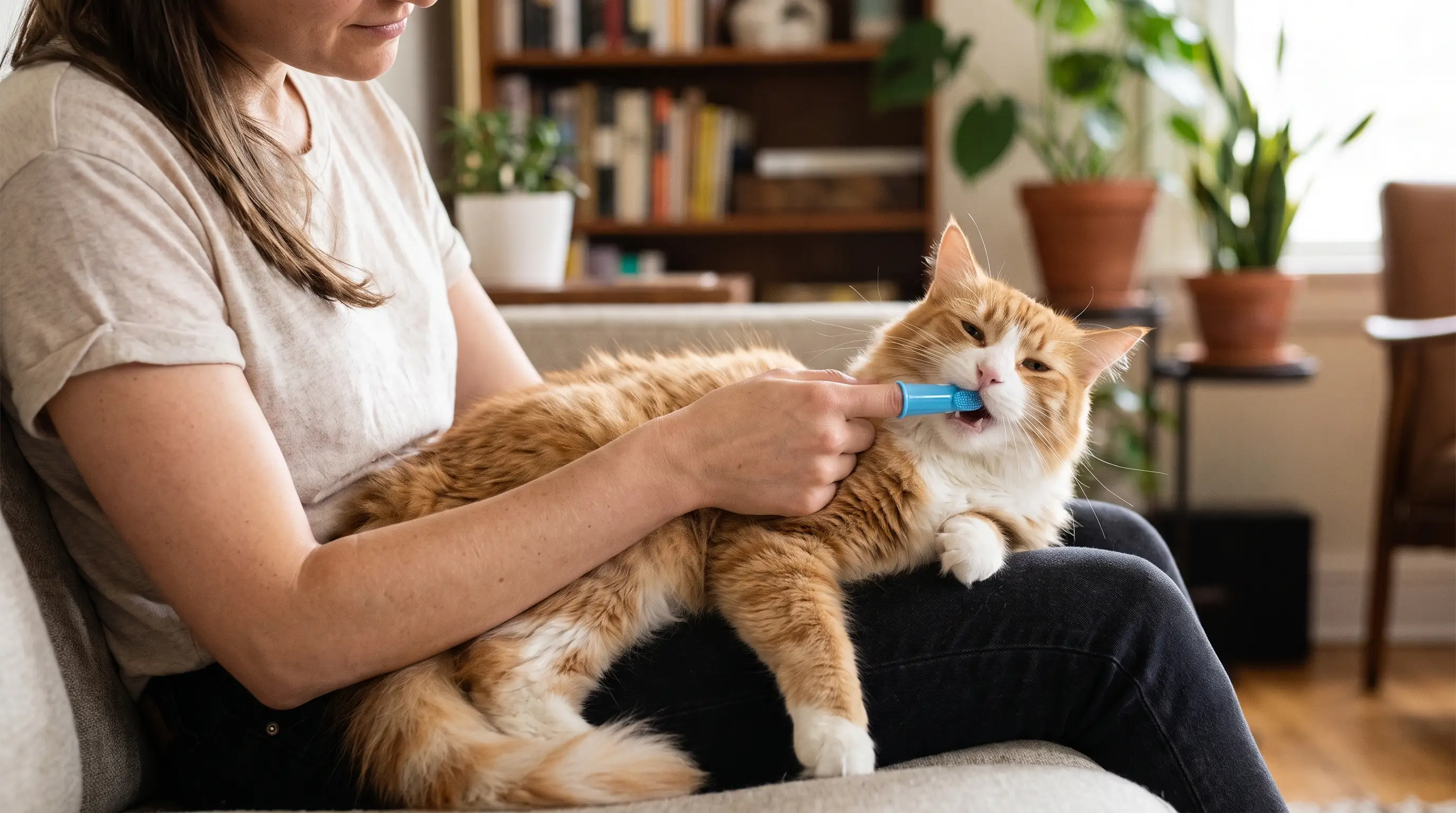
Myth one: dry food cleans a cat's teeth. It doesn't, not in any way that prevents dental disease. Most cats crunch a piece of kibble once or swallow it whole, so there's almost no scrubbing action, and standard kibble is too small and brittle to abrade the tooth near the gumline where disease starts. Cats fed dry food still build plaque and tartar and still get periodontal disease. What actually helps is brushing the teeth and periodic professional cleanings under your vet. The one exception is a handful of prescription dental diets with a specific kibble size and texture that are clinically tested to reduce buildup, and those are a deliberate treatment, not a bag off the supermarket shelf.
Myth two: grain-free is automatically healthier. Grains are not a common allergen for cats, and a well-formulated grain-inclusive food is perfectly good for the vast majority of them. Grain-free only matters for the small number of cats with a diagnosed sensitivity, and even then the label alone tells you nothing about quality, since the grains are often just swapped for peas, potato, or other starches. Ignore the marketing word and read the adequacy statement instead.
How to choose and switch safely
Here's the bottom line in plain terms. Pick a food that's complete and balanced for your cat's life stage, then let moisture guide the format. Many cats do best on all wet or a wet-leaning mix, and any cat with urinary or kidney history should sit firmly in that camp. If your cat loves kibble and your routine needs it, keep it, but add wet food where you can and make sure fresh water is always available in a few spots, ideally away from the food bowl.
Whatever you feed, portion to body condition rather than to the label's generous suggestion. You should be able to feel your cat's ribs with a light touch and see a waist from above; if you can't, cut the ration and recheck in a few weeks. And switch foods slowly. Changing overnight often triggers a hunger strike or an upset stomach, so blend the new food into the old over about a week, shifting the ratio a little each day. If your cat is very food-fussy, a stray you're still settling in, or an unfamiliar new arrival, go slower still and let it eat before you start tinkering.
Common questions
Is wet or dry food better for cats?
Neither wins outright; what matters is that the food is complete and balanced for your cat's life stage. Wet food's high moisture is a real advantage for hydration and urinary health, while dry food is cheaper and easier to leave down. Many cats do well on all wet or a wet-leaning mix.
Do cats really need wet food?
No cat strictly needs wet food, but most benefit from it because cats have a low thirst drive and tend to under-drink. Wet food is around 70-80% water, so it passively boosts daily fluid intake. Any cat with a urinary or kidney history should lean heavily toward wet.
Is it OK to feed a cat only dry food?
Yes, a cat can be healthy on dry food alone if it's complete and balanced and the cat drinks enough water. The catch is that many cats don't drink enough to make up for kibble's low moisture, which raises the risk of concentrated urine and urinary problems over time.
Does dry food clean cats' teeth?
Not meaningfully. Most cats crunch kibble once or swallow it whole, so there's little abrasion, and standard dry food does not prevent dental disease. Real dental care means tooth brushing and periodic vet cleanings; a few prescription dental diets are the exception.
Is grain-free cat food better for cats?
No, grain-free is not automatically better. Grains are not a common feline allergen, and a well-formulated grain-inclusive diet is fine for most cats. Grain-free only matters for the small number with a diagnosed sensitivity; the label itself tells you nothing about quality.
Can you mix wet and dry cat food?
Yes, mixing wet and dry is a common and sensible approach that combines wet food's hydration with dry food's convenience and cost. Feed them in the same day rather than the same bowl so the wet portion doesn't spoil, and count both toward the daily calorie total to avoid overfeeding.
More in Cats
Can you take your cat to the beach? An honest guide
Most cats should skip the beach, and a few can go safely. The honest, vet-checkable guide to heat, sun, saltwater, harnesses and who stays home.
What Catnip Really Does to a Cat
The honest, myth-busting guide to catnip: what nepetalactone does, why 1 in 3 cats ignore it, and what to try instead.
You Found a Stray Cat: What to Actually Do
A friendly cat on your doorstep may already have a home. Here is the honest, welfare-first order of steps before you take it in.