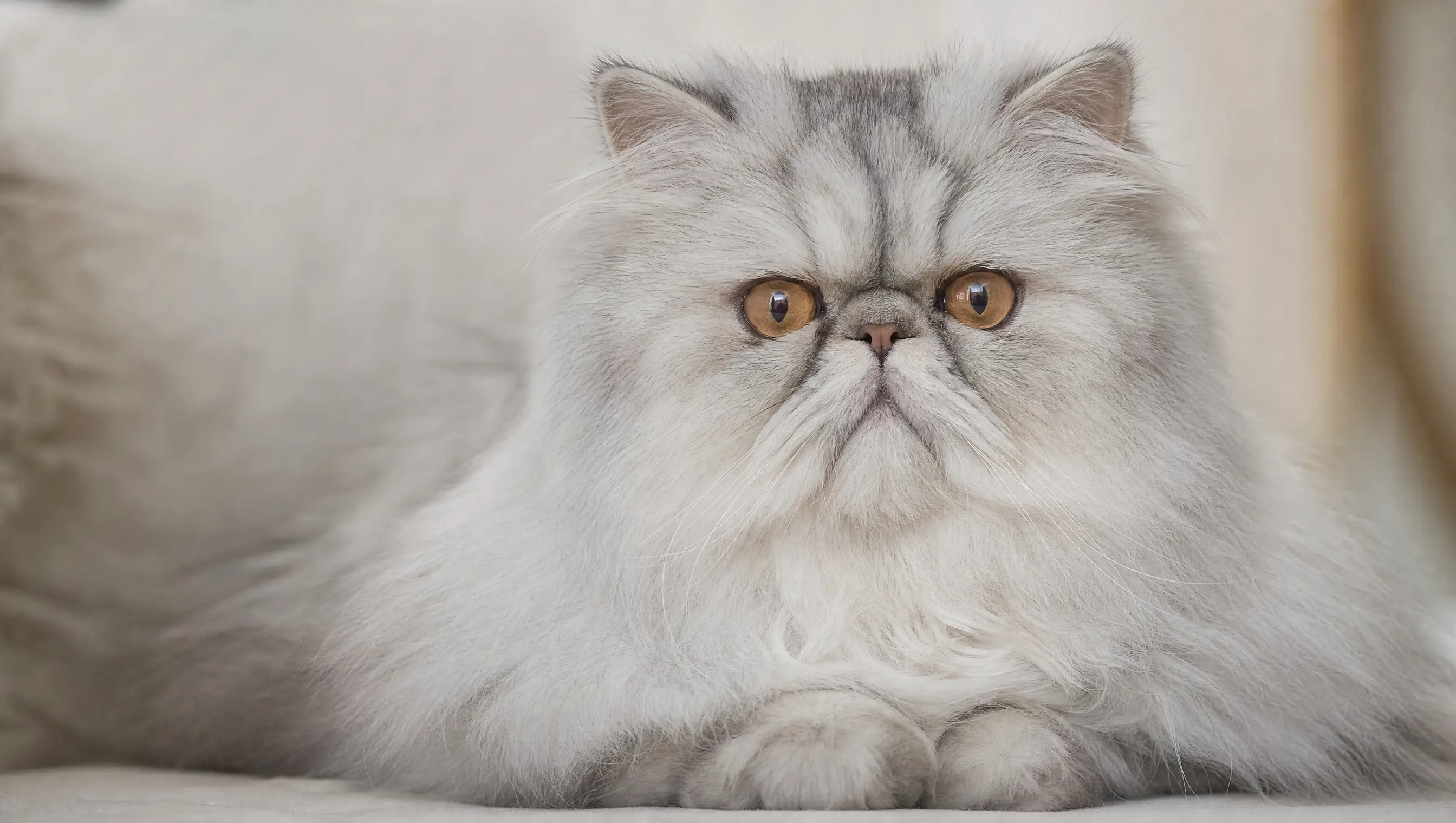
Persian
A furry cushion with opinions — placid, plush, and happiest ruling the sofa.
On these lists: Cats for apartments · Indoor cats
Vital stats
| Size | Medium · cobby, low-slung build |
| Weight | 3–6 kg |
| Life expectancy | 12–16 years |
| Energy | Low — placid and undemanding |
| Shedding | Heavy, year-round |
| Coat | Long, dense double coat |
| Group | Longhair |
| Origin | Iran |
Breed traits
Friendliness
Care
Mind
The Persian by the numbers
The Persian facts owners search for most — price, lifespan, weight, shedding and colours, in one place.
Less common, so expect a waitlist and some travel to a reputable breeder — which pushes the price up. Ongoing costs stay modest — it eats little and routine vet care sits at the lower end. Its coat also needs a professional groom every few weeks — a real line in the budget.
We don't quote a single figure: the real price swings with breeder, region, bloodline and health testing — and a rescue costs a fraction of a breeder's litter. Adopting is almost always the cheapest route.
Temperament
Persians are quiet, gentle homebodies. They'd rather drape themselves on a cushion than climb the curtains, and they greet the day with a soft chirp instead of the demanding yowl of an Oriental breed. They bond closely but calmly — affectionate on their own terms, happy to sit near you for hours without needing to be the centre of a game. Strangers and chaos put them off; a loud, busy household with young children full of surprises is not their scene. Give them routine, gentle handling and a settled home, and you get one of the most restful cats there is. Just know the placid nature is genuine — this is not a cat that will entertain itself with acrobatics.
Habits & quirks
The daily comb
That double coat mats fast — a missed few days can turn into pelts that have to be shaved out under sedation.
Weepy eyes
The flat face crowds the tear ducts, so most Persians need their eyes and face folds wiped clean daily to prevent staining and sores.
Floor cat
Short legs and a heavy coat mean they favour ground level and low perches over high leaps and shelves.
Quiet company
They shadow you softly rather than loudly — content to be in the same room, not underfoot demanding attention.
Health
The Persian's looks come with real health work, and a good breeder is where it starts. Polycystic kidney disease (PKD) was long common in the breed, so buy only from someone who DNA-tests their cats as PKD-negative and will show you the result. The flat face is the other big one: very short muzzles can mean narrowed nostrils, noisy breathing and poor tolerance of heat, and they crowd the tear ducts and teeth, leading to weepy eyes, entropion and a misaligned bite. Favour a breeder aiming for a more open muzzle, keep the cat cool in summer, and stay on top of daily eye cleaning and regular dental checks.
Nutrition
| Grooming | Non-negotiable daily combing right down to the skin, plus regular baths to keep the coat and the greasy chin clean. Many owners keep a pet in a shorter 'lion clip' to make it manageable. |
| Breathing & heat | The flat (brachycephalic) face can mean narrowed nostrils, noisy breathing and poor heat tolerance. Keep them cool in summer, and choose a breeder favouring a more open muzzle and open nostrils. |
| Kidneys | Polycystic kidney disease (PKD) has been common in the breed. Buy from a breeder who DNA-tests their cats as PKD-negative, and ask to see the results. |
| Eyes & teeth | Excess tearing, entropion and a crowded, misaligned jaw are all linked to the shortened face. Clean the eyes daily and keep up with dental checks. |
Cats are obligate carnivores, so a meat-first diet with proper protein does more for a Persian than a cereal-heavy bowl. Wet food is especially worth leaning on here: it keeps water going in, which supports the kidneys — the organ this breed is most prone to trouble with. The flat face makes some Persians messy or awkward eaters, so a shallow, wide dish they can reach into comfortably helps. They're placid, low-energy cats that gain weight quietly, so measure meals, go easy on treats, and check now and then that you can still feel the ribs under all that coat.
Kitten guide
The single most useful thing you can do with a Persian kitten is make grooming and face-wiping feel normal from day one. Comb it gently every day and wipe the eyes and nose folds clean, so the cat grows up accepting the handling it will need for life rather than fighting it. Persians are quiet, sensitive kittens, so a calm home suits them far better than a loud, busy one — let it settle into one room first and keep introductions gentle. Kitten-proof the space and give it low, easy perches rather than high leaps, since short legs and a heavy coat keep this breed close to the floor. Book an early vet visit for vaccinations, a microchip, a PKD result check and a plan for neutering.
Training
Persians are calm and cooperative rather than driven, so training is less about tricks and more about gentle routine. Keep a clean, low-sided litter tray within easy reach — short legs and a full coat make a tall or distant tray a nuisance — and check it stays tidy, because coat and litter don't mix well. Set out a scratching post and a few ground-level perches, and reward calm use rather than expecting acrobatics. Enrichment for a Persian is quiet play in short bursts: a wand toy, a slow puzzle feeder, a warm window seat. Above all, fold daily combing and eye-cleaning into the routine and pair them with a treat, so the handling this breed depends on stays a pleasant part of the day.
Life expectancy
Persians live 12–16 years. How close a Persian gets to the top of that range comes down largely to the two things the breed struggles with: the kidneys and the flat face. A cat from PKD-tested parents, bred for a more open muzzle and kept cool, well-groomed and lean, avoids most of what shortens Persian lives. Regular vet checks — kidney values in particular — catch problems while there's still time to manage them.
Similar breeds
Breeds with a similar build and background — worth a look if this one isn't quite the fit.
Compare this breed
Common questions
How much grooming does a Persian really need?
Daily. The coat is a dense double coat that mats within days if you skip it, and neglected mats often end in a vet shave-down. Budget ten to fifteen minutes a day, plus periodic baths.
Are Persians unhealthy because of the flat face?
The very flat 'show' faces can struggle with breathing, tear drainage and heat. It's not universal — 'doll-face' or more traditional Persians with an open muzzle tend to breathe more easily. Also insist on PKD DNA-testing, whichever type you choose.
Are Persians good with children and other pets?
With calm, gentle ones, yes — they're placid and tolerant. But they dislike rough handling and noise, so a household of loud toddlers isn't ideal. They generally coexist peacefully with other quiet cats and easygoing dogs.
Does the Persian shed a lot?
Yes — the Persian is a heavy shedder, dropping hair year-round or in big seasonal moults. Brush it several times a week and expect regular vacuuming; it isn't the coat for you if loose fur is a dealbreaker.
Are Persian cats hypoallergenic?
No cat breed is truly hypoallergenic, and the Persian isn't one of the easier ones. The trigger is Fel d 1, a protein in a cat's saliva and skin that ends up on the coat during grooming and then spreads on loose hair and dander — and this breed sheds enough to move plenty of it around. If someone at home is allergic to cats, this is a hard breed to live with; spend real time around one first.
Stories featuring this breed
All stories →
When is a cat a senior? Cat life stages, explained
A cat is an adult at one and a senior at eleven — but eleven isn't old. The real feline life stages, what each one means, and why 11 is barely retirement age.
How to train a cat to walk on a harness
Some cats take to a harness and some never will — and forcing it backfires. How to introduce one properly, the gear that matters, and the honest limits.
How to stop a cat scratching the furniture
Scratching is a normal, necessary cat behaviour, not misbehaviour, so the fix is redirection rather than punishment. The setup that actually gets a cat choosing the post over the sofa.