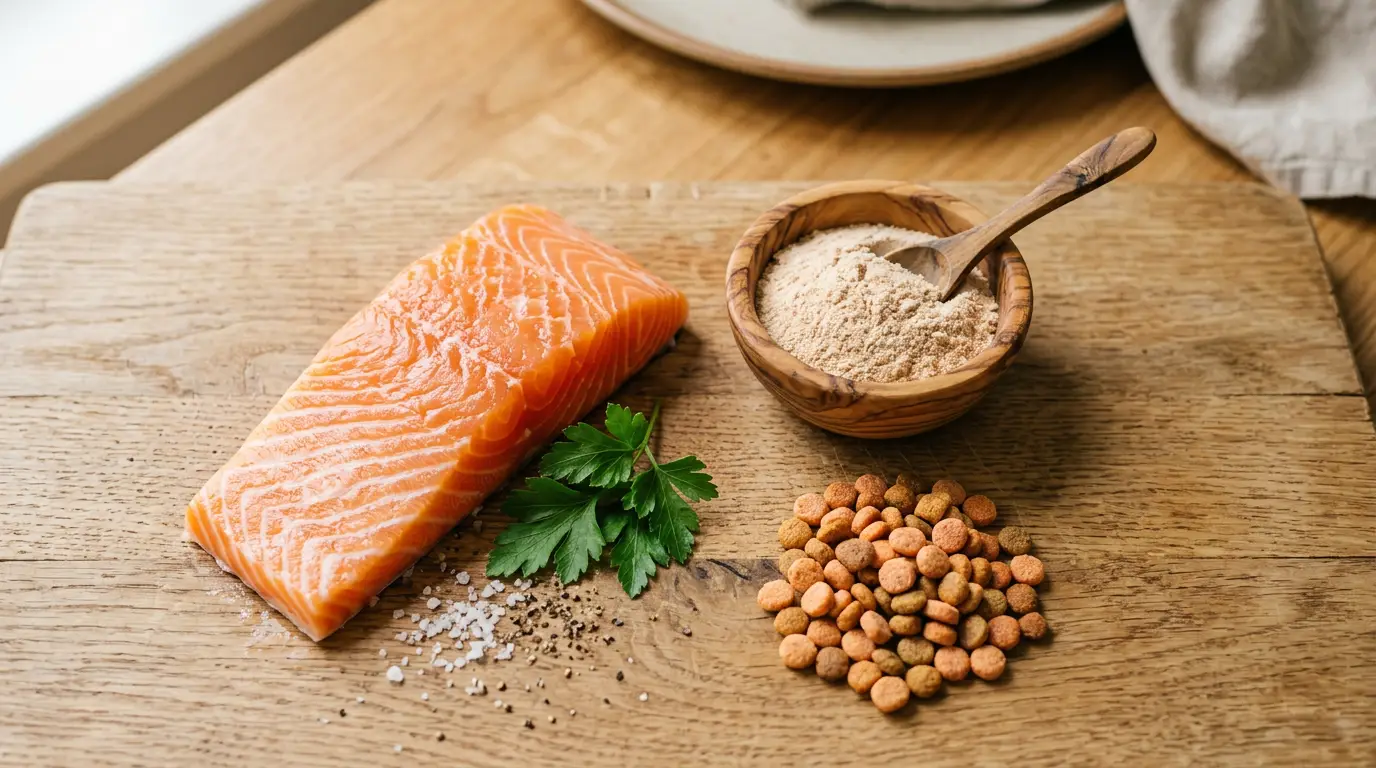
Human-grade vs feed-grade pet food, decoded
'Human-grade' is one of the few quality claims on pet food that actually has a definition — and precisely because it sells, it is one of the most loosely used. Legitimately, it means every ingredient and the finished product would be legal for a person to eat, made in a facility approved for human food. Most pet food is 'feed-grade', a different and lower legal standard. Here is what the line really means, why the phrase is so often misused, and whether human-grade is worth the premium for your dog or cat.
What 'human-grade' legally means
For a pet food to be truthfully labelled human-grade, it has to clear a high bar: every single ingredient must be human-edible, and the finished product must be manufactured, packaged and held in a facility licensed to make human food. This is a real, verifiable standard, not a vibe — a food that meets it is, in principle, something you could eat yourself. The key word is edible, the legal term for fit for human consumption at every step. If even one ingredient is feed-grade, or the plant isn't human-food licensed, the finished food is not legitimately human-grade, however the marketing phrases it.
What 'feed-grade' means — and why it isn't automatically bad

Feed-grade is the ordinary standard the vast majority of pet food is made to, and it is regulated for safety — it simply allows ingredients and facilities that aren't cleared for the human table. That includes perfectly nutritious things like meat meals and animal by-products, which can be excellent protein sources even though they never head to a supermarket. Feed-grade does not mean unsafe or low quality; it means held to pet-food rules rather than human-food rules. A well-formulated feed-grade diet that is complete and balanced to AAFCO or FEDIAF standards can nourish a dog or cat perfectly well for life.
Why the phrase is so often misused
Because 'human-grade' commands a higher price, it is stretched constantly. You will see it on foods where only some ingredients are human-edible, on products made in ordinary pet-food plants, and as a vaguer cousin, 'human-quality', which has no defined meaning at all. Regulators in some markets have pushed back on unqualified human-grade claims for exactly this reason. The honest test is documentation: a genuinely human-grade maker can state that both the ingredients and the finished-product facility meet the human-food standard. If a brand can't or won't say that plainly, treat the word as marketing.
Is it worth paying for?
For most healthy pets, human-grade is a reasonable choice but not a nutritional necessity — a complete-and-balanced feed-grade food meets the same nutrient requirements. What you're paying for with true human-grade is sourcing and manufacturing standards, which some owners value for transparency and peace of mind, and which can matter more for a pet with specific needs. But it is not a substitute for the one thing that actually determines whether a food can sustain your animal: the complete-and-balanced statement for the right life stage. Buy human-grade if the standard matters to you and the claim is genuine — just don't assume the words alone make a food better than a well-formulated feed-grade one. When you've picked a food, our food calculator sorts the portion.
Common questions
What does human-grade pet food mean?
It means every ingredient is human-edible and the finished product is made in a facility licensed to produce human food — so, in principle, a person could eat it. It is a real legal standard, distinct from and higher than the feed-grade standard most pet food is made to.
Is human-grade dog food better than feed-grade?
Not necessarily nutritionally. A complete-and-balanced feed-grade food meets the same nutrient requirements. Human-grade buys you stricter sourcing and manufacturing standards, which some owners value, but it is not required for a healthy pet and doesn't replace the complete-and-balanced statement as the thing that matters most.
Is feed-grade pet food safe?
Yes. Feed-grade is a regulated safety standard; it simply allows ingredients and facilities not cleared for human consumption, including nutritious items like meat meals and by-products. A well-formulated, complete-and-balanced feed-grade diet can nourish a dog or cat well for life.
Why is human-grade pet food so expensive?
Because meeting the standard is costly: every ingredient must be human-edible and the whole product made in a human-food facility, which raises sourcing and manufacturing costs. Part of the price also reflects the marketing premium the term commands, which is why it is often stretched or misused.
How do I know if a pet food is really human-grade?
Look for a brand that can plainly state that both its ingredients and its finished-product facility meet the human-food standard. Vaguer terms like 'human-quality' have no legal meaning. If a company can't or won't document both parts of the claim, treat 'human-grade' as marketing rather than fact.
More in Dogs
Reading the pet food ingredient list: meat, meal and by-product
'Chicken' first isn't the win it looks like, and 'by-product' isn't the villain. How to read an ingredient panel the way the people who write it do.

Pet food quality words, decoded: what the label really promises
Human-grade, holistic, natural, premium, single protein. Most of it is marketing, some of it is law. Here's what each word actually guarantees — and the one claim that really matters.

Hydration for dogs and cats: why it matters, and why cats barely drink
Cats are built to run a little dry, and it quietly damages their kidneys and bladder. How much water dogs and cats really need, and how to get more into a reluctant drinker.