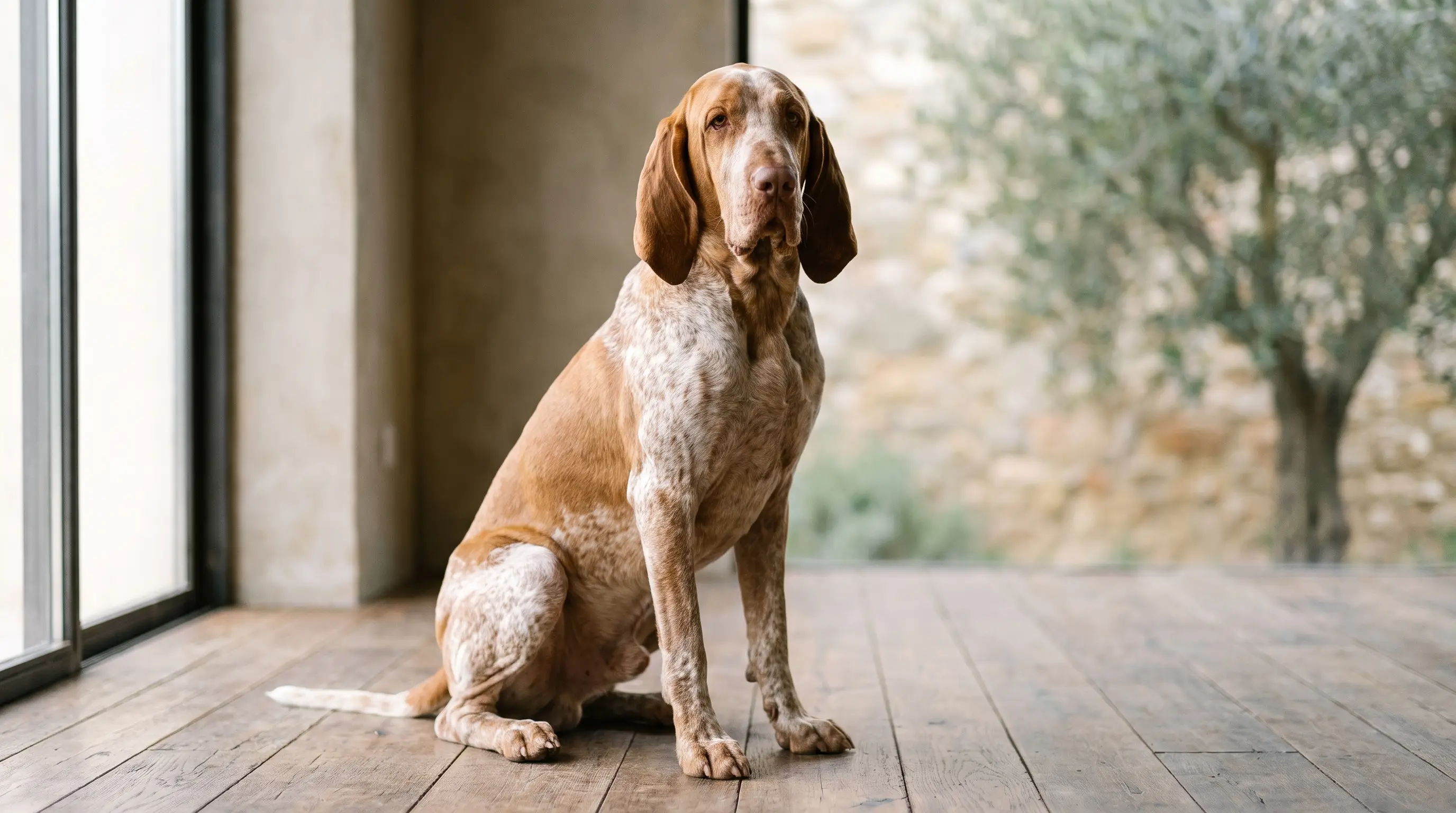
Bracco Italiano
Italy's Renaissance pointer — all ears, jowls and unhurried elegance.
Vital stats
| Size | Large · 55–67 cm |
| Weight | 25–40 kg |
| Life expectancy | 10–14 years |
| Energy | High — 1–2 hours/day |
| Shedding | Low–moderate |
| Coat | Short dense coat · white-orange, white-chestnut, roan |
| Group | Sporting · FCI №202 / AKC |
Breed traits
Friendliness
Care
Mind
Temperament
Painted into Italian frescoes and bred at Renaissance courts, the Bracco has pointed birds for centuries — at a floating, ground-eating trot rather than a gallop. It works with its handler, not for itself, and that shows at home: an affectionate, gentle companion that craves inclusion and sulks theatrically when scolded.
Habits & quirks
The mournful look
Droopy ears, loose jowls and heavy brows produce operatic sadness over minor injustices.
Lean-in greetings
It says hello with its whole body, ideally ending up between your knees.
Nose-led detours
Walks proceed scent to scent; the straight line is a foreign concept.
The jowl shake
One head-shake after drinking can redecorate a kitchen.
Care
| Exercise | This is a working gundog: one to two hours daily, with free running and scent games. |
| Ears | Long, low-set ears need weekly checks and cleaning to prevent infection. |
| Feeding | Deep-chested and bloat-prone — feed two calm meals a day and avoid exercise straight afterwards. |
| Training | Soft-natured despite the size; reward-based methods only, started early. |
Common questions
Are Bracco Italianos good family dogs?
Very — they're gentle, patient and deeply attached to their people. They do need real daily exercise and dislike being left alone for long.
Do Bracco Italianos drool?
Yes, moderately — the loose lips guarantee some slobber, especially after drinking. It's part of the package with that magnificent head.
Are Bracco Italianos rare?
Outside Italy, yes. The AKC only fully recognised the breed in 2022, and finding a litter usually means a wait and some travelling.