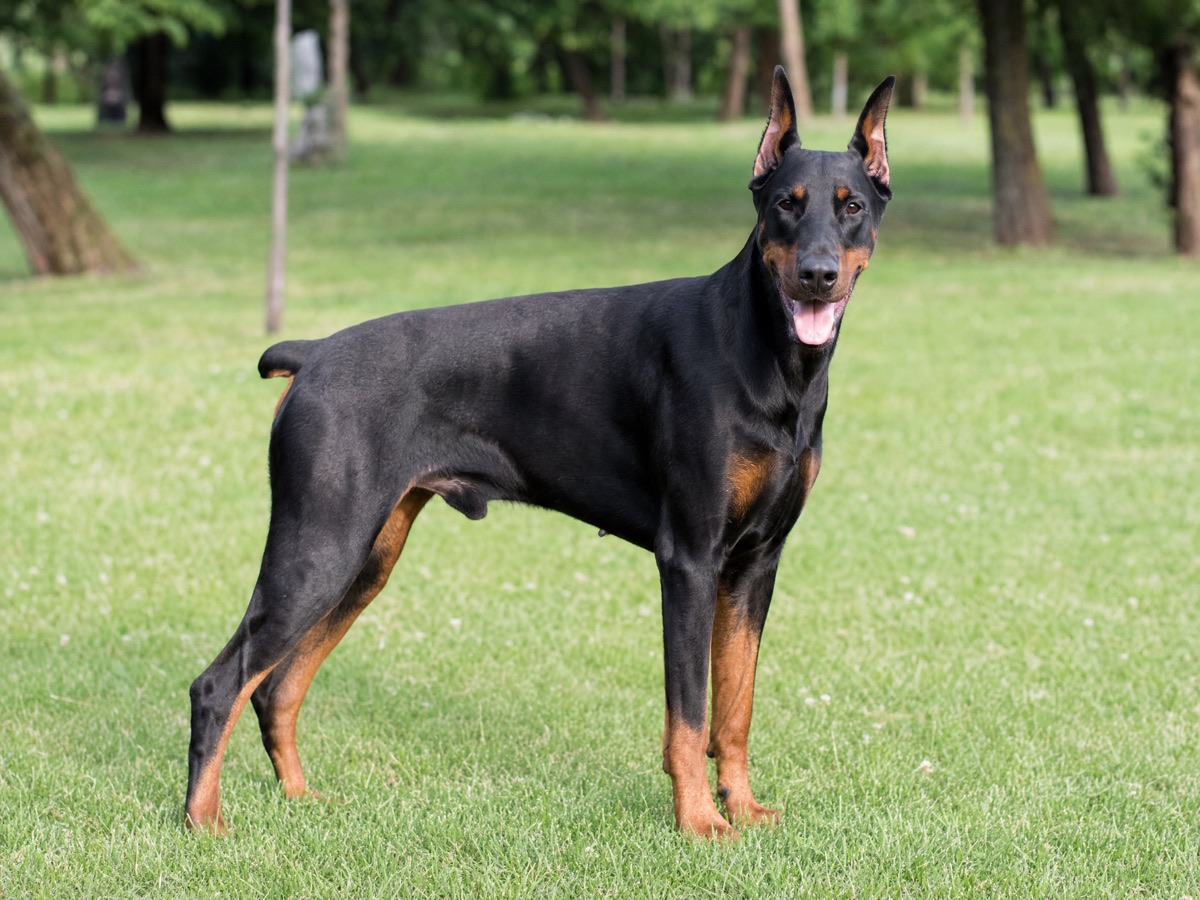
Dobermann
Sleek, brilliant and devoted — the elegant thinking-dog's guardian.
Vital stats
| Size | Large · 63–72 cm |
| Weight | 32–45 kg |
| Life expectancy | 10–12 years |
| Energy | High — 1–2 hours/day |
| Shedding | Moderate, year-round |
| Coat | Short and sleek · black or brown with rust |
| Group | Working · FCI №143 / AKC |
Breed traits
Friendliness
Care
Mind
Temperament
Assembled in the 1880s to guard a tax collector on his rounds, the Dobermann is a protection dog with a scholar's brain and a velcro heart. It wants work for its mind, an athlete's exercise, and constant closeness to its people — aloof watchfulness on the street, unabashed cuddling on the sofa.
Habits & quirks
The velcro shadow
Wherever you are, a Dobermann is against your leg — or planning to be.
Blanket burrower
A thin coat plus a love of comfort equals a dog under your duvet, not on it.
Post at the door
It settles where every entrance is visible — off duty is still on call.
The lean
Full-body contact is the breed's love language; brace yourself.
Care
| Exercise | An hour or two of real work daily — running, training games, scent work — or the brain sours. |
| Health | Dilated cardiomyopathy is the breed's shadow; choose heart-tested lines and screen regularly. |
| Companionship | This is a velcro breed — it cannot live in a garden or be left for long hours. |
| Warmth | A thin single-layer coat means a winter jacket and a bed away from draughts. |
Common questions
Are Dobermanns good family dogs?
Yes for active, involved families — they're loyal, gentle with their own children and famously 'velcro'. Early socialisation and training are essential.
Do Dobermanns need a lot of exercise?
Yes — a good hour or two daily of physical and mental work. A bored, under-exercised Dobermann becomes anxious and destructive.
Are Dobermanns aggressive?
Well-bred, well-socialised Dobermanns are stable, affectionate and discerning rather than aggressive — modern lines are much softer than the film-villain image. As with any guardian breed, problems start with poor breeding or isolation.