Working dog jobs: the breeds behind the badge
A working dog is matched to its job by drive and build, not by looks. Police units want nerve and bite; detection teams want a nose and a dog that will work for a tennis ball all day; hunters want a dog that points, retrieves soft or runs down game by sight. The same breeding that makes these dogs brilliant at the task often makes them a hard fit for a quiet sofa. Here is what does each job, and why.
Police patrol and apprehension: the German Shepherd and Belgian Malinois
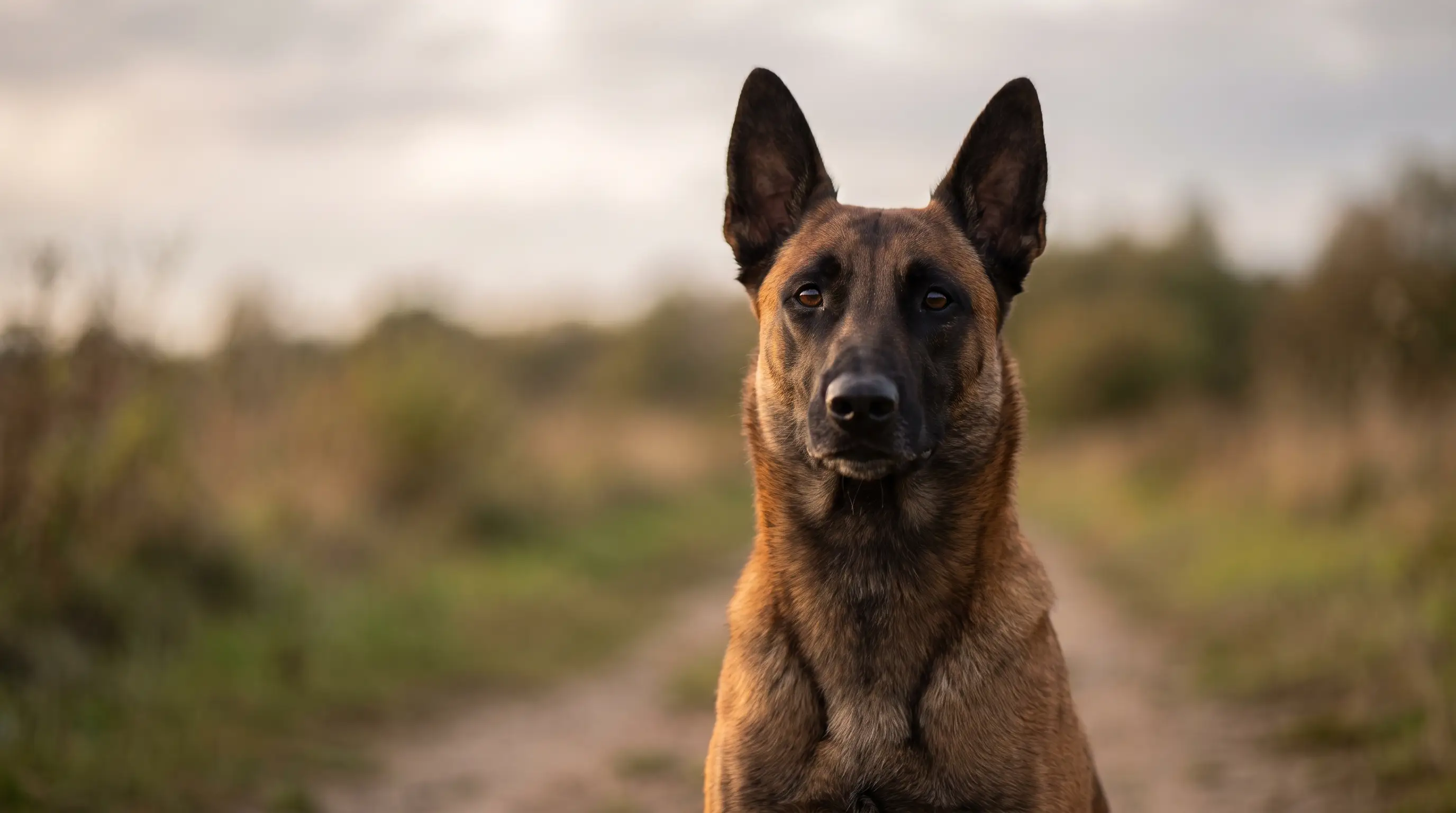
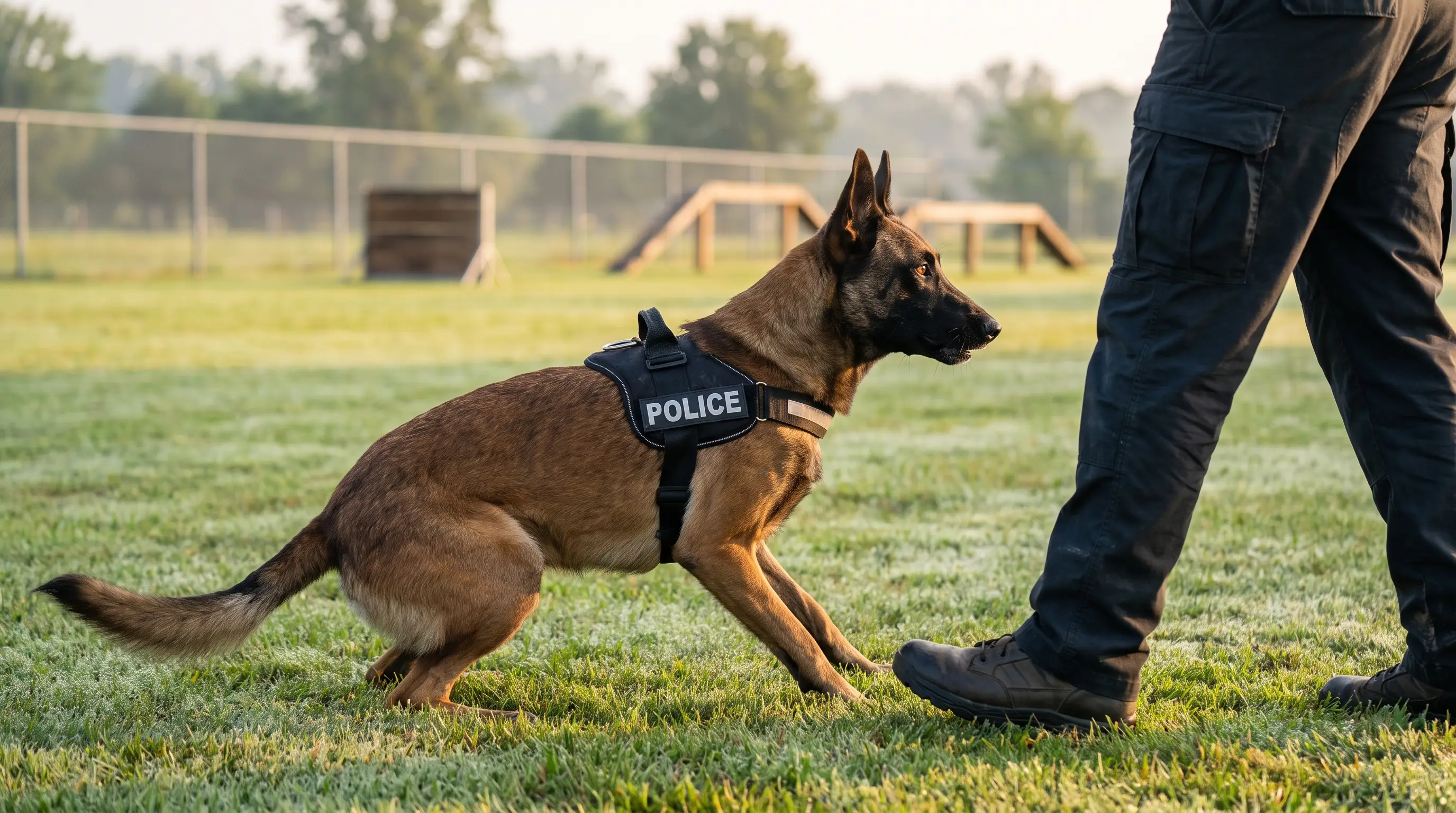
Patrol and apprehension work goes to the German Shepherd and, more and more, the Belgian Malinois, because both breeds carry the drive, trainability and steady nerve a dual-purpose police dog needs. The Shepherd is the breed most people picture on a K-9 unit, and it still works well. But modern military and police teams increasingly lean toward the Belgian Malinois. The Malinois is lighter and leaner, it can clear a six-foot wall, and that smaller frame puts less load on hips and elbows over a working life, which matters for a dog expected to run, jump and bite on demand for years. It is the breed you see with elite tactical units for exactly those reasons. Neither breed is a beginner's dog. These are high-output animals bred to bite and hold, and the same edge that makes them useful on a call makes them a lot of dog to live with off the clock.
What both share is a willingness to work with a handler under pressure. A patrol dog has to track a suspect, hold a position, and switch from search to apprehension on a word. That combination of nose, obedience and controlled aggression is rare, which is why the field narrows to these two herding breeds and their close relatives like the Dutch Shepherd.
Detection: explosives and drugs
Detection work, sniffing out explosives or narcotics, tends to go to the Malinois, the Labrador Retriever and springer spaniels, because the job rewards a first-class nose paired with an easy, biddable temperament. Here the priority flips away from the bite. A detection dog does not need to apprehend anyone; it needs to search methodically, indicate calmly, and work for a reward without getting frustrated. Labradors and springers are naturals at this. They have the scenting ability, they love to work for food or a toy, and they read as friendly, which helps when the search happens around the public. The Malinois shows up here too when a unit wants a single dog that can both detect and apprehend. The tell across all three is the same: a strong, controllable drive for the reward at the end of a find, not aggression.
Tracking and search-and-rescue: the Bloodhound

For following a specific person's scent over ground, the Bloodhound is the gold standard, and its trailing evidence has been accepted in some United States courts under strict conditions. The Bloodhound is a scent-discriminating trailer: given an article that carries one person's smell, it can pick that trail out and hold it, ignoring everyone else who has crossed the same path. Courts that admit its evidence require proof that the dog is of proven tracking stock, properly trained, reliable in past work, and correctly put on the trail, and even then the trail is treated as supporting evidence, not the whole case. Search-and-rescue teams use a different tool for a different problem: Labradors and shepherds trained to air-scent, which means catching human scent drifting on the wind rather than following a specific person's exact footsteps. One works a named individual's trail; the other sweeps an area for any living person. Both earn their keep, and both come down to how a dog is built to use its nose.
Hunting: pointers, retrievers, scent hounds and sighthounds

Hunting splits into jobs, and each job has its breed: pointers and setters find and freeze on game, retrievers bring it back undamaged, scent hounds work a trail by nose, and sighthounds run it down by eye. The English Pointer locks onto game and holds a rigid point, foreleg up, so the hunter can move in, one of the most specialised instincts in any breed. Retrievers like the Chesapeake Bay Retriever carry shot birds in a soft mouth that doesn't crush the meat, and the Chessie will do it out of cold water all morning. Scent hounds like the Beagle follow a ground trail on their nose, and that same friendly, food-driven nose now works airport agriculture and customs benches, where the beagle's non-threatening size and gentle way with crowds is a feature, not a compromise. Sighthounds are the outlier: the Greyhound hunts by sight and raw speed, reaching around 45 mph in short bursts, built to see the quarry and catch it rather than smell it out. Four different noses and eyes and mouths, four different jobs.
Herding and livestock guardians: the Border Collie, Kelpie and Anatolian Shepherd
Livestock needs two opposite kinds of dog: herders that move stock and guardians that protect it, and they are bred for opposite temperaments. The Border Collie and the Australian Kelpie move sheep and cattle with intensity and an almost obsessive focus, using eye, position and pressure to shift a flock where the handler wants it. The Border Collie's problem-solving and stamina are the reason it is often called the most trainable breed alive, and also the reason it goes to pieces in a home with nothing to do. The guardian job is the mirror image. An Anatolian Shepherd doesn't herd; it lives with the flock and stands between it and wolves or thieves, calm most of the day and decisive when a threat appears. You want a herder switched on and a guardian switched off until needed, and centuries of breeding have pushed the two in different directions. If you want to understand what that guarding instinct is defending against, our piece on the truth about wolf packs is a good companion read.
Working line versus pet home
The honest takeaway is that these are working-line dogs bred for a job and a drive, and that same drive can make a poor fit for a quiet pet home. A Malinois with no work becomes a problem. A Border Collie with a bored suburban afternoon starts herding the children and the vacuum cleaner. A Bloodhound will follow its nose over the horizon and ignore you doing it. None of that is a flaw in the dog; it is the exact quality that makes it good at the badge, the bench or the field. Admire the work these breeds do, and if one calls to you, match the dog to the life you can actually give it, not to the video that made you fall for it.
Common questions
What breed are most police dogs?
Most police dogs are German Shepherds or Belgian Malinois. Both are herding breeds with the drive, trainability and nerve needed for patrol and apprehension work, and many units also use Bloodhounds for tracking and Labradors for detection.
Why are police switching from German Shepherds to Belgian Malinois?
Police and military units increasingly choose the Belgian Malinois because it is lighter and more agile, can jump higher, and its leaner frame tends to mean fewer hip and elbow problems over a working career. German Shepherds are still widely used and remain the breed most associated with law enforcement.
What two breeds are most used as police dogs?
The German Shepherd and the Belgian Malinois are the two breeds most used for police patrol and apprehension. Dutch Shepherds are a common third, and Bloodhounds and Labradors fill tracking and detection roles.
What is the best dog breed for search and rescue?
There is no single best breed; it depends on the task. Bloodhounds are the gold standard for trailing one specific person's scent, while Labradors and German Shepherds are widely used for air-scenting search-and-rescue over open areas.
Why are beagles used at airports?
Beagles are used at airports because they combine a very strong nose with a friendly, non-threatening size and a calm way around crowds. That temperament lets them search luggage and passengers for prohibited food and agricultural items without alarming travelers.
What kind of dogs are used for hunting?
Hunting dogs are matched to the job: pointers and setters like the English Pointer find and freeze on game, retrievers like the Chesapeake Bay Retriever carry shot birds in a soft mouth, scent hounds like the Beagle follow a trail by nose, and sighthounds like the Greyhound hunt by sight and speed.
More in Dogs
8 rare dog breeds most people never meet
Eight of the world's rarest dog breeds — where they come from, what makes them unusual, and why you almost never see one.
Foxtails: The Summer Grass Seed That Burrows Into Pets
Foxtail grass seeds catch in fur and travel one way—inward. Here's how to spot them on a cat or dog, and stop them.
The oldest dog ever and how long dogs really live
Bluey reached 29 years. Bobi's 31-year claim fell apart. Here's the real math on dog lifespan, and how to buy your dog more time.