
Foxtails: The Summer Grass Seed That Burrows Into Pets
A foxtail is a barbed grass seed that only moves one direction: forward, into your pet. Once the arrow-shaped head snags fur, skin, an ear, or a nostril, its microscopic barbs act like fishhooks—they let the seed drive deeper but never back it out. That is why a two-minute coat check after a summer walk beats a surgery bill, and why you should never dig one out yourself.
What a foxtail actually is, and why it moves one way
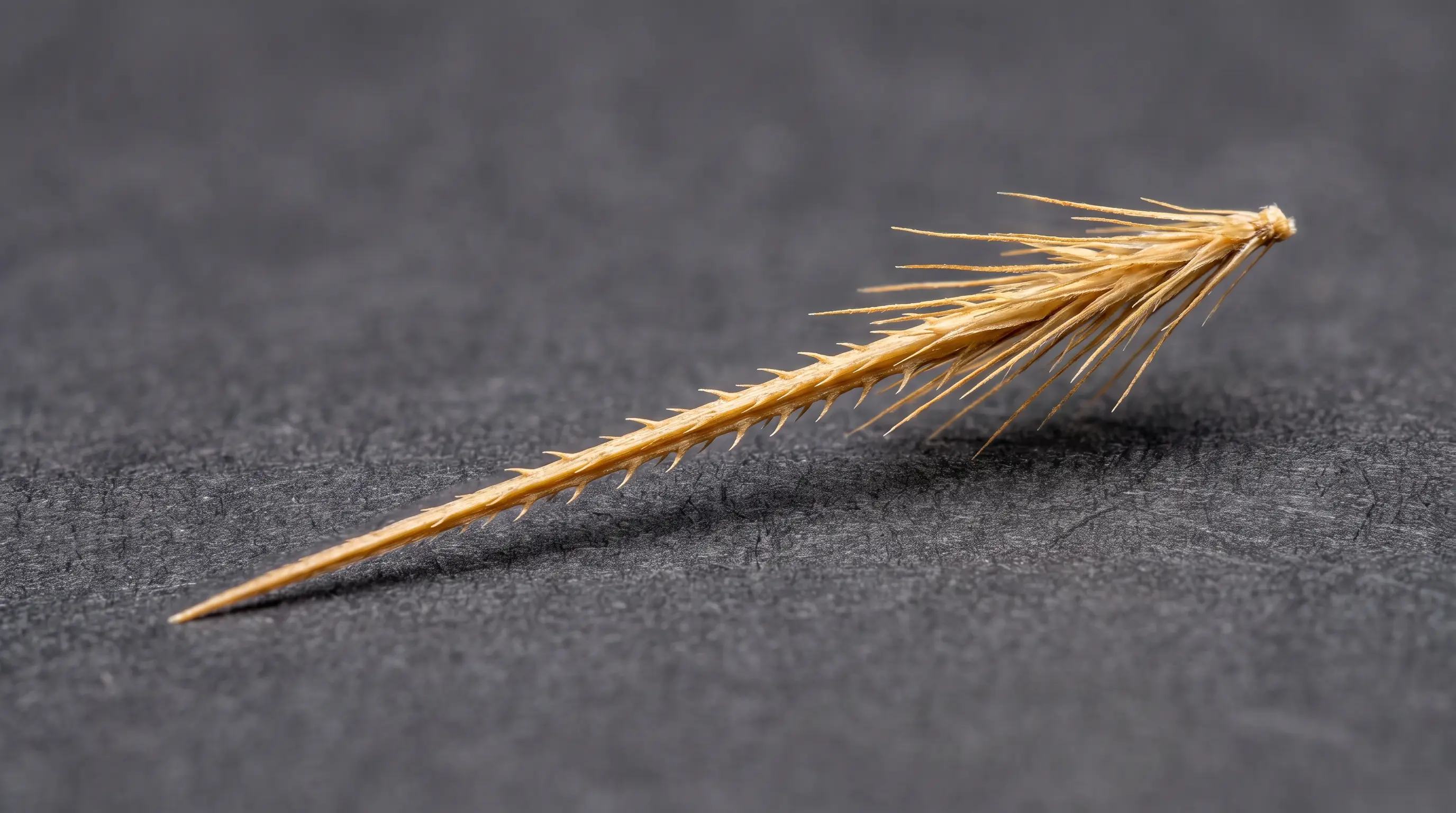
A foxtail is the dried seed head of common wild grasses—foxtail and wild barley among them—that ripen from late spring through summer. Green and soft in April, they turn blond, brittle, and sharp by June. Look closely at one and you see the whole problem: rows of tiny barbs angled backward along a pointed shaft. Those barbs are built to plant the seed in soil, working deeper with every bit of movement while the barbs stop it sliding back. A pet's coat is just soil the plant wasn't designed for. Fur brushes a dry seed head, the awn catches, and every step, shake, and lick after that ratchets it forward. It does not fall out. It does not work loose. Left alone, it keeps going—through skin, into an ear canal, up a nostril—and in serious cases it migrates far from where it started, reaching the chest and even the lungs, seeding infection and abscesses along the way. This is a mechanical problem, not an allergy or an infection you can wait out.
Where foxtails get in: toes, ears, eyes, nose, skin
Foxtails enter wherever a pet's body meets the grass first: the paws, ears, eyes, nose, and the thin-furred armpits and groin. Between the toes is the classic site—a seed lodges in the webbing, the pet licks obsessively at one paw, and within a day or two there's a red, swollen bump that may open into a draining sore. Ears are next: a seed that drops into the canal triggers sudden, frantic head-shaking or pawing at one ear, often right after a walk. In the eye, expect a squint, a weepy or held-shut eye, and pawing at the face. Up the nose, the sign is unmistakable and abrupt: a dog or cat that starts sneezing violently, over and over, minutes after coming in from outside. Under the skin anywhere on the body, a foxtail can announce itself as a firm lump or a wound that keeps draining and won't heal. Cats get foxtails less often than dogs because they tend to avoid crashing through tall grass, but outdoor cats and those with feathery coats are far from immune.
The warning signs, read by location
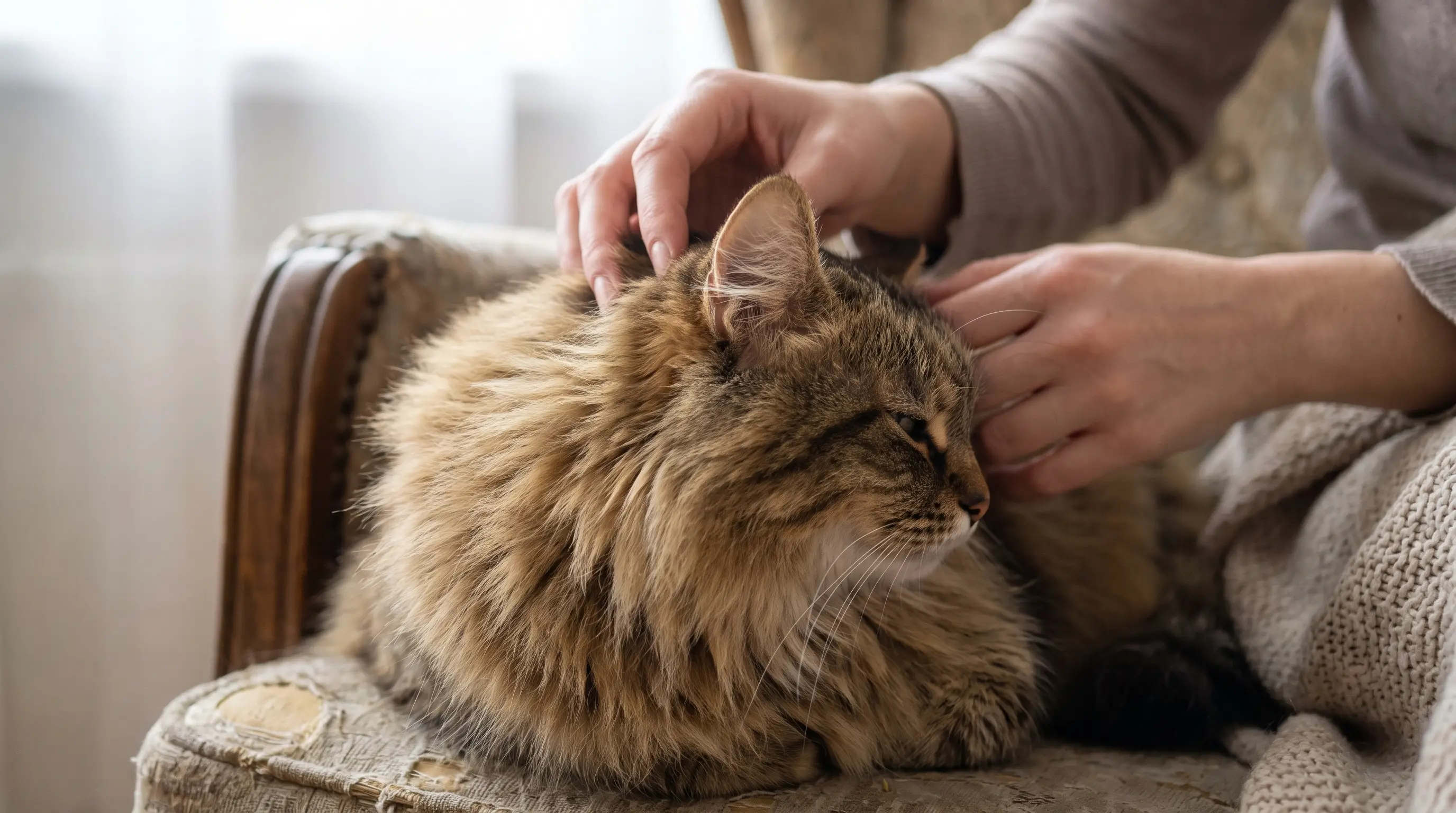
Match the behavior to the spot and you'll usually know which entry point to check. An ear: head-shaking, head tilt, or pawing at one side. An eye: squinting, tearing, a lid held shut, rubbing the face on the floor. The nose: a sudden fit of hard, repeated sneezing after time outdoors, sometimes with a little blood. A paw: fixated licking of one foot, limping, a swelling between the toes that may burst and drain. Anywhere under the coat: a lump or a small sore that keeps weeping. What makes foxtails genuinely dangerous is that they hide from the usual tools—a grass seed is organic and doesn't show up on a standard X-ray, so a vet often finds it the hard way, by careful exam or a minor procedure under sedation. Long-haired breeds carry the highest risk because their coats give the seed more to grab. If you share your home with a Maine Coon or a Persian, the fur around the ears, paws, and belly is exactly where these seeds like to disappear.
What to do—and the one thing not to do
If you see a foxtail sign, check the coat and call your vet—do not go digging. This is the rule that matters most. A foxtail you can see clearly caught in surface fur, before it has broken skin, you can gently comb or pluck out. But the moment it has entered the skin, an ear canal, an eye, or a nostril, probing at it with tweezers or a cotton bud tends to push it deeper and snap off the tip you needed to remove whole. Leave it for someone with the right light, magnification, and instruments. Vets deal with these constantly through summer; retrieval is usually quick, and the sooner the seed comes out, the smaller the procedure. Waiting is what turns a five-minute extraction into treating an abscess or chasing a seed that has already started to travel. If your pet is frantic—relentless sneezing, a shut and streaming eye, non-stop pawing at an ear—treat it as same-day urgent, not a wait-and-see.
Prevention: the after-walk check and a shorter lawn
The best defense against foxtails is a habit: check your pet head to toe after every summer walk. Run your hands and eyes over the coat, part the fur between every toe, look inside and around the ears, and feel through the armpits and groin—the spots seeds reach first and hide longest. On hairy breeds, trim the fur between the paw pads and around the ear openings before peak season so there's less for a seed to catch. Keep your own lawn mown short; a foxtail can't ripen and detach from grass that never gets tall and dry. When the fields go blond in high summer, steer walks away from overgrown, dry grassy verges and stick to mown paths or pavement. The same seasonal caution applies to a day out—warm-weather outings come with their own checklist, and a quick coat inspection belongs on it, as we cover in taking a cat to the beach. None of this is complicated. It's two minutes of attention at the door that keeps a grass seed from becoming a surgery.
Common questions
What is a foxtail (grass seed)?
A foxtail is the dried, arrow-shaped seed head of wild grasses like foxtail and wild barley that ripen in late spring and summer. It's covered in backward-facing barbs, so once it catches on fur or skin it can only move forward, burrowing inward rather than falling out.
How do I know if my dog or cat has a foxtail?
Watch for a sign tied to one spot: head-shaking or pawing an ear, a squinting or weepy eye, sudden violent sneezing after being outside, obsessive licking of one paw, or a lump or draining sore under the skin. Any of these appearing soon after a summer walk is a reason to check the coat and call your vet.
What do you do if a foxtail is in a cat's eye?
Don't try to remove it yourself—get to a vet the same day. A foxtail in the eye causes squinting, tearing, and a held-shut lid, and probing at it can push it deeper or damage the eye. A vet has the magnification and tools to take it out safely and treat the irritation.
Can a foxtail travel to the lungs?
Yes. Because the barbs only let it move forward, a foxtail can migrate well beyond where it entered, and in serious cases one inhaled through the nose or mouth reaches the chest and lungs, causing infection and abscesses. This is why an untreated foxtail is not something to wait out.
When is foxtail season?
Foxtail season runs from late spring through summer, when wild grasses dry out and their seed heads turn blond, brittle, and sharp. Risk is highest in the hottest, driest weeks when fields are overgrown and the seeds detach at the lightest touch.
How do you prevent foxtails?
Check the coat, paws (between the toes), ears, and armpits after every summer walk, and trim paw and ear fur on hairy breeds. Keep your lawn mown short and avoid dry, overgrown grassy fields at the peak of the season.
More in Dogs
8 rare dog breeds most people never meet
Eight of the world's rarest dog breeds — where they come from, what makes them unusual, and why you almost never see one.

The oldest dog ever and how long dogs really live
Bluey reached 29 years. Bobi's 31-year claim fell apart. Here's the real math on dog lifespan, and how to buy your dog more time.

Disney dog breeds: the real dog behind every one
Lady is a Cocker Spaniel and Dug is a Golden Retriever, but Pluto and Bolt were never given an official breed. The honest list.