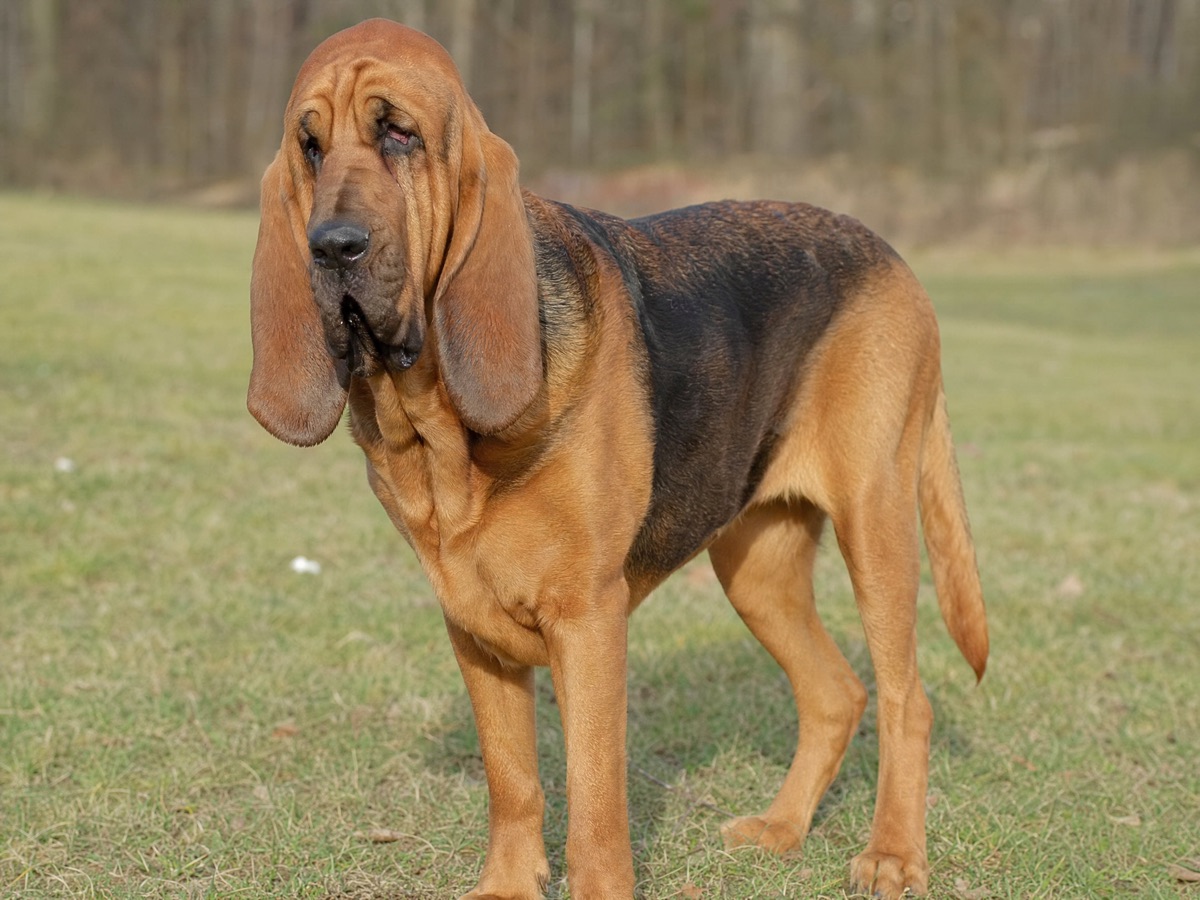
Bloodhound
The greatest nose in dogdom — a trail once found is never forgotten.
Vital stats
| Size | Large · 58–69 cm |
| Weight | 36–50 kg |
| Life expectancy | 8–10 years |
| Energy | Moderate-high — 60+ min/day |
| Shedding | Moderate, year-round |
| Coat | Short, dense coat · black & tan, liver & tan, red |
| Group | Hound · FCI №84 / AKC |
| Origin | Belgium / France |
| FCI group | 6 — Scent hounds and related breeds · FCI 84 |
Breed traits
Friendliness
Care
Mind
The Bloodhound by the numbers
The Bloodhound facts owners search for most — price, lifespan, weight, shedding and colours, in one place.
Less common, so expect a waitlist and some travel to a reputable breeder — which pushes the price up. Ongoing costs run high — more food, bigger doses at the vet, and pricier insurance.
We don't quote a single figure: the real price swings with breeder, region, bloodline and health testing — and a rescue costs a fraction of a breeder's litter. Adopting is almost always the cheapest route.
Temperament
Monks at the Abbey of Saint-Hubert bred this hound a thousand years ago to follow one scent to the exclusion of all else, and that single-mindedness defines it still: mild, patient and affectionate in the house, utterly deaf to you the moment its nose drops. It works with people willingly — it just doesn't take orders from them.
Habits & quirks
Nose-first navigation
Every walk is an investigation; the ground is a newspaper and it reads slowly.
The drool flick
One shake of that great head redecorates walls a surprising distance away.
Ear dunking
Those magnificent ears trail through water bowls, mud and dinner alike — they were bred to sweep scent toward the nose.
Selective deafness
It hears you perfectly; the trail is simply more interesting.
Health
The Bloodhound is a big, deep-chested dog, and that shape brings the one emergency every owner should know before they ever need it: bloat, where the stomach fills with gas and can twist. Feed calm, unhurried meals, let him rest after them, and learn the signs of gastric torsion — it moves fast. Two more jobs are weekly, not urgent, but they matter: clean deep into the ears and the loose facial folds, because both trap moisture and turn into infections if they are left. And keep him contained — a Bloodhound that catches a scent will follow it for miles without a backward glance, so a secure fence and a lead everywhere else are simply part of owning one.
Nutrition
| Containment | A high, secure fence and a lead everywhere else — a Bloodhound on a trail will follow it for miles without a backward glance. |
| Ears & wrinkles | Clean the deep ear canals and facial folds weekly to keep infections at bay. |
| Health | A deep-chested giant: feed calm, rested meals and know the emergency signs of bloat before you need them. |
| Exercise | An hour-plus daily, ideally with long-line trailing games — nose work satisfies it like nothing else. |
Feed a Bloodhound the way you would feed any deep-chested giant: measured meals, split across the day rather than one big bowl, and calm rest afterwards instead of a romp — gulping a huge meal and then charging around is exactly what raises the bloat risk. Keep him at a lean, honest weight; the extra kilos a big hound puts on load the joints and do him no favours. And accept the drool — a Bloodhound waters at the sight of dinner, and that is just part of the deal, not a sign anything is wrong.
Puppy guide
A Bloodhound puppy grows into a lot of dog, so the early months are about steady habits rather than big adventures. Keep exercise gentle and low-impact while the heavy frame is still forming, and start the weekly ear and wrinkle cleaning young so he takes it as normal. Socialise him kindly — he is a soft, sensitive hound under all that size — and begin recall early, knowing the nose will always be the stronger pull. Work with food from the start; a Bloodhound works for a reward and shuts down under pressure.
Training
Bloodhounds were bred for a thousand years to lock onto one scent and ignore everything else, so train with that, not against it. Keep sessions short, upbeat and led by food, and never expect the instant obedience of a retriever — a Bloodhound on a trail has genuinely stopped hearing you. Recall is the honest limit, which is why the fence and the lead do the real work. Give him proper scent games, a long line and ground to track, and you will see a happy hound; drill him with repetition and a raised voice and you will see a stubborn one.
Life expectancy
Bloodhounds live 8–10 years. Bloodhounds are shorter-lived than smaller hounds, as big deep-chested dogs tend to be, and the way to make the most of those years is unglamorous: keep him lean, feed calm split meals, know the signs of bloat before you need them, and stay on top of the weekly ear and fold cleaning. Do those few things well and a Bloodhound spends its life doing what it loves best — nose down, following a story across the ground that only it can read.
Similar breeds
Breeds with a similar build and background — worth a look if this one isn't quite the fit.
Breeds that look like this
Common questions
Are Bloodhounds good family dogs?
Yes — gentle, patient and affectionate, but big and clumsy indoors and heavy droolers. Best for families with space and a sense of humour.
Are Bloodhounds hard to train?
Independent and single-minded on a scent, they need patient, positive, food-motivated training and secure fencing — a Bloodhound on a trail will not hear you.
How old a trail can a Bloodhound follow?
Well-trained hounds have successfully worked trails several days old across miles of country. It's why search-and-rescue teams still call on them when technology runs out.
Does the Bloodhound shed a lot?
Moderately. The Bloodhound sheds a fair amount, steadily through the year with heavier seasonal patches. A weekly brush keeps most of the loose hair off your floors and clothes.
Is the Bloodhound hypoallergenic?
Not really. No dog is truly hypoallergenic, and the Bloodhound's shedding coat releases plenty of the dander that sets off allergies. If someone at home is allergic, this isn't the easiest breed to live with — spend time around one first.
Stories featuring this breed
All stories →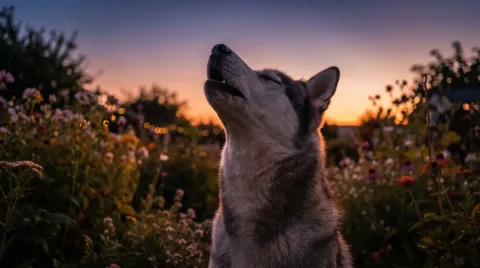
Why do dogs howl? Sirens, solitude and the wolf inside
The howl is long-distance radio inherited from wolves — and no, the siren isn't hurting your dog's ears. What each howl broadcasts, and the one kind that's a message for you.
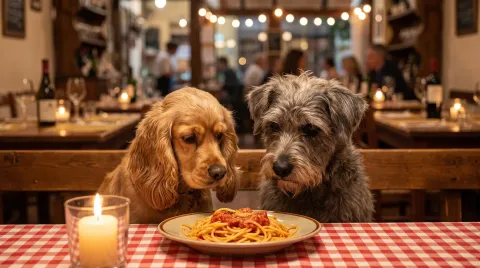
Disney dog breeds: the real dog behind every one
Lady is a Cocker Spaniel and Dug is a Golden Retriever, but Pluto and Bolt were never given an official breed. The honest list.
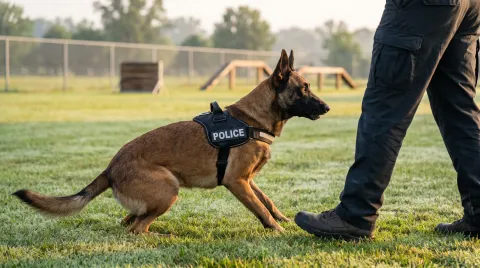
Working dog jobs: the breeds behind the badge
Which breeds do police, detection, rescue and hunting work, and the drive that makes each one right for the job.