You Found a Stray Cat: What to Actually Do
If you found a stray cat, do not take it inside yet. First check for a collar, get it scanned for a microchip, offer water, and post in local found-pet groups, because a friendly cat is often someone's outdoor pet with a home a few doors away. The steps below go in that order for a reason: the most common mistake is treating a cat with an owner as a cat without one.
Stray vs feral: work out which one you found
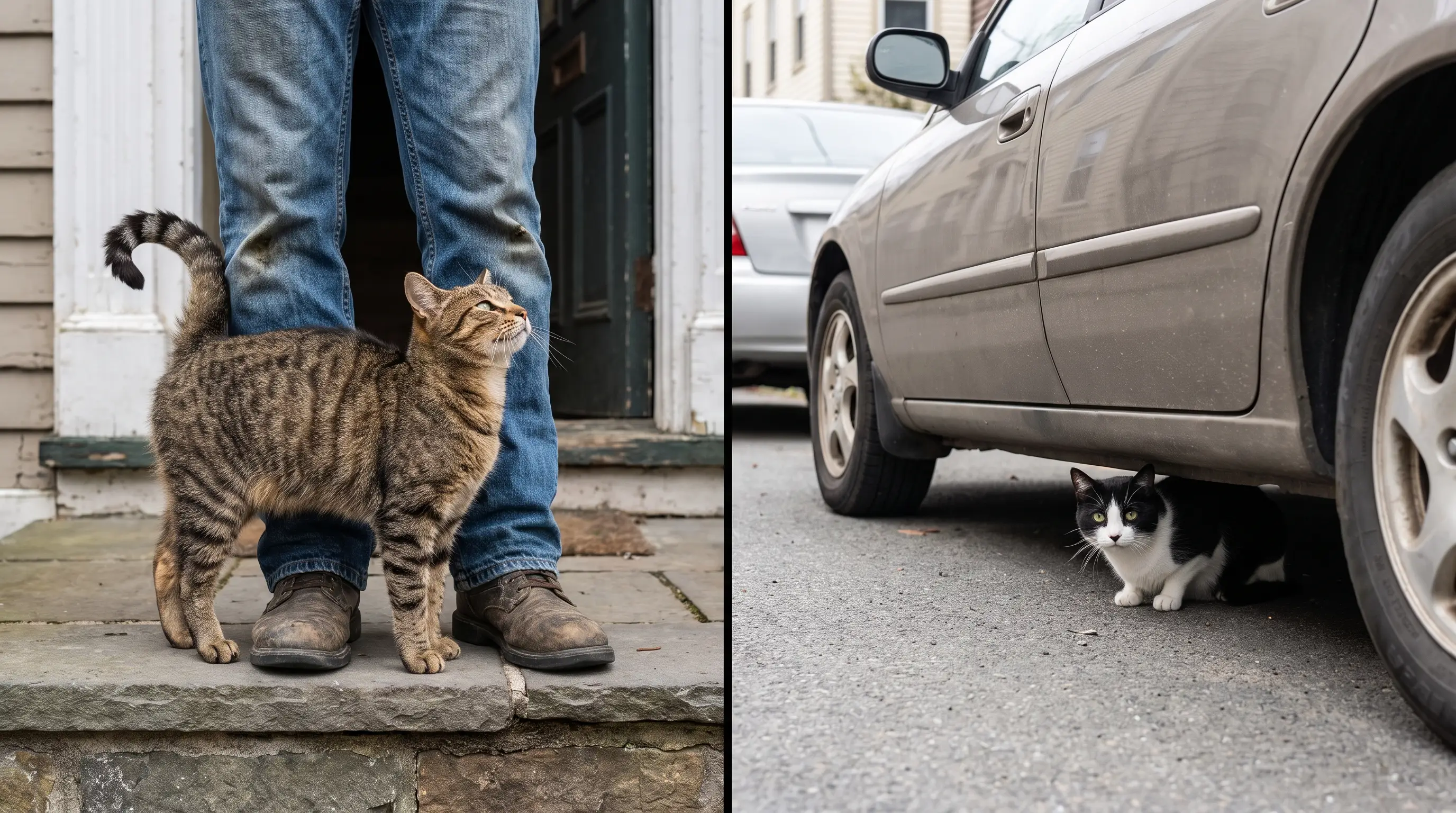
The first thing to figure out is whether the cat is a stray or a feral, because they need opposite responses. A stray was once owned and socialised to people. It is lost or abandoned, so it often approaches you, meows, rubs against legs, and lets you close. It may be underweight or scruffy because it has been fending for itself. A feral cat was born outdoors or has lived wild long enough that it was never socialised to humans. It keeps its distance, will not be handled, and watches you from under a car rather than walking up to you. If a cat comes to you, you are almost certainly dealing with a stray, and most strays are ordinary domestic shorthair pets rather than anything exotic. If the cat avoids you completely, treat it as feral and read the TNR section below before doing anything. Getting this call right up front changes every decision that follows.
Your first hour: collar, microchip, water
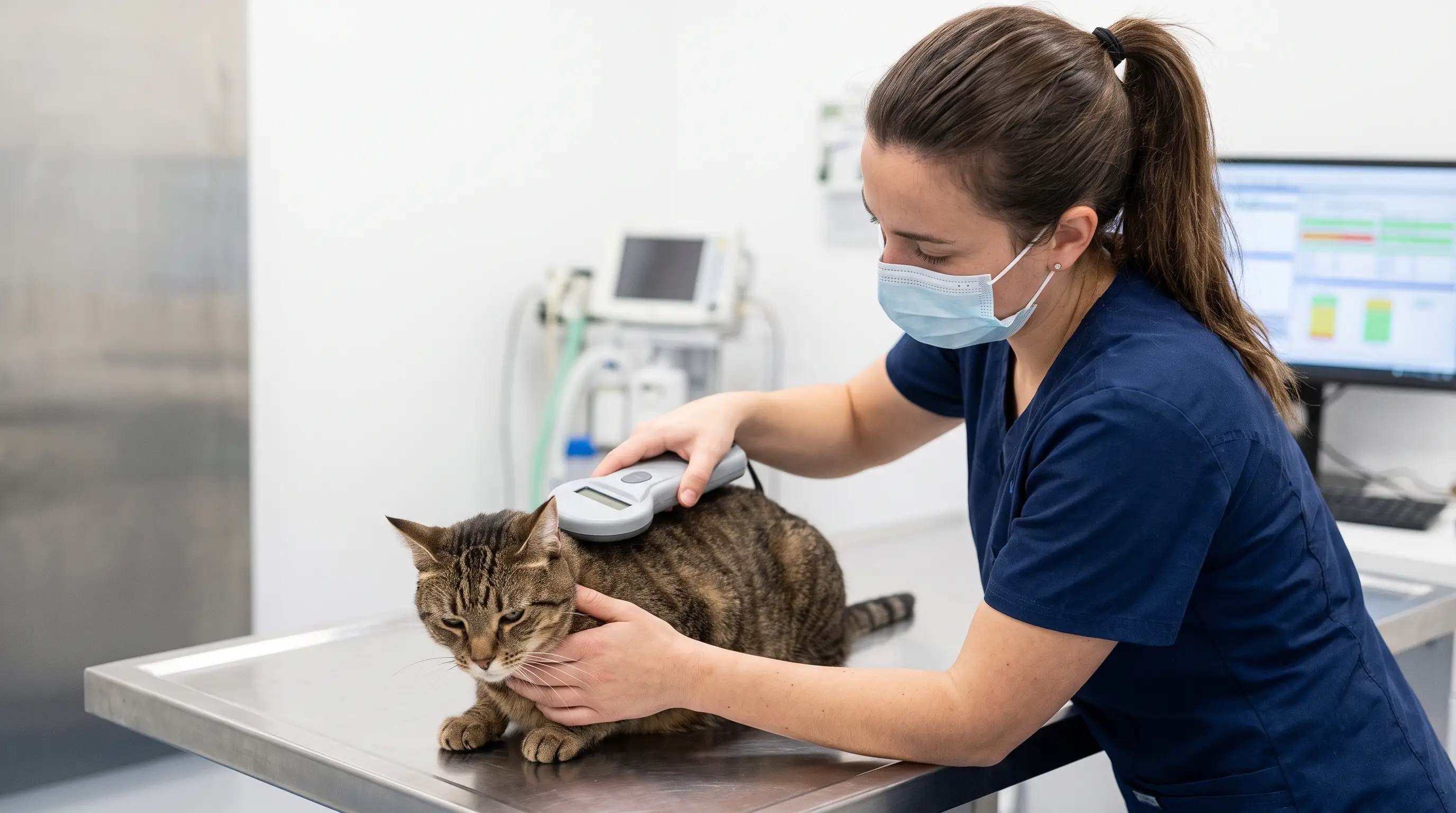
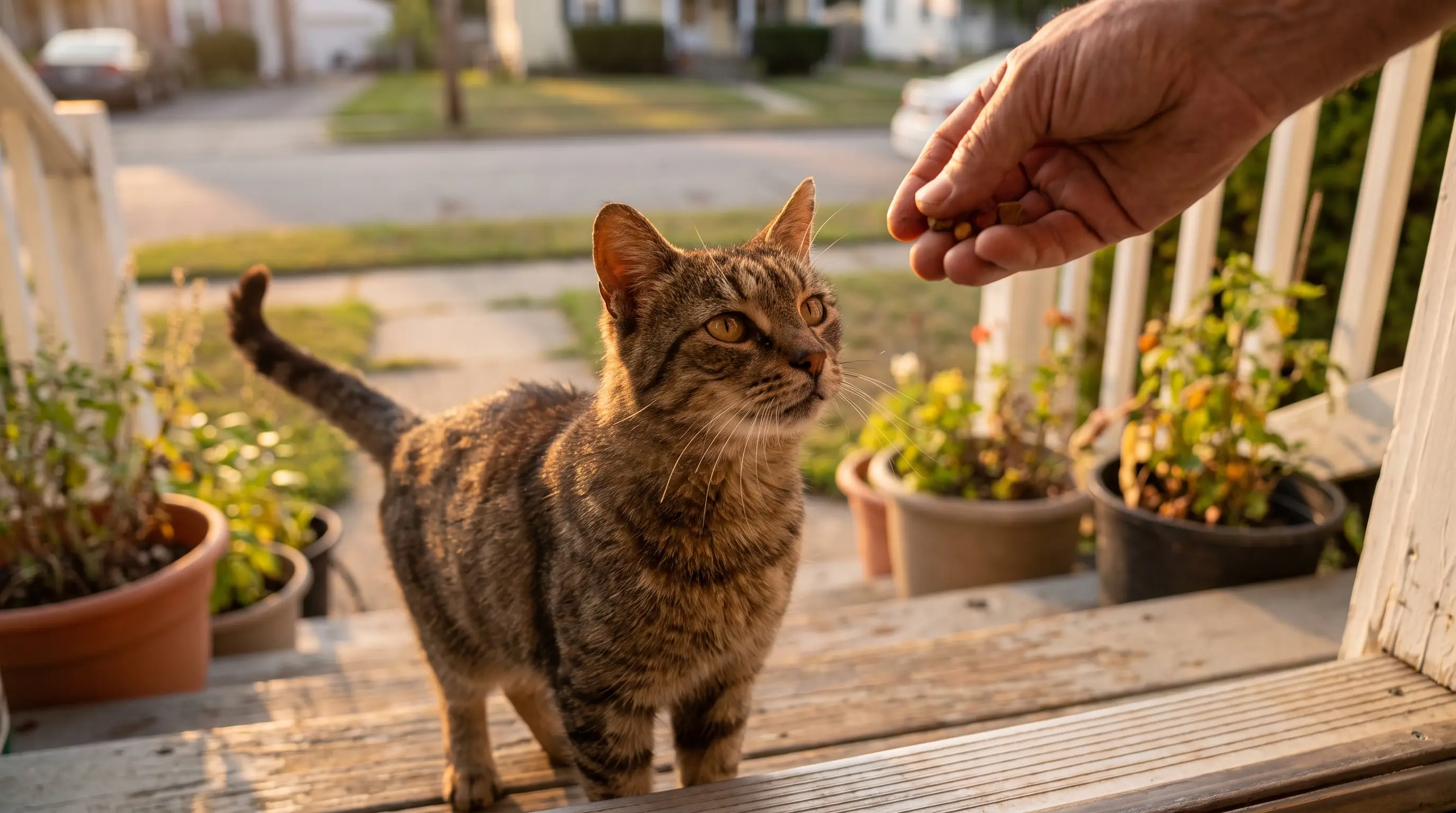
For a friendly stray, the first hour is about identification, not adoption. Check for a collar and tag, and read any phone number on it. Even without a collar, take the cat to a vet or shelter to be scanned for a microchip, which they do free and in under a minute; a chip can carry the owner's contact details straight away. Offer fresh water and a little cat food to steady the cat, but hold off on bringing it permanently indoors until you have checked for an owner. If you have other pets at home, keep any new cat separate anyway, since you do not yet know its health or vaccination status. A scan and a collar check take an afternoon and routinely reunite cats with owners who are frantically looking for them.
Is it actually lost, or just an outdoor pet?
A friendly cat outdoors is frequently not lost at all, just an outdoor pet a short walk from its own food bowl. Before you take it in, post a clear photo and your location in local lost-and-found and found-pet groups, and scan those same groups for anyone reporting a missing cat that matches. Ask neighbours directly and check community boards. A well-fed cat with a clean coat that turns up at the same time each day almost always has an owner nearby who lets it roam. Taking such a cat indoors and rehoming it quickly is how cats get separated from families who never stopped looking. Give the search a few days before you conclude the cat is homeless, unless it is visibly sick, injured, or a young kitten.
Should you feed it? Yes, but never milk
You can feed a friendly stray, and a little cat food plus fresh water is genuinely helpful for a hungry, underweight cat. The one thing to avoid is cow's milk. Most adult cats are lactose intolerant, so the saucer of milk from cartoons tends to cause stomach upset and diarrhoea, which is the last thing a stressed stray needs. Keep portions small and regular rather than one large meal, and always leave clean water out. Be aware that steady feeding builds a routine, so a cat you feed daily may start treating your porch as home. That is fine if you intend to take responsibility, but feed with that outcome in mind rather than by accident.
Feral cats and TNR: when not to 'rescue'
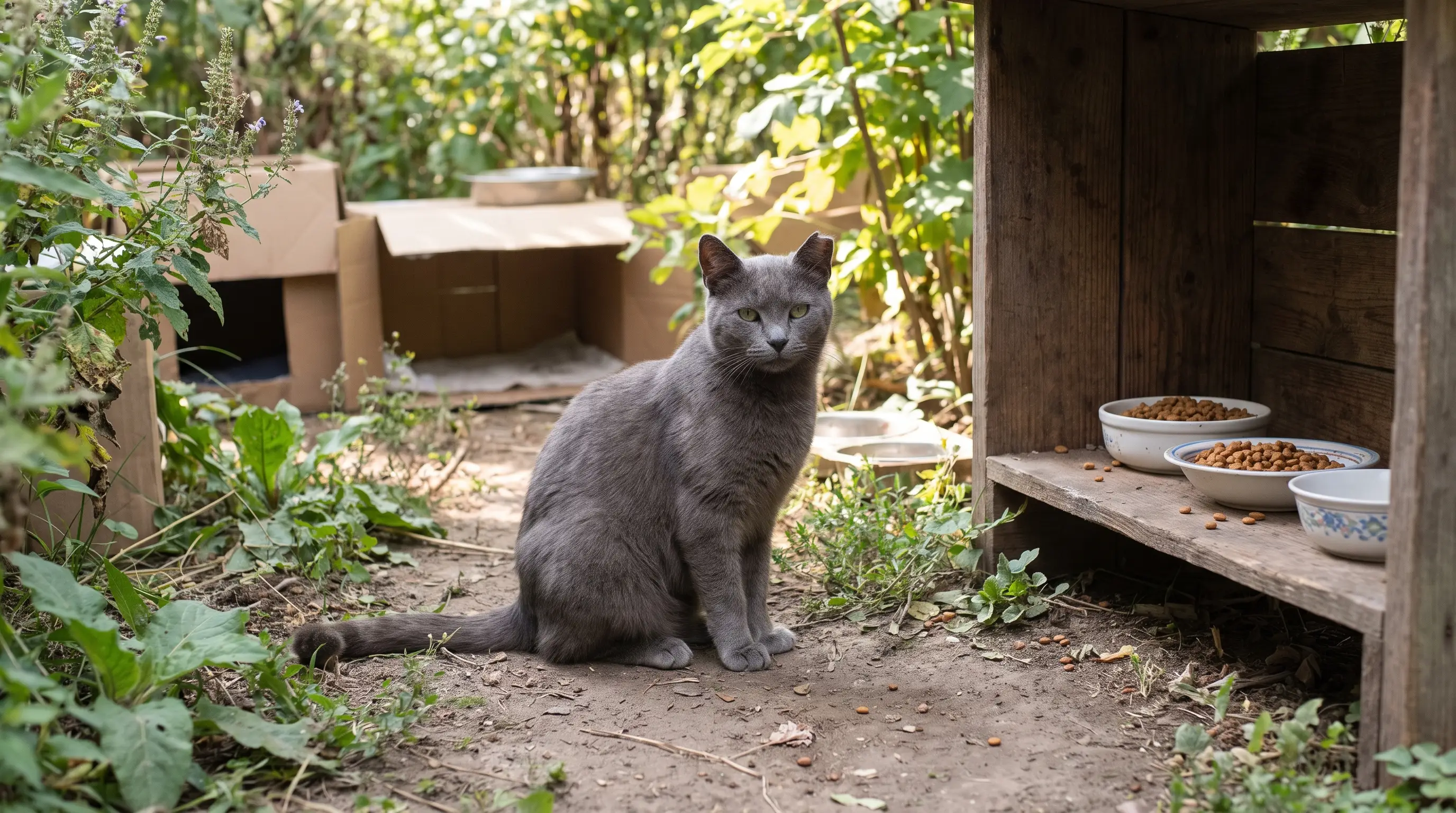
A healthy feral cat living in a managed colony usually should not be rescued, and trying to can do real harm. Ferals are not socialised to people, so a home is stressful for them, not a gift; a thriving community cat already has territory, a food source, and often a caretaker. The humane approach is TNR, short for trap-neuter-return: the cat is humanely trapped, neutered, ear-tipped so everyone can see it has been done, and returned to where it lives. A clipped ear tip is the signal that a cat is already part of a managed colony and should be left in place. This is a different animal from a truly wild species; if you are curious about the line between feral house cats and their untamed relatives, our piece on wild cats draws it out. The honest point of view here: not every outdoor cat is lost or needs saving, and pulling a settled feral out of its colony often makes its life worse.
When a cat really does need help
Some cats do need rescuing, and the clear cases are kittens and any cat that is sick, injured, or in immediate danger. Young kittens without a visible mother, a cat that is limping, wounded, struggling to breathe, or stuck somewhere unsafe should not be left to sort themselves out; call a local shelter or vet and follow their guidance. For these cats, speed matters more than the collar-and-chip checklist. The rule that holds the whole guide together is simple: match your response to the cat in front of you. A friendly, healthy adult probably has a home to find, a healthy colony feral should be neutered and returned, and a vulnerable kitten or an injured cat needs hands-on help now.
Common questions
What should I do if I find a stray cat?
Check for a collar and tag, then take the cat to a vet or shelter to be scanned free for a microchip before assuming it is homeless. Offer water and a little food, and post in local found-pet groups, because a friendly cat often has an owner nearby.
What's the difference between a stray and a feral cat?
A stray was once owned and socialised to people, so it is usually approachable and may meow at you, but it is now lost or abandoned. A feral cat was born or has lived wild and is not socialised, so it avoids people and will not be handled, and the two need different responses.
Should I feed a stray cat?
Yes, a little cat food and fresh water helps a hungry stray, but never give cow's milk because most cats are lactose intolerant and it causes stomach upset. Keep portions small, and remember that regular feeding can make the cat treat your home as its own.
How can I tell if a cat is a stray or just lost?
A well-fed cat with a clean coat that appears at the same time each day usually has an owner who lets it roam outdoors. Post a photo in local lost-and-found groups and check for missing-cat listings before taking it in, since many friendly outdoor cats are simply someone's pet.
Can I keep a stray cat I found?
Only after you have genuinely tried to find its owner, by checking for a collar, getting it scanned for a microchip, and posting in local found-pet groups for several days. If no owner comes forward and the cat is not part of a managed feral colony, you can then look at adopting it responsibly.
What is TNR (trap-neuter-return)?
TNR stands for trap-neuter-return, the humane way to manage feral colony cats. The cat is humanely trapped, neutered, ear-tipped so it is visibly marked, and returned to where it lives, because a healthy colony feral is better off in its territory than removed from it.
More in Cats
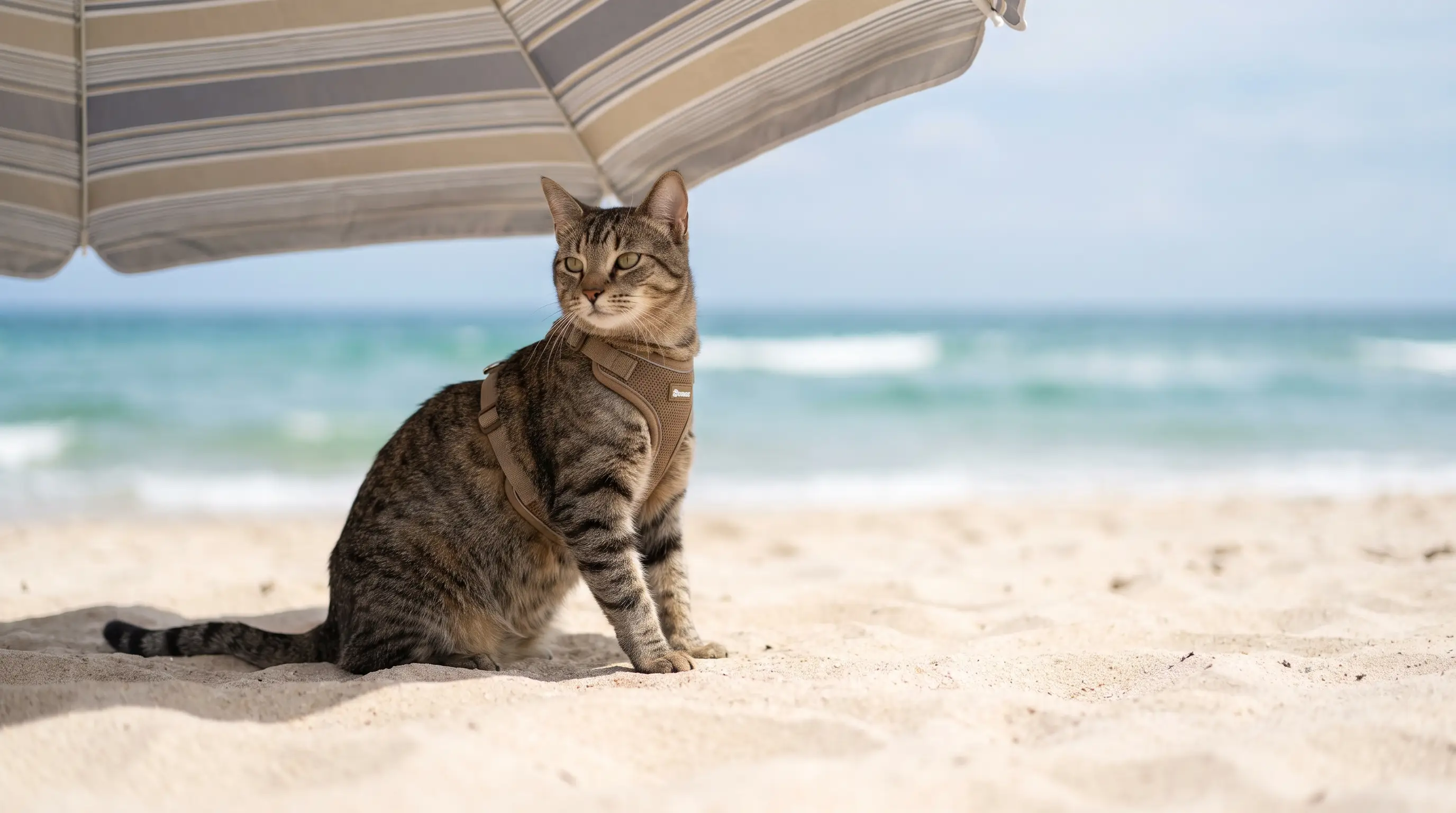
Can you take your cat to the beach? An honest guide
Most cats should skip the beach, and a few can go safely. The honest, vet-checkable guide to heat, sun, saltwater, harnesses and who stays home.

What Catnip Really Does to a Cat
The honest, myth-busting guide to catnip: what nepetalactone does, why 1 in 3 cats ignore it, and what to try instead.

Foxtails: The Summer Grass Seed That Burrows Into Pets
Foxtail grass seeds catch in fur and travel one way—inward. Here's how to spot them on a cat or dog, and stop them.