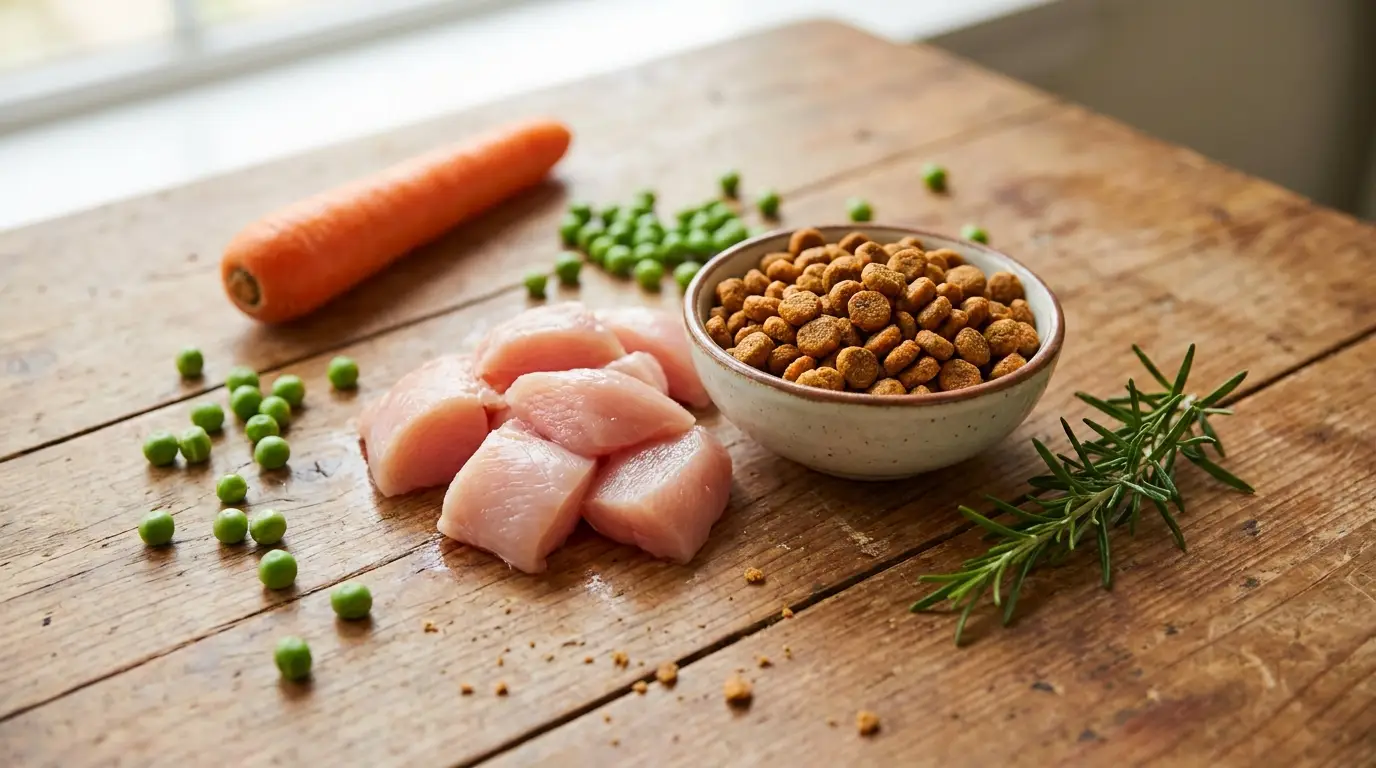
Reading the pet food ingredient list: meat, meal and by-product
The ingredient list is where pet food marketing does its cleverest work. Ingredients are listed by weight, so a meat at the top looks like proof of quality — but that order can be, and is, engineered. Learning three things (how water skews the order, how ingredients get split, and what 'meal' and 'by-product' actually are) lets you read past the presentation to the food underneath. None of it is complicated once you know the tricks.
Why 'chicken first' can be a mirage
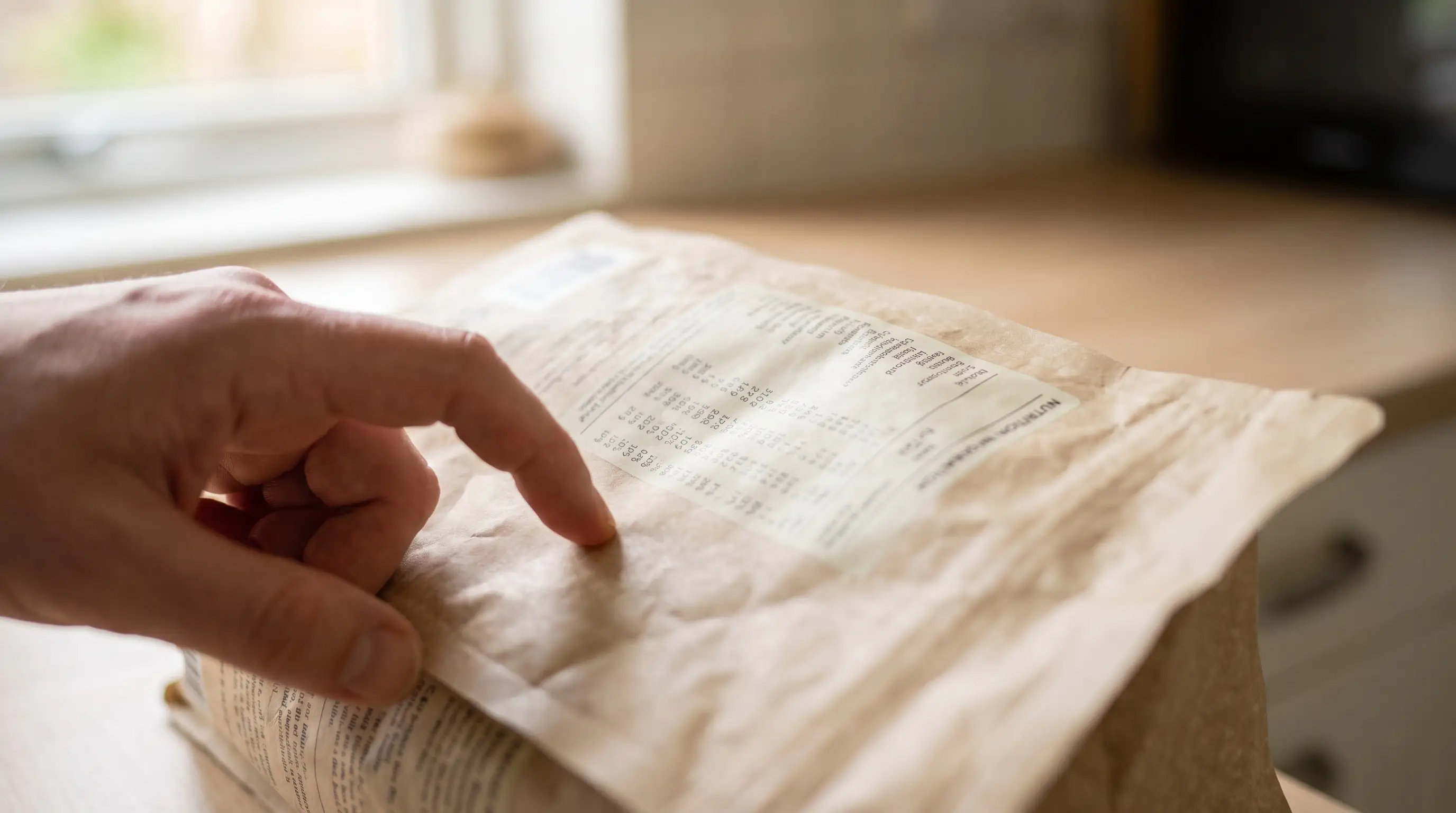
Ingredients are ordered by weight before cooking, and that is the loophole. Fresh chicken is about 70 percent water, so a food can list "chicken" first and look protein-rich — but once the water cooks off, the actual amount of chicken left in the kibble can be far smaller than the position suggests. A "chicken meal" listed second or third, by contrast, is chicken with the water already removed, so it can contribute more real chicken than the fresh "chicken" above it. The top of the list is a starting point, not a verdict. This is why the whole panel, read together, tells you more than the first ingredient alone — and why the adequacy statement matters more than any single line.
Meat, meal and by-product — what they really are
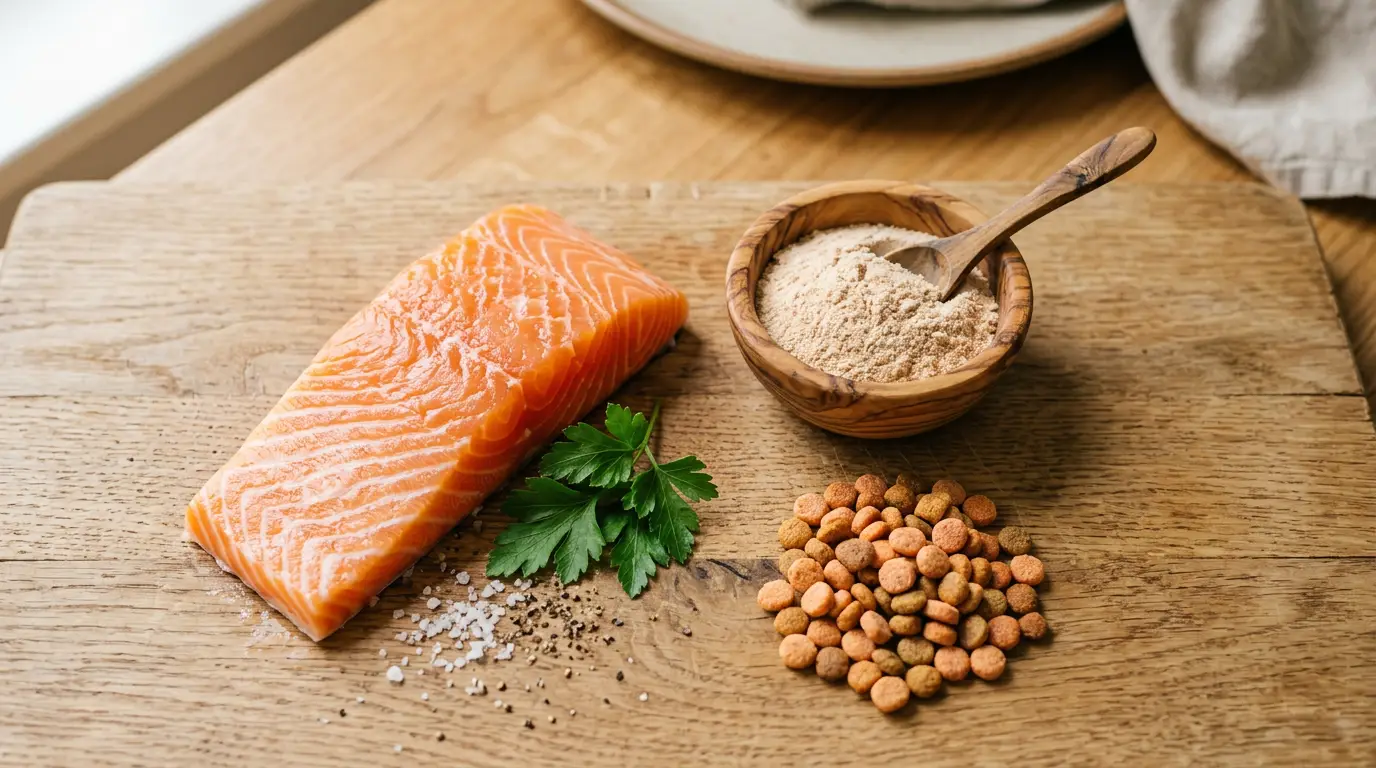
Three words trip people up. Named meat ("chicken", "lamb") is fresh muscle meat, water and all. Named meal ("chicken meal", "lamb meal") is that meat rendered down — cooked and dried into a concentrated protein powder, which is why it packs more protein per gram than fresh meat. By-products are the parts beyond prime muscle: organs like liver, heart and kidney, which are genuinely nutritious and are exactly what a wild dog or cat eats first. The real quality signal isn't meal-versus-fresh, it's named versus unnamed. "Chicken meal" and "chicken by-product" name their source; "meat meal", "animal fat" or "poultry by-product" don't, and that vagueness — not the word by-product itself — is the thing to be wary of.
The ingredient-splitting trick
Here is the sharpest trick to spot. Because the list is by weight, a maker who wants meat to appear first can split a cheaper ingredient into several sub-forms so none is heavy enough to outrank the meat. Peas might appear separately as pea protein, pea fibre, pea starch and pea flour; corn as corn, corn gluten and corn meal. Individually each sits below the meat; added back together they might outweigh it. When you see the same base ingredient repeated in different guises down the list, mentally recombine them — the food may contain far more plant matter than the meat-first impression suggests. It doesn't make the food bad, but it does mean the panel was arranged to flatter.
A 30-second way to read any label
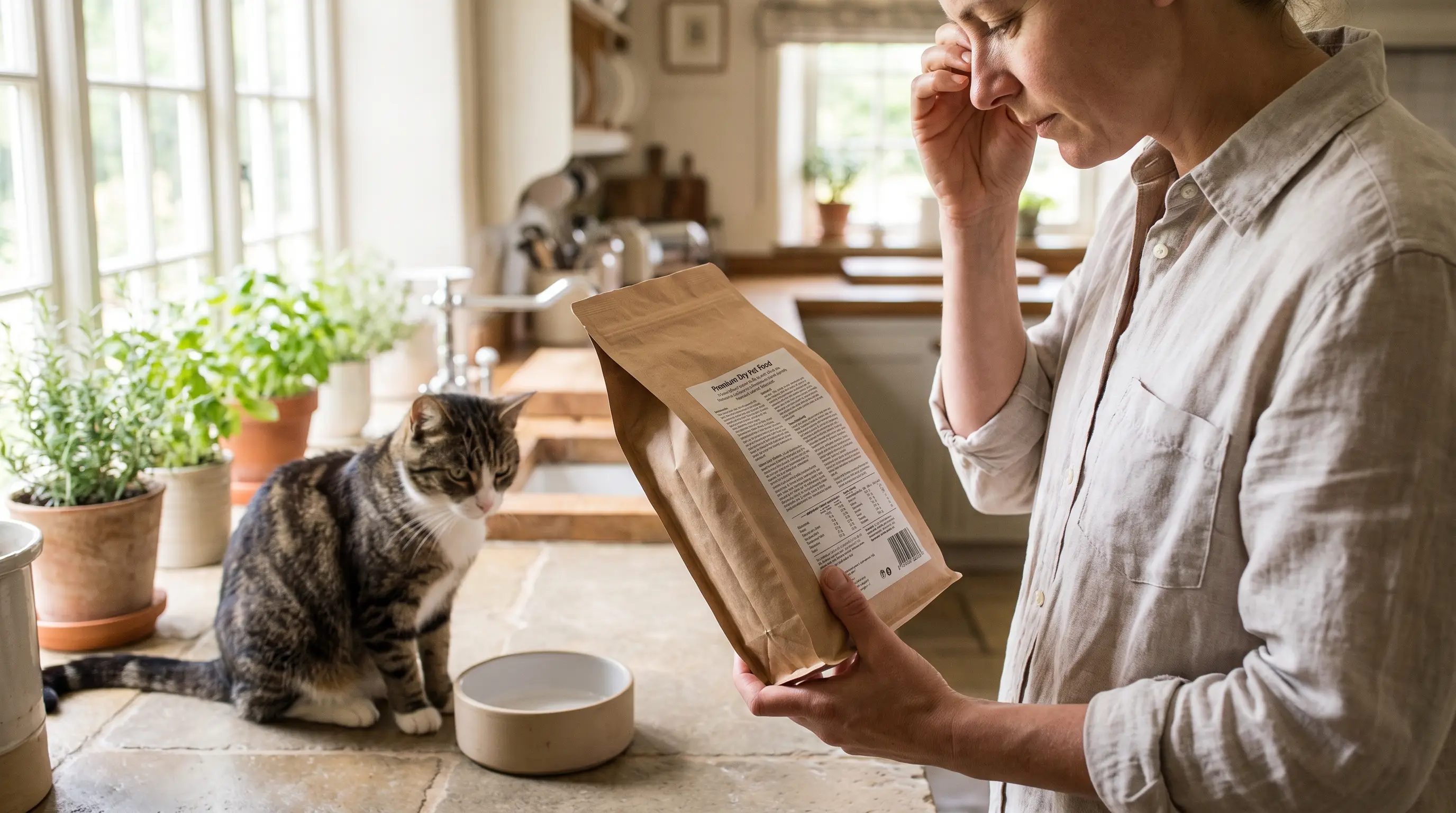
Put it together into a quick routine. First, confirm the complete-and-balanced statement for the right life stage — that comes before any ingredient analysis. Then scan the first five or six ingredients, mentally adding water back to fresh meats and recombining any split ingredients, and check whether the meat sources are named rather than generic. Don't panic at "meal" or "by-product"; do pause at unnamed ones. And remember the guaranteed analysis is on an as-fed basis, so a wet food's protein looks low only because it's mostly water — compare foods on a dry-matter basis if you want to be exact. That's the whole skill. Once you've chosen, our food calculator handles how much to feed.
Common questions
Is the first ingredient in pet food the most important?
Not on its own. Ingredients are listed by pre-cooking weight, so a fresh meat listed first is ~70% water and may contribute less than a 'meal' lower down once cooked. Read the whole panel together, and check the complete-and-balanced statement, rather than judging by the first ingredient alone.
Are meat by-products bad in pet food?
Not inherently. By-products are organs like liver, heart and kidney — genuinely nutritious parts that wild dogs and cats eat first. The quality signal is whether they're named (like 'chicken by-product') or generic (like 'poultry by-product'); the vagueness is the concern, not the word by-product itself.
What's the difference between chicken and chicken meal?
'Chicken' is fresh muscle meat including its water; 'chicken meal' is that meat cooked and dried into a concentrated protein powder. Because the water is already removed, chicken meal can contribute more actual protein per gram than fresh chicken listed above it.
What is ingredient splitting in pet food?
It's when a maker splits one cheaper ingredient into several sub-forms — peas into pea protein, pea fibre, pea starch — so each sits lower on the weight-ordered list than the meat. Recombined, they might outweigh the meat. Spotting repeated base ingredients in different guises reveals how much plant matter a food really contains.
How do I compare the protein in wet and dry pet food?
Compare on a dry-matter basis. The guaranteed analysis is 'as fed', so a wet food's protein percentage looks low simply because the food is mostly water. To compare fairly, remove the moisture from the equation, or just know that wet and dry figures aren't directly comparable as printed.
More in Dogs
Human-grade vs feed-grade pet food, decoded
'Human-grade' is one of the few pet-food terms with a legal meaning — and one of the most stretched. Here's what it really requires, and whether it's worth paying for.

Pet food quality words, decoded: what the label really promises
Human-grade, holistic, natural, premium, single protein. Most of it is marketing, some of it is law. Here's what each word actually guarantees — and the one claim that really matters.

Hydration for dogs and cats: why it matters, and why cats barely drink
Cats are built to run a little dry, and it quietly damages their kidneys and bladder. How much water dogs and cats really need, and how to get more into a reluctant drinker.