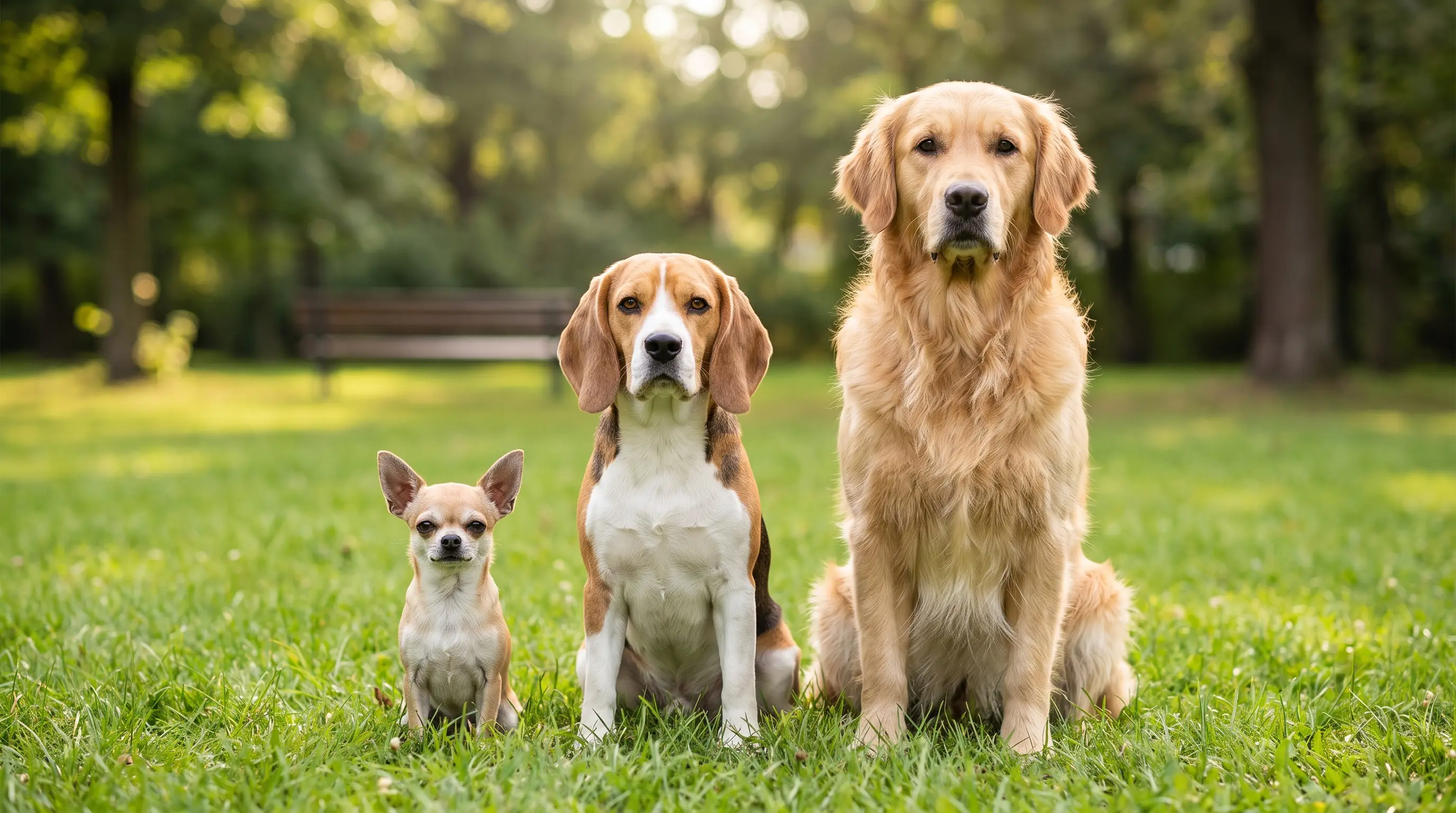
Small, medium or large? Choosing a dog's size
The right size of dog is the one whose energy, strength and running costs fit your actual life, not the one that looks best in the photo. Size decides how much a dog eats, how hard it can pull, what boarding costs and roughly how long it lives, but on its own it tells you almost nothing about how calm or busy the dog will be at home. Sort out those two questions separately and the choice gets a lot clearer.
Size isn't the same as energy
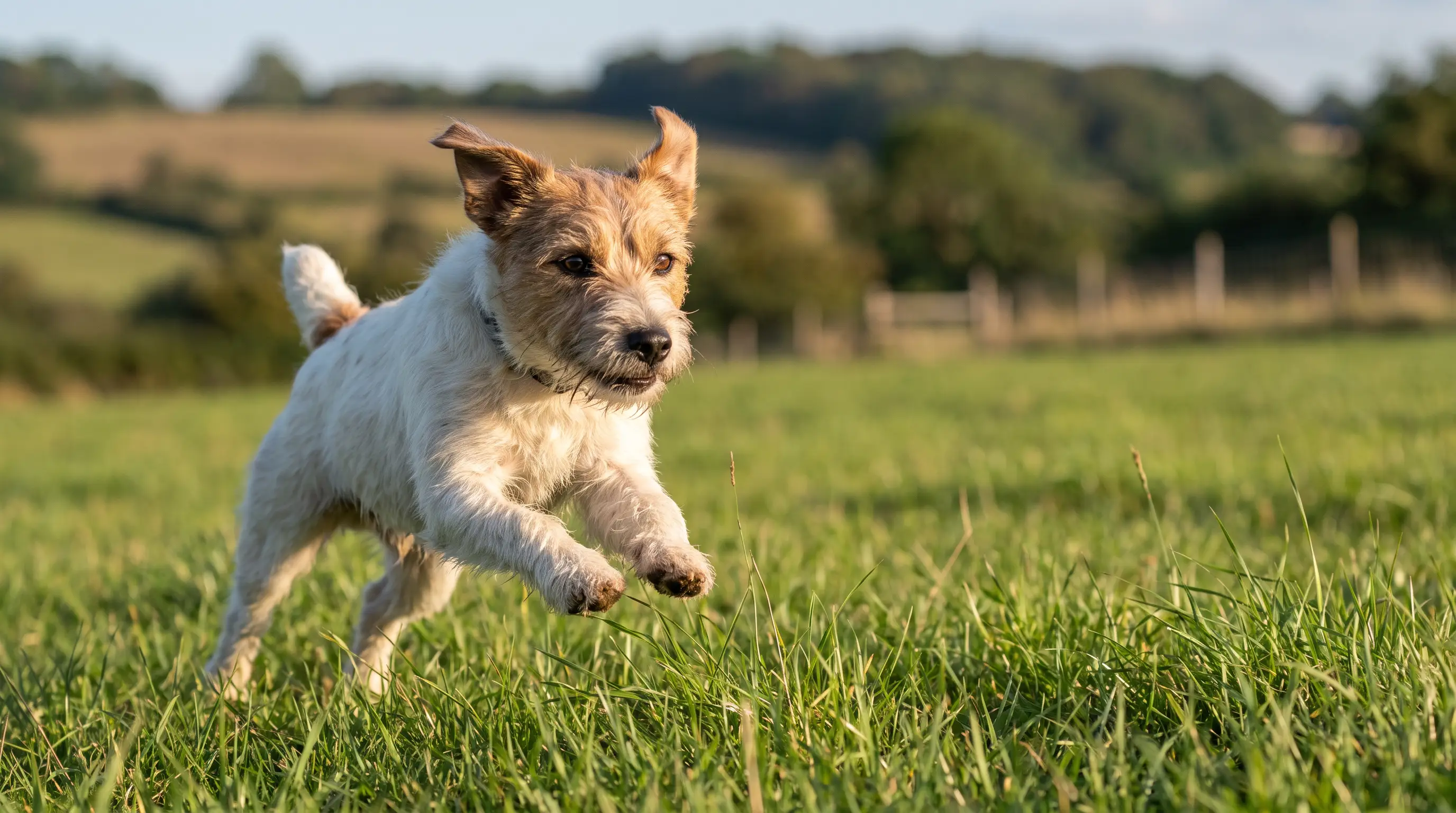
A dog's size and its energy are two separate things, and treating them as one is the classic adoption mistake. A Jack Russell weighs a few kilos and will happily run you into the ground; a Mastiff or a Great Dane weighs as much as a person and spends most of the day asleep on the floor. Small does not mean low-maintenance, and big does not mean demanding. If you want a dog that keeps up with running and long hikes, that is a question about drive and stamina, and plenty of small breeds have far more of both than the giants do.
So pick for temperament and energy first, then think about size. Ask how much exercise the dog actually needs, how much it wants to use its brain, and how settled it is indoors, before you ask how big it will get. The breed profiles spell out energy and temperament for each one, which matters far more day to day than the number on the scales. A calm, well-matched dog of any size is easier to live with than a mismatched bundle of energy you can never quite tire out.
Space and where you live
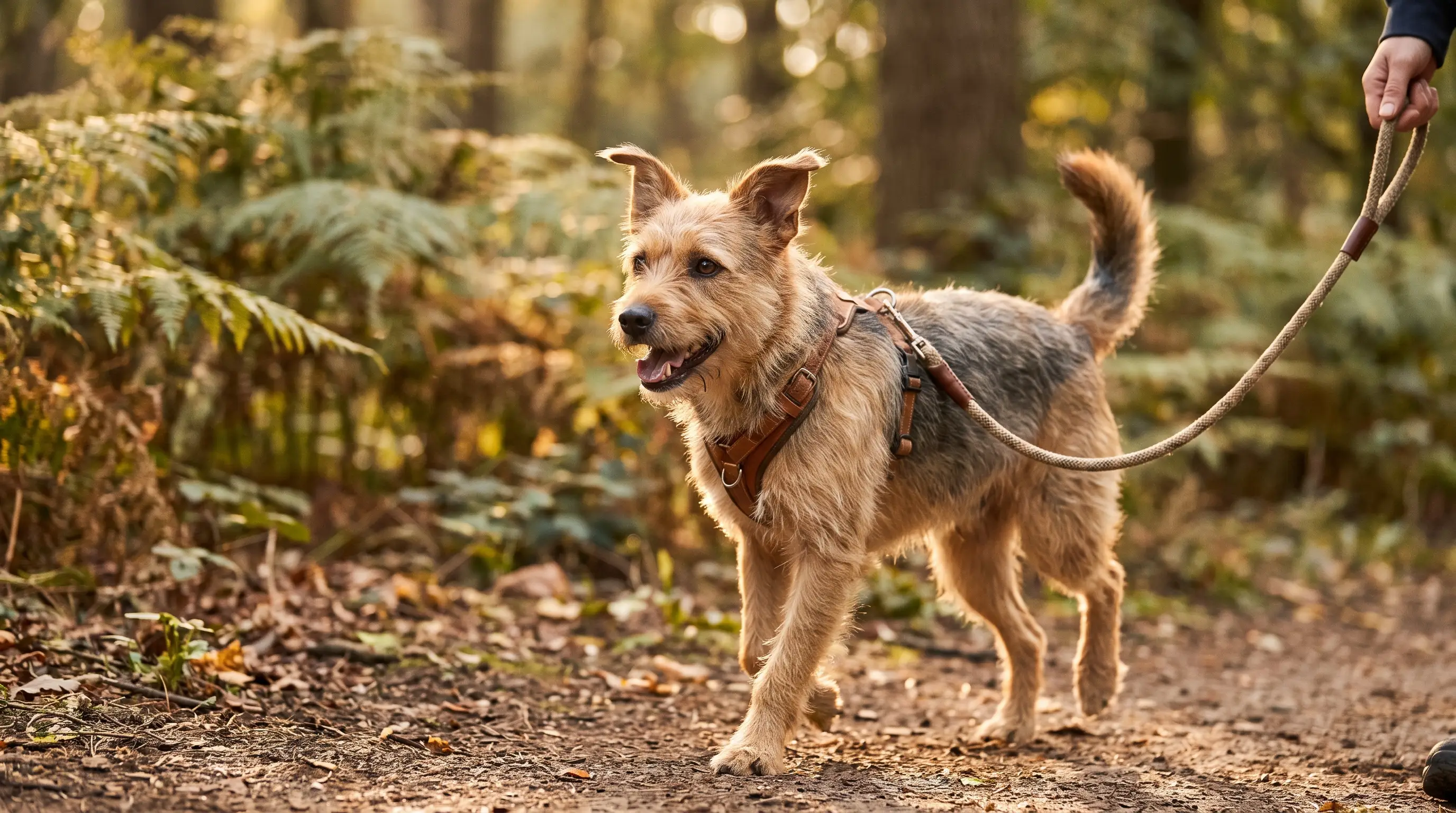
Where you live matters, but not in the simple small-flat-means-small-dog way people assume. A calm adult of a large breed can suit an apartment better than a wired terrier that never switches off, because floor space matters far less to a dog than exercise, routine and company. A Greyhound is a big dog and one of the best-known couch dogs there is; a young working-line spaniel in the same flat would climb the walls. What a home has to give is enough walks and stimulation, not square metres.
The practical details of your home do count, though. No garden means every toilet trip is a walk, in all weather, which is a bigger commitment with a dog that needs to go out often. Stairs and no lift make life harder with a giant breed, or with an older dog whose joints should not be pounding up and down all day. Think about access, noise for the neighbours, and how you would carry the dog if it were hurt. If you are renting or short on space, our roundup of dogs that suit apartments leans on temperament as much as size.
The real costs scale with size
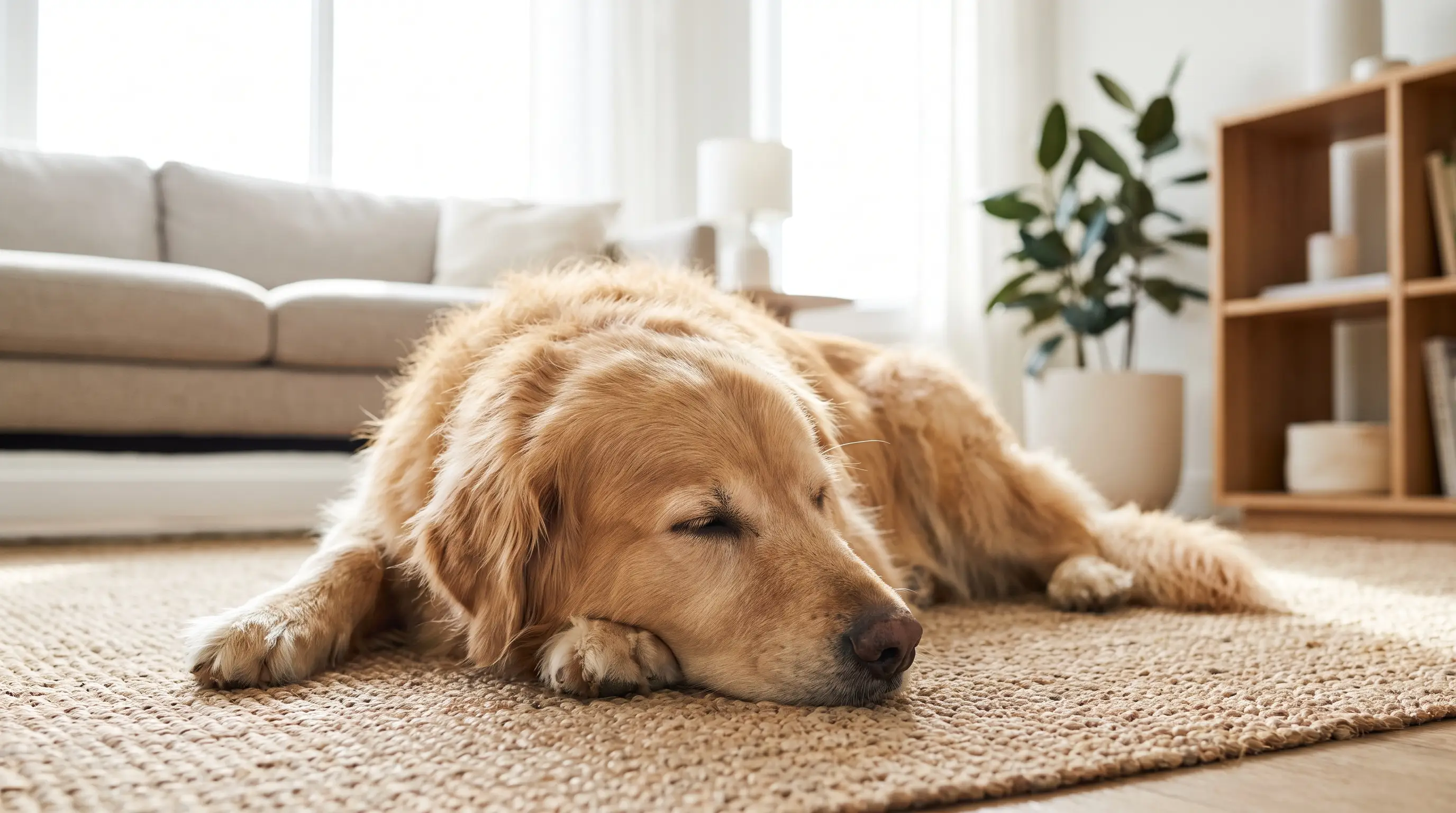
Most of what a dog costs scales with its weight, so a big dog is a bigger bill on almost every line. Food is the obvious one: a large or giant breed eats several times what a small dog does, every day, for life. Beds, crates, harnesses and coats all cost more in the bigger sizes, and boarding kennels and some groomers charge by size too.
The one people forget is the vet. Many medicines are dosed by body weight, so wormers, flea treatment, painkillers and anaesthetic all cost more for a heavy dog than a light one, and anything long-term adds up. Insurance premiums often run higher for large and giant breeds as well. None of this makes a big dog a bad choice, but it should be a choice you have costed honestly rather than a surprise that lands three months in. Add up food, routine vet care and insurance at the real adult size before you commit.
Can you handle it?
Be honest about whether you can physically manage the dog, on its best day and its worst. A large dog that pulls can take you off your feet, and lead manners are harder to hold when the dog outweighs the person on the other end. Think about who in the house will actually be walking it: a dog that one strong adult can handle may be too much for a child or an older relative doing the same walk in the rain.
Then think ahead to the parts nobody pictures at the puppy stage. At some point you may have to lift the dog, into a car, onto a vet table, or up the stairs when it is old, ill or recovering from surgery. Lifting a 40 kg dog that cannot help you is a two-person job. A small or medium dog you can carry on your own stays manageable through illness and old age in a way a giant breed simply does not. If you are not sure what fits your strength and setup, our breed finder filters by size and energy together.
Lifespan and health
As a rule, smaller dogs live longer than big ones, and it is one of the clearest patterns across the whole species. Many small breeds reach their mid to late teens, while a lot of giant breeds are considered old by six or seven and have shorter lives overall. Size is not the only factor, but if a long time together is what you want most, a smaller dog stacks the odds in your favour.
Some health issues track with size too. Large, deep-chested breeds are more prone to bloat, a fast and life-threatening twisting of the stomach that owners of those dogs need to know the signs of. Big and giant breeds also carry more weight through their joints, so hip and elbow problems and arthritis are common concerns, and several giant breeds are watched for heart conditions. Smaller dogs have their own list, from dental crowding to knee and windpipe trouble. Every size comes with something, so read up on the specific breed's known problems rather than assuming small automatically means healthy.
Common questions
What size dog is best for me?
The best size is the one whose energy, strength and running costs match your home and daily life, not a fixed rule. Work out how active and settled you want the dog to be first, then narrow by size, budget and how much dog you can physically handle.
Are small dogs easier than big dogs?
Not automatically. Small dogs cost less to feed and are easier to lift and control, but many small breeds are high-energy and vocal, while plenty of large breeds are calm indoors. How easy a dog is depends far more on temperament and training than on size.
Do big dogs need more exercise than small dogs?
Not necessarily. Exercise needs come from breed and drive, not size: some small working breeds need more than a large, laid-back dog like a Greyhound. Judge each dog by its energy level rather than its weight.
What's the best size dog for an apartment?
There is no single best size; a calm dog that gets enough walks can suit a flat at almost any size. Many large breeds settle well indoors, while a busy small dog can be a poor apartment fit. Prioritise a low-energy temperament and reliable exercise over floor space.
Do smaller dogs live longer than big dogs?
Generally yes. Smaller breeds tend to live longer, often into their mid to late teens, while many giant breeds have shorter lifespans and are considered old by around six or seven. Size is a strong pattern, but not the only factor in how long a dog lives.
Is a medium-sized dog a good choice for a family?
Often, yes. Medium dogs are big enough to join in active family life and small enough to lift and manage, which is why many popular family breeds sit in that range. The right fit still comes down to the individual breed's energy and temperament, not size alone.
More in Dogs
Why adopt an adult dog instead of a puppy
An adult dog shows you its size, coat and temperament from day one, and is often already house-trained, for an easier start than a puppy.
Dog-proofing your home and garden
Dog-proof your home and garden before you adopt: fix indoor hazards, secure the fences and gate, clear toxic plants, and set up the dog's own space.
Adopting a senior dog or cat
What to expect when you adopt an older dog or cat: the calm, the fast bond, the vet planning, and the honest trade-off of less time.