8 small wild cats you've never heard of
When people say 'wild cat' they picture a lion or a tiger. But most of the roughly forty wild cat species are small — some smaller than the cat asleep on your sofa — and you will almost certainly never see one. Here are eight of the strangest, and what makes each one worth knowing.
Sand cat
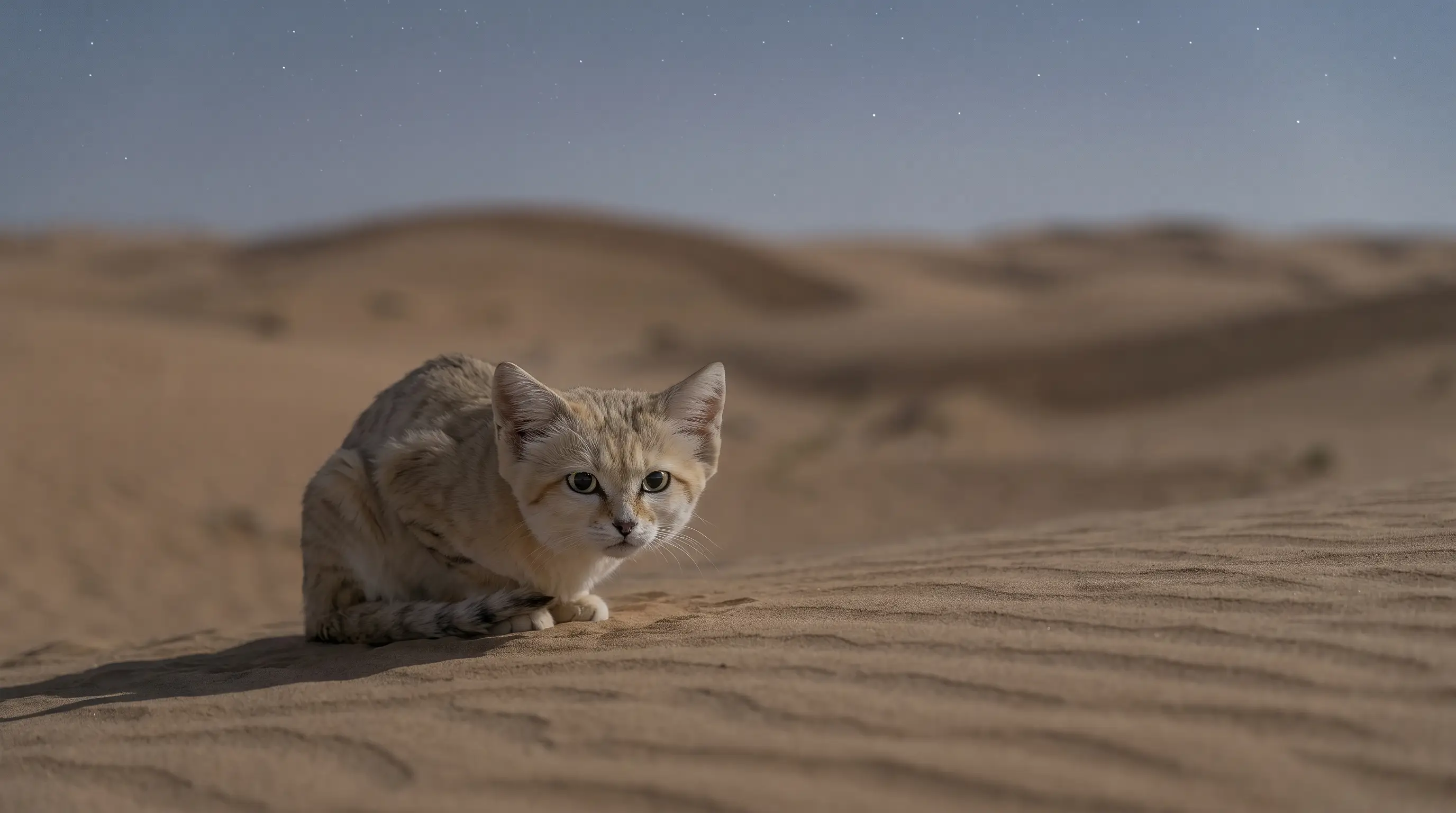
The sand cat is the only cat that lives its whole life in true desert, from the Sahara across Arabia to the sands of Central Asia. It barely drinks — it takes most of its water from the gerbils, birds and reptiles it eats. Thick fur grows over the soles of its paws, insulating them from ground that can scald and muffling its tracks. Oversized ears pick up prey moving beneath the sand, and it hunts at night to avoid the heat. Because it flattens itself and its sandy coat disappears against the dunes, it is one of the hardest wild cats to find; researchers often locate one only by its tracks and the shine of its eyes. It keeps a kitten face into adulthood, which has made it a favourite online, but it does badly in captivity and belongs in the desert.
Black-footed cat
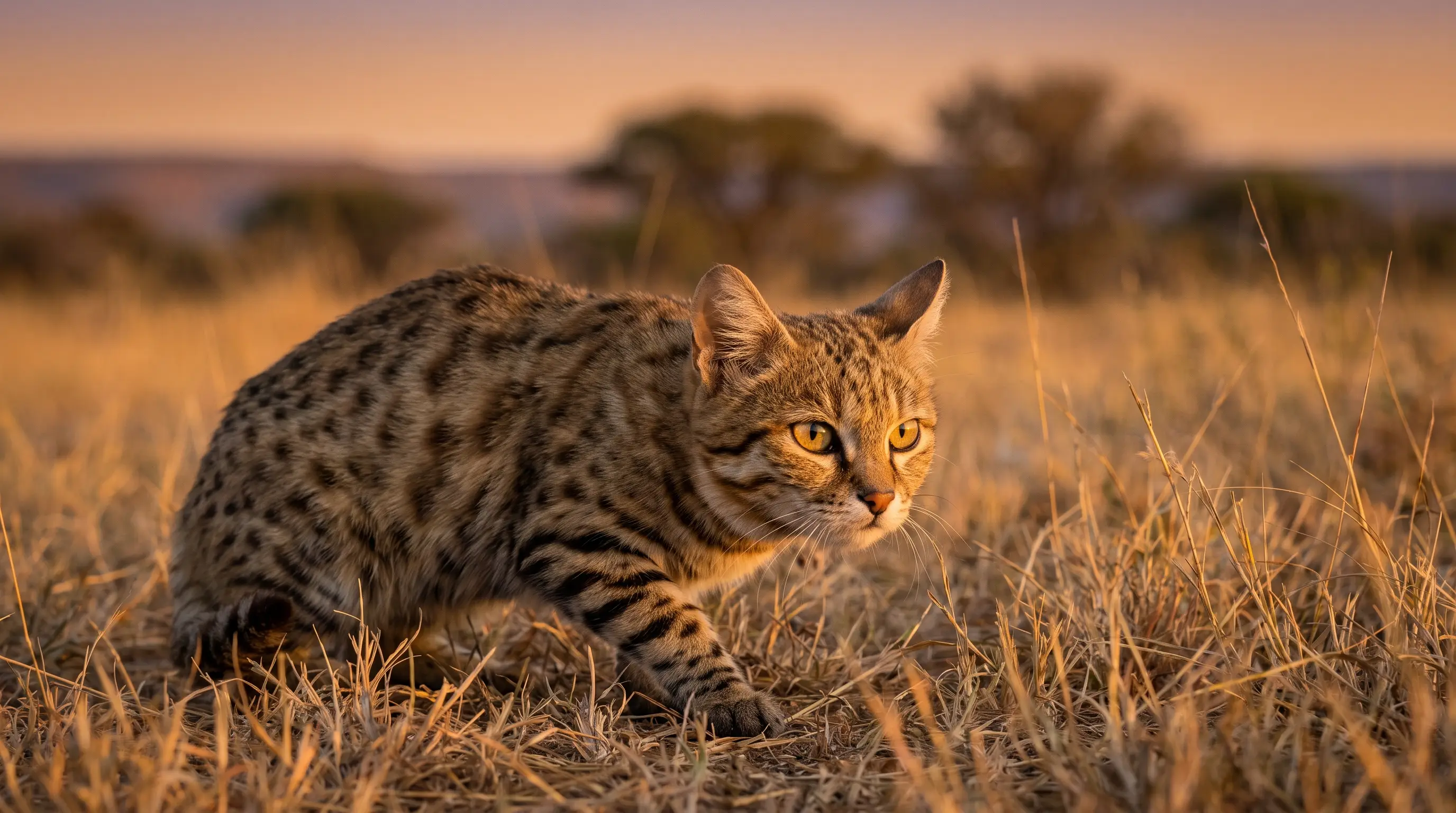
Africa's smallest cat is also its most lethal. The black-footed cat weighs about one to two kilograms — small enough to sit in cupped hands — yet it succeeds in roughly six out of ten hunts, the highest strike rate recorded in any wild cat. A lion makes a kill in perhaps one attempt in five. Working the dry grasslands of southern Africa through the night, one black-footed cat can take ten or more small birds and rodents before dawn, covering miles as it goes. Only the pads and undersides of its feet are actually black. Its size makes it look harmless and its ferocity is easy to underestimate, which is exactly why biologists keep studying it. It is listed as Vulnerable, threatened by habitat loss and by poison put out for other animals.
Rusty-spotted cat
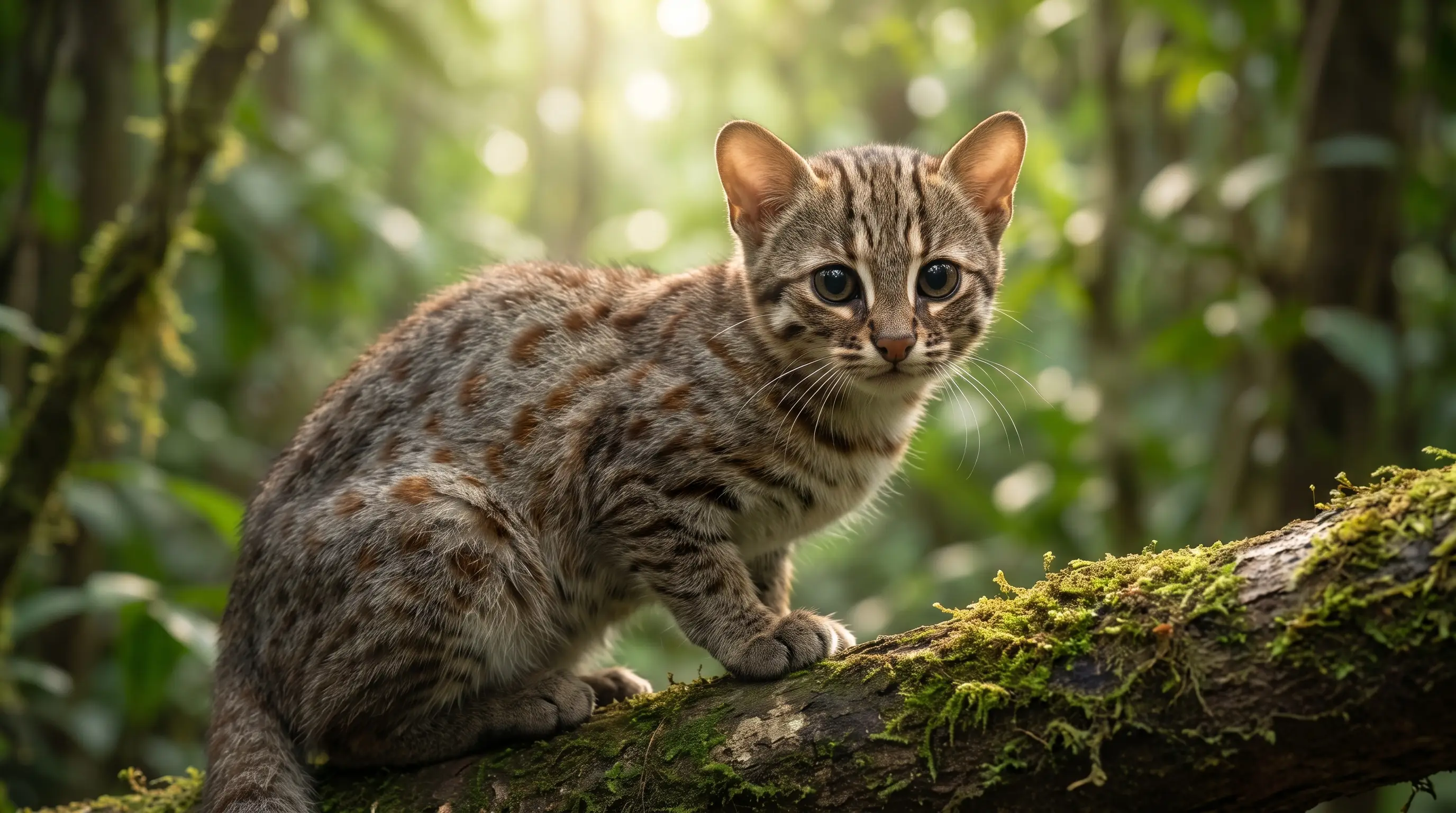
The rusty-spotted cat is the smallest cat in the world — an adult can weigh barely a kilogram, around half the weight of an average housecat. It lives in India and Sri Lanka, in forest, scrub and increasingly around farmland, and it moves so fast and so lightly through the branches that it has been nicknamed the hummingbird of the cat family. Grey, with the rust-coloured spots that give it its name, it hunts rodents and birds mostly after dark and is rarely seen. A lot about it is still unknown, and that is part of the danger: it is listed as Near Threatened, and its forests are shrinking faster than anyone can study them.
Pallas's cat
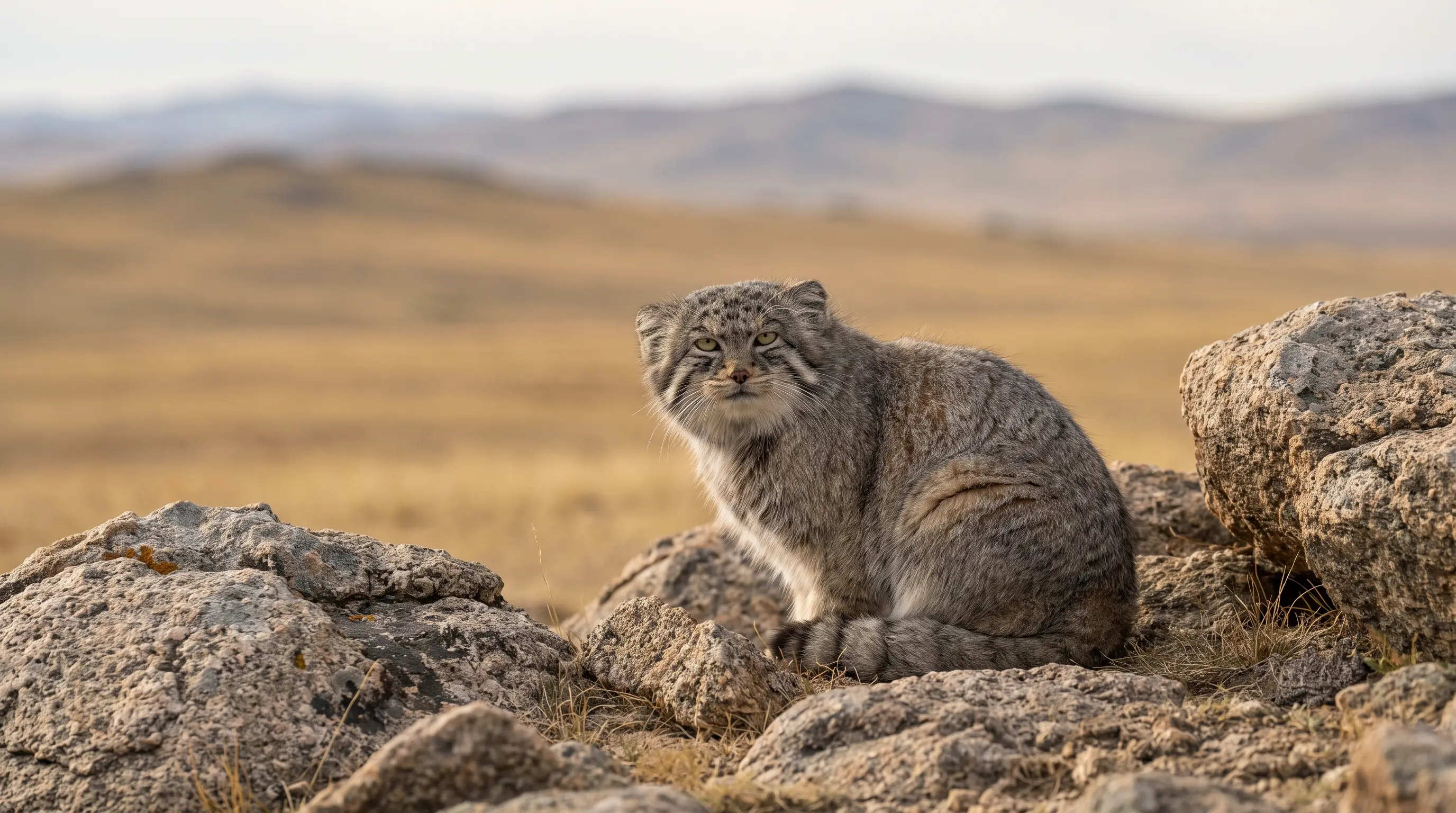
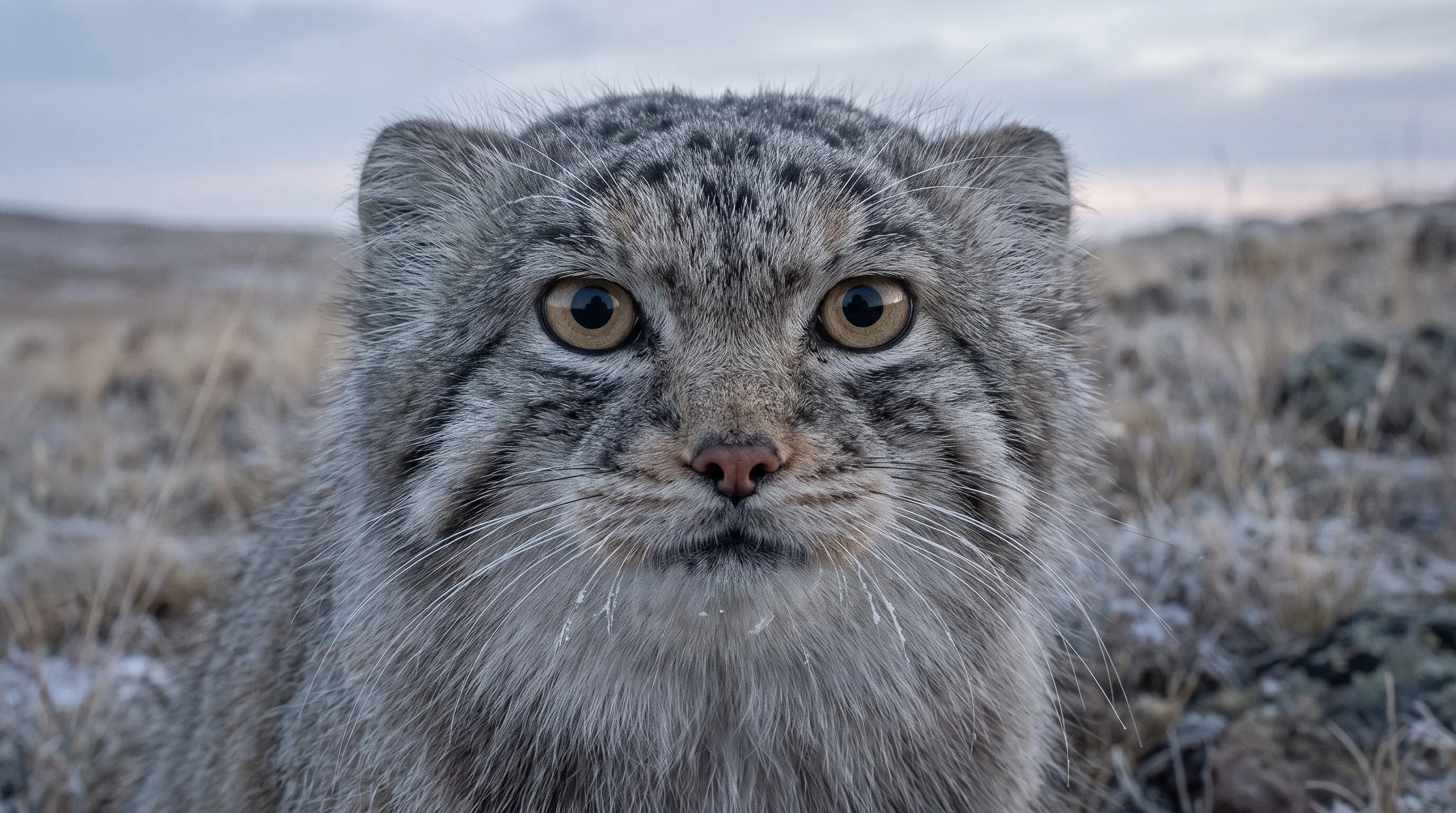
The Pallas's cat looks furious in every photograph, and the face is doing real work. Also called the manul, it lives across the cold, high grasslands of Central Asia, from Mongolia to the Tibetan Plateau, where winters are savage. Its coat is the densest of any cat; short legs, a stocky body and low, wide-set ears all cut heat loss and let it press flat against rock and out of the wind. Unlike most cats it has round pupils rather than vertical slits. Under all that fur it is only about housecat-sized, not the giant it appears, and it hunts pikas and other small mammals across open ground with almost nowhere to hide. It is elusive, does poorly at low altitude, and struggles in captivity, where its kittens are very vulnerable to infection.
Fishing cat
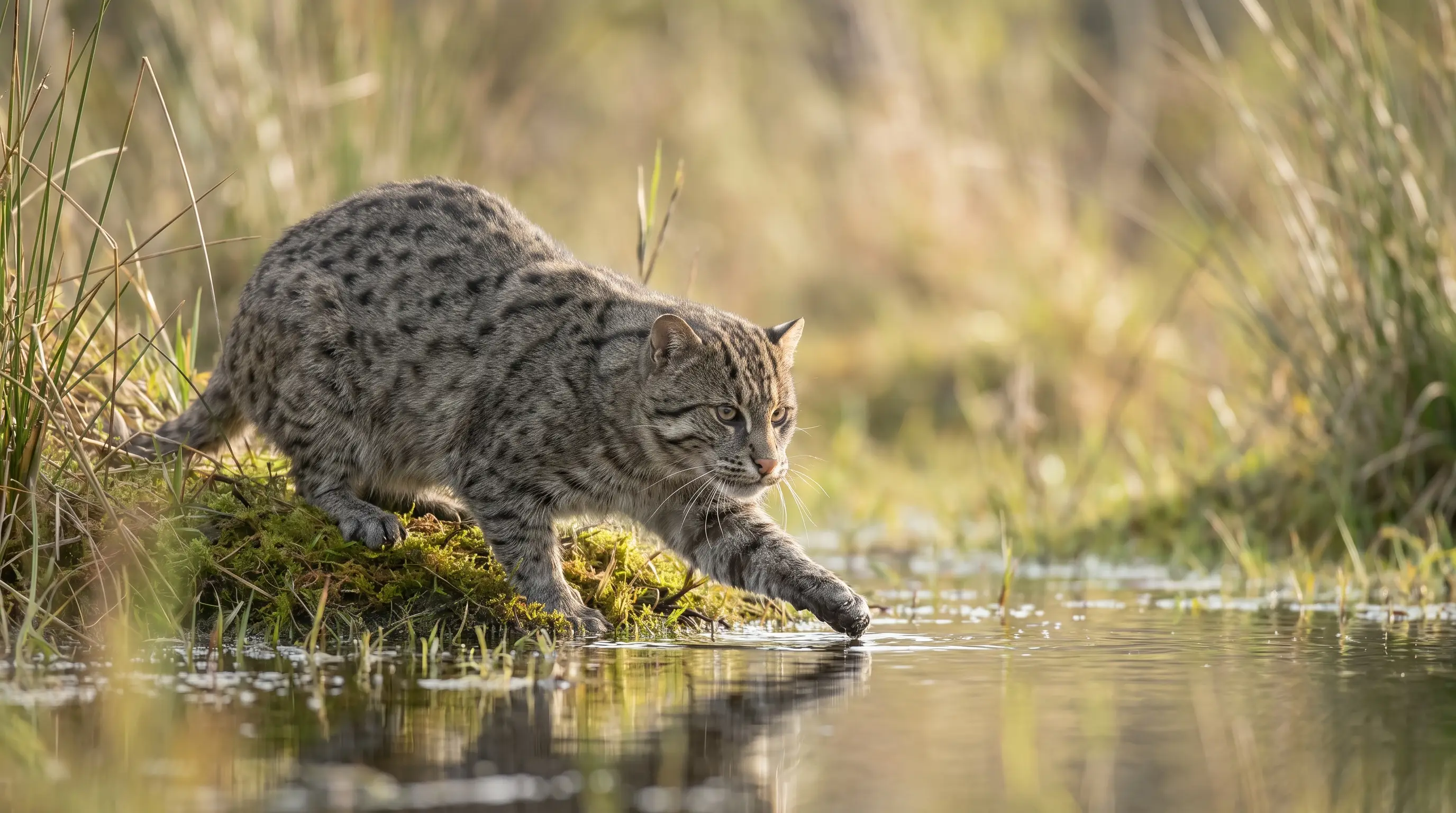
Most cats avoid water; the fishing cat dives in. About twice the size of a housecat and built low and heavy, it lives in the wetlands, mangroves and marshes of South and Southeast Asia, where it wades, swims and scoops fish straight out of the water. Its coat is double-layered to keep the skin dry, and its front paws are partly webbed. It will also take frogs, snakes, birds and rodents, but fish are the point. Its trouble is its address: wetlands are drained, built on and polluted faster than almost any other habitat, and the fishing cat is listed as Vulnerable and gone from parts of its old range. Where marshes are protected, it can live surprisingly close to people without anyone noticing.
Scottish wildcat
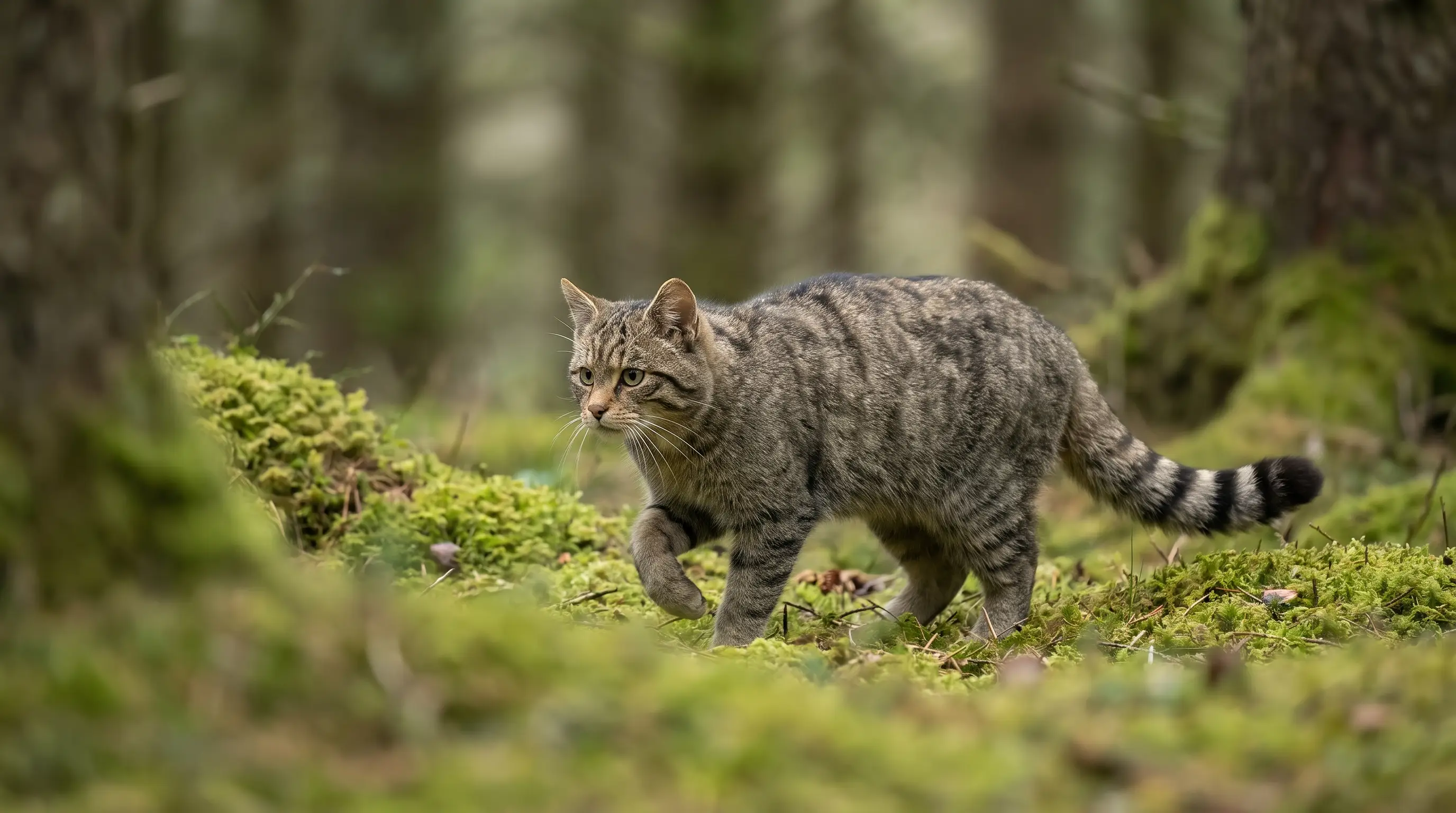
Britain's only native cat is nearly gone. The Scottish wildcat survives in the Highlands and looks, at a glance, like a big muscular tabby — but a purebred has a thick, blunt, black-ringed tail and none of the white patches or broken markings of a house cat. That resemblance is the danger. Decades of breeding with domestic and feral cats have blurred the wild population almost out of existence, and in 2019 an official review judged it no longer viable in the wild on its own. A conservation programme has since bred wildcats and released them into the Cairngorms, the first of them in 2023. It is a rare case of a wild cat threatened less by hunting or lost habitat than by its own domestic cousins.
African wildcat
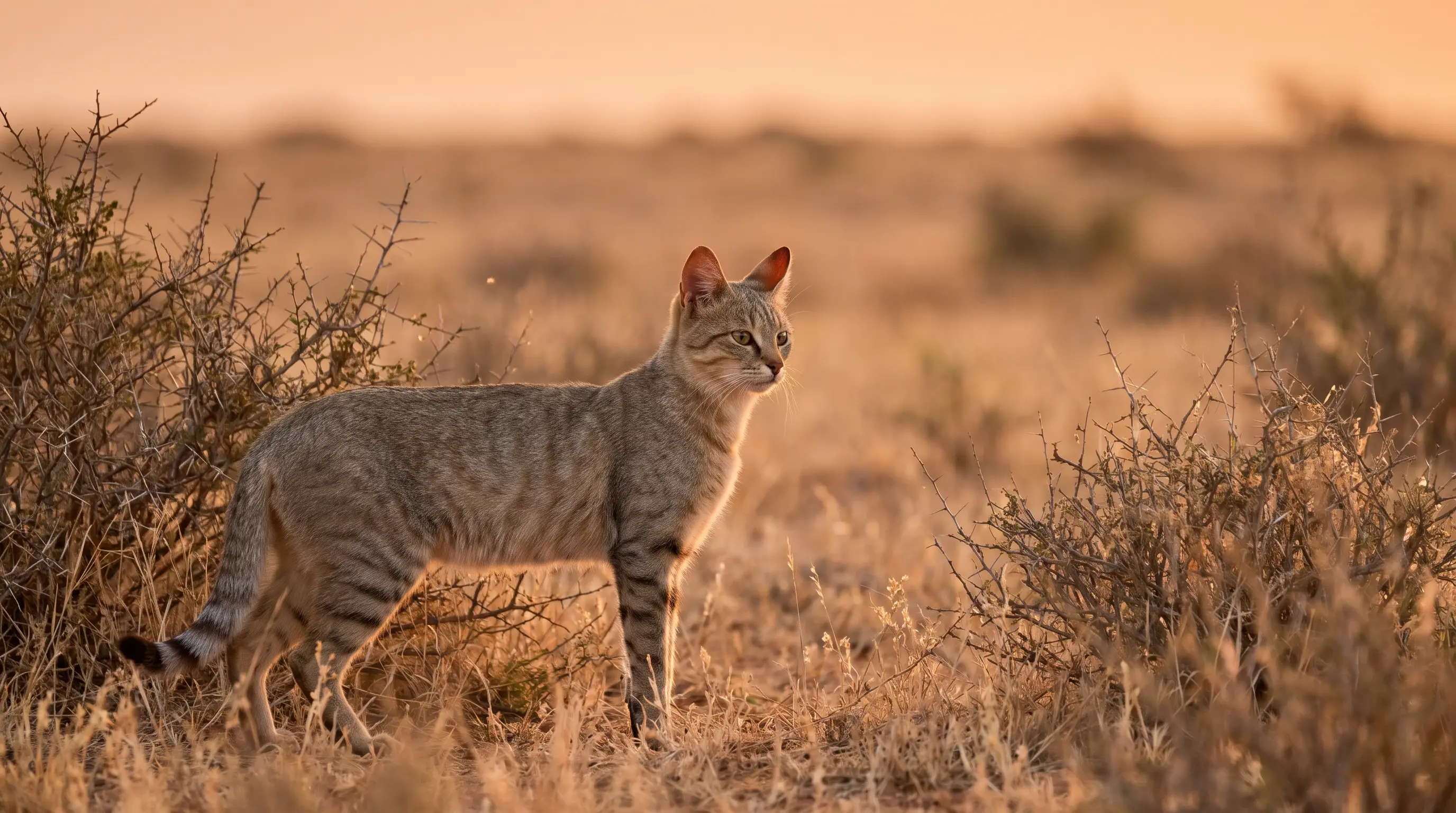
Every domestic cat on Earth descends from this one. The African wildcat is a lean, sandy, faintly striped tabby of North Africa and the Middle East, and around ten thousand years ago, as people in the Fertile Crescent began storing grain, these cats moved in to hunt the rodents the grain drew. The boldest, calmest ones stayed close, and over many generations they became the domestic shorthair now dozing on windowsills worldwide. Genetically the housecat and the African wildcat are barely distinct, which is why a pet gone feral survives so easily on its own. The wild version is still out there, hunting scrub and desert, looking like a slightly longer-legged, more upright take on the tabby you already know.
Asian leopard cat
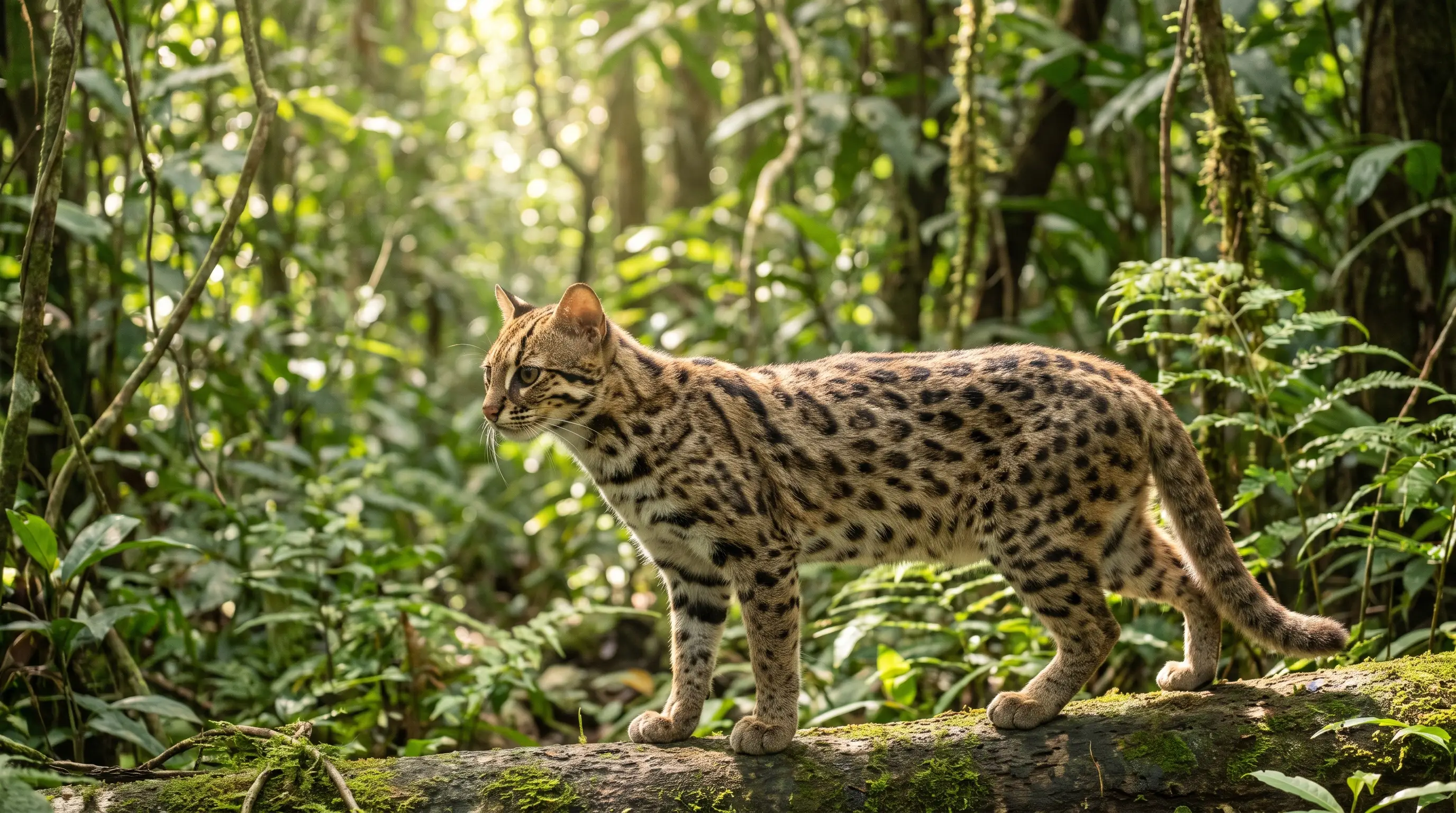
The leopard-spotted coat of a Bengal cat comes straight from this animal. The Asian leopard cat is a small, slender wild cat found across much of South and East Asia — tawny or grey, with bold dark spots and white underparts. In the 1960s and 70s the breeder Jean Mill crossed it with domestic cats, and the hybrids became the Bengal, a fully domestic breed that keeps the wild look and loses the wild temperament. The leopard cat itself is adaptable and still widespread, living even around farmland and plantations, though some island populations are threatened. It is a reminder that the wildness people find beautiful in a pet was borrowed from an animal that never asked to be a housecat.
Common questions
What is the smallest wild cat?
The rusty-spotted cat of India and Sri Lanka is the world's smallest wild cat — an adult can weigh around a kilogram, roughly half the size of an average housecat. Africa's black-footed cat is a close second and the smallest cat on that continent.
What is the deadliest wild cat?
By hunting success, the black-footed cat. It makes a kill in roughly six out of ten attempts — a far higher strike rate than a lion or a leopard — and can catch ten or more small animals in a single night, despite being only about the size of a small housecat.
Are domestic cats descended from wild cats?
Yes. Every domestic cat descends from the African wildcat, which began living alongside people in the Fertile Crescent around ten thousand years ago. Genetically the two are almost identical, which is why house cats survive in the wild so easily. The Bengal is a separate, much more recent case, created by crossing domestic cats with the Asian leopard cat.
Can you keep a wild cat as a pet?
Almost never a good idea, and often illegal. Small wild cats like the sand cat, Pallas's cat and fishing cat have specific diets, large ranges and strong instincts, and most do badly in homes and even in zoos. If you want the wild look, a domestic breed such as the Bengal gives you the appearance without the animal's needs — browse the cats in the BreedQuest catalog instead.
More in Wild
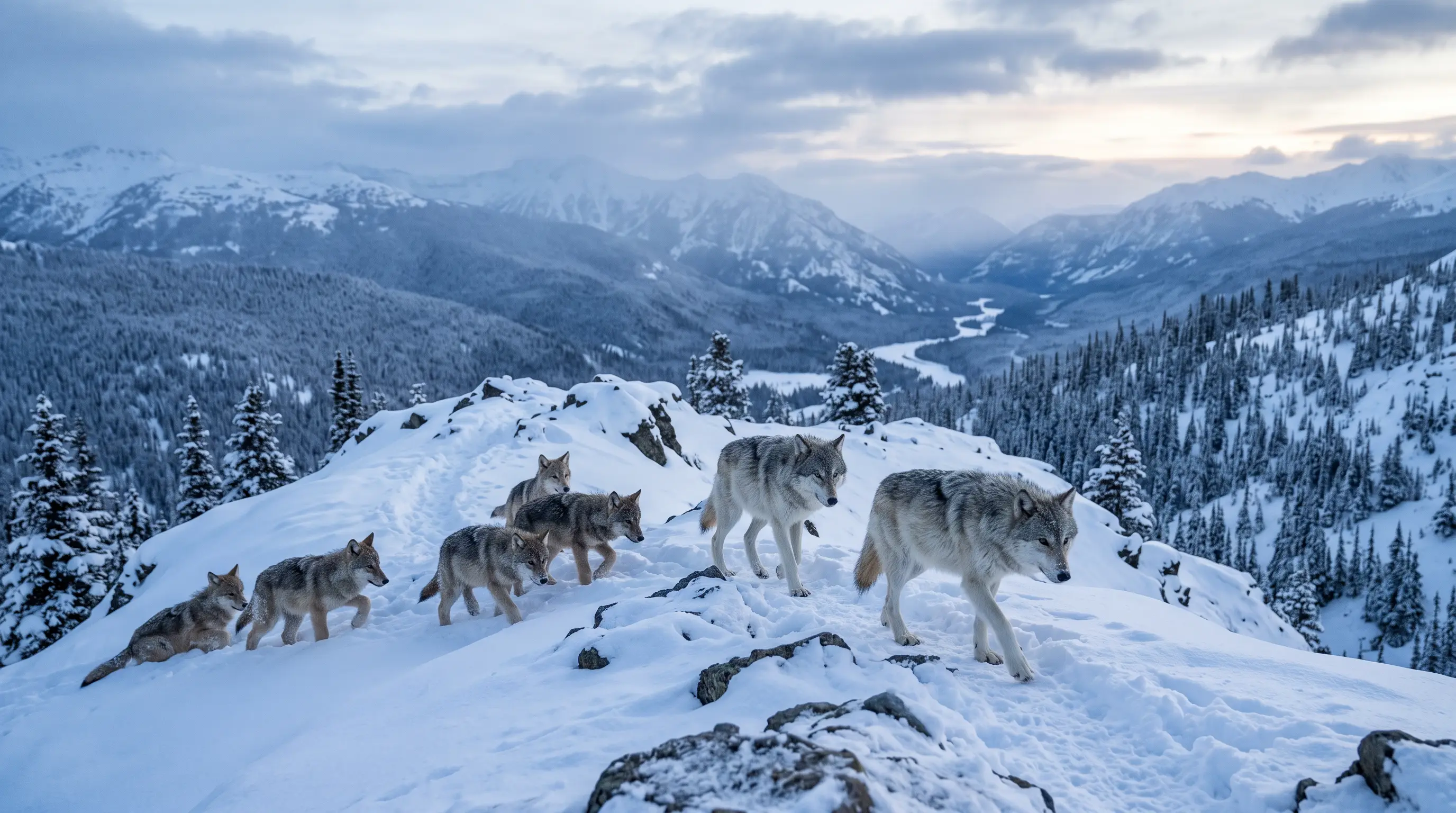
The Alpha Wolf Myth: How a Pack Really Works
The alpha wolf was invented in a captive enclosure. In the wild a pack is a family led by parents, and your dog isn't fighting you for rank.
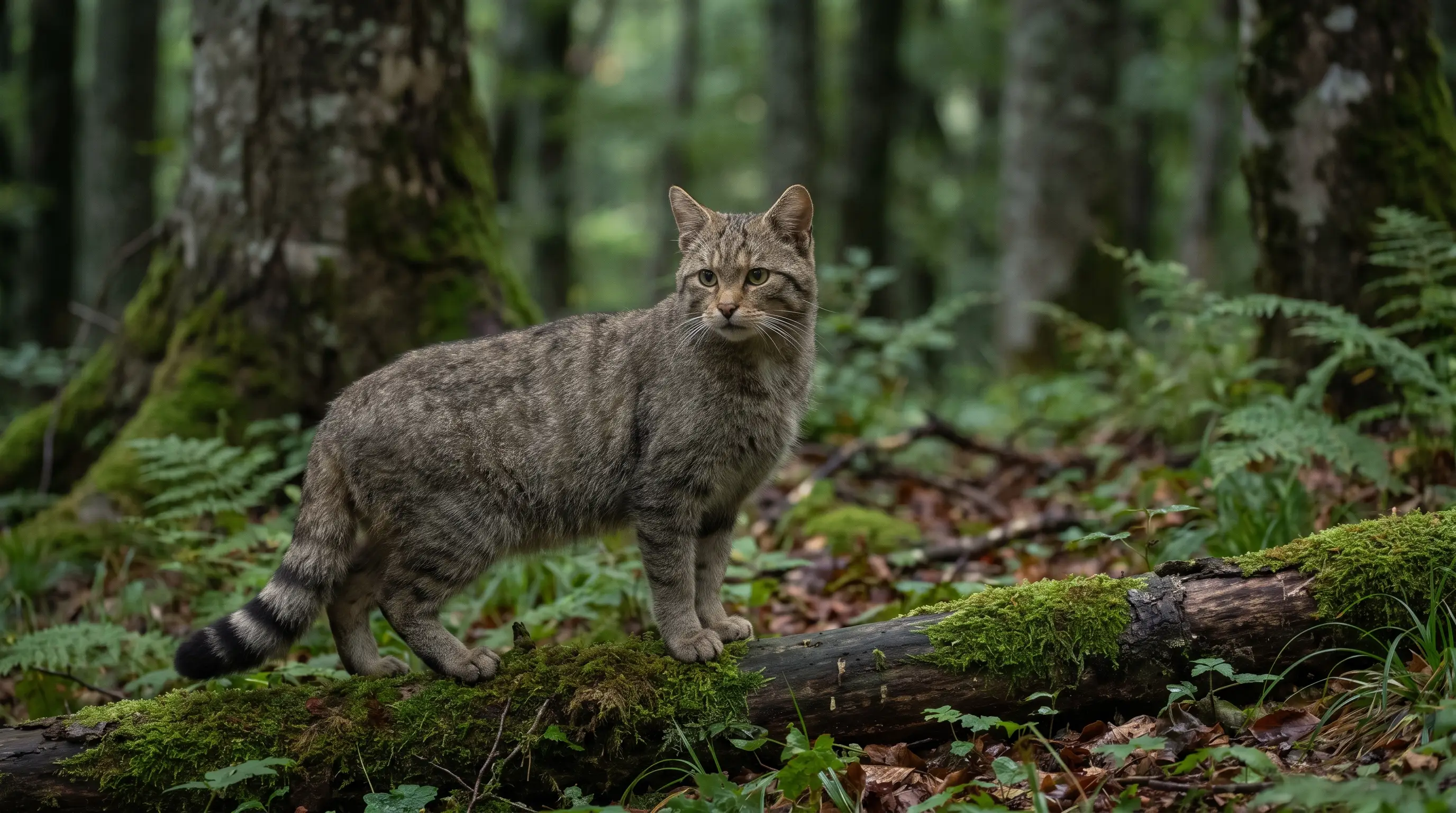
Italian wildcat: spotting a true Felis silvestris
Italy has a genuine native wild cat hiding in its forests. Here is how to tell one from a big farmyard tabby, and why it needs protecting.
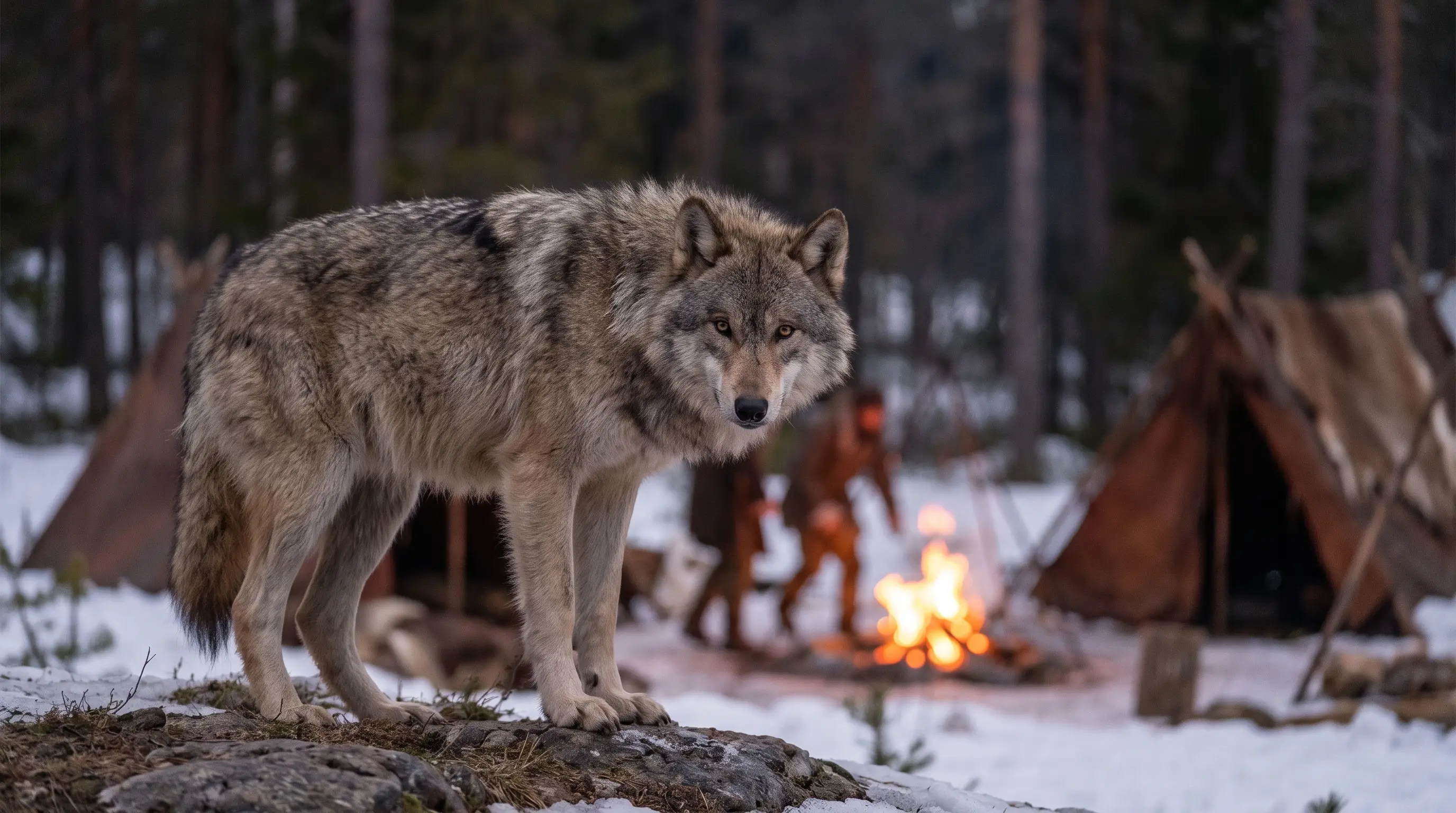
How the wolf became the dog
The tamest wolves fed themselves at our campfires and bred a new animal into existence. The full, honestly bounded story.