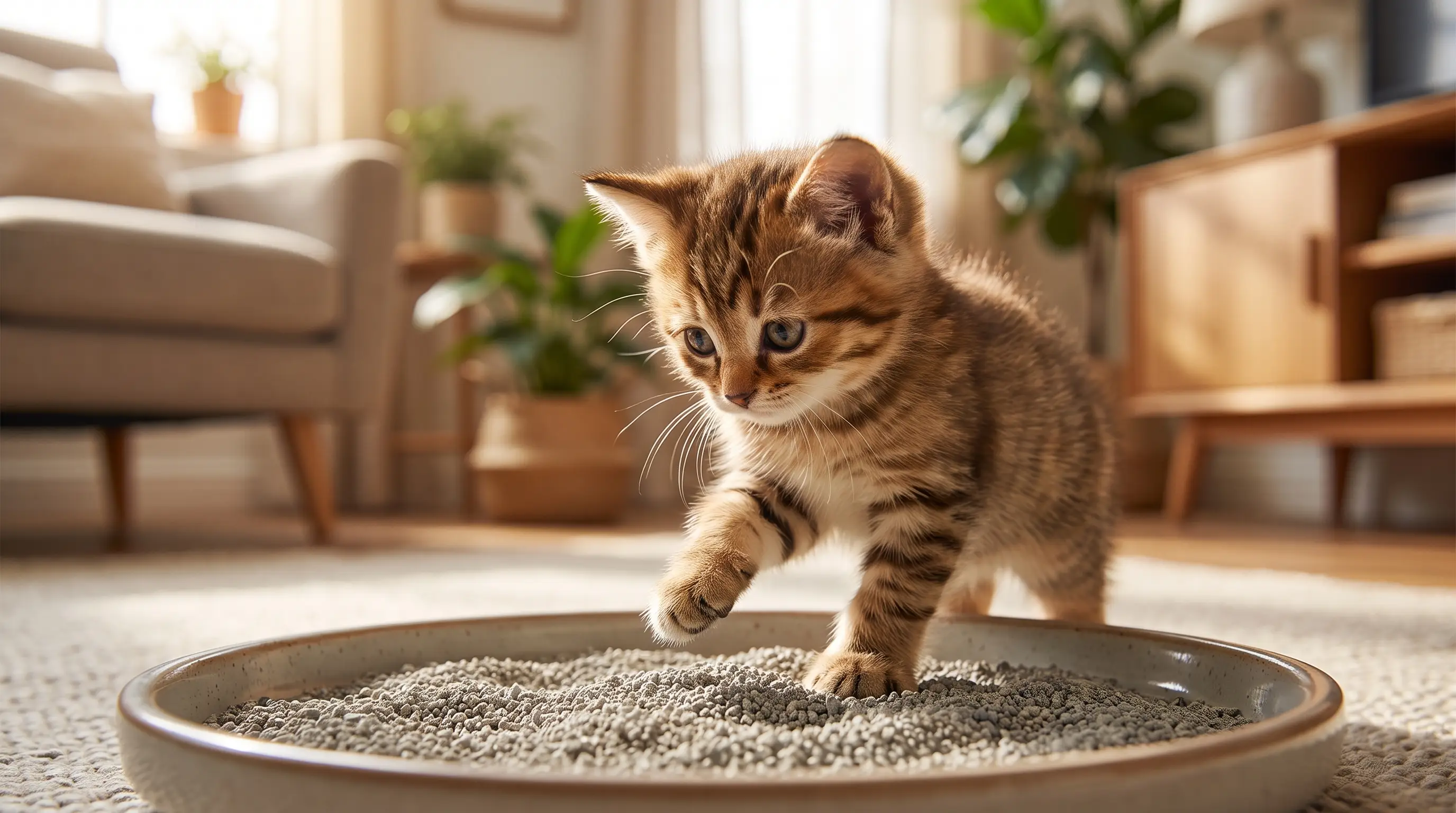
How to litter train a kitten (and fix accidents)
Here is the good news before anything else: a kitten almost trains itself. Cats are born with the urge to bury their waste in loose material, so most kittens work out the litter box within a week or two of coming home, with barely any teaching from you. Your real job is to build a box a kitten wants to use, then stay out of the way, and to know exactly what to check on the rare day it misses.
Do kittens need to be litter trained?
Barely. Most kittens turn up already knowing what to do, because the drive to dig and cover waste is inherited from their wildcat ancestors, who hid their scent from predators by burying it. By around three to four weeks, as a kitten weans onto solid food, it starts hunting out soft, diggable material on its own. A kitten that spent those early weeks with its mother has often copied her at the box before you ever met it. So the word training oversells it. What you are really doing is removing obstacles and giving a nudge at the right moments, and most kittens are reliable within one to four weeks of arriving home. A friendly, curious domestic shorthair kitten will usually have the whole thing sorted before you have finished worrying about it.
The litter box setup

Get the box right and the training mostly takes care of itself. Start with a low-sided, open tray a kitten can climb into without a scramble, roughly 13 by 9 inches, with no lid and no high walls. Fill it with fine, unscented, non-clumping litter while the kitten is under about three months old, because kittens taste and swallow litter, and clumping types can form a mass in the gut. Skip anything perfumed; strong fragrance that smells clean to you can put a kitten off the box entirely.
Location matters as much as the box. Put the tray somewhere quiet and easy to reach, and keep it well away from the food and water bowls, since cats instinctively avoid going where they eat. If you have more than one cat, follow the n+1 rule: one tray per cat, plus one spare, spread around the home so no single box can be guarded. Our cat litter guide goes deeper on litter types and box counts if you want the long version.
How to encourage a kitten to use the tray
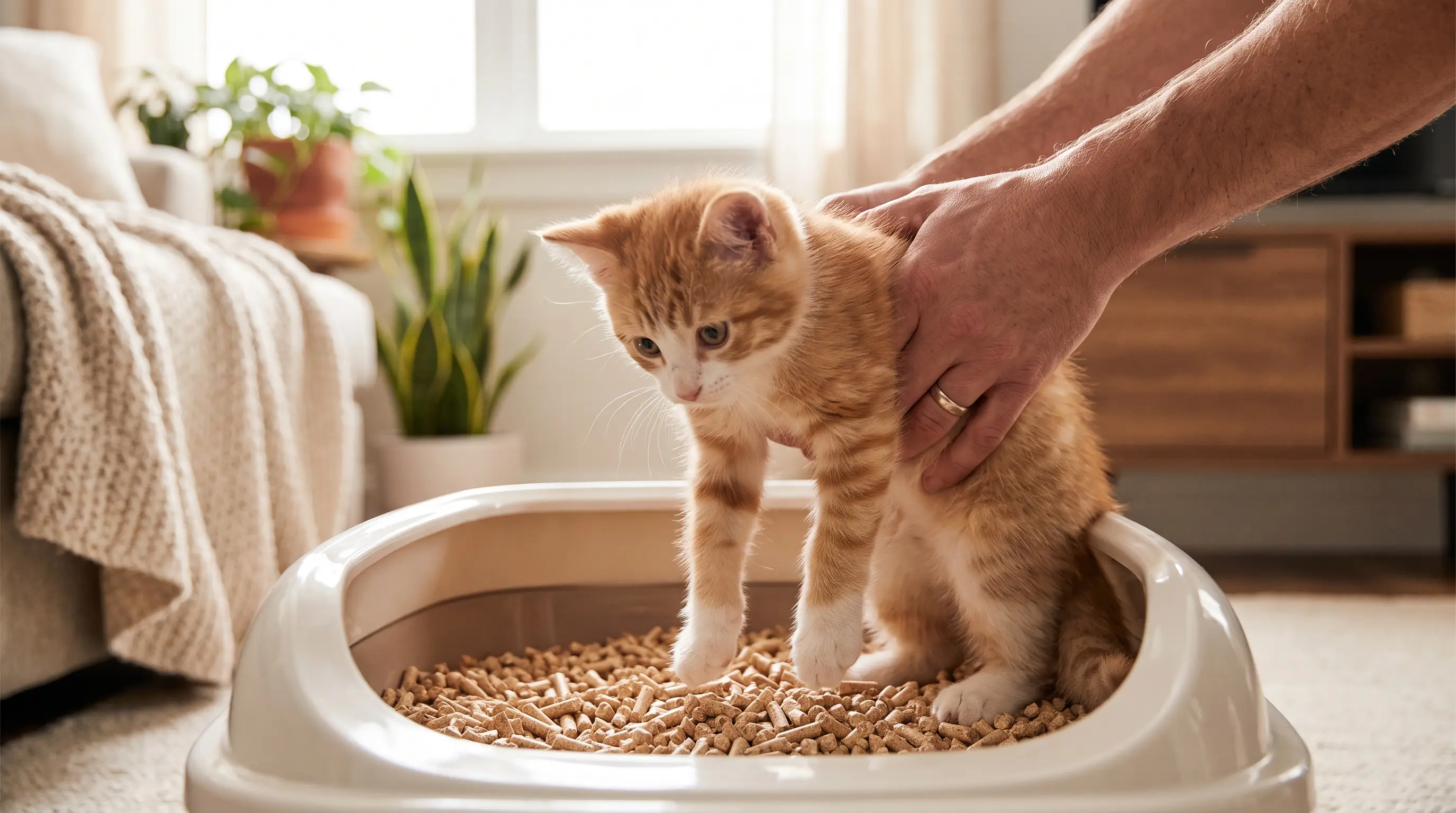
Gently place the kitten in the tray after every meal and after every nap, because a full kitten waking up or finishing dinner is a kitten that needs to go. Once it is standing in the litter, let it paw and dig; that scratching is instinct switching on, and it usually leads straight to the right result. When the kitten uses the box, offer a treat the moment it steps out, so the reward lands while the memory is fresh.
Never punish an accident. Rubbing a kitten's nose in a mess or scolding it teaches one thing only, which is fear of you and of the box, and a frightened kitten hides to go somewhere you cannot see. Those first days are also when the kitten is learning the whole house, so if you want a wider plan for settling in, our guide to bringing a kitten home covers the rest of week one.
When a kitten misses the box
Rule out a medical cause before you assume it is behavior. Straining, frequent trips, blood in the urine, crying at the box, or going just outside it can signal a urinary tract infection or feline idiopathic cystitis, a painful bladder inflammation that is common in young cats, so a vet visit comes first. Once a check clears the health side, work through the obvious box problems. Is the tray clean enough, given that many kittens refuse a soiled box and it needs scooping every day? Does the kitten dislike the litter you switched to, or the spot you moved it to? Is the box suddenly too tall to climb into, or covered and dark enough to feel like a trap? Fix whichever one fits, and if the kitten has a run of misses, confine it to a small room with the tray a few steps away, so getting it right is the easiest option in the room.
Cleaning an accident so it does not repeat
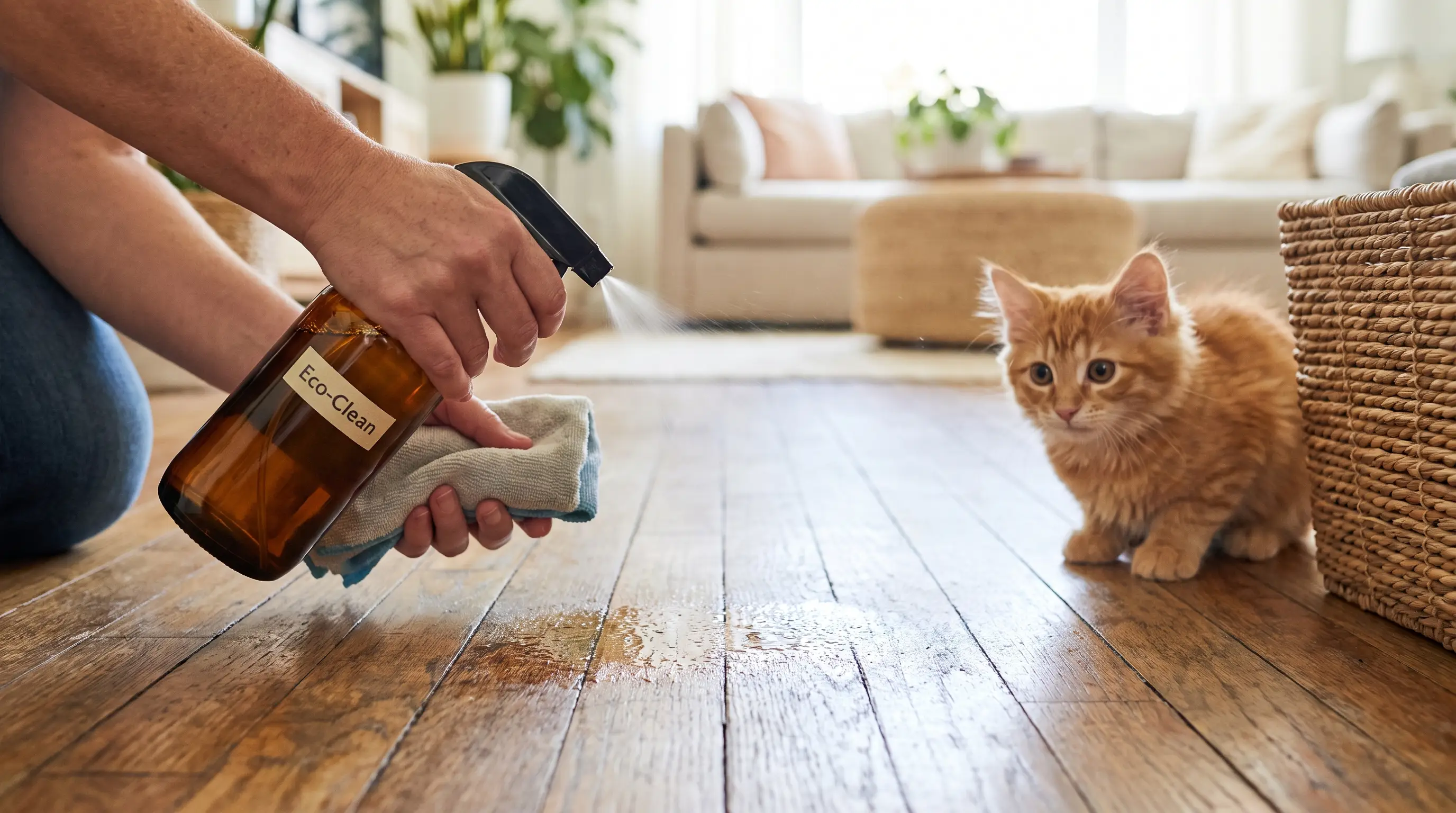
Clean every accident with an enzyme cleaner, not an ordinary household product. Urine leaves scent markers that pull the kitten straight back to the same corner, and regular detergents only mask the smell rather than remove it. Ammonia-based cleaners are worse, because ammonia is a component of urine and effectively tells the kitten this is the spot. Enzyme cleaners break the odor compounds down instead of covering them, so the pull to reoffend disappears with the smell. Blot up as much as you can first, soak the area, and let it dry fully before you decide whether the problem is really solved.
Common questions
How long does it take to litter train a kitten?
Most kittens learn the box within one to four weeks of coming home, and many are reliable within days. Because the urge to bury waste is instinctive, you are mostly waiting for the kitten to settle in rather than teaching a new skill.
Do kittens naturally use the litter box?
Yes, kittens almost always know how to use a tray by instinct. The drive to dig and cover their waste is inherited from wildcat ancestors, so you rarely need to teach it, only to provide a clean, accessible box.
At what age can you litter train a kitten?
You can introduce a tray at around three to four weeks, as the kitten weans onto solid food and starts eliminating on its own. Before that age, newborn kittens rely on their mother to stimulate them to go.
What litter is best for a kitten?
Use a fine, unscented, non-clumping litter for kittens under about three months old. Kittens taste and swallow litter, and clumping types can form a dangerous mass in the gut, while strong fragrances often put a kitten off the box.
Why is my kitten not using the litter box?
Rule out a medical cause like a urinary infection or bladder inflammation with a vet first, especially if the kitten strains or cries. If health is clear, check whether the box is dirty, the litter or spot is disliked, or the tray is too tall or covered.
How many litter boxes do I need for one kitten?
Follow the n+1 rule: one tray per cat plus one spare, so a single kitten does best with two boxes. Spreading them out means a soiled or guarded box never leaves the kitten without an option.
More in Cats

Can you take your cat to the beach? An honest guide
Most cats should skip the beach, and a few can go safely. The honest, vet-checkable guide to heat, sun, saltwater, harnesses and who stays home.

What Catnip Really Does to a Cat
The honest, myth-busting guide to catnip: what nepetalactone does, why 1 in 3 cats ignore it, and what to try instead.

You Found a Stray Cat: What to Actually Do
A friendly cat on your doorstep may already have a home. Here is the honest, welfare-first order of steps before you take it in.