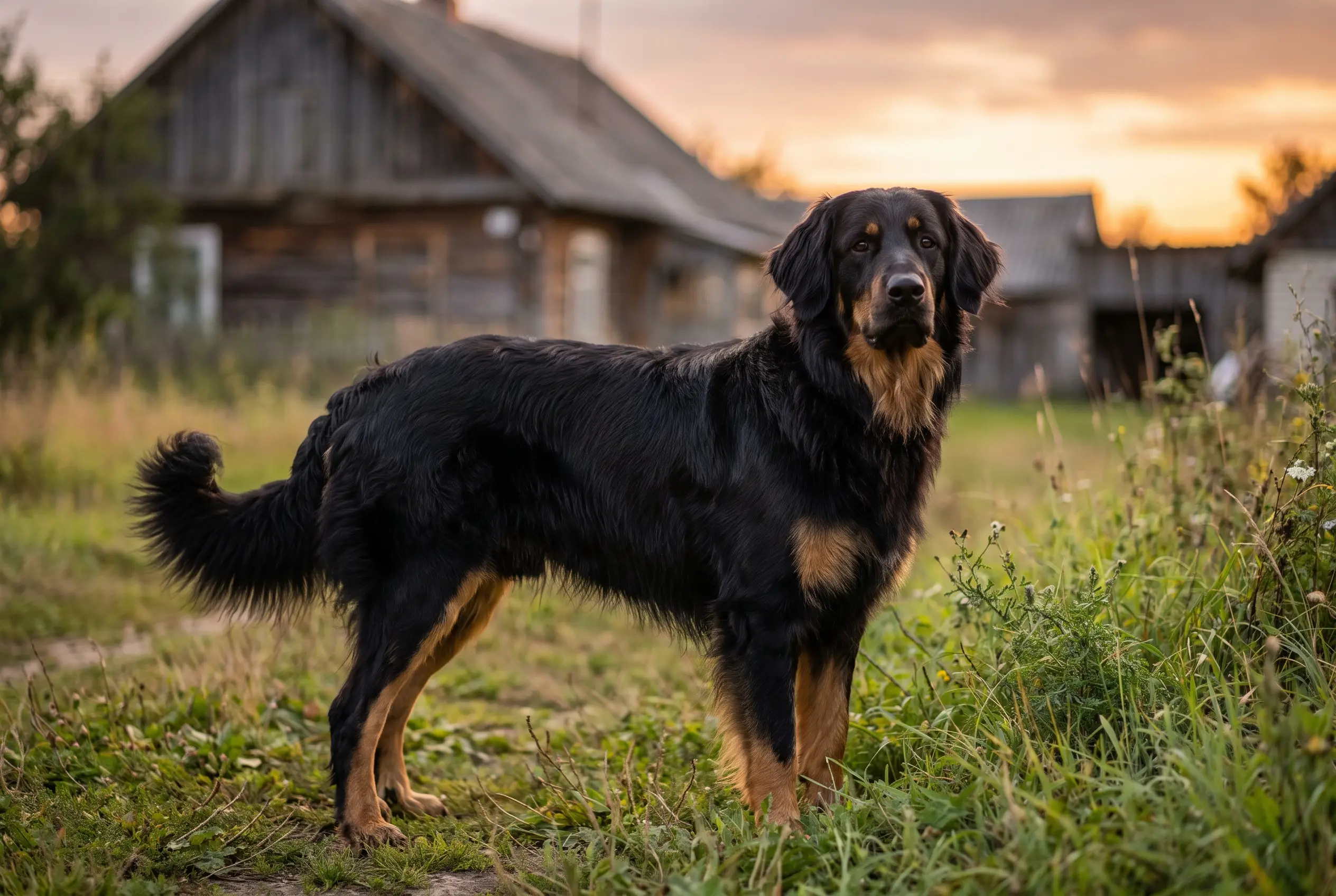
Hovawart
The old German farm watchman, rebuilt and still on duty.
Vital stats
| Size | Large · 58–70 cm |
| Weight | 25–45 kg |
| Life expectancy | 12–14 years |
| Energy | Moderate to high — daily exercise plus a job to do |
| Shedding | Moderate — heavier during the seasonal moults |
| Coat | Long, slightly wavy, light undercoat · black, black and gold, or blond |
| Group | Working · Molossoid (FCI №190, Group 2) |
| Origin | Germany |
Breed traits
Friendliness
Care
Mind
Temperament
The Hovawart is even-tempered, self-assured and deeply loyal to its family, with a guarding instinct that needs no encouragement. It watches its territory as a matter of course, decides for itself what deserves attention, and takes a cool, polite line with strangers. It also matures late — expect a large, strong adolescent until two or three years old — so training has to stay consistent, fair and patient through that whole stretch. Push it around and it digs in; give it clear rules and real work, and it becomes a steady partner that does well in tracking, rescue and protection sport.
Habits & quirks
Self-appointed sentry
It picks the spot with the best view of the gate and the door, and settles there. Guarding the household is not a trick you taught it — it came installed.
A long adolescence
The body is finished around one; the head takes until two or three. Expect a 40-kilo teenager for a while, and keep the training going all the way through.
Its own risk assessor
It sizes up a visitor itself before taking your word for it. In a well-raised dog that lands on polite indifference, not suspicion.
A voice built for a farmyard
Anything crossing its boundary gets announced in a bark sized for open country. The neighbours will know when the post arrives.
Care
| Exercise | An hour or more a day, with work for the nose and brain folded in — tracking, obedience, rescue training. A garden alone does not count; to this dog, a garden is just a post to guard. |
| Grooming | Brush the long coat weekly, more often during the two moults. There is little undercoat and nothing to trim — an easy coat for a dog this size. |
| Training | Start early, keep it fair, and stay consistent for years — the breed answers force with stubbornness. Socialise widely as a puppy, because the guarding instinct arrives on its own. |
| Health | Sturdy for a large breed. Buy from lines with hip scores — German club screening has kept dysplasia rates low — and have the thyroid checked if coat or energy fades. |
Common questions
What does "Hovawart" mean?
"Farm watchman", from the Middle High German hova (farm, estate) and wart (watchman). Dogs of that name guarded German estates from the Middle Ages on; the modern breed was rebuilt in the 1920s and 30s by Kurt Friedrich König's circle, who crossed the last Black Forest farm dogs with Newfoundlands, Leonbergers and German Shepherds. The FCI recognised the result in 1964 as standard No. 190.
Is a Hovawart a good family dog?
Yes — for a family it can guard. It is affectionate and patient with its own household, children included, and treats the home as its responsibility. Strangers get watched rather than welcomed, so early socialisation matters, and its size and self-confidence make it a hard first dog.
When does a Hovawart calm down?
Around two to three years old. The breed matures late, so a full-grown body carries a puppy's judgement for longer than most owners expect. Keep training and structure in place through the whole adolescence — the adult that comes out the other side is steady and reliable.