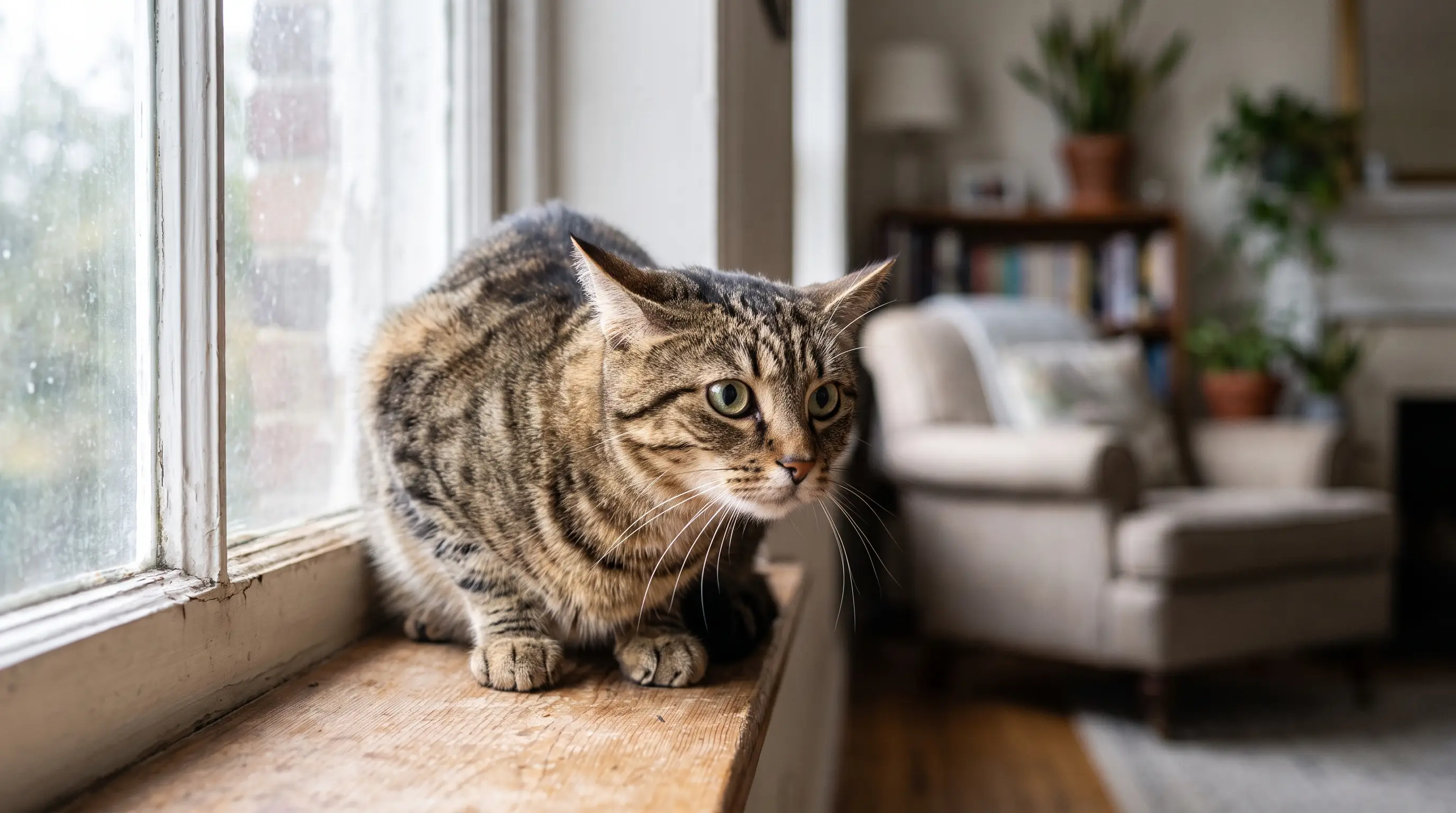
Cat stress signs owners miss
Cats hide stress on purpose. As an animal that both hunts and gets hunted, a cat that looks weak invites trouble, so it masks fear and pain until the signs are almost too quiet to catch. That instinct is exactly why owners miss the early warnings. Learn to read the small changes and you can step in before a stressed cat turns into a sick one.
Why cats hide stress
Cats hide stress because a cat is both a hunter and prey, and in that double role any visible weakness is dangerous. A limping or anxious cat is a target for a bigger predator and an easy mark for a rival competing for the same territory, so natural selection favoured the cats that carried on as if nothing were wrong. Your indoor cat inherited that programming and masks discomfort by default. This is the reason stress is so easy to overlook: by the time the signs are obvious to you, the cat has usually been coping quietly for a while. It also explains why waiting for a dramatic, unmistakable symptom is the wrong strategy. The useful skill is spotting small departures from your own cat's normal.
The quiet signs owners miss
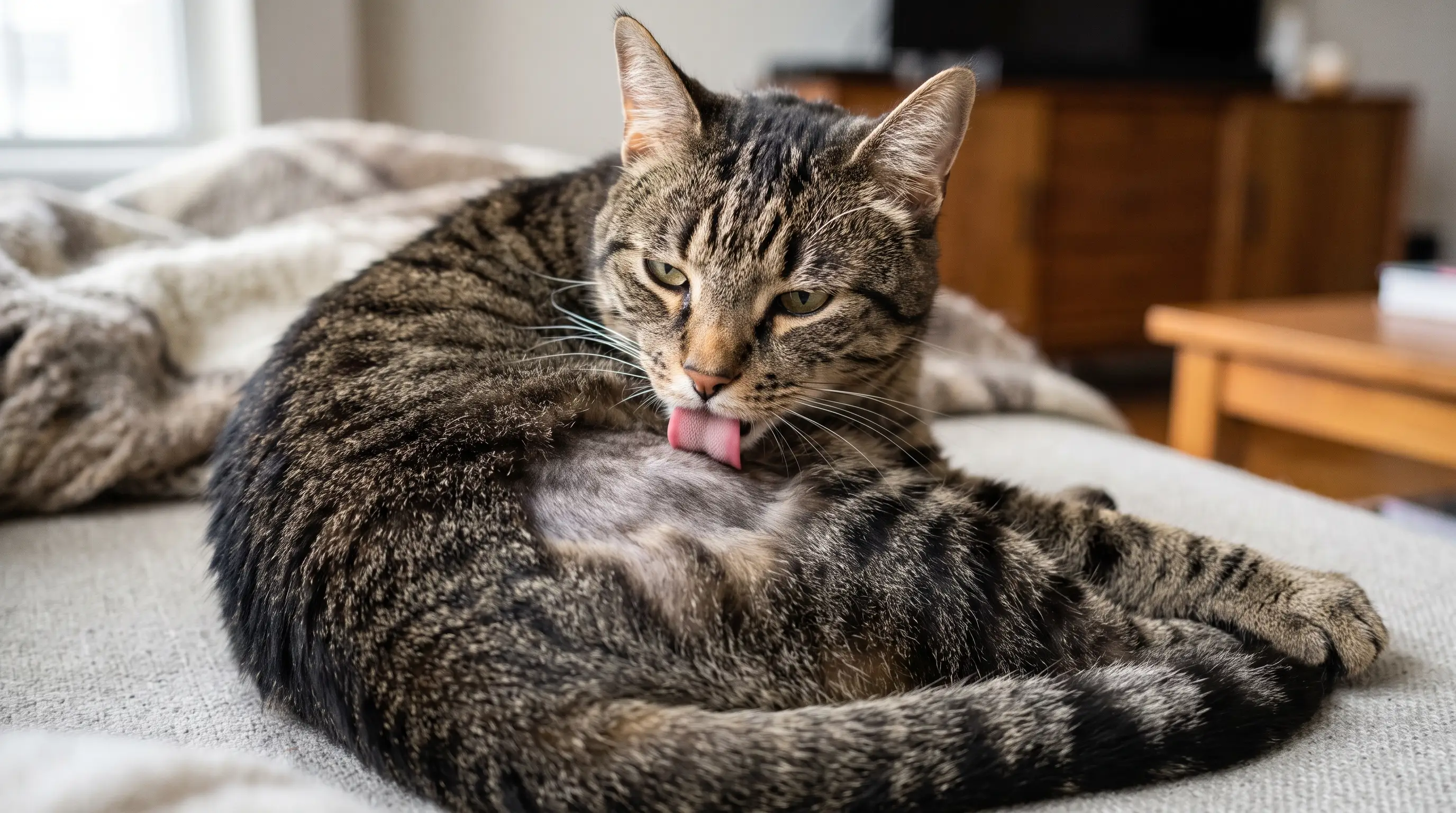
The signs are quiet, and most of them look like ordinary cat behavior until you notice the change. Watch for overgrooming until the belly or inner legs turn bald and stubbly, or the opposite, a coat that goes greasy and unkempt because the cat has stopped grooming at all. The other shifts stack up in behavior: hiding far more than usual, toileting outside the litter box, eating less or stress-eating, sleeping even more than a cat's already generous quota, backing off play and contact, and either sudden aggression or, the flip side, unusual clinginess.
Add excessive meowing, fresh scratching and urine-marking, and pica, the chewing of odd non-food materials like wool, plastic or cardboard. Vocal breeds like the Siamese talk a lot at baseline, so with them you are listening for a change in pattern, not volume alone. One symptom on its own means little. A cluster of them, or a clear break from your cat's usual routine, is the real message.
Body language that gives it away
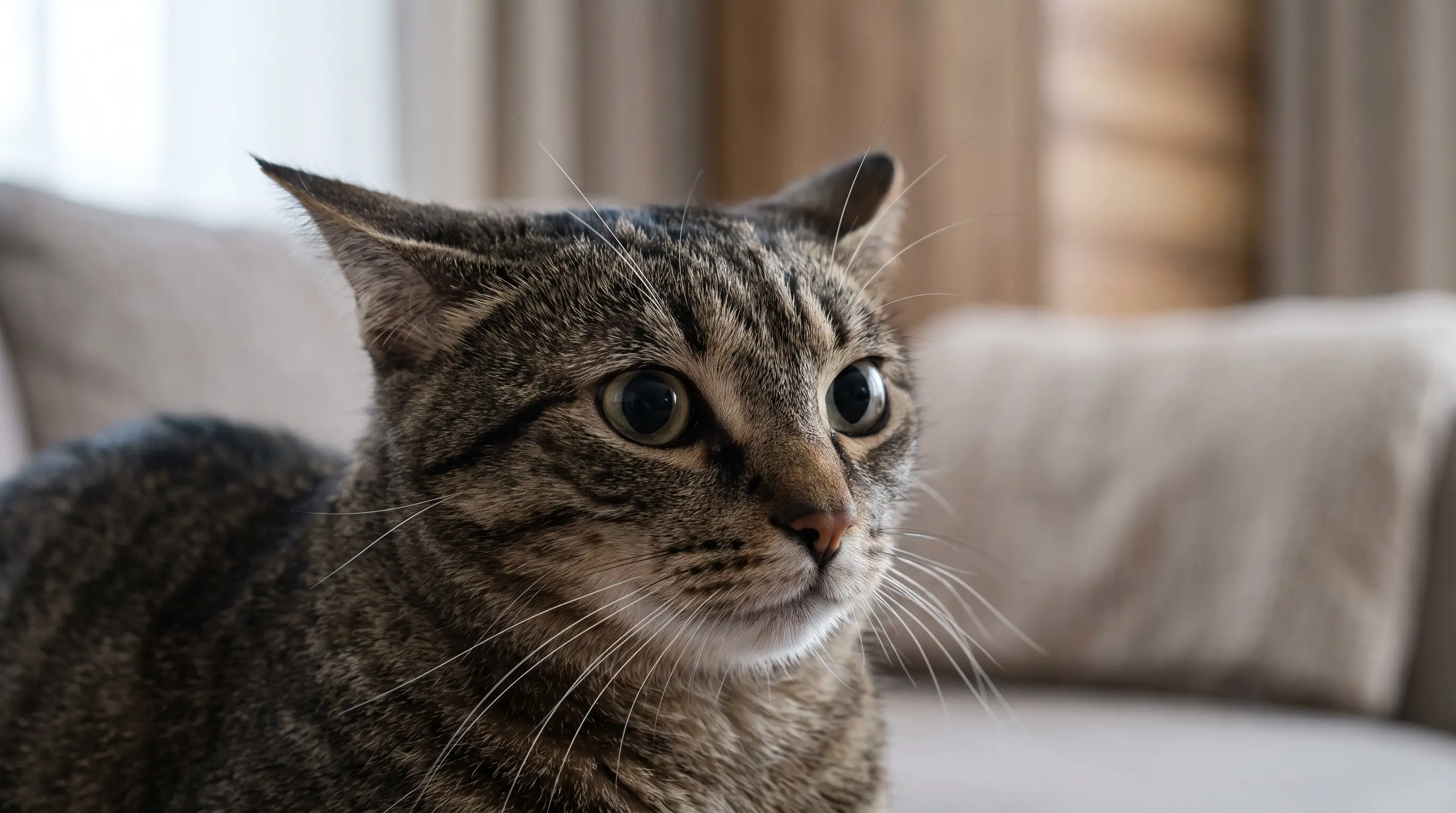
A stressed cat's body signals before its habits do. Read the ears first: flattened sideways into "airplane ears" or swivelling to track threats it can hear. Then the eyes, where pupils dilated wide in normal light point to fear or high arousal. The posture tightens into a low crouch with the weight tucked under and the muscles set to bolt, and the tail wraps close or clamps flat against the body rather than standing loose and upright. You may also see the skin along the back twitch or ripple, quick agitated tail flicks, and a face pulled tense around the whiskers. None of these is proof on its own, because a cat mid-play can look similar for a second or two. Held for minutes in a calm, quiet room, though, they read clearly as distress.
Common triggers
Most feline stress traces back to a change in the cat's territory or routine. The usual culprits are a new pet, partner or baby in the home, moving house, building work with its noise and strangers, a dirty or badly placed litter box, plain boredom in an under-stimulated indoor cat, and tension with another cat over food, litter or favourite spots. Cats are creatures of habit, and even a rearranged room or a shifted feeding time can unsettle a sensitive one. If you have just brought home a new arrival, our guide to what to do when you find a stray cat covers the slow, separate introduction that keeps both cats calm and lowers the odds of a lasting standoff.
The medical overlap you can't skip
Before you treat any of this as behavior, see a vet, because stress signs and illness look identical from the outside. A cat straining in the litter box, licking its belly bare or refusing food could be stressed, or it could have a urinary blockage, pain, dental disease or an overactive thyroid. One condition sits right on the line: feline idiopathic cystitis, a painful bladder inflammation with no infection or stone behind it, where stress is the accepted trigger. Cats with it often overgroom, hide and urinate outside the box, and there is no single test for it, so a vet diagnoses by ruling other causes out. A male cat straining to pass urine and producing little or nothing is an emergency, not a wait-and-see. The order matters: physical check first, behavior plan second.
How to lower the stress
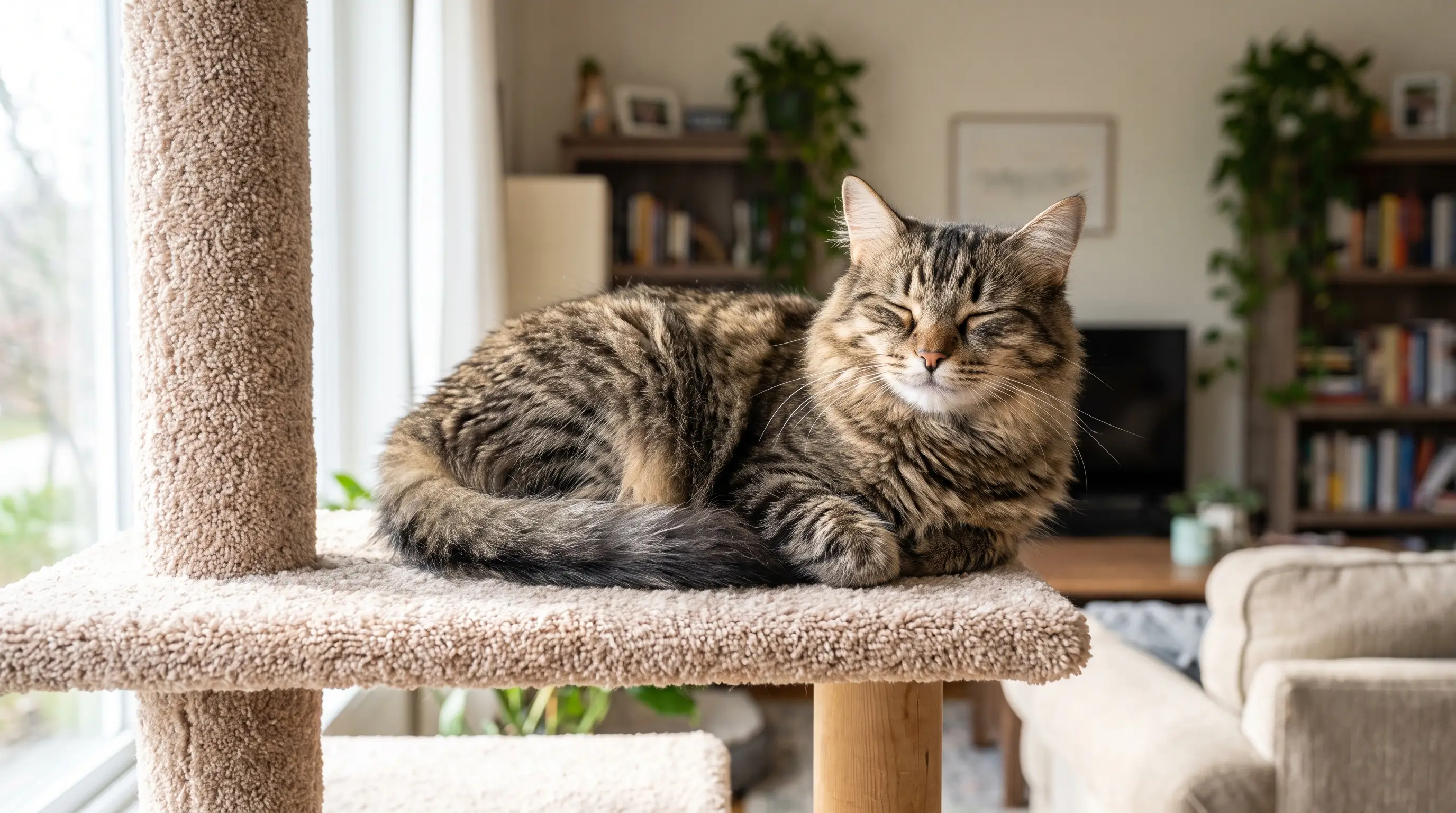
You lower a cat's stress by handing back control of its environment. Keep the routine steady, because predictable feeding, play and quiet times reassure a cat more than any product on a shelf. Give it enough resources that nothing has to be contested: the standard advice is one litter box per cat plus one spare, spread around the home rather than lined up in a row, and our cat litter guide covers placement and box type in detail.
Add vertical space, cat trees, shelves and cleared windowsills, so a nervous cat can climb above the action, and give it covered hiding spots it can retreat to unbothered. Play with a wand toy every day to burn energy and rebuild confidence, and introduce new pets or people slowly, by smell and through a closed door first. Pheromone diffusers help some cats and do nothing for others in the trials, so treat one as a low-risk extra and ask your vet, never as a substitute for fixing the underlying trigger.
Common questions
How can you tell if a cat is stressed?
Watch for a cluster of changes rather than one sign: hiding more, overgrooming or a suddenly neglected coat, toileting outside the box, eating or sleeping differently, less play, and new aggression or clinginess. A single symptom is weak evidence; a clear break from your cat's normal routine is the real signal. Because these overlap with illness, a vet check comes first.
How does a stressed cat behave?
A stressed cat tends to make itself small and invisible: it crouches low, hides for long stretches, holds its ears flattened or swivelling and its pupils wide, and keeps its tail tucked or clamped. Some go withdrawn and stop playing, others turn irritable or unusually clingy. The behavior is usually quiet, because hiding weakness is a survival instinct.
How do you calm a stressed cat?
Remove or reduce the trigger first, then give the cat control: a steady routine, enough litter boxes and feeding stations that nothing is contested, high perches and covered hiding spots, and daily play. Never force contact on a frightened cat; let it come out on its own terms. Ask your vet about pheromone diffusers, which help some cats but not all.
What can I give a cat for stress?
There is no food that fixes stress, but a vet may suggest calming diets or treats containing L-tryptophan or alpha-casozepine, or a prescription supplement. These are mild aids, not cures, and they only work alongside fixing the environment. Don't give human anti-anxiety medication or unprescribed supplements without veterinary guidance.
How long does stress last in cats?
It depends on the cause. Short-term stress from a vet visit or a thunderstorm usually passes within hours to a couple of days once the trigger is gone. Stress from an ongoing problem, such as a resident-cat conflict or a permanent household change, can last weeks or turn chronic if the underlying issue isn't addressed, which is when it starts to affect health.
How do you help a cat relax?
Give it a predictable routine, plenty of resources it doesn't have to compete for, vertical space to climb and hiding places to retreat to, and daily play to burn energy. Let the cat set the pace of contact instead of picking it up when it's tense. If it stays anxious despite all this, see a vet to rule out pain or illness.
More in Cats
Can you take your cat to the beach? An honest guide
Most cats should skip the beach, and a few can go safely. The honest, vet-checkable guide to heat, sun, saltwater, harnesses and who stays home.
What Catnip Really Does to a Cat
The honest, myth-busting guide to catnip: what nepetalactone does, why 1 in 3 cats ignore it, and what to try instead.
You Found a Stray Cat: What to Actually Do
A friendly cat on your doorstep may already have a home. Here is the honest, welfare-first order of steps before you take it in.