Grain-free dog food and DCM: the honest state of the science
The honest version is neither headline. The FDA has not proved that grain-free food causes heart disease — and it has not cleared it either. Since 2018 it has investigated a suspected link between certain diets — often grain-free and heavy in peas, lentils and other pulses — and dilated cardiomyopathy (DCM), a serious heart-muscle disease. The link is biologically plausible, still unproven, and the investigation is open but quiet. Here's what's actually known, why vets now talk about pulses rather than grain, and the responsible-owner takeaway.
What DCM is
Dilated cardiomyopathy is a disease of the heart muscle: the heart enlarges and its walls thin and weaken, so it pumps less effectively and can slide into heart failure. There's a long-established genetic form in certain large and giant breeds — the Dobermann, Great Dane, Boxer and Irish Wolfhound among them — where the cause is clearly hereditary. What put diet in the frame was something different: non-hereditary DCM turning up in dogs, and in breeds, not usually prone to it. That pattern is what the FDA set out to investigate.
What the FDA found — and when
The timeline matters. The FDA issued its first public alert in July 2018, then a detailed update in June 2019 that named 16 dog-food brands, each with ten or more case reports. Among the reported diets, more than 90% were labelled grain-free, about 93% contained peas and/or lentils, and roughly 42% contained potatoes or sweet potatoes. The report count grew from 524 cases by April 2019 to 1,382 canine DCM reports by November 2022 — though the pace slowed sharply after the initial publicity, which is exactly what you'd expect once reporting fatigue sets in.
Suspected, not proven — the current status
This is the line that gets mangled in both directions. At a 2020 scientific forum the FDA called it 'a complex scientific issue that may involve multiple factors' and stressed that no causal link had been established. In December 2022 it said it would not issue further routine updates unless there was meaningful new science to share, noting that adverse-event reports alone can't prove a product caused a condition. The investigation is open, just quiet. So the accurate summary is: a suspected, plausible association — not a proven cause, and equally not something that has been 'debunked' or cleared.
It's about pulses, not just 'grain-free'
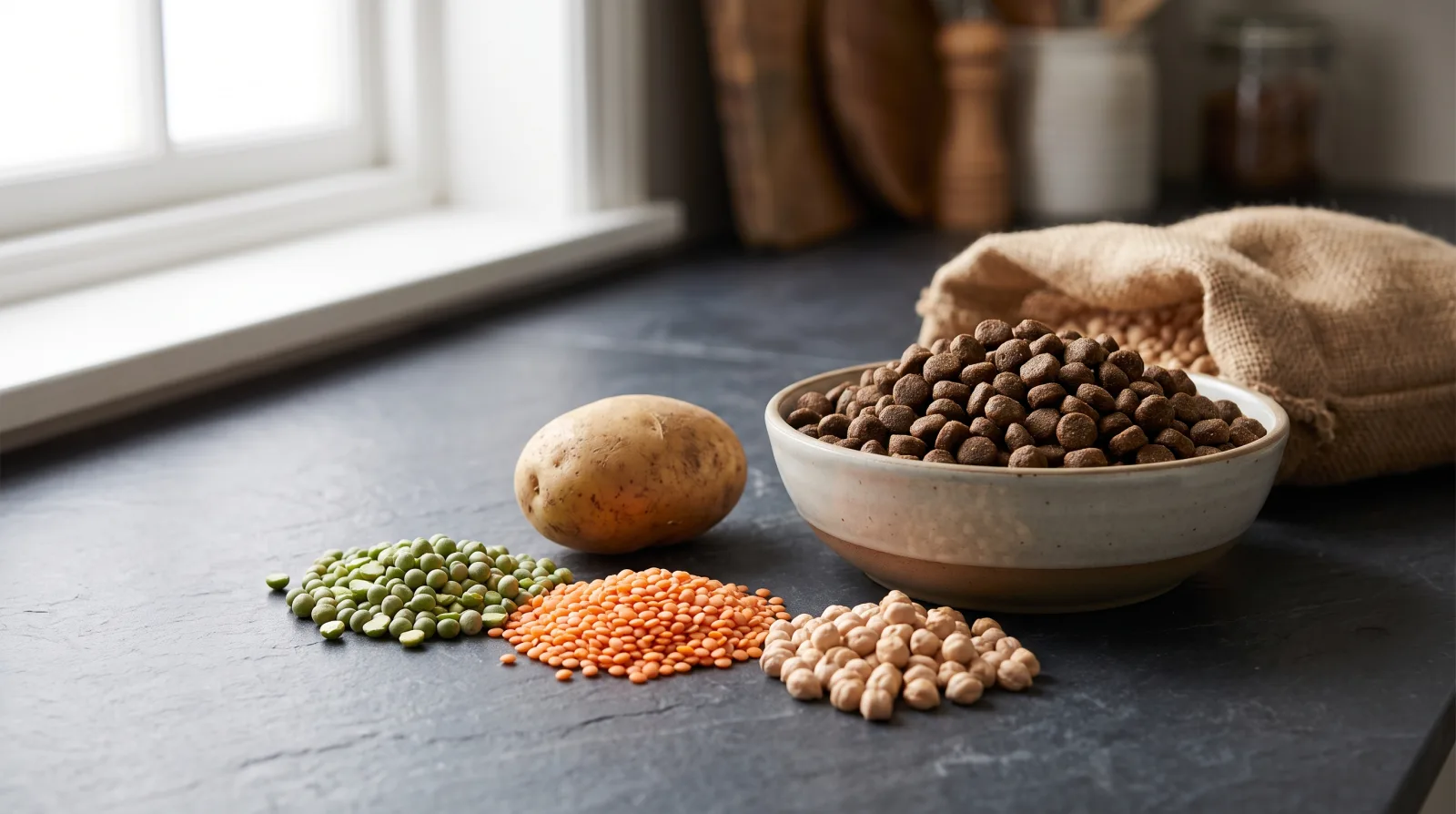
Early on, taurine was the prime suspect — a deficiency of this amino acid is a known cause of DCM. But most of the diet-associated dogs in this investigation were not taurine-deficient, so taurine alone doesn't explain it. Attention has shifted to the pulses themselves — peas, lentils, chickpeas — possibly through effects on fibre, the gut microbiome and how the body handles bile acids. The practical upshot is that 'grain-free' on the front of the bag is the wrong thing to fixate on: grain-inclusive foods heavy in pulses have shown up too. It's the amount of legume in the recipe, not the absence of grain, that vet nutritionists now watch.
The responsible-owner takeaway
Start from the fact that grain-free isn't medically necessary for most dogs, and a true grain allergy is uncommon. Favour foods from makers that meet the WSAVA guidance: a board-certified nutritionist on staff, real feeding trials, and their own manufacturing with proper quality control. If you already feed a grain-free or pulse-heavy diet, don't panic — talk to your vet, and know the warning signs of DCM: tiredness, weakness, exercise intolerance, a cough, fast or laboured breathing, or fainting all warrant a prompt vet visit. And there's genuine reassurance in the data: many affected dogs improved with a diet change plus cardiac treatment when it was caught early. When you're weighing up a food, the claim to anchor on is still the complete-and-balanced statement, not the grain-free flag.
Common questions
Is grain-free dog food bad for the heart?
The honest answer is that it's under suspicion, not proven guilty. The FDA has investigated a possible link between certain grain-free, legume-heavy diets and DCM, a heart-muscle disease, but has not established that grain-free food causes it. It's a plausible association worth taking seriously, not a settled fact.
Do grain-free diets cause heart disease in dogs?
No causal link has been proven. The FDA logged over 1,300 canine DCM reports and found most involved grain-free, pea- and lentil-heavy diets, but reports alone can't establish cause. Current thinking points at pulses rather than the absence of grain — and the investigation remains open rather than closed.
Did the FDA prove grain-free food causes DCM?
No. This is the most common misconception. The FDA investigated a suspected association and has repeatedly said no causal relationship has been established, because adverse-event counts by themselves can't prove causation. It also hasn't cleared these diets — the case is unresolved, not decided either way.
Should I stop feeding my dog grain-free food?
Talk to your vet rather than switching on your own. Grain-free isn't medically necessary for most dogs and a true grain allergy is uncommon, so unless there's a specific reason to feed it, many vets suggest a diet from a company that meets WSAVA guidance. If your dog needs grain-free for a diagnosed reason, discuss the pulse content with your vet.
What are the symptoms of DCM in dogs?
Watch for tiredness, weakness, reduced tolerance for exercise, a cough, fast or laboured breathing, and fainting or collapse. DCM can be silent early on, so any of these signs — especially in a predisposed breed or a dog on a pulse-heavy diet — warrants a prompt veterinary check, including heart imaging if your vet advises it.
Is grain-free the same as grain allergy?
No. Grain-free foods are marketed widely, but genuine grain allergies in dogs are uncommon; most food allergies are to a protein such as beef, dairy or chicken. Choosing grain-free rarely addresses an allergy, and it's the pulse content, not the missing grain, that's tied to the DCM question.
More in Dogs
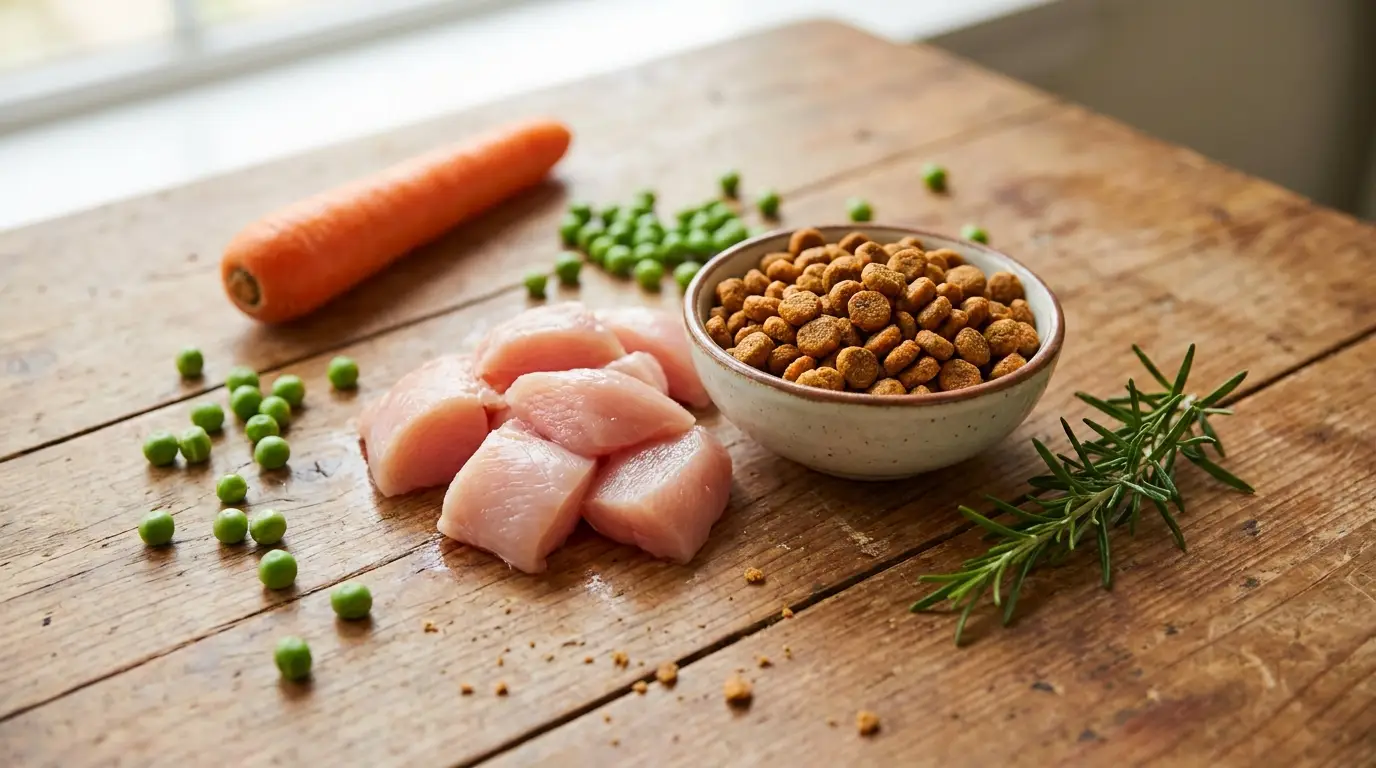
Reading the pet food ingredient list: meat, meal and by-product
'Chicken' first isn't the win it looks like, and 'by-product' isn't the villain. How to read an ingredient panel the way the people who write it do.
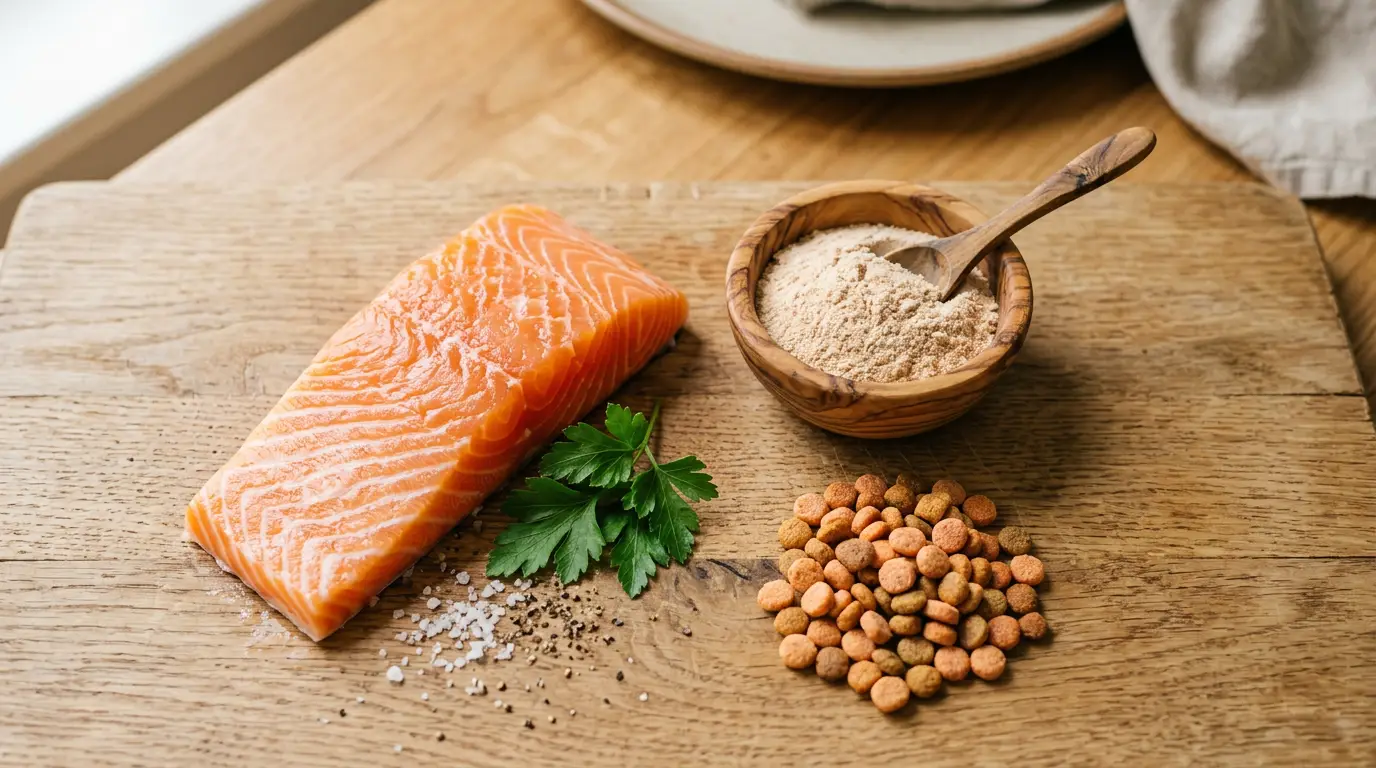
Human-grade vs feed-grade pet food, decoded
'Human-grade' is one of the few pet-food terms with a legal meaning — and one of the most stretched. Here's what it really requires, and whether it's worth paying for.

Pet food quality words, decoded: what the label really promises
Human-grade, holistic, natural, premium, single protein. Most of it is marketing, some of it is law. Here's what each word actually guarantees — and the one claim that really matters.