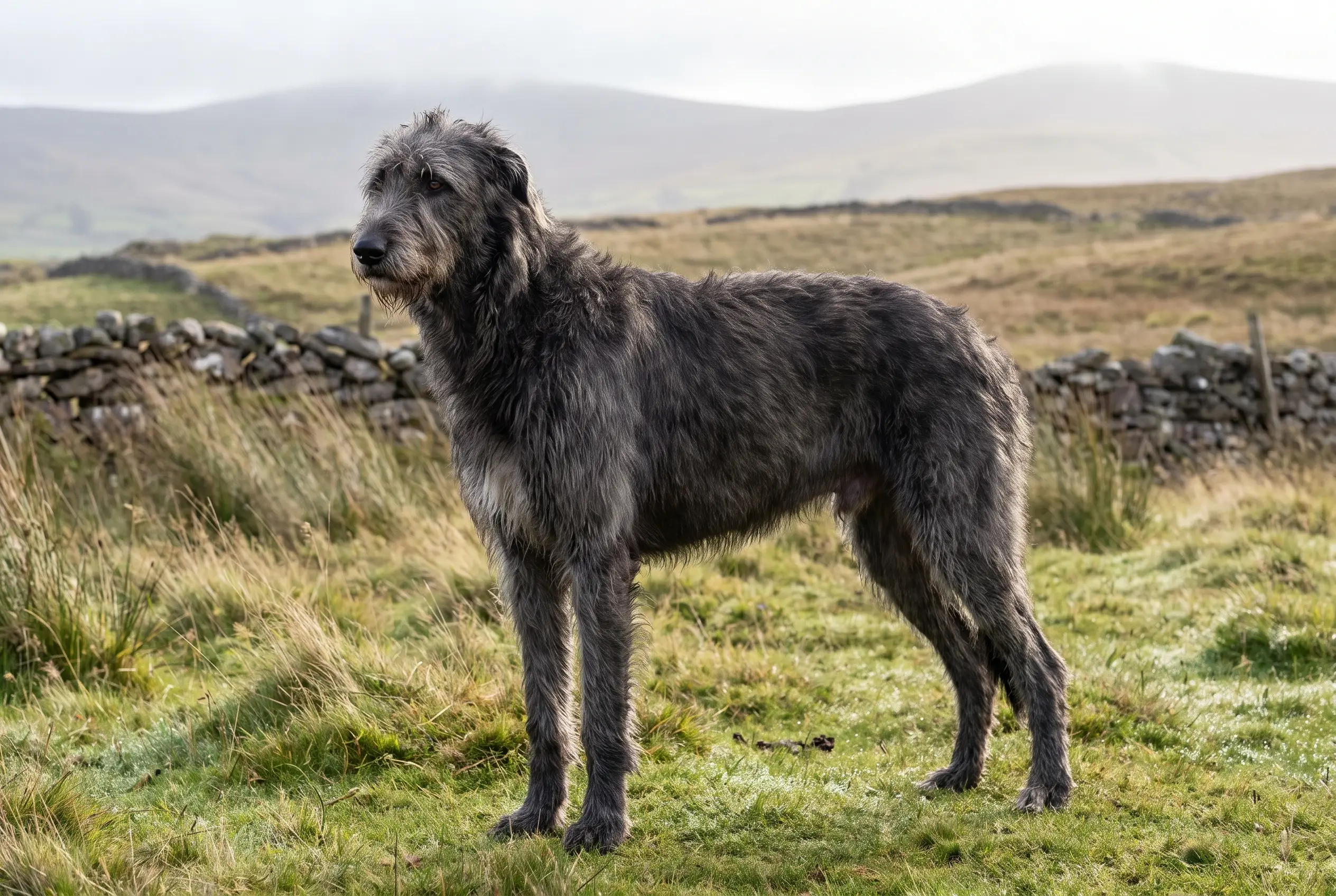
Irish Wolfhound
A gentle giant from the age of wolves — the tallest, kindest hound of all.
Vital stats
| Size | Giant · 71–86 cm |
| Weight | 40–55 kg |
| Life expectancy | 6–8 years |
| Energy | Moderate — 40–60 min/day |
| Shedding | Moderate, year-round |
| Coat | Rough, wiry · grey, brindle, red, black, fawn, white |
| Group | Hound · FCI №160 / AKC |
| Origin | Ireland |
| FCI group | 10 — Sighthounds · FCI 160 |
Breed traits
Friendliness
Care
Mind
The Irish Wolfhound by the numbers
The Irish Wolfhound facts owners search for most — price, lifespan, weight, shedding and colours, in one place.
Widely bred, so you can usually find a litter from a registered breeder without a long wait. Ongoing costs run high — more food, bigger doses at the vet, and pricier insurance.
We don't quote a single figure: the real price swings with breeder, region, bloodline and health testing — and a rescue costs a fraction of a breeder's litter. Adopting is almost always the cheapest route.
Temperament
Bred to course wolves and giant Irish elk, the Wolfhound spent its ferocity centuries ago; what remains is a serene, sweet-natured companion that leans on the people it loves. It rarely barks, rarely guards, and mostly wants a soft bed within sight of you — until something runs, and the sighthound wakes.
Habits & quirks
The lean
Wolfhounds show affection by resting their considerable weight against your legs.
Lap dog delusions
Forty-five kilos will still attempt to fit on the sofa beside you, and partly succeed.
The gallop
A few times a day the couch potato remembers it's a sighthound and flies across the garden.
Counter surveillance
Its head clears the kitchen worktop without jumping — nothing edible is truly out of reach.
Care
| Exercise | Gentle daily walks plus a safe, fenced space to gallop; never over-exercise a fast-growing puppy. |
| Health | Heart disease, bloat and bone cancer shadow the breed — choose health-tested lines and learn the signs of bloat. |
| Feeding | Slow, steady puppy growth on a giant-breed diet; split adult meals to reduce bloat risk. |
| Space | Not a flat dog: it needs room to turn around, a large car, and furniture it's allowed on. |
Life expectancy
This breed has a typical life expectancy of 6–8 years.
Similar breeds
Breeds with a similar build and background — worth a look if this one isn't quite the fit.
Breeds that look like this
Common questions
How long do Irish Wolfhounds live?
Sadly only 6–8 years on average, as with most giant breeds. Good breeding, lean weight and heart screening give you the best odds of more.
Are Irish Wolfhounds good family dogs?
Wonderful — they are famously gentle and patient with children. Supervise around toddlers simply because of sheer size, and give the dog a quiet retreat.
Do Irish Wolfhounds need a lot of exercise?
Less than you'd think: an hour of gentle walking plus the odd free run suits an adult. Puppies must be exercised sparingly to protect growing joints.
Does the Irish Wolfhound shed a lot?
Moderately. The Irish Wolfhound sheds a fair amount, steadily through the year with heavier seasonal patches. A weekly brush keeps most of the loose hair off your floors and clothes.
Is the Irish Wolfhound hypoallergenic?
Not really. No dog is truly hypoallergenic, and the Irish Wolfhound's shedding coat releases plenty of the dander that sets off allergies. If someone at home is allergic, this isn't the easiest breed to live with — spend time around one first.
Is the Irish Wolfhound easy to train?
Reasonably. The Irish Wolfhound is trainable with consistency and rewards, though it isn't the quickest study. Keep sessions short and positive, and be patient with the basics like recall.