Arthritis in cats: the hidden signs and how to help
Most cats over 12 have arthritis: an estimated 70-90% show arthritic changes, yet only a small minority ever get treatment. The reason is simple. Cats almost never limp, so the pain looks like ordinary ageing: sleeping more, jumping less, a coat gone scruffy. This guide covers the real signs of arthritis in cats, why they hide pain so well, what your vet can actually do about it, and the cheap home changes that give an old cat comfort back.
How common arthritis in cats really is
Arthritis is one of the most common conditions in older cats: an estimated 70-90% of cats over 12 show arthritic changes on X-ray. Treatment rates tell a different story. Only a small fraction of those cats ever receive pain relief, because the disease hides in plain sight. Cats rarely limp, so the single sign most owners watch for never appears, and the slow winding down that arthritis causes gets filed under normal ageing.
That gap matters because arthritis hurts every day. A cat with sore hips and elbows still climbs, still jumps when it must, and pays for it quietly, with no way to tell you. The encouraging part is that once you know what to look for, the signs are easy to spot at home, and modern treatment can give an old cat years of comfortable movement back.
The real signs of arthritis in cats
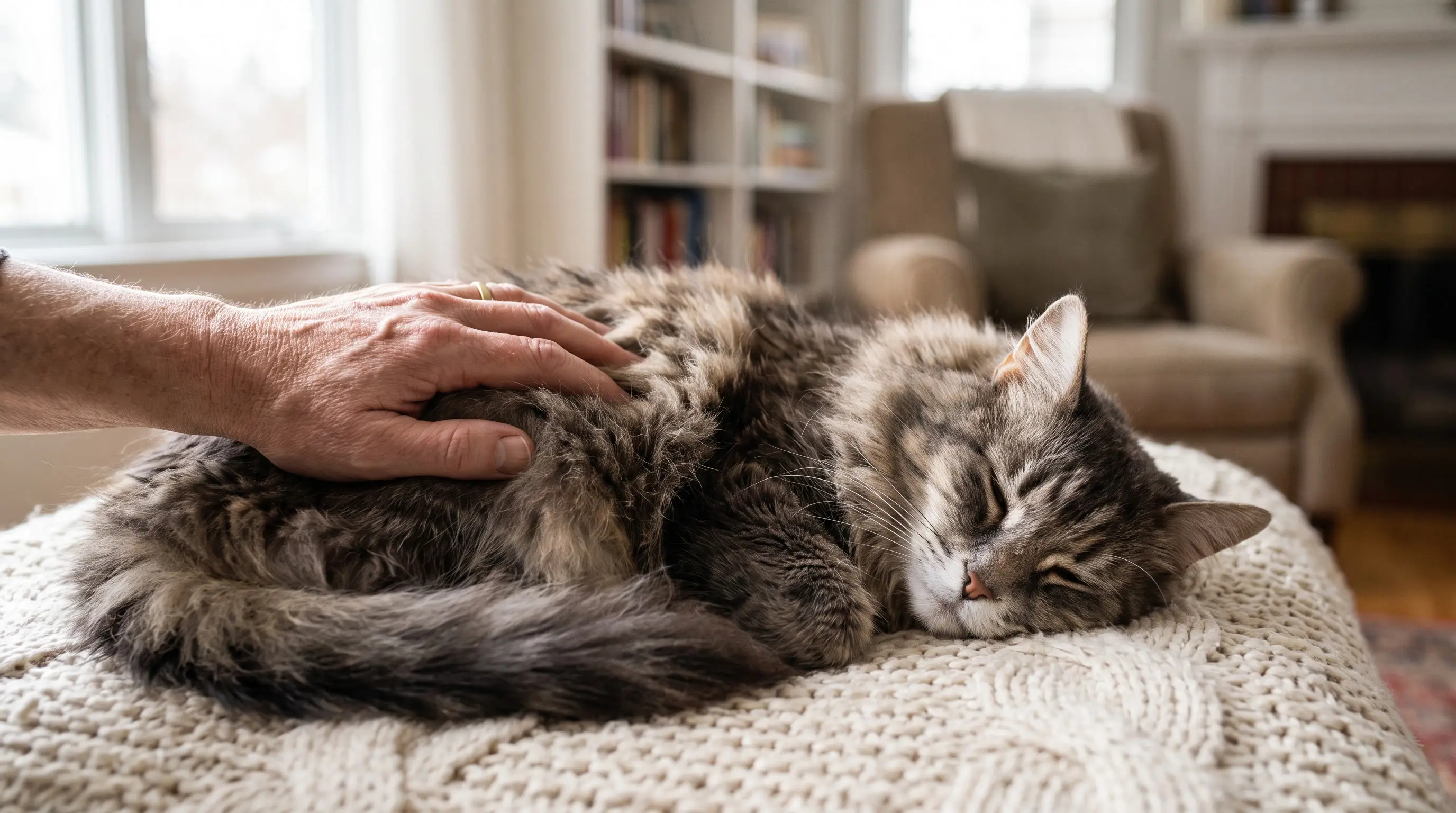
The clearest sign is a change in jumping. A cat that once flowed onto the worktop in a single leap now stops, calculates, and either walks away or breaks the jump into stages via a chair. Watch too for hesitation at the top or bottom of stairs, longer and deeper sleep, and irritability when you stroke the lower back or pick the cat up.
The coat tells its own story. Grooming needs a flexible spine, so an arthritic cat grooms less and the fur goes scruffy and matted, especially over the hips; long-haired cats such as the Persian can mat within days, and our guide to senior cat grooming covers how to help. Litter box misses are another classic clue: climbing over a high side hurts, so the cat goes beside the tray instead. If that sounds familiar, read our guide to litter box problems in older cats before assuming bad behaviour.
Why cats hide pain
Cats hide pain because evolution punished them for showing it. The cat is both predator and prey: small enough to be a meal for larger hunters, and a visibly weakened animal is the one that gets picked off. So cats are wired to keep moving, keep eating and keep quiet, whatever their joints are doing. Crying, limping and complaining are last resorts, not early warnings.
That wiring makes your observations more valuable than any single clinic visit. On the exam table, adrenaline masks stiffness, and a cat that can barely manage the stairs at home may stride across the consult room looking sound. Keep short notes or phone videos of how your cat jumps, walks and grooms over a couple of weeks. Vets rely on exactly this kind of home evidence to diagnose feline arthritis, because the cat itself will volunteer nothing.
What the vet can do
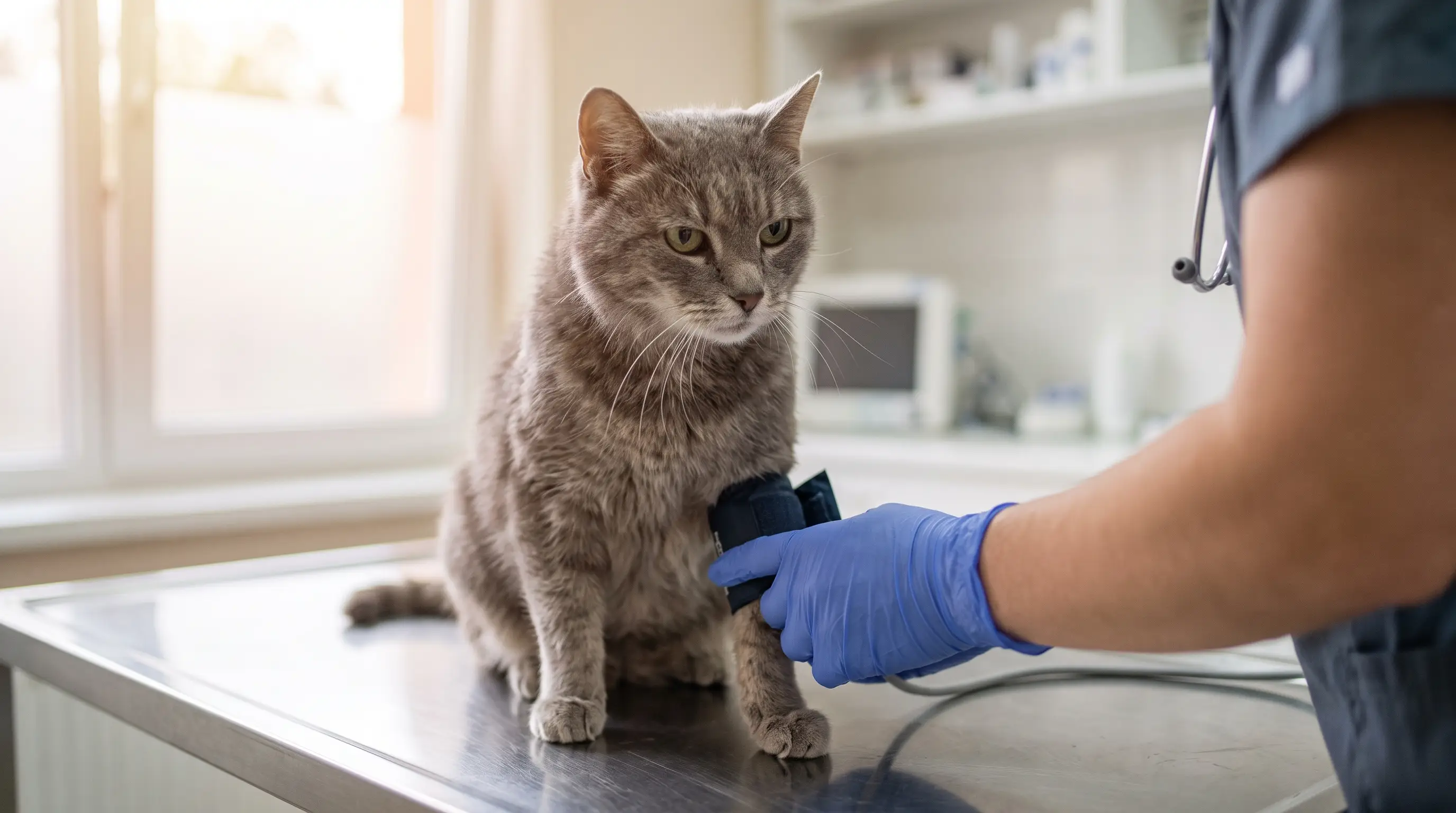
Your vet can do a great deal, starting with a hands-on exam of the joints and spine, sometimes backed by X-rays. Licensed feline pain relief comes next, usually an anti-inflammatory made and dosed specifically for cats. Never give human painkillers. Paracetamol is lethal to cats even in tiny doses, ibuprofen is also toxic, and a single well-meant tablet can kill.
Weight management is the other half of treatment, because every extra hundred grams loads sore joints harder, and even modest weight loss frees up movement. Ask about the newer option too: a monthly arthritis injection your vet may offer, an anti-NGF monoclonal antibody developed for cats, which blocks a key pain signal and suits cats who refuse daily medication. Between these tools, most arthritic cats can be kept comfortable for years, and owners usually notice the change within weeks of starting treatment.
Home changes that give comfort back

Small changes at home give back most of what arthritis takes. Put a ramp or a sturdy step up to the favourite windowsill and sofa, so your cat can reach warm, high places without the leap. Swap the litter tray for a low-entry one and put a tray on every floor of the house, so an old cat never faces a staircase with a full bladder.
Warmth and grip matter just as much. Provide a thick, draught-free bed away from doorways, because cold stiffens sore joints, and lay rugs or runners across slippery wood and tile so stiff legs don't splay. Finally, brush your cat gently every day, concentrating on the hips, lower back and the other spots it can no longer twist round to reach. These fixes sit at the heart of good senior cat care, and most of them cost almost nothing.
Common questions
How do I know if my cat has arthritis?
Watch how your cat jumps: hesitating, breaking a jump into stages or giving up on high spots is the clearest sign. Add sleeping more, a scruffy or matted coat, irritability when handled and litter box misses, and arthritis is likely. A vet exam confirms it.
What can I give my cat for arthritis pain?
Only medication prescribed by your vet and made for cats. Never give human painkillers: paracetamol kills cats even in tiny doses, and ibuprofen is also deadly to them. Vets can prescribe feline anti-inflammatories or a monthly anti-NGF arthritis injection.
At what age do cats get arthritis?
Arthritis can begin in middle age, but old cats bear the brunt: an estimated 70-90% of cats over 12 show arthritic changes. Any older cat that jumps less or sleeps more deserves a check.
Do cats limp when they have arthritis?
Rarely. Feline arthritis usually affects joints on both sides of the body, so there is no good leg to favour, and cats instinctively mask pain. Look for reduced jumping, stiffness after rest and changes in behaviour instead of a limp.
How can I help my cat with arthritis at home?
Add ramps or steps to favourite high spots, provide a low-entry litter tray on every floor, offer warm draught-free beds, lay rugs on slippery floors and gently brush the areas your cat can no longer reach. These changes cut daily pain immediately.
Can arthritis in cats be treated?
Yes. It cannot be cured, but vet-prescribed pain relief, weight management and the newer monthly anti-NGF injections control the pain well, and home adjustments do the rest. Most arthritic cats can stay comfortable and mobile for years.
More in Cats

Organic, natural, holistic: which pet food claims are real
Only one of these words is backed by law. Here's what organic, natural, holistic, premium and gourmet actually guarantee on a bag of dog or cat food.

Single-protein and limited-ingredient dog food: when it helps
Limited-ingredient and single-protein diets have one real job — investigating food allergies with your vet. Here's when they help and when it's just marketing.

'Complete and balanced': the only pet food claim that matters
One small line on the bag decides whether a food can actually feed your pet. Here's how to find the AAFCO/FEDIAF adequacy statement and read it properly.