Senior cat grooming: mats, claws, teeth and weekly care
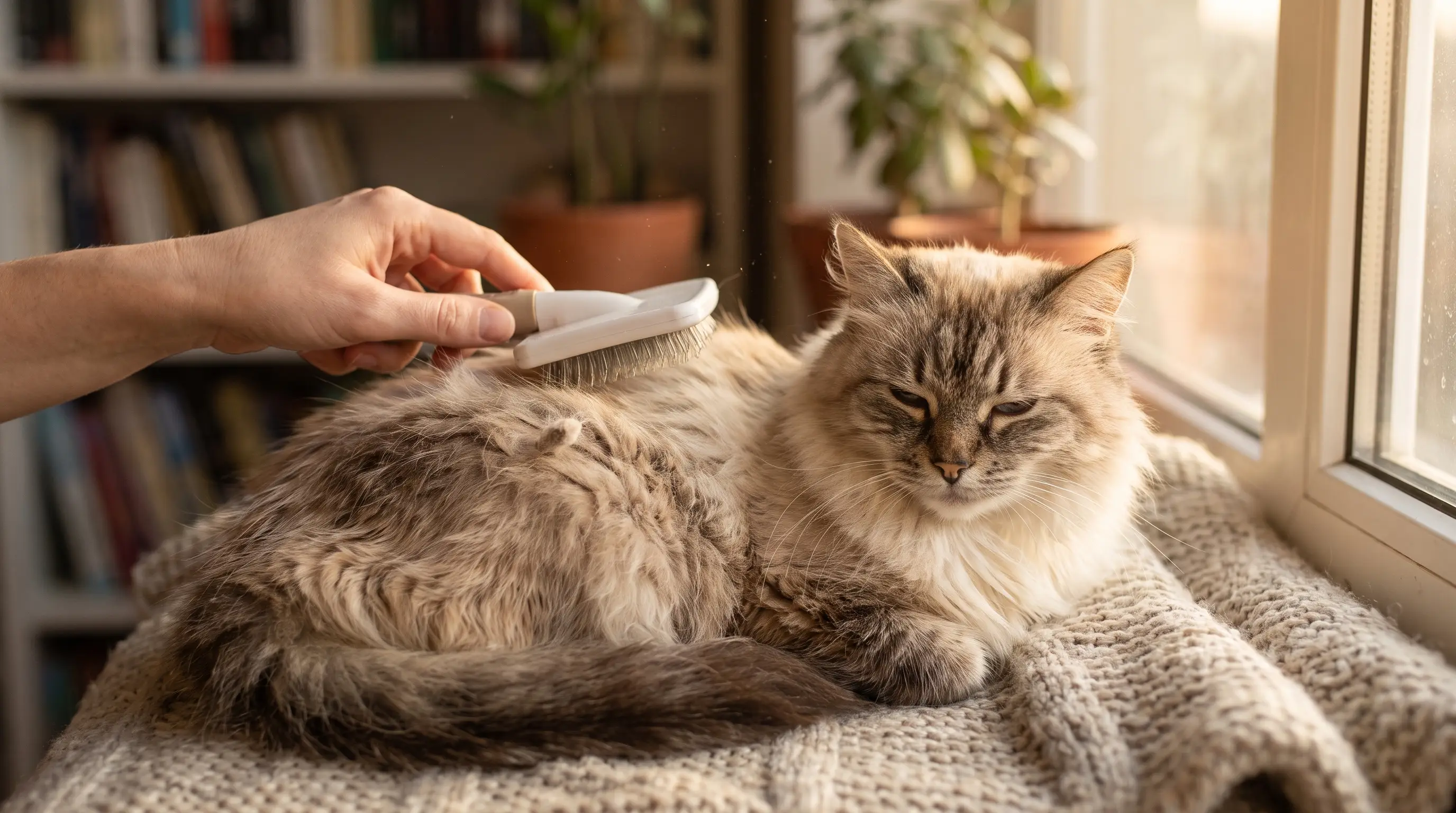
Senior cats need help with grooming because age makes self-care painful: stiff joints stop the twisting a proper wash requires, claws thicken and curl instead of wearing down, and dental disease creeps in quietly. The fix is a simple regular routine. Short daily brushing prevents mats, a claw trim every few weeks stops overgrown claws reaching the pads, and a weekly hands-on check catches lumps, weight loss and sore spots early. Here is how to do each part safely.
Why old cats stop grooming themselves
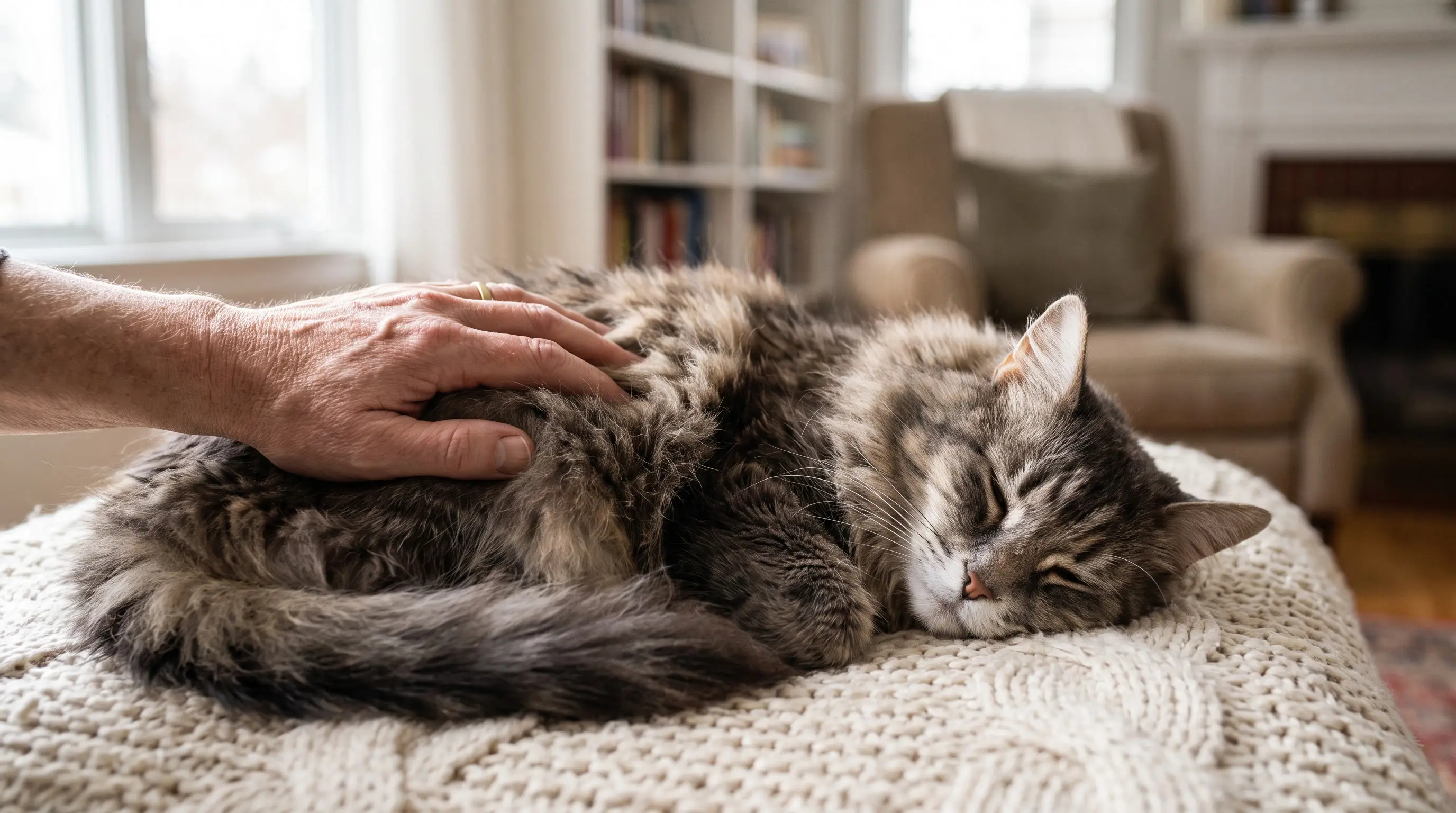
Old cats stop grooming because it hurts. A thorough wash means twisting the spine, reaching over the shoulder and holding awkward positions for minutes at a time, and arthritic joints make every one of those movements painful. Arthritis is very common in cats past ten, and because cats hide pain so well, a greasy, clumped or flaky coat is often the first visible sign. The back, hips and base of the tail go first, because those are exactly the areas a stiff cat can no longer reach.
Sore teeth stop grooming too, since washing works the mouth constantly. If your cat's coat has gone downhill, treat it as a symptom and get it checked; managing arthritis in cats with proper pain relief often brings grooming back. In the meantime, take over the job yourself with short, gentle sessions, and build them into the wider routine covered in our senior cat care guide.
How to deal with matted fur safely
Never cut a mat out with scissors. The skin of an older cat is thin and loose, and it tents up into the base of the mat, so one confident snip can open a wound that needs stitches. Work on mats with your fingers instead: rub a little cornflour into a small mat, tease it apart from the tips inward, then follow with a soft brush. Short daily sessions of a few minutes beat one long battle, because a sore, restrained cat learns to dread the brush.
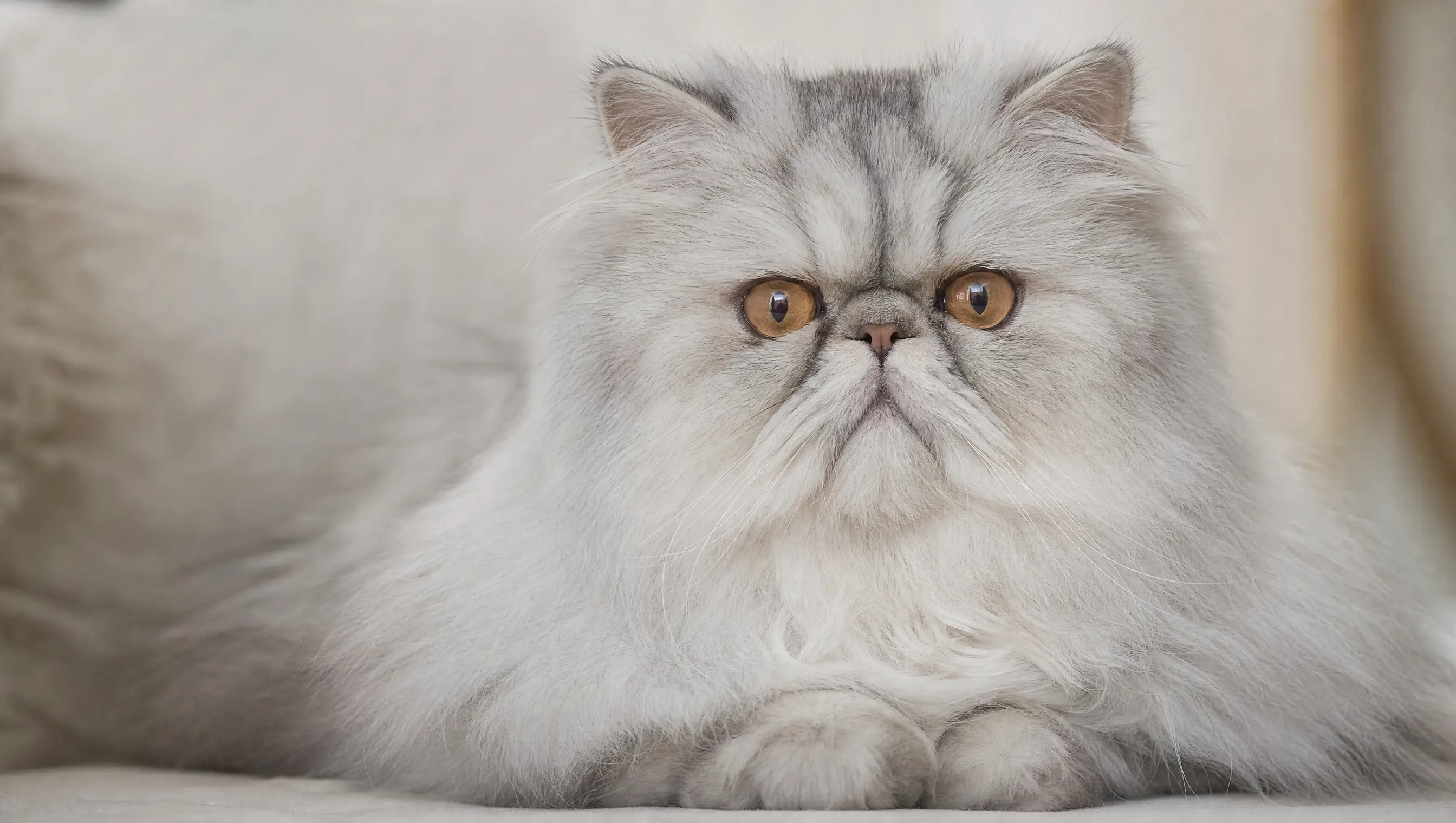
Long-haired cats mat worst, especially behind the legs, in the armpits and along the spine, and a senior Persian can felt up in a matter of weeks once self-grooming stops. Check those spots every day with your fingertips. If the coat has felted into large plates against the skin, stop; heavy matting needs a professional groomer or a vet with clippers, sometimes with sedation, and that is far kinder than pulling at it at home.
Thick claws need trimming every few weeks
Senior claws thicken, flake and curl because the nail no longer sheds its outer sheath the way it once did. Younger cats strip that dead layer through scratching; older cats scratch less, so layer builds on layer until the claw looks like a thick, brittle horn. Stiff toes also retract less, which is why you hear clicking on hard floors. Left alone, a curling claw can grow in a full circle and pierce the pad it grew from.
Trim every two to four weeks, taking just the sharp, curled tip and staying well clear of the pink quick. Do not forget the dewclaws on the inside of the front legs; they touch the ground least, so they overgrow first and are the classic claws to curl into the pad. A claw that has already grown into the pad is a vet visit, not a home job, because the wound underneath is usually infected and painful.
Dental disease is common and treatable at any age
Dental disease affects most cats by their senior years, and it rarely announces itself. A cat with a rotten tooth or inflamed gums usually keeps eating, just more slowly, favouring one side, dropping kibble or drifting towards soft food. Bad breath, drooling, pawing at the mouth and an unkempt chin are all late signs. Weight loss in an old cat often traces back to a mouth that hurts, so lift the lip and look, and let your vet examine the teeth at every check-up.
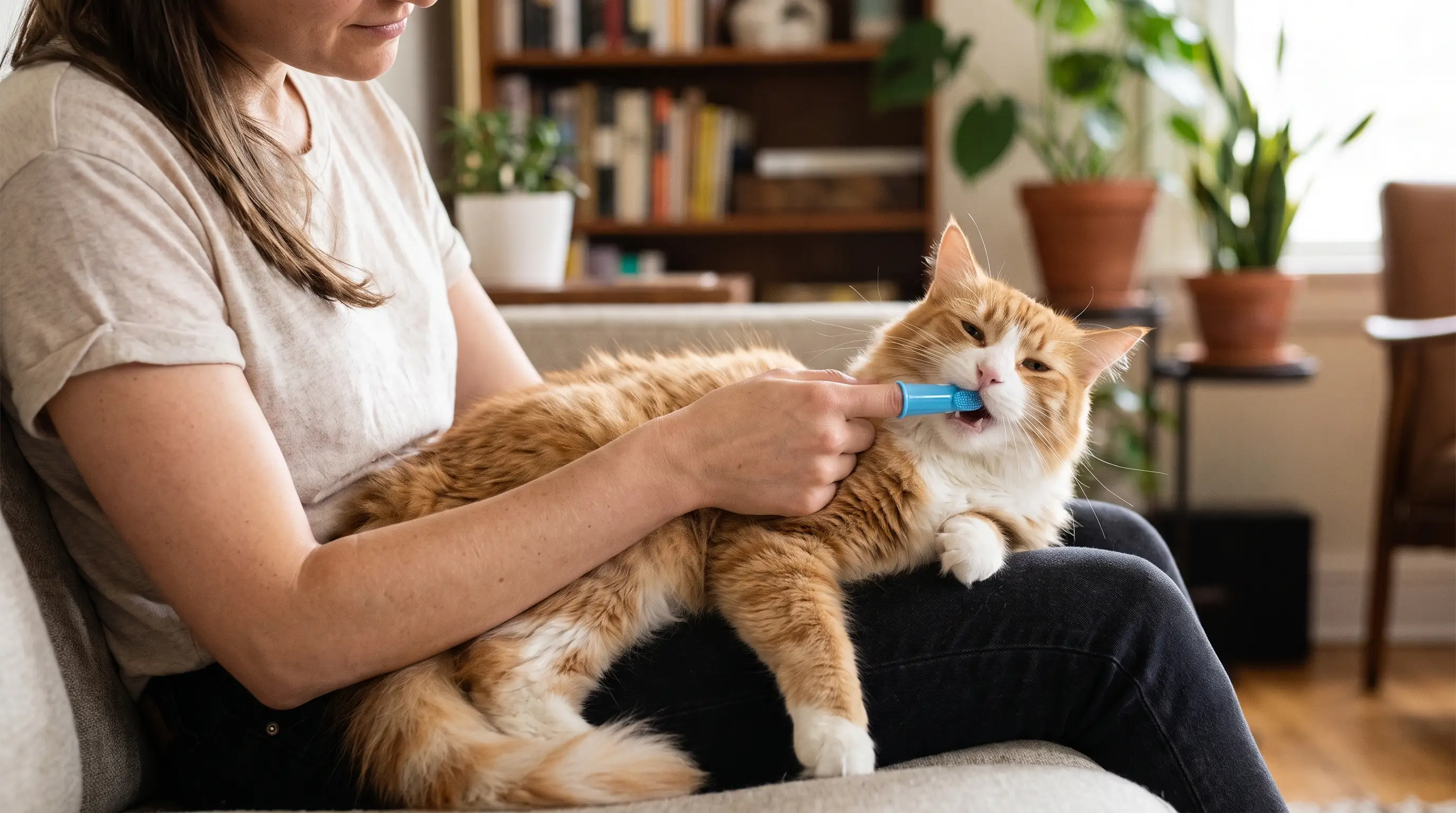
Age alone is not a reason to refuse a dental under anaesthesia. Modern protocols, with pre-anaesthetic blood tests, blood pressure monitoring and fluids during the procedure, make dentals safe for the great majority of older cats, and vets regularly see elderly cats transformed once a painful mouth is fixed. Between dentals, daily brushing with a cat toothpaste is the single most useful thing you can do at home; start slowly and reward every session.
A gentle weekly routine that doubles as a health check
Ten minutes once a week is enough to keep on top of coat, claws and early warning signs. Pick a calm moment, brush with the lie of the coat, and run your hands slowly over the whole body while you do it. Your fingers will find what your eyes miss: new lumps, scabs, mats forming behind the legs, a spine that suddenly feels bony, or a flinch over one hip that was not there last week.
Make it a fixed circuit: coat and skin first, then each paw and claw, then a look at eyes, ears and teeth, and a rough sense of weight. Gradual weight loss is one of the most important signals in a senior cat and almost impossible to see day to day. Note anything new and mention it to your vet early; the conditions that shorten old cats' lives are far easier to manage when they are caught at this stage.
Common questions
Why do older cats get matted fur?
Because pain, usually from arthritis, stops them grooming themselves properly. Without daily self-grooming, loose hair and skin oils tangle into mats, worst in long-haired cats behind the legs and along the spine.
How do I remove mats from my old cat's fur?
Never use scissors; an older cat's skin tents up into the mat and one snip can cause a serious wound. Work cornflour into small mats with your fingers, tease them apart and brush them out over short daily sessions. Heavy matting should go to a professional groomer or your vet.
Why are my old cat's claws so thick?
Ageing claws shed their outer sheath less, so dead layers build up and the claw becomes thick and brittle. Older cats also scratch less, which is what used to strip that dead layer away.
Should I trim my senior cat's claws?
Yes, every two to four weeks. Senior claws retract less, overgrow and can curl into the pads, and the dewclaws overgrow fastest. If a claw has already grown into the pad, see your vet rather than trimming it yourself.
Why has my old cat stopped grooming himself?
Almost always because grooming hurts. Arthritis makes the twisting painful and dental disease can make washing sore, so a scruffy coat in an old cat is a health signal that deserves a vet check.
Do old cats need to be groomed?
Yes. Most senior cats can no longer keep their own coat, claws and teeth in order, so they need short gentle brushing sessions, regular claw trims and dental care from you and your vet.
More in Cats

Organic, natural, holistic: which pet food claims are real
Only one of these words is backed by law. Here's what organic, natural, holistic, premium and gourmet actually guarantee on a bag of dog or cat food.
Single-protein and limited-ingredient dog food: when it helps
Limited-ingredient and single-protein diets have one real job — investigating food allergies with your vet. Here's when they help and when it's just marketing.
'Complete and balanced': the only pet food claim that matters
One small line on the bag decides whether a food can actually feed your pet. Here's how to find the AAFCO/FEDIAF adequacy statement and read it properly.