Cat litter, honestly: type, depth, and how often
Pick an unscented clumping or low-dust natural litter, fill the box about 5 cm deep, scoop it once or twice a day, and keep one more box than you have cats. That covers most of what actually matters. The rest — which of the three litter types, how often to do a full change, and why a cat suddenly refuses the box — comes down to trade-offs and a few honest rules worth knowing.
The main litter types

There are three families of cat litter, and each trades one strength for another. Clumping bentonite clay is the default for good reasons: it forms tight, scoopable clumps around urine, holds odor down, and costs little. The trade-offs are weight, dust, and tracking, since the fine granules cling to paws and scatter across the floor. A long-haired cat like the Persian will carry even more of it around the house. Silica crystal (gel) litter locks in moisture and odor better than almost anything, throws off very little dust, and lasts longer between full changes, but it costs more, some cats dislike the crunch underfoot, and the spent crystals do not biodegrade. Natural plant-based litters made from wood, paper, corn, wheat, or tofu are light, low-dust, and often compostable, and a few are flushable in small amounts. They tend to clump more softly and can cost more per week. One honest caveat for all of them: none is truly safe to flush into a septic system, and clay sets like cement in pipes.
How much litter and how often
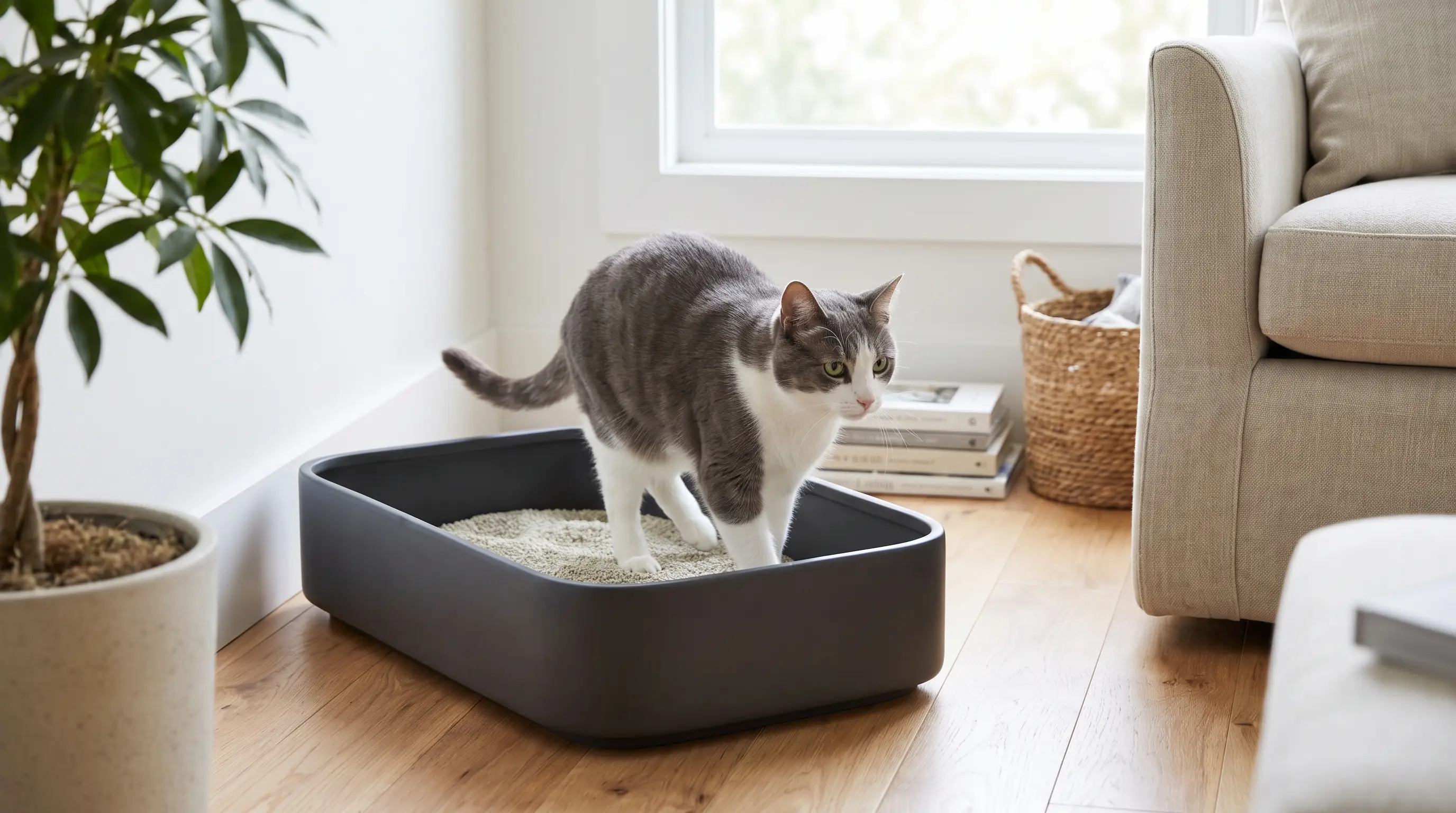
Fill the box about 5 cm (2 inches) deep, enough for a cat to dig and cover without scraping the bottom. Cats bury by instinct, and a shallow tray reads as unusable to many of them. Scoop solids and clumps at least once or twice a day; this single habit does more for odor than any perfume or additive. How often you empty and refill the whole box depends on the type. Clumping clay usually needs a full change every two to three weeks for one cat, sooner with several. Non-clumping clay should be dumped weekly because urine sits in it. Silica crystals stretch to three or four weeks, and some wood-based clumping litters last six to eight. When you do a full change, wash the empty box with mild unscented dish soap and skip bleach or pine cleaners, whose smell can put a cat off the box entirely.
How many boxes and where to put them
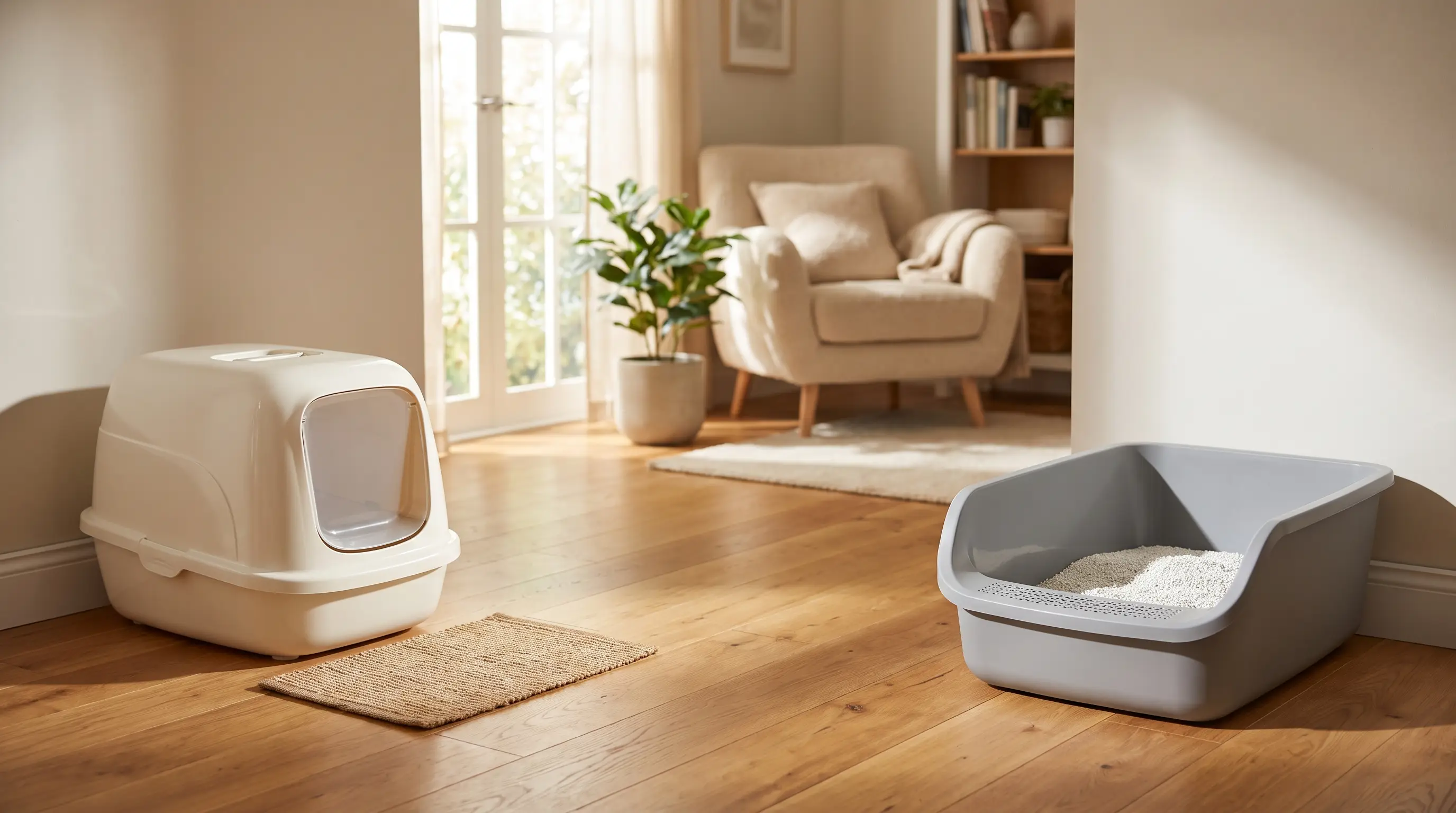
Keep one more box than you have cats — the n+1 rule that the AAHA and AAFP feline life stage guidelines both endorse. Two cats means three boxes; one cat still does best with two. Cats treat litter boxes as territory, and a single shared tray invites guarding, stress, and accidents. Placement matters as much as number. Put boxes in quiet, easy-to-reach spots away from food and water bowls, since cats dislike eliminating where they eat. Avoid noisy corners next to a washing machine or a busy hallway, and don't line all the boxes up in one room, which a cat reads as a single station. Spread them across different rooms and floors so a cat always has one nearby, especially in a multi-level home or with an older cat who moves slowly.
Scented versus unscented litter
Skip the scented litter — cats almost always prefer unscented. A cat's sense of smell is far sharper than ours, so the floral or fresh-linen perfume that reads as clean to you can read as overwhelming to the cat standing in it. Heavy fragrance is one of the more common reasons a cat quietly starts avoiding an otherwise fine box. Scent also masks the one signal you want: a box that smells bad means it needs scooping, not covering up. If odor is a real problem, more frequent scooping, an extra box, or an unscented litter with baking soda solves it without the perfume.
Litter-box aversion
When a cat starts going outside the box, rule out illness before you blame behavior. Cystitis, bladder stones, and urinary infections make urinating painful, and the cat comes to associate the box with that pain — a sudden change in habits is a reason to call the vet, not to switch litters first. Inappropriate elimination is the most common behavioral reason cats are surrendered to shelters, and much of it is fixable. Once a medical cause is ruled out, work through the usual suspects: a dirty box, a litter the cat dislikes, a box that is too small or covered, or a location that feels exposed or noisy. Watch for hovering at the edge, perching on the rim to avoid touching the litter, or scratching the wall instead of the sand. If you just brought home a new cat, our guide to what to do when you find a stray covers settling-in basics too.
Kittens and covered versus open boxes
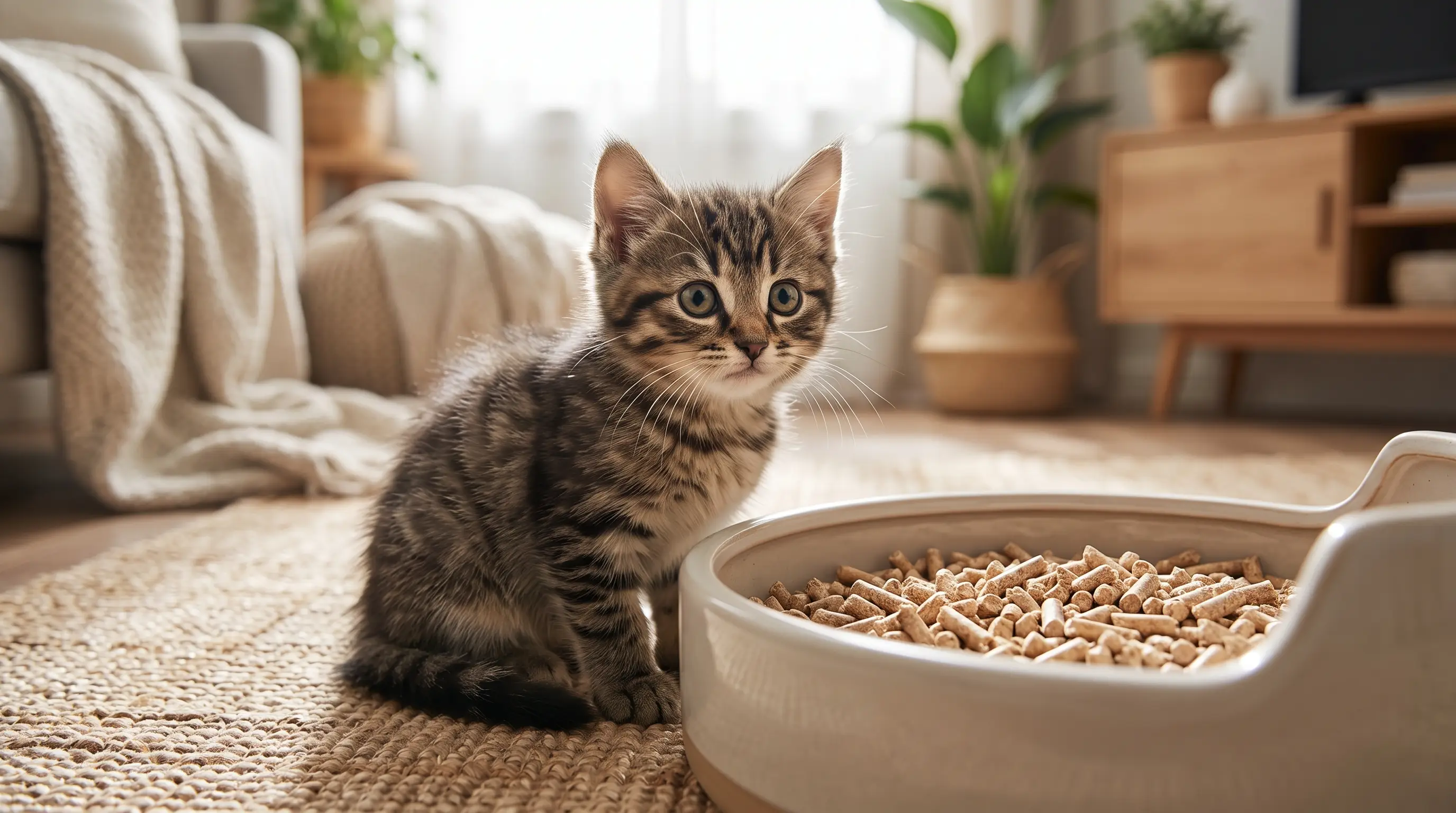
Kittens need a low-sided box they can climb into and, ideally, a non-clumping litter while they are very young. Curious kittens sometimes taste litter, and clumping bentonite can swell if swallowed, so plain non-clumping clay or a pelleted natural litter is the safer default until they are a few months old and past the mouthing stage. On covered versus open boxes, the research is less dramatic than marketing suggests: most cats show no strong preference in controlled tests, but plenty of individuals favor open boxes that don't trap odor and humidity or box them in. Hoods keep litter and smell out of sight for you, but they need the same scooping schedule, and a cramped covered box is worse than a roomy open one. Bigger and lower usually wins, for kittens and senior cats alike.
Common questions
What is the best cat litter?
There is no single best litter: it depends on the cat. Clumping bentonite clay is the most common for cost and odor control, silica lasts longer and makes little dust, and plant-based litters are light and often compostable. Most cats prefer a fine-grained, unscented litter.
How often should you change cat litter?
Scoop clumps and solids every day, once or twice. A full change depends on the type: clumping every 2-3 weeks for one cat, non-clumping weekly, silica every 3-4 weeks. Times shorten with more cats.
How much litter should you put in the litter box?
About 5 cm (2 inches) deep, enough for the cat to dig and cover without hitting the bottom. Top up weekly to keep the level. Too much is wasted, too little discourages the cat.
Where should you put a cat's litter box?
In a quiet, accessible spot away from food and water bowls, since cats dislike eliminating where they eat. Avoid noisy or high-traffic corners and spots next to the washing machine. Spread boxes across different rooms, not side by side.
Why is my cat pooping outside the litter box?
Often because the box is dirty, the litter is disliked, or it is badly placed, but the first thing to rule out is a medical problem. Cystitis, stones, or urinary infections make urinating painful and the cat associates the box with pain. If the behavior is new, see the vet before changing litter.
Do cats prefer a covered or uncovered litter box?
Most studies find no clear preference, but many cats like open boxes because they hold less odor and moisture and offer more escape routes. Covered boxes hide the mess from view but need cleaning just as often. Bigger with low sides is best, especially for kittens and senior cats.
More in Cats
Can you take your cat to the beach? An honest guide
Most cats should skip the beach, and a few can go safely. The honest, vet-checkable guide to heat, sun, saltwater, harnesses and who stays home.
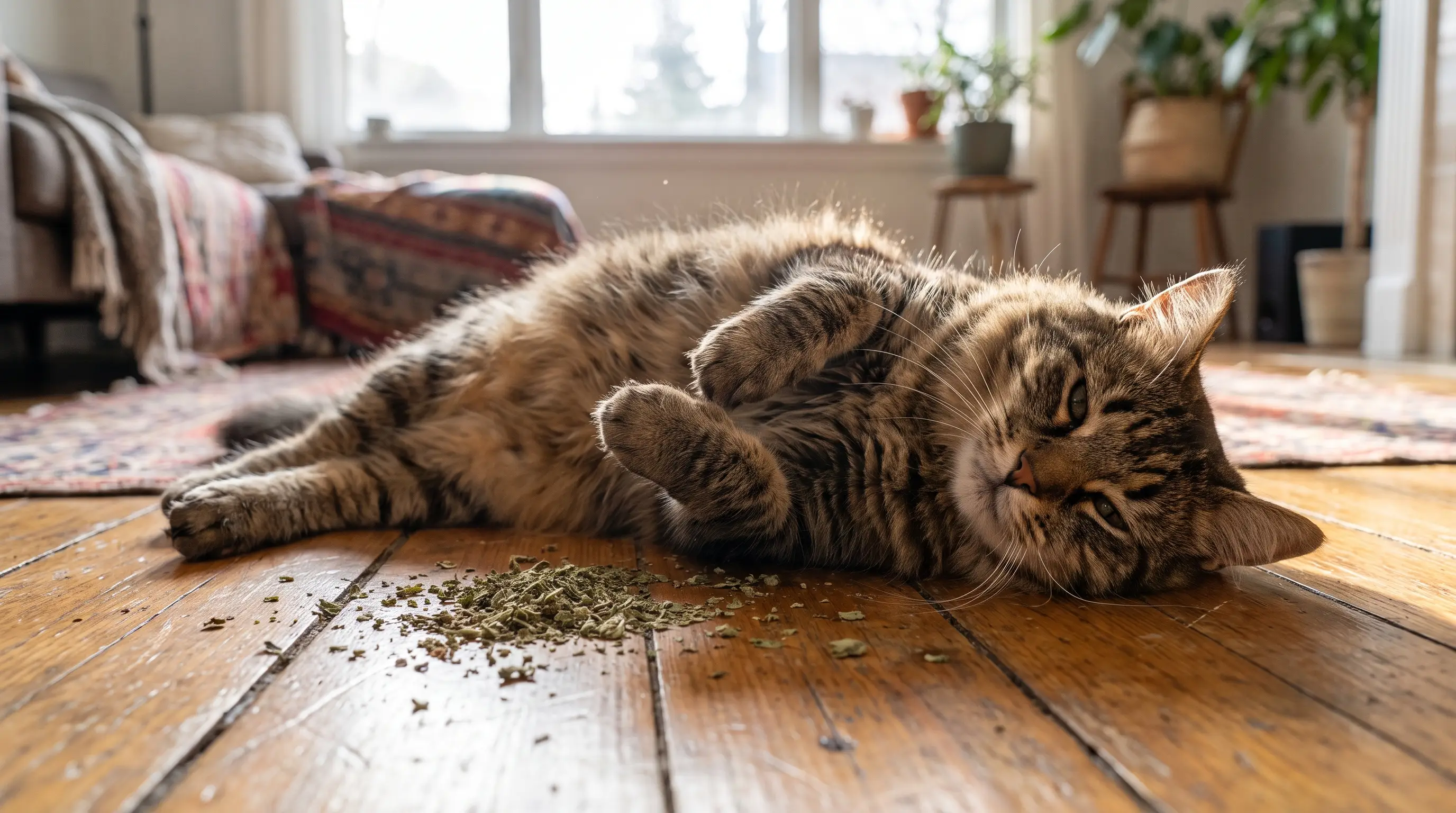
What Catnip Really Does to a Cat
The honest, myth-busting guide to catnip: what nepetalactone does, why 1 in 3 cats ignore it, and what to try instead.
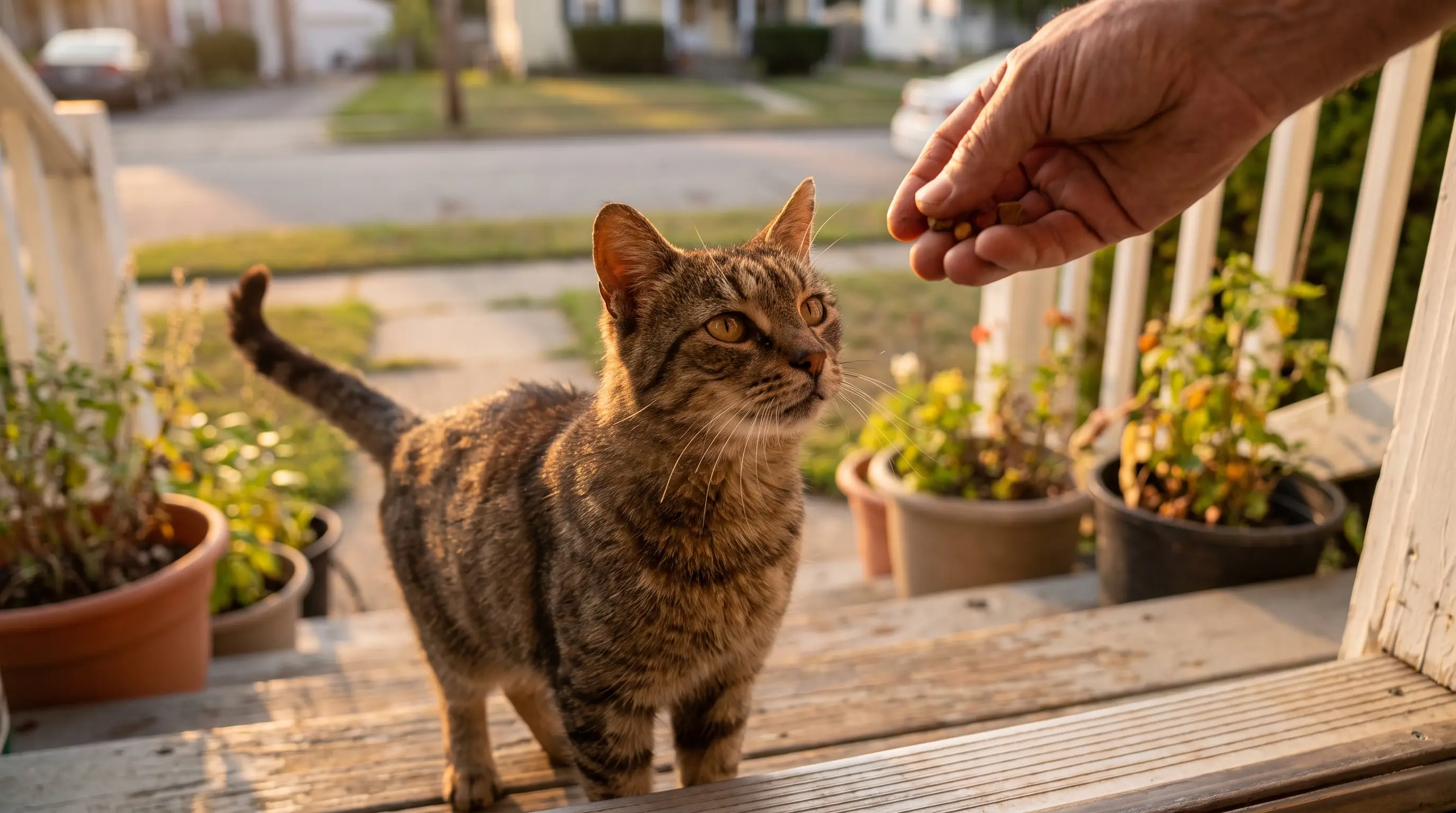
You Found a Stray Cat: What to Actually Do
A friendly cat on your doorstep may already have a home. Here is the honest, welfare-first order of steps before you take it in.