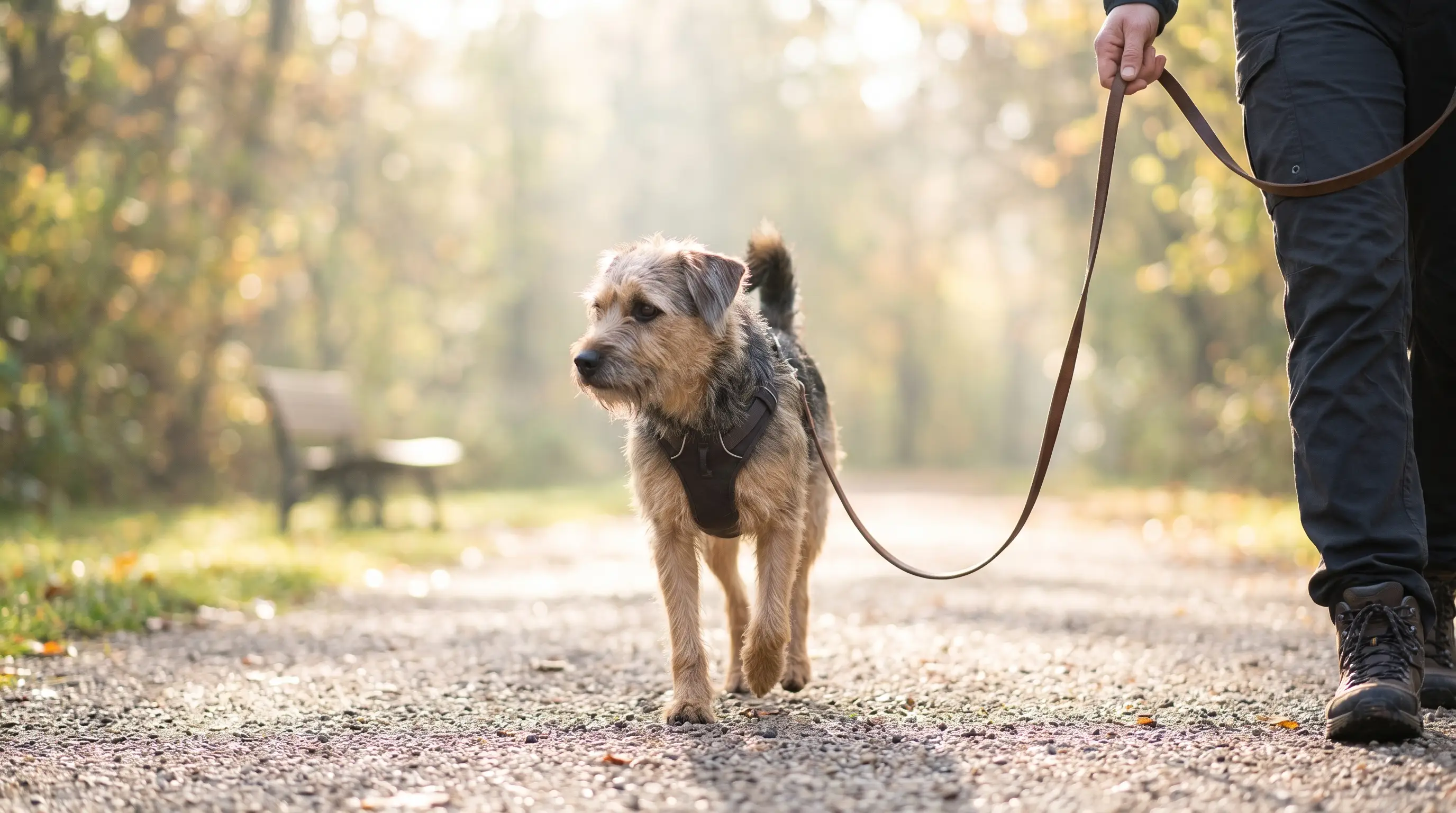
Stop the pulling: loose-lead walking that works
Dogs pull on the lead because it works: they lean forward, the interesting thing gets closer, and we follow along. The fix is reward-based and boringly consistent — pay your dog for walking at your side, and the instant the lead goes tight, stop dead or turn the other way so pulling never earns a single step forward. No pain, no gadgets that fix it overnight, just patience and repetition until a loose lead becomes the habit.
Why dogs pull on the lead
Dogs pull on the lead because pulling gets them where they want to go. They lean into the harness, the lamppost or the other dog gets closer, and we take a step — and every pull that ends in forward motion is a small paycheck. Dogs repeat what pays. There's a speed mismatch built in too: a person strolls at roughly 2 to 3 miles per hour, while a loose dog trots closer to 4 to 6, so your ordinary pace already feels like dawdling to them. Add the smells, the passing dogs, and the plain excitement of being outside, and the lead goes tight before you've left the drive. None of this is defiance or a bid to be the boss — the old dominance story about dogs doesn't hold up. Pulling is just a habit that keeps getting rewarded.
The opposition reflex
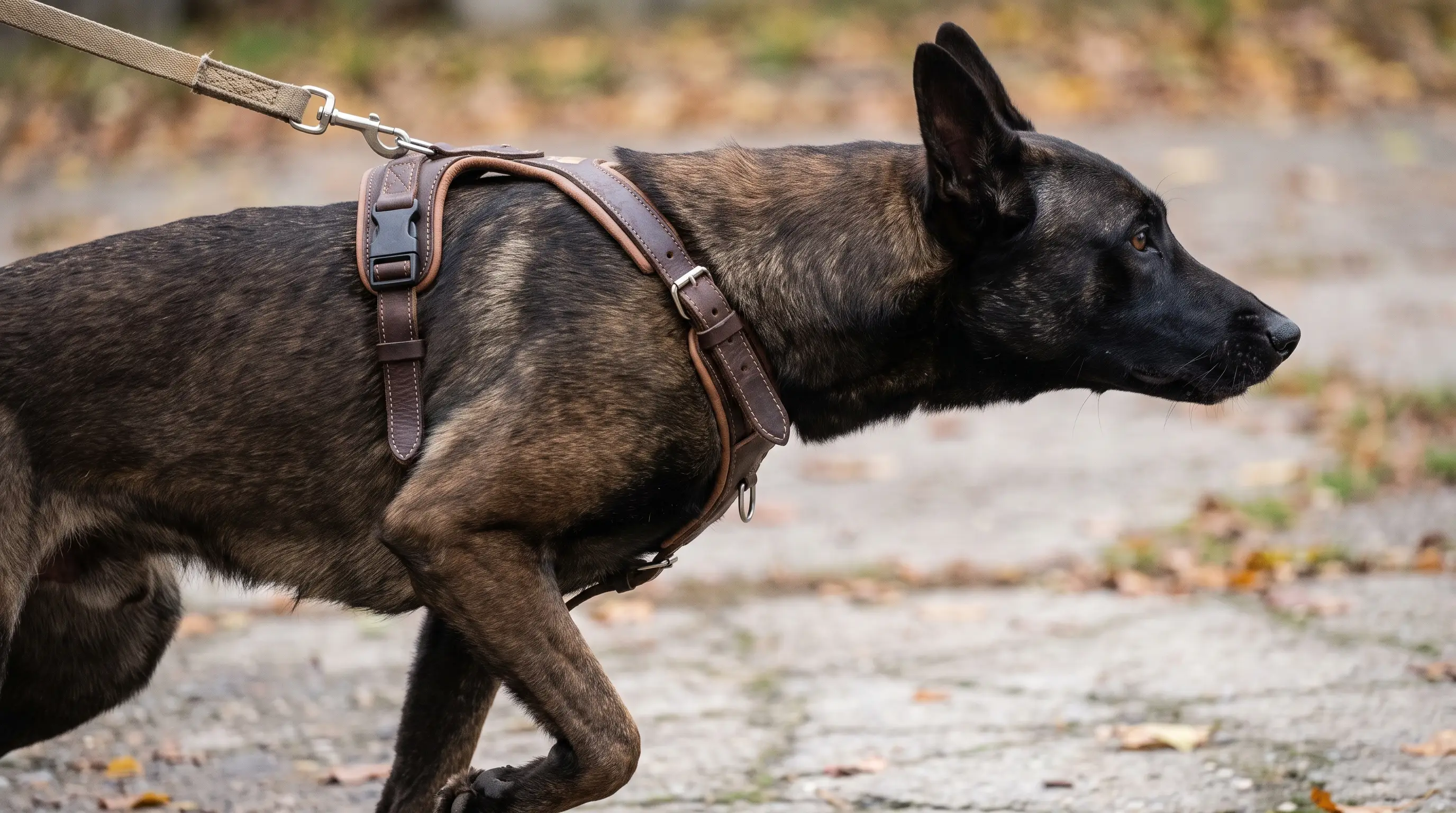
The opposition reflex is a dog's automatic urge to push back against steady pressure: pull them one way and they lean the other. It's the same wiring that lets sled dogs throw their whole body into a harness and pull for miles. On a walk it turns into a loop — the collar tightens, your dog's body answers by leaning forward, that leaning tightens the lead more, and round it goes. Constant tension is the worst thing you can hand a pulling dog, because it keeps the reflex switched on. This is why hauling back on a tight lead almost never works: physiologically your dog is built to resist it. The practical takeaway is to keep the lead loose whenever you can, hanging in a relaxed J-shape, and to break tension the moment it starts rather than settling into a tug of war.
The stop-and-reward method
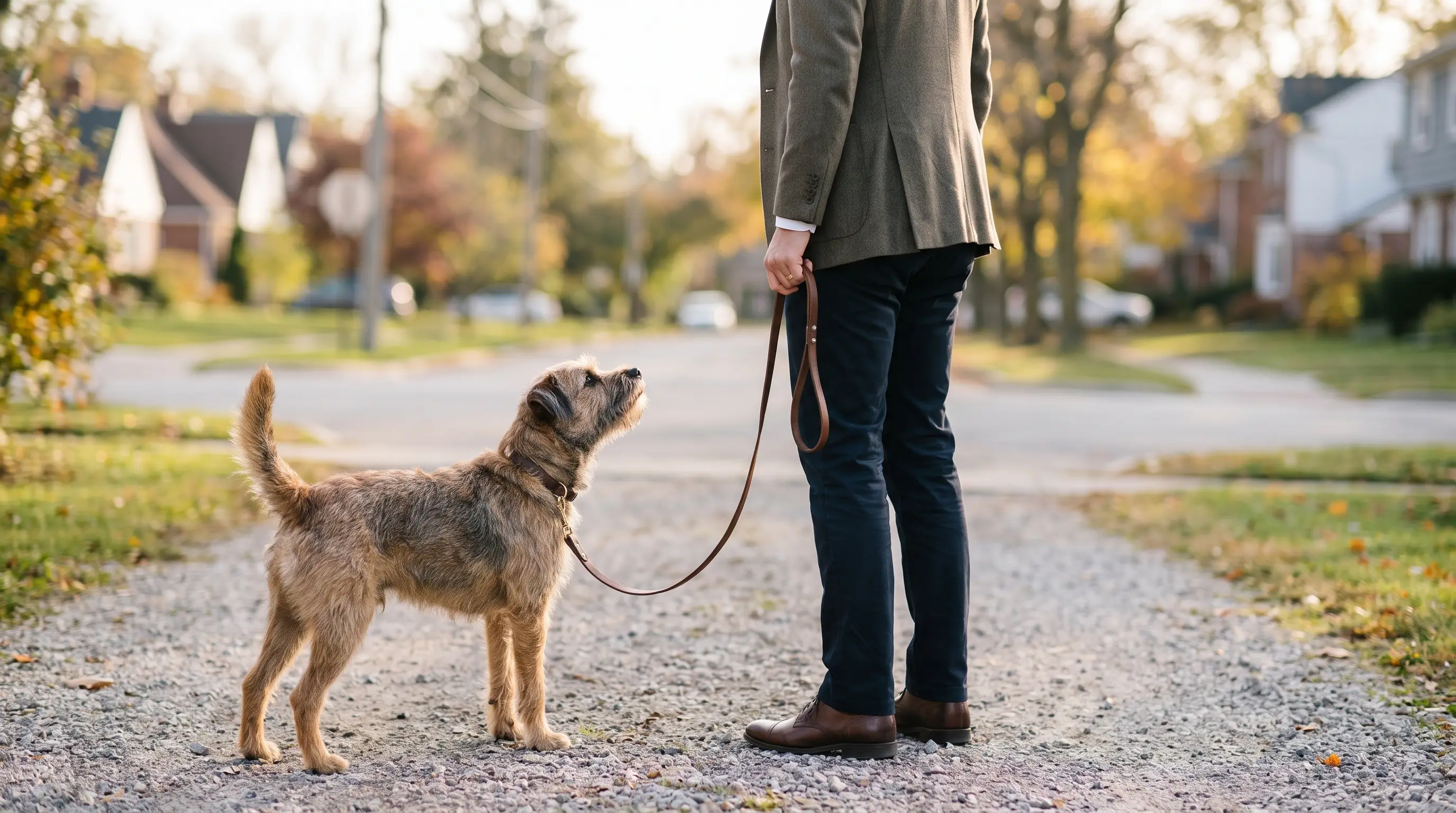
Stop dead the instant the lead goes tight, and start moving again only once it loosens — that is the whole method, repeated until it becomes a habit. Reward your dog for being at your side, delivering small high-value treats right by your leg so that hanging out next to you becomes the best-paid spot on the walk. When the lead goes taut, either plant your feet or calmly turn and walk the other way, so pulling never buys a single step forward. The moment the lead slackens and your dog checks back in with you, mark it with a quick word like "yes" and pay up. Consistency is the part people get wrong: if pulling works even one time in five, you've taught a gambler's lesson, and gamblers keep pulling. Done every time, the dog learns the simple rule that a loose lead moves the world forward and a tight one freezes it.
Front-clip harnesses and head halters
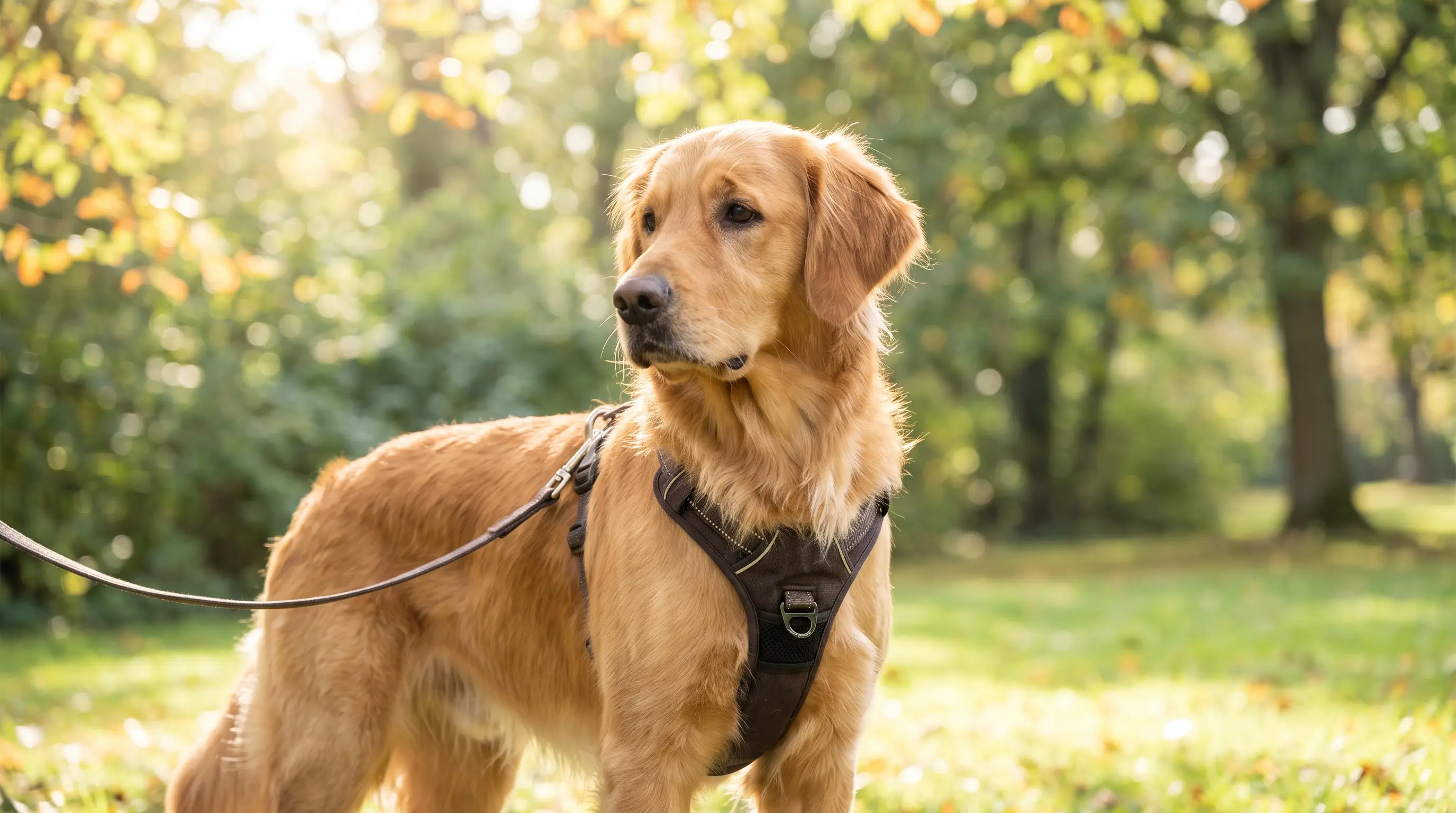
A front-clip harness or a head halter can make walks manageable while you train, but neither one is a cure on its own. A front-clip harness attaches at a ring on the chest, so when your dog leans into it their own momentum turns them gently back toward you instead of powering straight ahead. A head halter fits over the muzzle and steers the head, which for a big strong dog can be the difference between a walkable dog and an impossible one. Fit matters a lot: a badly sized harness rubs behind the legs, and a head halter needs slow, treat-paired introduction or the dog will fight it. Think of both as management that buys you calmer walks and safer footing while the real training happens underneath. Take the gear off a half-trained dog and the pulling comes straight back, because the equipment was never teaching the lesson — you were.
Skip the choke, prong and shock tools
Skip choke chains, prong collars and shock collars — they stop pulling by hurting the dog, and the trade-off isn't worth it. These tools work by applying pain or pressure to the neck until the dog gives up, which suppresses the behaviour without teaching the dog what to do instead. The American Veterinary Society of Animal Behavior's position statement recommends reward-based training and warns that aversive tools carry real risks of fear, anxiety and aggression, sometimes aimed back at the handler or at whatever the dog was looking at when it got hurt. A dog that learns another dog's approach predicts a jab to the throat can start reacting to other dogs. Reward-based methods work at least as well for loose-lead walking and don't spend your dog's trust to get there. Some breeds bred to haul, like the Alaskan malamute, will test any method, and the kind approach still wins with patience.
Setting your dog up to succeed
Start where it's boring and take the edge off first, because a calm dog in a dull place learns faster than an over-excited one in a busy one. Keep early sessions short — five or ten minutes is plenty — and practise somewhere low-key like the back garden or a quiet stretch of pavement, well away from the parade of dogs and squirrels that make focus impossible. Before you train, let your dog burn off some steam with a game or a proper sniff around, so they arrive at the lesson already a bit settled rather than fizzing with energy. Sniffing is genuinely tiring for dogs and takes the edge off arousal, which is exactly what you want before asking for concentration. Then build up slowly, adding distractions only once the easy version is solid. Patience and repetition are the entire game here; there's no shortcut, but there is a finish line, and most dogs get there faster than their owners expect.
Common questions
Why does my dog pull on the leash so much?
Your dog pulls because it works — every time pulling gets them closer to a smell, a person or another dog, the behaviour is rewarded and repeats. Dogs also naturally walk faster than we do, and steady collar pressure triggers an opposition reflex that makes them lean in even harder.
How do I get my dog to stop pulling on the leash?
Stop moving the instant the lead goes tight and only walk on once it loosens, so pulling never earns forward motion. Reward your dog with a small treat for being at your side, keep sessions short and consistent, and every tight lead should freeze the walk while every loose lead lets it continue.
Does a front-clip harness stop pulling?
A front-clip harness reduces pulling by turning your dog back toward you when they lean, but it manages the behaviour rather than curing it. It makes walks easier while you train, though remove it from an untrained dog and the pulling usually returns.
At what age should I start leash training a puppy?
You can start leash training as soon as a puppy comes home, around 8 weeks, using short, gentle, reward-based sessions indoors or in the garden. Early habits stick, so teaching a loose lead from the start is easier than fixing pulling later.
Do dogs grow out of pulling on the leash?
No, dogs don't grow out of pulling on their own — it's a learned habit that gets stronger the more it's rewarded, not a phase. Without training that stops pulling from paying off, most dogs pull for life.
Why does my dog pull even with a harness?
Many dogs pull in a harness because a back-clip harness actually gives them something to lean into, engaging the same opposition reflex sled dogs use. A front-clip harness that attaches at the chest works better, but no harness replaces teaching the dog that a loose lead is what moves the walk forward.
More in Dogs
8 rare dog breeds most people never meet
Eight of the world's rarest dog breeds — where they come from, what makes them unusual, and why you almost never see one.

Foxtails: The Summer Grass Seed That Burrows Into Pets
Foxtail grass seeds catch in fur and travel one way—inward. Here's how to spot them on a cat or dog, and stop them.
The oldest dog ever and how long dogs really live
Bluey reached 29 years. Bobi's 31-year claim fell apart. Here's the real math on dog lifespan, and how to buy your dog more time.